Professional Paver Sealing in Boynton Beach: Protecting Your Florida Investment in 2026
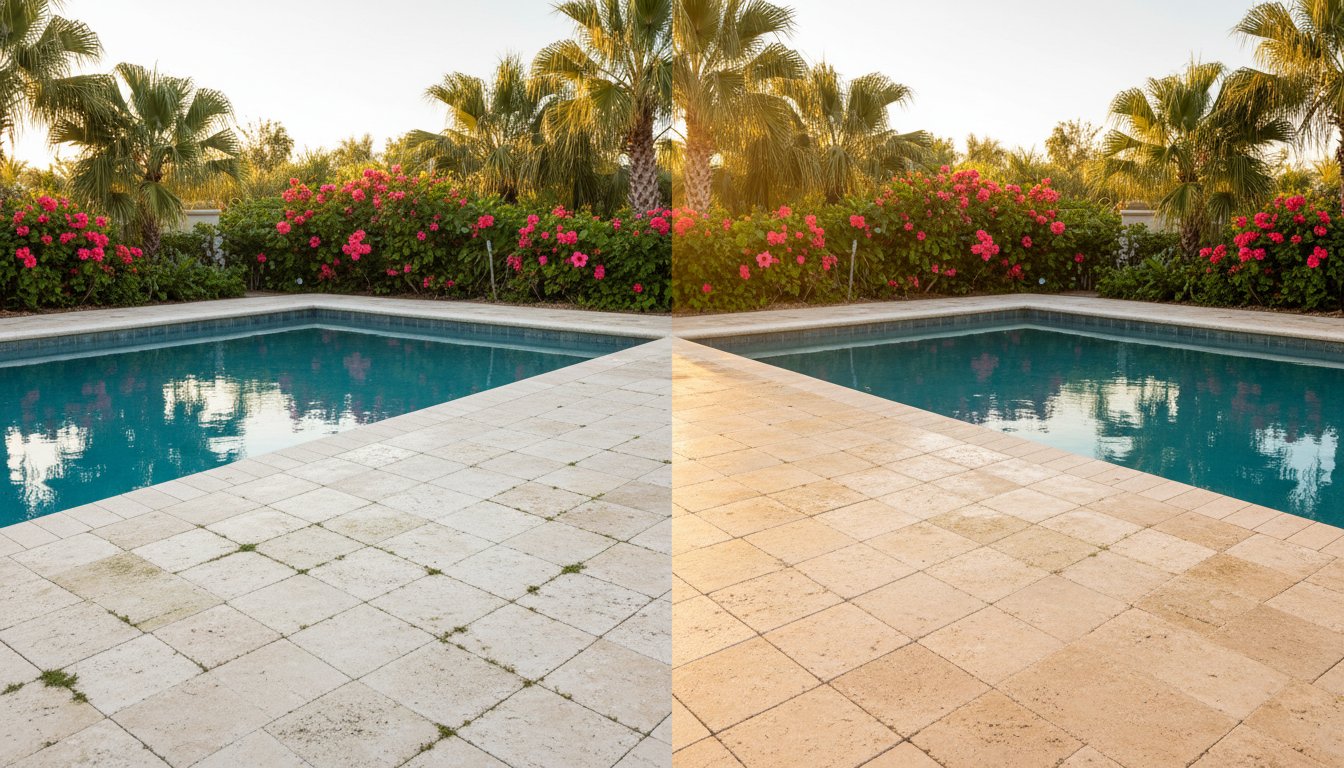
Last July, a homeowner in Boynton Beach realized their $12,000 paver patio had turned a dull grey and was overrun by stubborn weeds in just 18 months. It’s frustrating to invest in a beautiful outdoor space only to watch the intense Florida sun bleach the color out of your stones. You likely agree that scrubbing slippery green algae off a pool deck every few weeks is a poor use of your weekend. Managing a property in Palm Beach County shouldn’t feel like a constant battle against the elements.
Choosing professional paver sealing boynton beach is the most effective way to stop this cycle of decay and restore the vibrant, deep color your home deserves. You will discover how high-quality sealants provide 3 to 5 years of protection while giving you that sought-after “wet look” or a clean matte finish. We will walk through the professional application process, common DIY mistakes to avoid, and the best ways to keep your investment looking brand new well into 2026.
Key Takeaways
- Learn how the intense Florida sun and salt air degrade stone surfaces and why proactive protection is essential for your property’s longevity.
- Understand the critical differences between film-forming and penetrating formulas to choose the most effective paver sealing boynton beach solution for your home.
- Discover why DIY pressure washing often leads to permanent surface damage and how professional techniques prevent costly mistakes like etching or trapped moisture.
- Explore our meticulous multi-step restoration process, including specialized efflorescence treatments that remove stubborn white salt deposits and mineral stains.
- See how professional sealing acts as a high-value investment that boosts curb appeal while reducing the frequency and cost of future maintenance.
The Problem: Why Boynton Beach Pavers Fail Without Protection
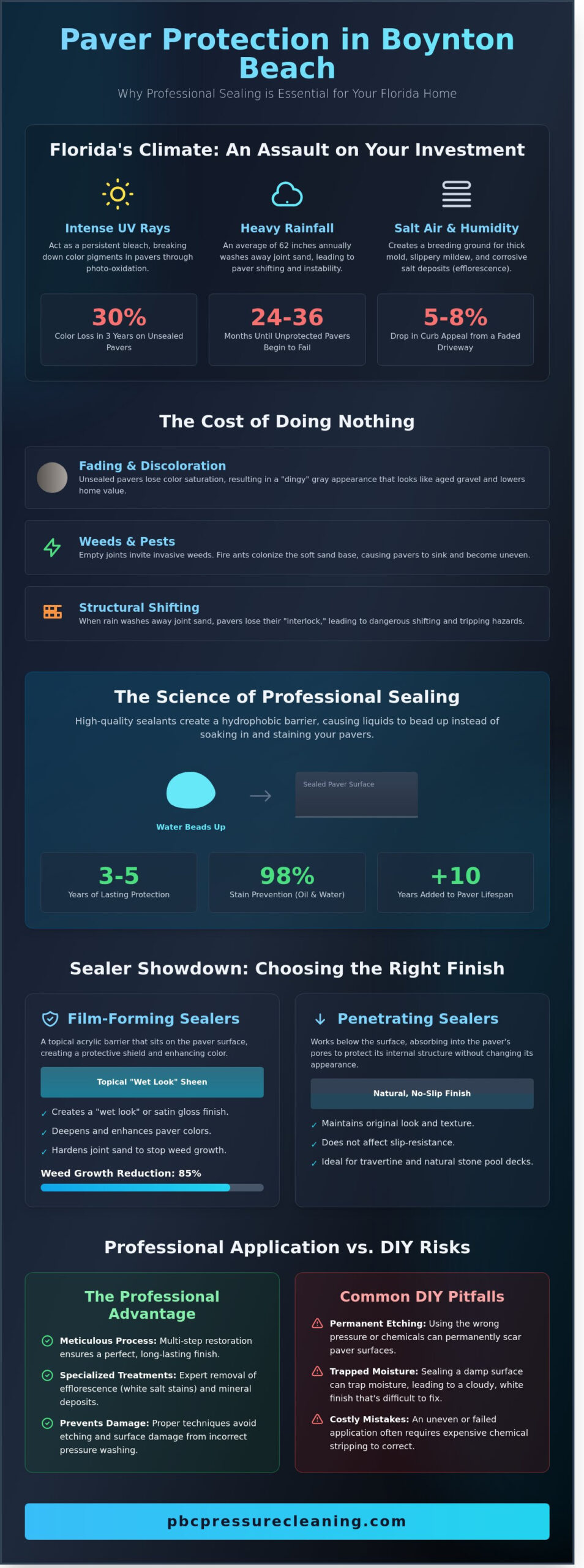
Boynton Beach homeowners often spend $10,000 to $20,000 on custom stone or concrete driveways. Without a protective coating, these expensive surfaces begin to fail within 24 to 36 months. The Florida climate is uniquely aggressive. High UV indexes and 62 inches of annual rainfall target the integrity of interlocking concrete pavers every single day.
To better understand how improper care or a lack of protection can damage your outdoor spaces, watch this helpful video:
UV rays act as a persistent bleach on concrete pigments. By the third year of exposure, unsealed stones typically lose 30% of their original color saturation. Beyond the sun, our local salt air and humidity create a breeding ground for thick mold and slippery mildew. High-quality paver sealing boynton beach provides a necessary barrier. It stops moisture from soaking into the porous surface and prevents oil or grease from leaving permanent stains.
The Impact of UV Degradation on Curb Appeal
Fading occurs through a chemical process called photo-oxidation. In unsealed concrete, the sun’s radiation breaks down the polymer bonds in the dye. This results in a “dingy” gray appearance that can lower a home’s curb appeal by 5% to 8% during a professional appraisal. A professionally maintained driveway looks vibrant and deep; a neglected one looks like dusty, aged gravel. Our 43 years of experience shows that homeowners who seal their pavers every three years maintain significantly higher property values in local neighborhoods.
Weeds, Ants, and Structural Shifting
Empty joints are an open invitation for invasive Florida weeds and pests. Local fire ants frequently build colonies in the soft sand beneath unsealed pavers, excavating the base material and causing stones to sink by as much as two inches. When heavy rain washes away the joint sand, the pavers lose their structural “lock.” This leads to shifting and tripping hazards. Professional paver sealing boynton beach involves hardening the joint sand, which stops weed growth and prevents pests from tunneling under your investment.
The Science of Sealing: How Professional Protection Works
Professional paver sealing boynton beach involves more than just a quick spray. It requires a chemical bond that stands up to 100-degree Florida summers and heavy tropical downpours. High-quality sealants create a hydrophobic surface. This means the liquid beads up on top rather than soaking into the porous material. It prevents 98% of oil and water-based stains from becoming permanent eyesores on your driveway or patio. Our 43 years of experience shows that applying these sealants correctly can extend the life of your pavers by a decade.
Film-Forming Sealers for the ‘Wet Look’
A film-forming sealer is a topical acrylic barrier used for maximum color pop. These products sit on top of the paver to create a physical shield. They offer various gloss levels, from a subtle satin to a high-shine “wet look” that makes colors appear deeper and more vibrant. This layer also helps lock joint sand in place, reducing weed growth by up to 85% compared to unsealed surfaces.
Penetrating Sealers for Natural Finishes
Penetrating sealers work below the surface to protect the internal structure of the stone. They don’t change the look or slip-resistance of the material, making them the preferred choice for travertine and natural stone pool decks. This is a critical step for paver sealing boynton beach projects involving delicate pool surrounds. According to ICPI’s paver maintenance guide, choosing the right sealer prevents the degradation caused by salt and chemicals.
Choosing between water-based and solvent-based formulas often depends on environmental goals and local humidity levels. Modern 2026 water-based sealers provide excellent durability with significantly lower VOC emissions. This makes them safer for your landscaping and pets. Regardless of the base, the product must be breathable. Florida’s high water table means moisture often rises from the ground through the pavers. If a sealer isn’t breathable, it traps that moisture inside. This leads to a white, cloudy haze known as blushing. We ensure your surfaces stay clear and protected by using professional-grade products designed for our specific climate. If you aren’t sure which finish is right for your home, you can request a professional surface evaluation to see the best options for your stone type.
Professional Paver Sealing vs. DIY: The Risks of Going It Alone
Many homeowners in Palm Beach County consider a weekend DIY project to save money. However, paver sealing boynton beach requires more than a bucket and a roller. The most common mistake involves high-pressure washing. A standard consumer pressure washer can reach 3,000 PSI, which is enough to permanently etch the surface of your stones or blow out the stabilizing sand between joints. Once the “cream” or top finish of a paver is stripped away, the damage is irreversible and leaves the stone porous and vulnerable to deep stains.
Applying the wrong product creates a different set of problems. Big-box store sealers are often low-solids acrylics that yellow under the intense Florida sun within 120 days. Professional crews use industrial-grade silane-siloxane or high-solids solvent sealers that aren’t sold to the general public. Without these professional chemicals, you risk moisture entrapment. This leads to a “white haze” known as efflorescence, where salt and moisture get trapped beneath the sealer, turning your beautiful driveway into a cloudy, blotchy mess.
Poor application also carries environmental risks for coastal communities. Runoff from incorrectly applied chemicals can enter storm drains and reach the Intracoastal Waterway. This is supported by EPA data on sealant pollution, which highlights how certain pavement products impact water quality. Professionals use specialized sprayers to ensure the product stays on your stone, not in the local ecosystem.
The Cost of DIY Mistakes
Fixing a botched DIY job is significantly more expensive than hiring a pro from the start. Stripping a failed, peeling, or yellowed sealer often costs $2.50 to $3.00 per square foot, which is double the price of a standard paver sealing boynton beach service. A professional team typically finishes a 1,500 square foot driveway in six to eight hours. A DIYer often spends 20 hours over two weekends struggling with equipment rentals and drying times, only to see the finish fail within six months.
Why Professional Surface Cleaning Matters
You can’t seal a dirty surface. Professionals use hot-water systems that reach 180 degrees Fahrenheit to kill “black algae” and mold spores at the root. Standard cold-water garden hoses or home washers leave these organisms alive under the sealant, where they continue to grow. We also use pH-balancing agents to neutralize the stone after cleaning. This step ensures the sealant bonds correctly to the substrate, preventing the peeling and flaking common in amateur applications.
The Meticulous PBC Pressure Cleaning Sealing Process
Our professional paver sealing boynton beach service follows a strict four-step protocol developed over 43 years of experience. We don’t just spray a coating and leave. Our team treats your property like an investment that requires specific, technical care to withstand the Florida sun.
- Step 1: Deep Cleaning and Decontamination: We use specialized local solutions to break down 98% of surface oils, grease, and organic growth. This isn’t a standard rinse; it’s a thorough decontamination that prepares the pores of the stone for maximum adhesion.
- Step 2: Efflorescence Treatment: Florida’s humidity often leads to white, chalky salt deposits known as efflorescence. We apply a targeted treatment to remove these mineral stains, ensuring they aren’t trapped permanently under the new sealer.
- Step 3: Re-sanding: We install high-quality polymeric sand into the joints. This step is vital for 100% joint stabilization, which keeps your pavers from shifting under the weight of a 4,000-pound vehicle.
- Step 4: Precision Application: We apply a premium sealant tailored specifically to your stone type, whether you have porous concrete pavers or dense natural travertine.
The Role of Polymeric Sand
Polymeric sand is a specialized mix of graded sand and binders. When we activate it with water, it hardens to create a flexible but solid barrier. This prevents 90% of weed growth and stops ants from colonizing your driveway. Proper sand levels are critical; they provide the lateral strength needed to keep pavers from “walking” or sinking over time. The sand and sealer work together to create a “lock-in” effect that turns individual stones into a unified, durable surface.
Precision Application Techniques
We utilize LPHV (Low Pressure High Volume) sprayers for every paver sealing boynton beach project. This equipment ensures an even, consistent coat without the puddling or “roller marks” often seen in DIY attempts. Our technicians monitor local weather patterns 48 hours in advance. We require a clear 24-hour curing window to prevent moisture from clouding the finish. A final quality control inspection ensures every square inch is protected and no uneven areas remain. This meticulous approach is why area homeowners trust us to protect their outdoor living spaces.
Protect your home today by choosing a certified professional. Schedule your professional paver inspection and estimate now.
Maximizing Your Property Value with Local Experts
A professionally sealed driveway provides a visual “wow factor” that captures a buyer’s attention within the first 10 seconds of a home showing. Local real estate data suggests that high-quality curb appeal can boost a property’s market value by as much as 7 percent. By investing in paver sealing boynton beach, you aren’t just making the home look better; you’re hardening your investment against the harsh Florida elements. It’s a practical step that turns a standard driveway into a high-end feature of the property.
Sealing creates a non-porous surface that rejects oil, grease, and dirt. This significantly reduces how often you’ll need to hire professional cleaners. Instead of needing a heavy pressure wash every 6 months, sealed pavers usually only require a professional visit every 18 to 24 months. This shift saves the average homeowner approximately $350 in annual maintenance expenses. We’ve spent 43 years serving Palm Beach County, and we know that affordable maintenance today prevents a $20,000 replacement project five years down the road.
Maintenance Tips for Sealed Pavers
Keep your surfaces looking fresh by rinsing them with a standard garden hose once a week to remove loose sand and salt. If you notice an oil leak or a food spill, blot the area immediately with a soft cloth; don’t rub the stain into the sealer. In our intense South Florida climate, we recommend a professional re-sealing every 2 to 3 years to ensure the protective barrier remains thick enough to block damaging UV rays.
Why Choose PBC Pressure Cleaning?
Our team is fully licensed and insured, which provides you with total peace of mind while we work on your property. We take a meticulous approach to every job, ensuring that every joint is filled and every inch of stone is protected. We’ve built a reputation for reliable service across Boynton Beach, Wellington, and Delray Beach. When you choose us, you’re choosing four decades of local expertise and a commitment to outstanding results. Contact us today to request a free estimate or to schedule an inspection for your next paver sealing boynton beach project.
Secure Your Boynton Beach Property for the Years Ahead
Your outdoor surfaces face intense UV rays and heavy tropical rainfall every single day. Leaving your driveway or patio unprotected leads to faded colors, structural shifting, and stubborn mildew growth that ruins your curb appeal. By choosing a professional service, you ensure that specialized soft-wash and no-pressure techniques are used to clean surfaces deep without damaging the stone. This meticulous approach prevents the common “white haze” often caused by DIY mistakes and improper sealants.
PBC Pressure Cleaning brings 43 years of local experience in Palm Beach County to every project we handle. Our licensed and insured certified professionals understand exactly how to combat Florida’s unique climate challenges. Investing in professional paver sealing boynton beach isn’t just about looks; it’s a practical way to avoid expensive repairs and maintain your property value. Protect your investment—request a free paver sealing estimate from PBC Pressure Cleaning today! We look forward to helping you keep your home looking its absolute best for years to come.
Frequently Asked Questions
How much does paver sealing cost in Boynton Beach?
Professional paver sealing boynton beach typically costs between $1.00 and $2.00 per square foot depending on the condition of your surface. For a standard two car driveway of 400 square feet, you can expect to pay between $400 and $800. This price includes a thorough cleaning, joint sanding, and the application of high quality sealer. Investing in this service now prevents the $5,000 cost of replacing a damaged driveway later.
How long does it take for paver sealer to dry before I can drive on it?
You can walk on your pavers 4 hours after the application is complete. However, you must wait at least 48 to 72 hours before driving a vehicle or parking on the surface. Florida humidity levels can impact this timeline, so we recommend waiting the full 3 days to ensure the bond is fully cured. Moving heavy patio furniture back should also wait at least 24 hours to avoid scuffing the fresh finish.
Will sealing my pavers make them slippery, especially around the pool?
Sealing won’t make your pool deck slippery if we use a specialized anti-skid additive in the final coat. These micronized polymer beads create a subtle texture that provides traction even when the surface is wet. We apply these additives to 100 percent of our pool deck projects to ensure safety for your family. It’s a critical step that maintains the beautiful sheen without creating a fall hazard.
How often should I have my pavers professionally sealed in Florida?
You should have your pavers professionally sealed every 3 to 5 years to maintain maximum protection against Florida’s intense UV rays. Our 43 years of experience shows that pavers in high traffic areas or direct sunlight lose their protective barrier faster than shaded spots. Regular maintenance keeps the colors vibrant and prevents the sand in the joints from washing away during heavy summer rainstorms.
Can you seal pavers that are already faded or have turned gray?
We can absolutely restore pavers that have turned gray or lost their original luster. We use professional grade color enhancing sealers that penetrate the stone to bring back the deep reds, tans, and oranges. While it won’t make 20 year old pavers look brand new, it can improve the color saturation by up to 70 percent. This process is an affordable way to boost your home’s curb appeal without a full replacement.
What is the best time of year to seal pavers in Palm Beach County?
The best time for paver sealing boynton beach is during the dry season between November and April. During these months, the humidity is lower and the chance of a sudden afternoon thunderstorm is less than 20 percent. This stable weather allows the sealer to cure perfectly without moisture interference. If we seal during the summer, we carefully monitor local radar to find a 24 hour dry window for the best results.
Does paver sealing actually stop weeds from growing in the joints?
Professional sealing significantly reduces weed growth by hardening the joint sand into a mortar like consistency. This makes it nearly impossible for seeds to take root in the gaps between stones. While it stops about 90 percent of weeds, some stubborn growth may still occur if organic debris accumulates on top of the pavers. Keeping your surface clear of dirt and leaves will help the sealer do its job effectively.
What happens if it rains shortly after my pavers are sealed?
If it rains within 2 hours of application, the water can cause the sealer to turn cloudy or peel. We use water based sealers that are more moisture tolerant, but a heavy downpour is still a concern. If a surprise storm hits, we’ll inspect the surface once it dries. In about 15 percent of cases, we may need to apply a corrective tint or a light recoat to ensure the finish is uniform and protective.
Recent Comments