Soft Wash vs. Pressure Wash: The Pro’s Guide to Choosing the Right Clean
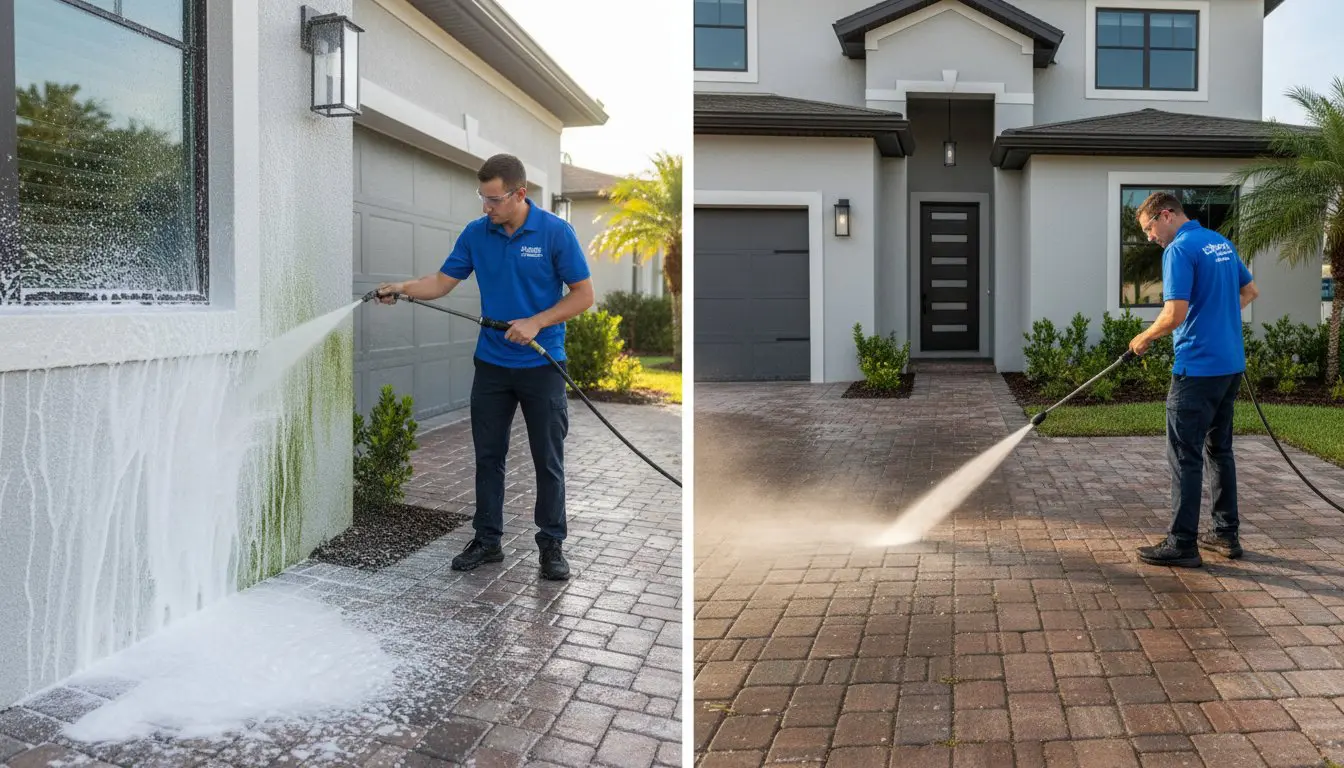
You know your home needs a deep clean, but the thought of blasting your siding or roof with high-pressure water can be nerve-wracking. Will it strip the paint, damage your shingles, or force water where it doesn’t belong? This common concern is exactly why understanding the soft wash vs pressure wash debate is so crucial for any homeowner. Choosing the wrong method is one of the costliest mistakes we see, turning a simple cleaning project into an expensive repair job.
While both services aim for a sparkling clean result, they are fundamentally different techniques designed for different surfaces. Using intense pressure on a delicate surface is a recipe for disaster, while a gentle wash might not be enough to lift stubborn stains from durable concrete. Knowing which to ask for is the key to protecting your property investment and achieving the outstanding curb appeal you want, without the risk of damage.
In this pro’s guide, we’ll provide the clarity you need. We will break down the crucial differences between these two methods, identify which surfaces are right for each, and empower you to make a confident, informed decision. You’ll learn how to get a thorough, beautiful clean that keeps your home safe and sound.
Key Takeaways
- Understand that soft washing uses specialized cleaning solutions to kill organic growth like mold and algae, while pressure washing uses sheer force to remove surface grime.
- The key to the soft wash vs pressure wash decision lies in understanding two main factors: water pressure (PSI) and the role of the cleaning agent.
- Choosing the wrong cleaning method for a specific surface can lead to costly and irreversible damage; learn which parts of your home require a gentle touch.
- While DIY seems tempting, both methods carry significant risks of property damage and personal injury without professional training and commercial-grade equipment.
What is Soft Washing? The Gentle Approach to a Deep Clean
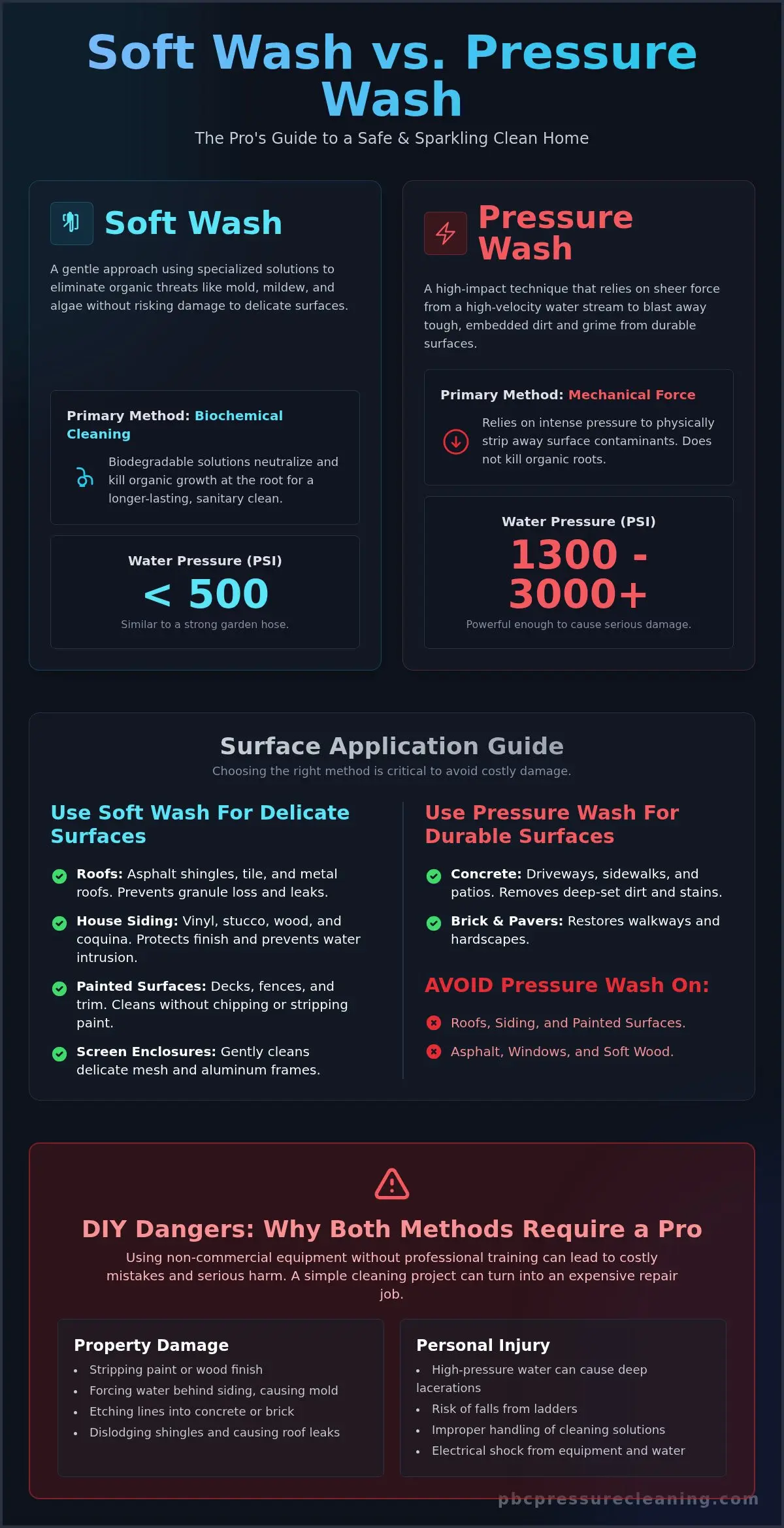
When homeowners consider cleaning their property’s exterior, they often think of high-pressure cleaning. However, a more meticulous and safer alternative exists for many surfaces. Soft washing is a low-pressure cleaning technique that uses specialized, biodegradable solutions to achieve a thorough clean without the risk of damage. Unlike traditional Pressure washing, which uses high-velocity water to blast away dirt, soft washing operates at a pressure under 500 PSI-similar to a strong garden hose. The cleaning solutions do the heavy lifting, not the force of the water.
Think of it as pest control for your home’s exterior. Those unsightly black, green, and brown stains on your roof and siding are not just dirt; they are living organisms like mold, mildew, algae, and bacteria. In the soft wash vs pressure wash debate, high pressure might remove the surface layer of this growth, but it often leaves the root system intact, allowing it to grow back quickly. Soft washing is designed to eliminate these organisms completely, providing a longer-lasting and more sanitary clean.
The Science Behind the Clean
Our professional soft washing service uses a custom blend of biodegradable cleaning agents, including sodium hypochlorite, surfactants, and algaecides. These solutions penetrate deep into the pores of a surface, breaking down dirt, grime, and other contaminants. More importantly, they neutralize and kill organic growth at its root. After the solution has had time to work, we use a gentle, low-pressure rinse to wash away the dead organisms and residue, revealing a bright, beautiful surface underneath.
Ideal Surfaces for Soft Washing
Using high pressure on delicate materials can cause irreversible damage, such as stripping paint, etching surfaces, or forcing water behind siding. Protecting your investment means choosing the right cleaning method. Soft washing is the professional standard for a variety of surfaces, including:
- Roofs: Essential for asphalt shingles, tile, and metal roofs to remove algae streaks without dislodging granules or causing leaks.
- House Siding: Safely cleans vinyl, stucco, wood, and coquina, preventing water intrusion and protecting the finish.
- Painted Surfaces: Cleans wood decks, fences, and painted trim without chipping or stripping away the protective coating.
- Screen Enclosures: Gently removes green algae and grime from delicate screen mesh and aluminum frames.
What is Pressure Washing? High-Power Cleaning for Tough Surfaces
Pressure washing is a powerful cleaning method that uses a high-velocity stream of cold water to remove dirt, grime, mold, and other stubborn contaminants from surfaces. Operating at pressures ranging from 1,300 to over 3,000 Pounds per Square Inch (PSI), this technique relies on sheer mechanical force to physically blast away buildup. It’s important not to confuse this with power washing, which uses heated water.
In the essential debate of soft wash vs pressure wash, understanding pressure washing means recognizing it as the heavy-duty option. It is designed specifically for tough, durable surfaces that can withstand intense force to restore their original appearance and protect your property
Soft Wash vs. Pressure Wash: A Side-by-Side Comparison
Choosing the right cleaning method is crucial for protecting your property’s value and appearance. To help you understand the key differences in the soft wash vs pressure wash debate, we’ve created this straightforward, side-by-side guide. This quick reference breaks down the core components of each service, ensuring you can make an informed, professional decision for your home or business.
Comparison Table: Key Differentiators
| Feature | Soft Wash | Pressure Wash |
|---|---|---|
| Pressure (PSI) | Low-pressure; typically under 500 PSI. | High-pressure; 1300 to 3000+ PSI. |
| Cleaning Method | Relies on specialized, biodegradable cleaning agents to kill organic growth. | Relies on the sheer force of water to blast away dirt and grime. |
| Primary Use | Roofs, siding (vinyl, stucco), fences, and other delicate surfaces. | Concrete driveways, patios, sidewalks, and durable hardscapes. |
| Key Risks | Requires careful application to protect surrounding plants and landscaping. | High risk of surface damage, etching, or water intrusion if used improperly. |
Which Method is More Effective?
The effectiveness of a cleaning method depends entirely on the job at hand. There is no single “better” option; the right choice is determined by the surface material and the type of stain you need to remove. For organic growth like algae, mold, and mildew that discolors your roof or siding, soft washing is far more effective. Its chemical-based approach eliminates the infestation at its root without harming the surface.
Conversely, for removing deeply embedded dirt, oil stains, and grime from hardscapes like concrete driveways, the high-powered force of pressure washing provides a deep, thorough clean that chemical solutions alone cannot achieve. A professional will always assess the surface and stain before recommending the safest and most effective method.
A Surface-by-Surface Guide: Choosing the Right Method for Your Home
Understanding the theory is important, but applying it correctly is what protects your property. This practical guide breaks down the most common exterior surfaces around your home, providing a clear recommendation from the professionals at Pressure Pros of Palm Beach. In the ongoing discussion of soft wash vs pressure wash, knowing which to apply where is the key to achieving a perfect clean without causing damage.
For Your Roof and Siding
When it comes to your roof, the choice is simple: soft washing is the only safe and manufacturer-approved method. Using high-pressure water on asphalt shingles or tiles can strip away protective granules, lift and break materials, and even void your roof’s warranty. It creates a high risk for leaks and permanent damage. Similarly, your home’s siding-whether vinyl, stucco, or wood-is best cleaned with a soft wash. This low-pressure approach eliminates grime and mildew without the risk of forcing water behind panels, which can lead to mold and rot.
For Your Driveway and Walkways
For durable, hard surfaces like concrete driveways and paver walkways, high-pressure washing is typically the most effective solution. Its powerful stream is necessary to penetrate the porous surface and lift out deep-set oil stains, tire marks, and stubborn grime. This method also provides the meticulous preparation needed for follow-up services like paver sealing. In cases of extreme algae or mildew buildup, a professional may use a soft wash pre-treatment to kill the growth before pressure washing it away for a truly outstanding result.
For Your Deck, Fence, and Patio
Wood surfaces require a more delicate touch. Using high pressure on a wood deck or fence can cause splintering, gouging, and irreversible damage to the fibers, a common mistake that shortens the life of your investment. Soft washing is the correct choice, as it safely cleans the wood and removes organic stains without harming its integrity. For patios, the right method depends on the material. While standard pavers can handle pressure washing, more delicate surfaces like painted concrete or certain types of natural stone should be soft washed to prevent chipping or stripping the finish.
Every surface is unique. If you’re not sure what your property needs, don’t risk causing damage. Get a free, expert evaluation.
DIY Dangers: Why Both Methods are Best Left to Professionals
It can be tempting to rent a machine from a local hardware store and tackle your home’s exterior cleaning yourself. While the DIY approach might seem like a way to save money, it often comes with significant risks that can lead to costly repairs and even personal injury. Both high-pressure washing and soft washing require specific knowledge and equipment to be performed safely and effectively.
Risk of Property Damage
The most common DIY mistake is using the wrong pressure or cleaning solution for the surface. Without proper training, you can easily cause irreversible and expensive damage to your home. Potential risks include:
- Etching patterns into concrete or brick
- Splintering wood decks and fences
- Forcing water behind siding, leading to mold and rot
- Shattering windows or breaking their thermal seals
- Stripping paint or protective coatings from surfaces
- Killing grass, plants, and shrubs with improperly mixed solutions
The debate of soft wash vs pressure wash is critical here, as choosing the wrong method is the fastest way to damage your property investment.
Personal Safety and Equipment
The equipment available for rent is rarely as powerful or reliable as professional-grade machinery. More importantly, it can be dangerous in untrained hands. A high-pressure stream can cause severe lacerations equivalent to a deep knife wound. Operating this powerful equipment while balancing on a ladder is a recipe for disaster, leading to serious falls and injuries. Professionals use specialized safety gear and have the training to manage these risks, ensuring the job is completed without incident.
When you’re ready to find a professional, it helps to know what to look for. For example, you can discover AlphaLux Cleaning to see the range of services and standards that a reputable company provides, which is a useful benchmark regardless of your location.
Guaranteed Professional Results
Ultimately, hiring a professional saves you time and guarantees a thorough, lasting clean. An experienced technician understands which method to use for every material, from delicate roof shingles to durable concrete driveways. When you partner with a licensed and insured company, you are protected from any liability for accidents or damage. Instead of spending a weekend struggling with rental equipment and risking your home’s integrity, you get outstanding, worry-free results that boost your curb appeal. For a professional assessment and a meticulous clean, trust the experts at Pressure Pros of Palm Beach to do the job right the first time.
Protect Your Investment with the Right Professional Clean
Ultimately, the soft wash vs pressure wash debate isn’t about which method is superior, but which is correct for the job at hand. Soft washing provides a gentle, thorough clean for delicate surfaces like siding and roofs by eliminating organic growth, while high-power pressure washing is reserved for blasting away stubborn stains from durable materials like concrete. Using the wrong technique can cause irreversible damage, underscoring the importance of professional guidance to protect your valuable property.
Don’t leave the beauty and integrity of your home to chance. The team at Pressure Pros of Palm Beach brings over 43 years of professional experience to every project in Palm Beach County. As licensed and insured specialists in both soft wash and pressure cleaning techniques, we have the knowledge and equipment to deliver a meticulous clean that boosts your curb appeal and protects your investment. Let us handle the hard work so you can enjoy a beautifully maintained property.
Request Your Free Estimate from Palm Beach County’s Cleaning Experts!
Frequently Asked Questions About Soft Wash and Pressure Washing
Can pressure washing damage my concrete driveway?
Yes, improper pressure washing can damage your concrete. Using excessively high pressure (PSI) or the wrong nozzle can etch the surface, creating permanent lines or “wand marks.” This is especially true for older or already sealed concrete. A professional will use the correct pressure and technique to thoroughly clean oil, grease, and grime from your driveway without causing this type of surface degradation, protecting your investment and ensuring a uniform, clean finish.
Is soft washing safe for my pets and plants?
When performed by a certified professional, soft washing is completely safe for your pets, plants, and family. Our technicians take meticulous precautions, such as pre-wetting all surrounding vegetation and using biodegradable, eco-friendly cleaning solutions. After the cleaning is complete, we perform a thorough rinse that neutralizes the cleaning agents, ensuring your landscaping remains healthy and your property is safe for everyone to enjoy immediately after our service.
How often should I have my house soft washed?
For most homes in the Palm Beach County area, we recommend a professional house soft wash every 12 to 24 months. This frequency is ideal for preventing the buildup of damaging algae, mildew, and dirt that thrive in our humid climate. Factors such as heavy tree coverage or shade may require more frequent cleanings. A regular, affordable soft wash service is one of the best ways to protect your home’s value and maintain its beautiful curb appeal.
What’s the average cost difference between soft washing and pressure washing?
The cost is often comparable, but the best method depends entirely on the surface being cleaned. Soft washing may sometimes have a slightly higher price due to the specialized cleaning solutions used to kill organic growth at its root. However, this often provides a longer-lasting and safer result on delicate surfaces like roofing and siding. The discussion of soft wash vs pressure wash should focus on which method delivers the best, safest result for your specific needs, providing unmatched value.
Can you use a pressure washer to soft wash?
Yes, a pressure washer is the machine used, but it must be equipped with special low-pressure nozzles and a system for applying cleaning solutions. The key is the technique and the attachments. These specialized nozzles reduce the pressure to levels similar to a garden hose, allowing the detergents to do the work. Using a standard pressure washer without the correct equipment and training can easily damage siding, window seals, and other delicate surfaces.
Does soft washing work on rust stains?
A standard soft wash solution is formulated to eliminate organic stains like mildew, algae, and moss, not metallic stains like rust. Rust removal is a distinct process that requires specialized, often acidic, cleaning agents to be effective. While we are equipped to handle tough rust stains on concrete and siding, it is treated as a separate service to ensure we use the correct, targeted solution for a thorough and complete removal of all unwanted blemishes.
Recent Comments