
How Often to Seal Pavers in Florida: The 2026 Homeowner’s Maintenance Guide
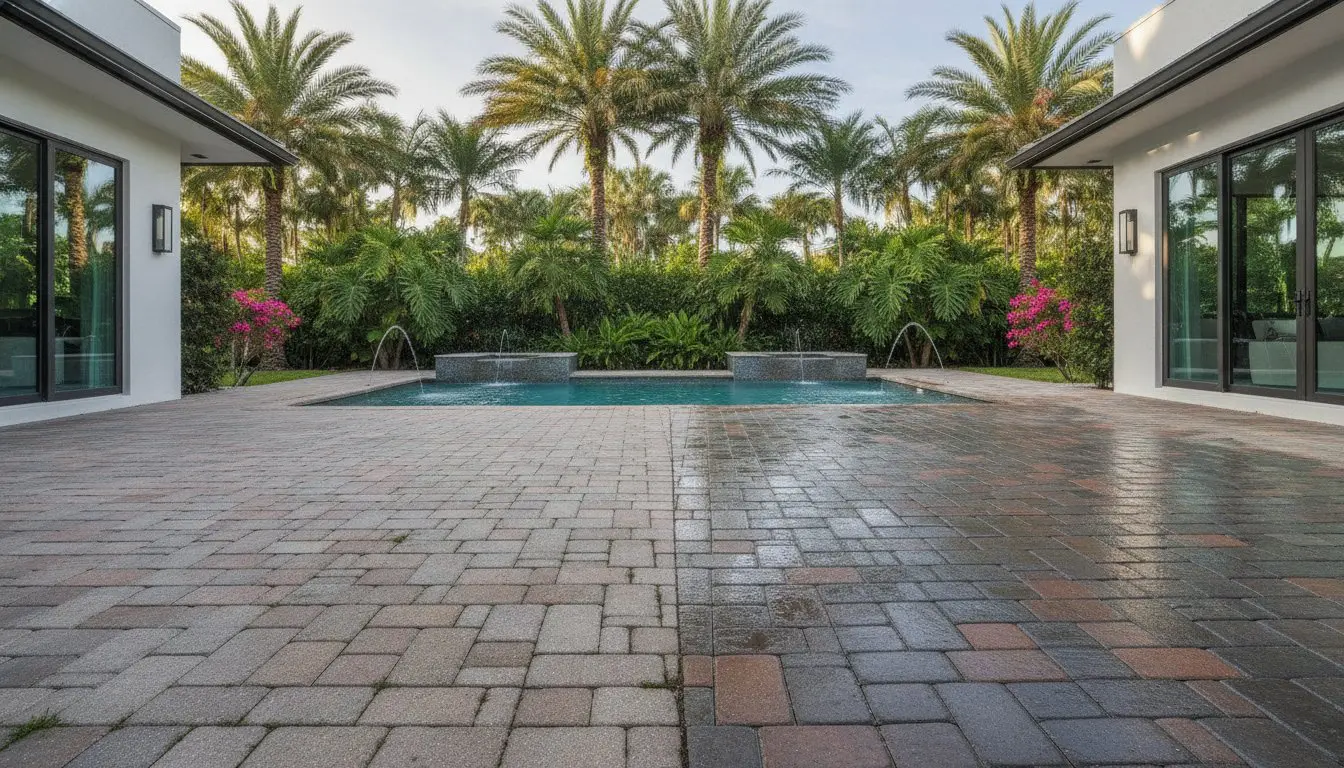
If you think your driveway’s faded color is just a natural part of aging in the Sunshine State, you’re actually watching your property’s value wash away with every tropical storm. Most homeowners understand that the intense UV exposure and heavy humidity in Florida are brutal on outdoor surfaces. You’ve likely seen mold creeping into shaded corners or noticed the sand between your stones disappearing after a heavy downpour. One of the most frequent questions we receive from local property owners is exactly how often to seal pavers in Florida to stop this cycle of deterioration.
It’s frustrating to see a beautiful patio lose its luster, but maintaining that “just installed” look is simpler than you might think. This 2026 maintenance guide reveals the ideal sealing frequency to protect your investment against erosion and weed growth. We’ll preview the specific factors that dictate your schedule, from pool deck exposure to high-traffic driveway wear. By following a professional maintenance plan, you can ensure your outdoor surfaces remain durable, vibrant, and easy to clean for years to come.
Key Takeaways
- Discover exactly how often to seal pavers in florida to maintain your property’s value and prevent costly long-term damage.
- Identify the critical warning signs, like color fading and water absorption, that signal your surfaces are losing their protective barrier.
- Learn why high-traffic areas like driveways and pool decks have different maintenance schedules than simple garden paths.
- Explore the differences between professional-grade sealants and DIY options to avoid common issues like peeling or cloudiness.
- Understand the importance of deep cleaning and proper sand replacement before any sealer is applied to ensure a lasting finish.
The Florida Standard: How Often to Seal Pavers for Maximum Protection
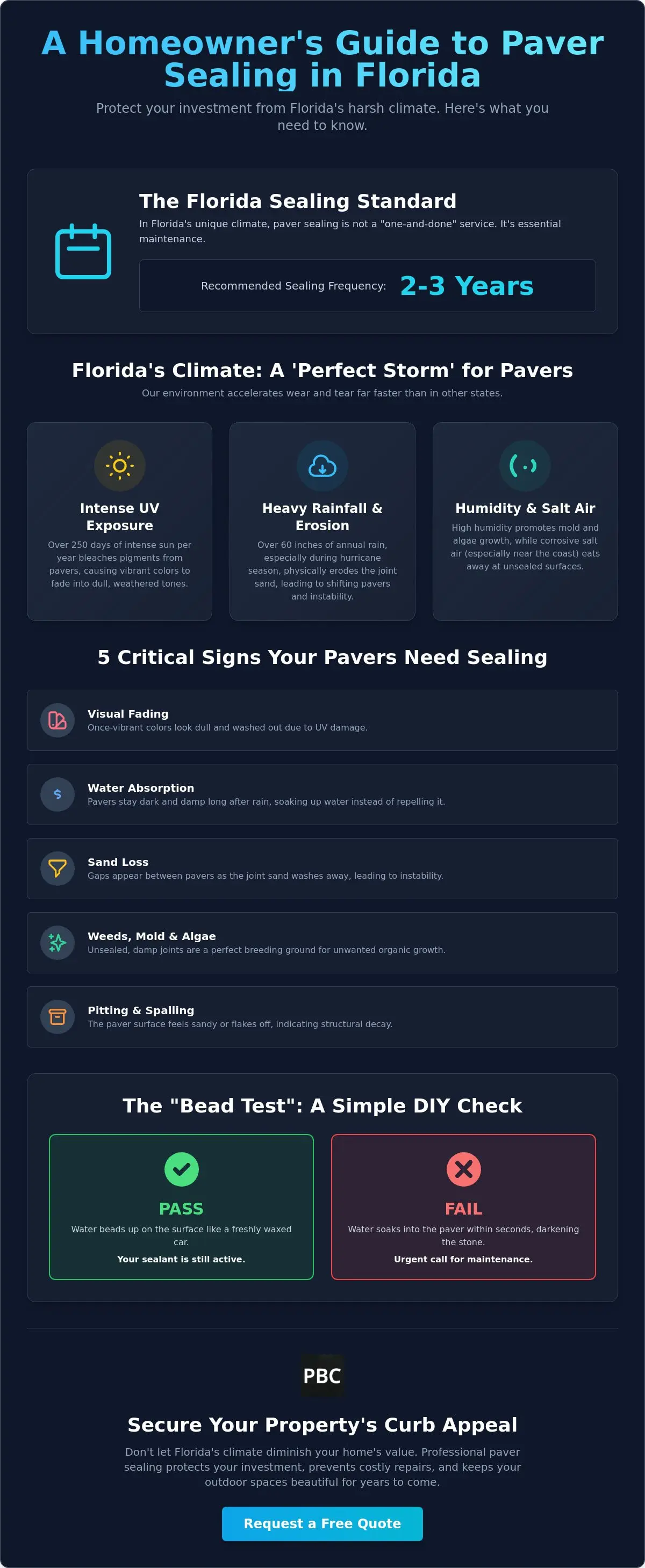
In the professional maintenance industry, we often say that “Florida years” are like “dog years” for outdoor surfaces. While a homeowner in a cooler, drier climate might wait five or six years between maintenance cycles, the local standard for how often to seal pavers in florida is typically every 2 to 3 years. This timeframe is essential to combat our unique combination of high humidity and intense environmental pressure. Think of paver sealing as a sacrificial barrier; it’s a protective layer designed to absorb the damage from the elements so the stone’s structural integrity remains untouched.
Before you can protect your property, it helps to understand the materials involved. What are pavers? In short, they are individual flooring units made from materials like concrete, brick, or natural stone that are fitted together to create flexible, durable surfaces. Without a high-quality sealer, these porous materials act like sponges, soaking up water, oil, and organic growth that can lead to permanent staining or cracking.
To better understand the timing of this essential service, watch this helpful video regarding local expectations:
Why Florida Weather is the ‘Perfect Storm’ for Pavers
Palm Beach County homeowners face environmental factors that are significantly more aggressive than those in northern states. We experience over 250 days of intense sunshine annually, and the UV radiation here is strong enough to bleach the pigments right out of your concrete stones. This constant sun exposure also accelerates the breakdown of inferior sealants, which is why determining how often to seal pavers in florida depends largely on your home’s direct sun exposure. Additionally, our region sees over 60 inches of annual rainfall. During hurricane season, heavy downpours physically erode the sand between your pavers, causing them to shift and become uneven. For those living near Boca Raton or Juno Beach, salt air acts as a hidden corrosive factor that can eat away at unsealed surfaces even faster.
The Role of Joint Sand in Your Sealing Schedule
Sealing isn’t just about making the surface look shiny; its most critical job is locking the joint sand in place. When we perform paver sealing, the product penetrates the sand and hardens it, creating a “sand joint” that resists erosion. Unsealed sand is a primary breeding ground for weeds and ant colonies, which can quickly undermine the stability of your entire driveway or patio. You can perform a simple “Sand Test” to check your protection: if you can easily sweep sand out of the joints with a finger or see it washing away during a light rain, your sealer has failed. Maintaining that sand bond every 2 to 3 years prevents the costly shifting that leads to tripping hazards and expensive repairs.
- Visual Fading: Florida’s sun is relentless. If your once-vibrant terracotta or charcoal tones now look like dull, weathered grey, the UV inhibitors in your previous sealer have likely evaporated.
- Water Absorption: This is a critical warning. Healthy, sealed pavers shed water. When pavers stay dark or damp hours after a rainstorm, it means the stone is soaking up moisture rather than repelling it.
- Sand Loss: Look for deep, unsightly gaps between the stones. Without the hardening effect of a quality sealer, the joint sand simply washes away during our heavy summer downpours.
- Biological Growth: Green algae, black mold, and stubborn weeds thrive in unsealed joints. Once these organisms take root, they can actually push pavers apart and cause shifting.
- Pitting and Spalling: If the surface of your pavers feels sandy under your shoes or shows small flakes popping off, the structural integrity of the stone is beginning to fail.
The ‘Bead Test’ for Paver Sealant
You don’t need specialized equipment to check your sealer’s health. Perform a simple “Bead Test” by pouring a small cup of water onto a dry, clean section of your pavers. If the water beads up like it’s on a freshly waxed car, your protection is still active. However, if the water vanishes into the stone within seconds, it’s an urgent call for maintenance. A failed bead test means your pavers are currently acting like a sponge for oils, tannins, and moisture.
Identifying Color Loss vs. Surface Dirt
Homeowners often mistake accumulated grime for permanent fading. Professional pressure cleaning is the only way to reveal the true condition of your stone. This process removes organic staining and surface dirt, allowing us to see if you’re dealing with a temporary mess or permanent UV bleaching. It’s vital to remember that you should never seal over dirty pavers, as this traps stains and debris under the new coating forever. If you’re concerned about the current state of your outdoor living space, you can request a professional inspection to determine if a full restoration is necessary.
Context Matters: Pool Decks vs. Driveways vs. Patios
While the general rule of thumb is every two to three years, the specific way you use your outdoor spaces changes the math for how often to seal pavers in florida. A decorative walkway in the front yard simply doesn’t face the same stress as a high-traffic driveway or a splash-prone pool deck. Understanding these differences helps you plan your maintenance budget and protect your property’s curb appeal before damage becomes permanent.
Pool Deck Challenges in Palm Beach County
Driveways and High-Traffic Wear Patterns
Your driveway is the workhorse of your property. It faces “tire scrub,” which occurs when heavy vehicles turn their wheels while stationary, and “hot tire pick-up,” where heat from the road causes tires to bond with and pull up low-quality sealers. Mechanical friction from heavy vehicles physically grinds down the sealer’s surface much faster than simple foot traffic. This is why the “turning point” of your driveway often shows signs of wear first. To combat this, we utilize high-solids sealers that provide a thicker, more durable shield against oil drips and transmission fluid stains. Without this protection, these fluids can penetrate deep into the stone, leaving permanent marks that even professional pressure washing might not fully remove.
Shaded Patios and Mold Growth
Patios and walkways located in heavy shade or under dense tropical foliage present their own set of problems. These areas stay damp longer after our frequent afternoon rains, creating a perfect incubator for mold and algae. In these cases, how often to seal pavers in florida might be dictated more by biological growth than by UV wear. Sealing these shaded stones helps close the pores where organic matter takes root, making it much easier for you to keep the area clean with a simple garden hose between professional service visits.
Pro-Grade vs. DIY: How Product Choice Affects Frequency
The chemistry of the product you choose is the single biggest factor in determining how often to seal pavers in florida. Most big-box retail stores sell low-solids sealers that are easy to apply but lack the concentration of protective resins found in commercial-grade alternatives. These DIY products often evaporate or wear away within six to twelve months, leaving your stones vulnerable to the elements once again. In contrast, professional-grade sealers contain a higher percentage of “solids,” the active ingredients that remain on the surface and within the sand joints to provide a durable, multi-year shield.
Choosing between water-based and solvent-based sealers also impacts your maintenance schedule. Solvent-based sealers are known for providing that deep “wet look” finish, but they are highly sensitive to Florida’s humidity. If applied incorrectly, they can trap moisture underneath the coating, creating a permanent “White Cloud” or blushing effect that ruins the aesthetic. Modern, high-solids water-based sealers are often a superior choice for our climate because they are breathable. They allow internal moisture to escape while still repelling external water, which is a key reason a professional application can reliably last three years.
The Danger of Over-Sealing Your Pavers
While it is tempting to apply a fresh coat every year to keep things looking new, over-sealing is a common and costly mistake. Applying too much product too frequently creates a thick, plastic-like buildup. This layer eventually loses its bond with the stone and begins to peel or flake off in large patches. Stripping away failed, built-up sealer is a labor-intensive process that is significantly more expensive than a standard maintenance visit. At Pressure Pros of Palm Beach, we always evaluate the thickness of existing layers before suggesting a new application to protect your long-term investment.
Why Professional Preparation is 90% of the Job
A sealer is only as good as the surface it bonds to. Professional preparation begins with ensuring no contaminants from other parts of your home can interfere with the process. We often recommend a soft wash roof cleaning before addressing the pavers to prevent mold spores or chemical runoff from the roof from settling into your freshly cleaned stones. Following this, we use commercial-grade pressure washing equipment to hit the “reset button” on your pavers, removing years of deep-seated grime and old sand. Finally, we respect the necessary drying times. Applying sealer to even slightly damp pavers is the fastest way to ensure a total product failure. If you want to avoid the pitfalls of DIY mistakes, you can request a professional inspection to see which product is right for your property.
Pressure Pros of Palm Beach understands that your home is your most significant asset. We’ve spent years serving homeowners in Wellington, Royal Palm Beach, and West Palm Beach, building a reputation for reliability and precision. Our team doesn’t just apply a coating; we follow a rigorous multi-step process designed to maximize the lifespan of your hardscape. This includes a restorative deep cleaning, the application of specialized joint sand, and a final layer of premium, commercial-grade sealer. By focusing on these details, we provide a solution that addresses the core question of how often to seal pavers in florida by extending the protection window as long as possible.
We often suggest bundling your maintenance to ensure the best results. For example, scheduling a roof cleaning alongside your paver service prevents organic debris and cleaning chemicals from washing down onto your newly sealed driveway. This holistic approach protects your entire home exterior from the top down. Our company maintains strict legal compliance and carries all necessary licensing, so you can have total confidence in the professional results we deliver.
The Pressure Pros Guarantee of Quality
Our mission is centered on property value and long-term asset protection. We don’t just “clean” surfaces; we restore them to their peak condition. For homeowners looking for a total exterior refresh, our painting services can be integrated into your maintenance plan to complement your pristine pavers. We’ve tailored our techniques to handle the specific soil types and high-alkalinity conditions unique to Palm Beach County, ensuring our sealants bond perfectly every time.
Schedule Your Paver Inspection Today
Determining how often to seal pavers in florida shouldn’t involve guesswork. Every property is different, and factors like drainage, shade, and traffic patterns play a massive role in your specific needs. We offer professional evaluations for homeowners in Loxahatchee, Delray Beach, and the surrounding areas to provide an accurate assessment of your stone’s health. Don’t wait for permanent pitting or sand loss to occur. Request a professional paver sealing quote today and let our experienced team protect your outdoor living space for the years ahead.
Secure Your Property’s Curb Appeal for the Long Term
Maintaining your outdoor surfaces is more than just a cosmetic choice; it’s a vital investment protection strategy. We have explored how environmental factors like intense UV radiation and heavy rainfall dictate how often to seal pavers in florida, emphasizing that a 2 to 3-year cycle is the standard for most Palm Beach County homes. By identifying early signs of wear like sand loss or water absorption and choosing high-solids professional sealants over big-box alternatives, you prevent the need for costly structural restoration later. For property owners who manage diverse international portfolios, you can learn more about Paris Fudosan Gestion to see how professional management safeguards high-end real estate in Paris.
Pressure Pros of Palm Beach is fully licensed and insured, bringing years of local exterior maintenance experience to every project. We specialize in South Florida’s high-humidity climate, ensuring your surfaces are prepared and protected with the precision they deserve. Our team is dedicated to delivering tangible results that enhance your property’s value and keep your outdoor spaces looking pristine. We understand the specific challenges of local soil and weather patterns, providing a level of service that DIY methods simply cannot match.
Ready to restore your driveway or pool deck? Schedule your professional paver inspection and request a quote today to ensure your hardscape remains a beautiful, durable asset for years to come. We look forward to helping you protect your home and maintain your curb appeal.
Frequently Asked Questions
Is it worth sealing pavers in Florida?
Yes, sealing is a critical investment protection measure for your property. It acts as a sacrificial barrier against our intense UV rays and prevents heavy summer rains from washing away your joint sand. Without this protection, you’ll likely face costly repairs from shifting stones and permanent staining from mold or oil.
What is the best time of year to seal pavers in Florida?
The dry season, which typically runs from late October through April, is the ideal time for this service. Lower humidity levels and more predictable weather patterns allow the product to bond and cure correctly. While we can seal year-round, avoiding the daily afternoon thunderstorms of the summer ensures the best long-term results.
How long does paver sealer take to dry in Florida humidity?
Most sealants are dry to the touch within 4 to 6 hours, but full curing requires more time. You can typically walk on the surface after 24 hours. However, we recommend keeping vehicles off the driveway for at least 48 hours to prevent “hot tire pick-up” or indentations in the fresh bond.
Can you seal pavers too often?
Yes, applying sealer every year can lead to a thick, plastic-like buildup that eventually peels or turns a milky white color. This happens because the new layers can’t breathe or bond to the stone. Following the professional recommendation for how often to seal pavers in florida, which is every 2 to 3 years, prevents this expensive issue.
Do I need to pressure wash my pavers before sealing?
Professional pressure cleaning is a mandatory step in the restoration process. If you apply sealer over dirt, mold, or old stains, you’ll trap those contaminants under a clear coat forever. A deep clean ensures the surface is porous and ready to accept the new protective layer for maximum longevity.
How much does it cost to seal pavers in Palm Beach County?
The total investment depends on the square footage of your project and the current state of your stone. If your pavers have never been sealed or require the stripping of old, failed product, the labor and material needs will differ. We provide detailed, written estimates to ensure you understand the value and scope of your specific maintenance plan.
Will sealing my pavers make them slippery when wet?
Standard high-gloss sealers can be slippery, but we use professional non-slip additives to ensure your safety. These specialized resins add a subtle texture to the surface that provides traction without altering the look of your pavers. This is especially important for pool decks and high-traffic walkways near your home’s entrance.
How long should I wait to seal new pavers in Florida?
It’s generally best to wait 60 to 90 days after installation before applying your first coat of sealer. This curing period allows “efflorescence,” a natural white salt deposit, to work its way out of the concrete. Sealing too early can trap these white clouds under the finish, requiring a difficult chemical stripping process to fix.
Recent Comments