Why Are My Roof Shingles Turning Black? Causes and Solutions for Florida Homes
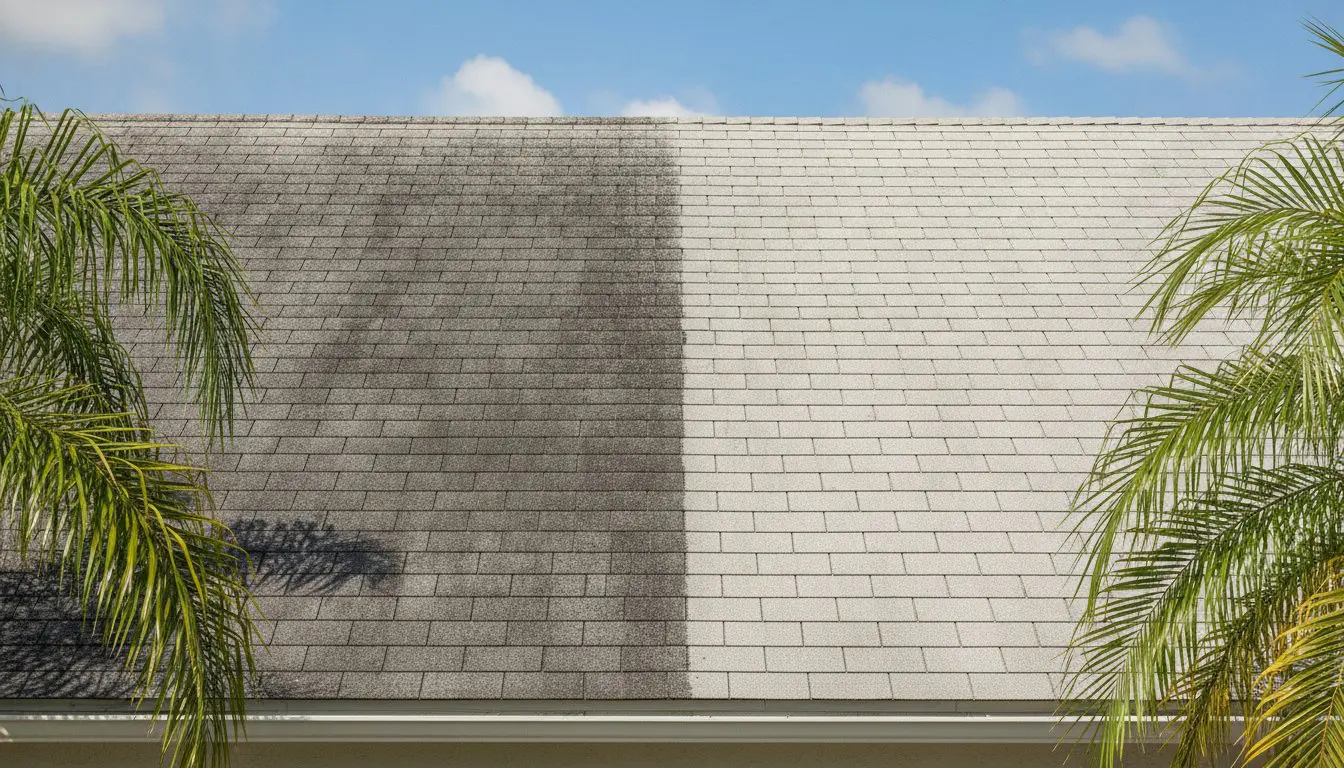
What if those ugly black stains on your roof aren’t actually dirt or mold, but a living organism slowly eating away at your shingles? If you’ve spent your weekend staring at your gutters and wondering why are my roof shingles turning black, you aren’t alone. Most Florida homeowners worry that these dark streaks mean their roof is rotting or needs an expensive replacement. It’s frustrating to see your curb appeal disappear under a layer of grime, especially when you’ve invested so much into maintaining your property’s value and protection.
The good news is that your roof likely doesn’t need a total overhaul. You can discover the real cause of those unsightly streaks and how to safely remove them without damaging your shingles. This guide helps you identify the black streaks correctly, explains why high-pressure cleaning is a common mistake, and details how professional soft washing can restore your home. We’ll also cover the best ways to prevent the growth from returning, ensuring your roof stays clean and functional for years to come.
Key Takeaways
- Identify the specific type of algae responsible for dark roof stains and why it develops a protective black shell to survive the Florida sun.
- Understand why are my roof shingles turning black faster than in previous decades due to changes in how modern shingles are manufactured.
- Recognize the hidden costs of ignoring black streaks, including increased attic temperatures and potential damage to your home’s energy efficiency.
- Learn why professional soft washing is the only method recommended by manufacturers to safely restore your roof without causing permanent damage.
- Discover effective prevention strategies, such as installing metal strips and managing nearby foliage, to keep your property looking its best for years.
The Science of the Streak: What Is Gloeocapsa Magma?
Many Florida homeowners look up and worry that their roof is rotting or covered in soot from nearby traffic. The reality is often biological. If you’ve been asking why are my roof shingles turning black, the answer is usually a hardy type of algae called Gloeocapsa magma. This organism thrives in the high humidity and intense heat of our local climate. While it starts as small, invisible spores, it quickly grows into the unsightly dark streaks that ruin your home’s curb appeal.
You’ll often notice these stains appearing first on the north side of your house or under heavy tree cover. These areas stay damp longer after a morning rain or heavy dew, providing the perfect breeding ground. To survive the punishing Florida sun, this algae develops a dark, pigment-rich outer coating. This black sheath acts like a biological sunscreen, protecting the organism from UV rays while it feeds on your shingles.
To better understand how these organisms take over your roof, watch this helpful video:
Algae vs. Mold: Knowing the Difference
Many people call these streaks “black mold,” but that’s a common misconception. Mold is a fungus that usually requires organic matter like wood or paper to grow. In contrast, roof algae is a cyanobacteria that survives on moisture and minerals. Understanding the biological cause of why are my roof shingles turning black helps you choose the right treatment. You can tell the difference by looking at the pattern. Mold often looks fuzzy or appears in splotches, while algae creates long, thin streaks that follow the flow of water. Gloeocapsa magma is specifically a bacteria that thrives on moisture and minerals found in modern roofing materials.
Why the Streaks Look Like Gravity-Defying Stains
The reason these stains look like they’re “bleeding” down your roof is due to how moisture moves. Every time it rains, water carries the algae spores down the slope. As the water evaporates, the algae stays behind and continues to grow, creating vertical lines that can eventually cover the entire roof surface. These spores are incredibly lightweight. Wind, squirrels, and birds easily carry them from one house to another. This is why you’ll often see several homes on the same street developing the same dark patterns at the same time. Investing in professional roof cleaning is the most effective way to stop this cycle and protect your property’s value.
Why Modern Roof Shingles Are Turning Black Faster
Homeowners often wonder why their parents’ roofs didn’t seem to have the same staining issues 30 or 40 years ago. It isn’t just your imagination. There has been a significant shift in how asphalt shingles are manufactured, which directly impacts how they age in our tropical climate. If you’re asking why are my roof shingles turning black so soon after a new installation, the answer is found in the recipe used to make modern roofing materials.
The Limestone Connection
In the past, asphalt shingles were made with much higher concentrations of petroleum-based asphalt. As oil prices rose, manufacturers began using limestone as a primary filler to add weight, durability, and fire resistance to the shingles. While limestone is an excellent building material, it’s also the favorite food source for Gloeocapsa magma. This algae thrives by consuming the calcium carbonate found in the limestone filler.
As the algae grows, it literally eats away at the surface of your shingles. This biological process doesn’t just look bad; it can actually thin the shingles over time and lead to premature granule loss. To help homeowners protect their investment, the Asphalt Roofing Manufacturers Association provides clear guidelines on roof cleaning and prevention methods. Following these industry-approved standards ensures you remove the growth without damaging the integrity of the roof.
Palm Beach County: The Perfect Algae Environment
Our local environment provides the ideal conditions for these organisms to flourish. Palm Beach County experiences high dew points and tropical humidity that keep roofs damp for hours every morning. In communities like Wellington or Boca Raton, where lush landscaping and mature trees are common, the problem is often worse. Overhanging branches create shade and trap moisture, preventing the sun from drying out the shingles.
Even coastal properties aren’t immune. Many people assume salt air might kill the algae, but this specific strain is incredibly hardy and continues to spread regardless of the proximity to the ocean. The combination of heat, moisture, and a steady supply of limestone filler makes growth nearly inevitable. This is why a professional roof cleaning is now considered a standard part of Florida home maintenance rather than a luxury. If you’ve started to see dark streaks forming, you can schedule a professional assessment to see how we can restore your home’s curb appeal and protect your shingles.
Is the Black Algae Damaging Your Roof?
Many homeowners assume those dark streaks are just a visual nuisance. They prioritize other home repairs because they think the stains can wait. However, understanding why are my roof shingles turning black is about more than just aesthetics. It’s about protecting the structural integrity of your home. Left untreated, these organisms cause physical damage that shortens the lifespan of your roofing system. What looks like a simple stain is actually a colony of bacteria slowly degrading your property’s value.
Heat Absorption and Energy Bills
In Florida, our sun is relentless. A clean roof is designed to reflect a portion of the sun’s energy. When algae covers your shingles in a dark, protective sheath, the roof begins to act like a heat sponge. A black roof absorbs significantly more thermal energy than a clean one. This excess heat transfers directly into your attic space, forcing your AC system to work much harder to keep your living areas cool.
This leads to higher monthly utility bills and puts unnecessary strain on your HVAC components. Maintaining your home’s exterior is an investment protection measure that pays for itself in energy savings. For example, regular gutter cleaning helps by removing the standing moisture and organic debris that algae needs to survive. When water can’t drain properly, it creates a damp microclimate that allows the black streaks to spread even faster across your shingles.
Granule Loss and Shingle Integrity
Asphalt shingles rely on a layer of crushed stone granules to protect the underlying asphalt from UV degradation. Gloeocapsa magma uses small, root-like structures to anchor itself to these granules. As the algae grows and expands, it physically loosens the bond between the granules and the shingle mat. You might notice “bald spots” appearing on your roof or find excessive amounts of granules sitting in your gutters after a storm.
Once these granules wash away, the sun’s UV rays quickly dry out the exposed asphalt. This leads to cracking, curling, and eventually, leaks. It’s also a matter of legal and financial protection. Many shingle manufacturers include maintenance clauses in their warranties. They may void coverage if they determine that preventable algae growth caused the premature failure of the roof. Professional roof cleaning removes the threat before it becomes a permanent problem, ensuring you get the full 30 to 50 year lifespan out of your architectural shingles.
Soft Wash Roof Cleaning vs. High-Pressure Blasting
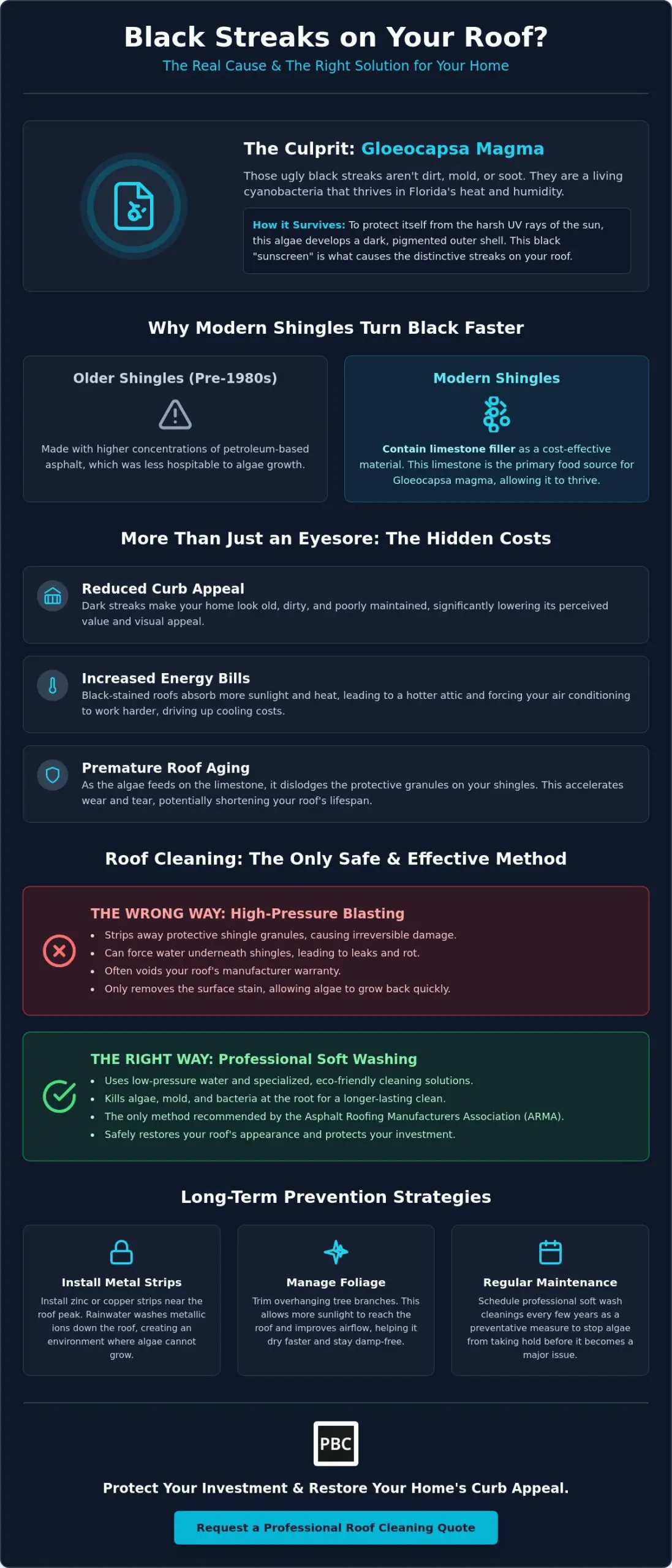
Once you understand why are my roof shingles turning black, the natural urge is to grab a pressure washer and blast the stains away. However, standard pressure washing is one of the most common mistakes a Florida homeowner can make. High-pressure water can strip away the protective granules you need to keep your roof functional. Instead, the Asphalt Roofing Manufacturers Association (ARMA) recommends a process called soft washing as the only safe way to clean asphalt shingles.
Soft washing relies on specialized cleaning solutions rather than brute force. While a standard pressure washer operates at 3,000 PSI or higher, a soft wash system uses a gentle 60 to 100 PSI. This is roughly the same pressure as a garden hose. The cleaning solution does the heavy lifting by killing the algae at the root. This ensures the stains don’t just disappear from the surface but are actually eradicated so they don’t grow back immediately.
The Risks of High-Pressure Cleaning
Using high pressure on a roof can blast away decades of shingle life in just a few minutes. When you’re dealing with the question of why are my roof shingles turning black, it’s tempting to think more pressure equals a better clean. In reality, this aggressive “blasting” often leads to shingle stripping, where the water force removes the stone granules and exposes the underlying asphalt mat. Even worse, water alone only rinses the surface. It leaves the biological roots of the algae deep within the shingle. You can read more about these roof pressure washing risks to see why many manufacturers will void your warranty if they find evidence of high-pressure cleaning.
The Benefits of Professional Soft Washing
Choosing a professional service offers peace of mind that DIY methods simply can’t match. Professional pressure cleaning companies near me use eco-friendly, biodegradable cleaners that provide a much longer-lasting result than water alone. These teams come equipped with the proper safety harnesses and insurance to handle steep roof pitches safely. Soft washing is a methodical process that preserves the integrity of your home’s exterior while delivering a like-new appearance.
- Preserves the manufacturer’s warranty by following ARMA guidelines.
- Kills algae, moss, and lichen at the source for a deeper clean.
- Avoids the risk of “granule blasting” that leads to premature roof failure.
- Improves curb appeal without the physical risk of walking on a wet, slippery roof.
If you’re ready to restore your home’s appearance safely, you can request a professional soft wash quote to protect your investment today.
Preventing Black Streaks on Your Florida Roof
Preventing the return of dark stains requires a proactive strategy. If you’ve recently solved the mystery of why are my roof shingles turning black, you know how much a clean roof improves your home’s appearance. One effective long-term solution is the installation of zinc or copper strips at the roof ridge. These metal strips release ions during rainstorms that act as a natural biocide. While this method is popular, homeowners must remember that these strips require their own maintenance. If they become coated in dirt or leaf litter, the metal cannot react with the water, and the protection fails.
Another vital part of prevention is managing the moisture levels on your roof surface. Algae needs a damp environment to anchor its spores and begin feeding on the limestone filler. By reducing the time your shingles stay wet, you make it much harder for the organism to survive. This involves a combination of smart landscaping and keeping your drainage systems functioning perfectly throughout the year.
Landscaping and Airflow
Algae thrives in the shadows. When trees hang over your home, they create a damp microclimate that stays humid long after the sun comes out. We recommend that homeowners in areas like Wellington or Boca Raton maintain at least a 10-foot clearance between all foliage and the roofline. This simple step increases sunlight exposure and improves airflow across the shingles. This helps the roof dry out quickly after a morning dew or a typical Florida afternoon thunderstorm.
Reducing the organic load around your entire property is also helpful. Spores are easily carried by the wind from one surface to another. Regular maintenance like expert deck cleaning helps lower the overall spore count on your lot. When your surrounding outdoor spaces are clean, it makes it harder for algae to migrate back to your roof and start the staining process over again.
Scheduling Professional Maintenance
Living in South Florida means dealing with extreme humidity nearly year-round. Because of our unique climate, we suggest a professional roof inspection every 2 to 3 years. A light, preventative soft wash treatment can kill microscopic spores before they have the chance to form visible colonies. This is much more cost-effective than waiting for the shingles to turn completely black again. Proactive care is always an investment protection measure that saves money on premature replacements.
Don’t overlook your drainage system either. Clear gutters are essential for roof health. When gutters are backed up with leaves and debris, they hold moisture against the bottom edge of your shingles. This dampness is often where new algae growth starts before climbing up the rest of the roof. Taking these steps before the summer rainy season begins will keep your home protected. If you want to ensure your property remains in top condition, you can request a quote for a maintenance check. Understanding why are my roof shingles turning black is the first step, but consistent care is what keeps your shingles looking like new.
Restore Your Home’s Curb Appeal and Protection
Your roof is one of the most significant investments in your property. While it’s stressful to see dark streaks spreading across your home, you now have the knowledge to address the problem correctly. These stains are a living organism feeding on your shingles, but they don’t have to mean a roof replacement. By choosing professional soft washing, you can safely remove the growth and protect your manufacturer warranty. Understanding why are my roof shingles turning black allows you to take control of your home’s maintenance and prevent future damage.
Pressure Pros of Palm beach brings over 10 years of local experience to every job. We are fully licensed and insured in Palm Beach County and use specialized soft wash equipment to deliver precise, high-quality results. Our team focuses on protecting your assets while restoring the beauty of your neighborhood. Take the next step in preserving your home’s value and energy efficiency today. Get a Free Roof Cleaning Estimate from Pressure Pros of Palm beach and enjoy a cleaner, safer home for years to come.
Frequently Asked Questions
Is the black stuff on my roof dangerous to my health?
The black streaks on your roof are usually Gloeocapsa magma, which is a hardy cyanobacteria rather than a toxic mold. While it isn’t directly dangerous to your health like indoor black mold, it can impact your home’s environment. Excessive heat absorption from a dark roof leads to higher moisture levels in the attic space. This trapped humidity can eventually encourage the growth of other fungi inside your home’s structure.
Can I use bleach to clean my own roof shingles?
Professionals use a specific sodium hypochlorite solution, but DIY application is risky. If you don’t use the correct dilution, you can kill your landscaping or corrode metal gutters. Walking on a wet, soapy roof is also extremely dangerous for anyone without professional training. It’s best to hire a local service that has the right safety equipment and understands the exact chemical ratios needed to kill the algae safely.
How much does professional soft wash roof cleaning cost in Florida?
The cost for roof cleaning varies based on the total square footage and the pitch of your home. Factors like the severity of the algae growth and the accessibility of the roofline also play a significant role. Every property is unique, so we avoid providing generic estimates that might be inaccurate. We recommend getting a personalized inspection to ensure you receive a fair quote for the specific needs of your residential building.
Will the black streaks come back after a professional cleaning?
Black streaks will eventually return because Florida’s tropical humidity is a constant factor. However, professional soft washing kills the algae at the root, which keeps the roof clean much longer than standard pressure washing. If you’re asking why are my roof shingles turning black again within a year, it might be due to overhanging trees or poor drainage. Regular maintenance every two to three years typically keeps the growth under control.
Does homeowners insurance cover roof cleaning for black algae?
Homeowners insurance typically doesn’t cover roof cleaning. Insurance providers view algae growth as a maintenance issue rather than a sudden peril like wind or hail damage. In fact, some insurance companies in Florida may threaten to cancel your policy if they see significant black streaks during a routine inspection. They consider the growth a sign of neglect that could lead to premature roof failure and future claims.
Can I just wait for a heavy rain to wash the black streaks away?
Waiting for rain will actually make the problem worse. Rainwater carries the algae spores down the slope of your roof, which is why are my roof shingles turning black in long vertical patterns. The water provides the moisture the bacteria needs to grow and spread. Because the algae is firmly anchored to the granules, a standard rainstorm isn’t strong enough to remove the protective black sheath the organism develops.
Recent Comments