
Professional Paver Sealing: A Homeowner’s 2026 Buying Guide
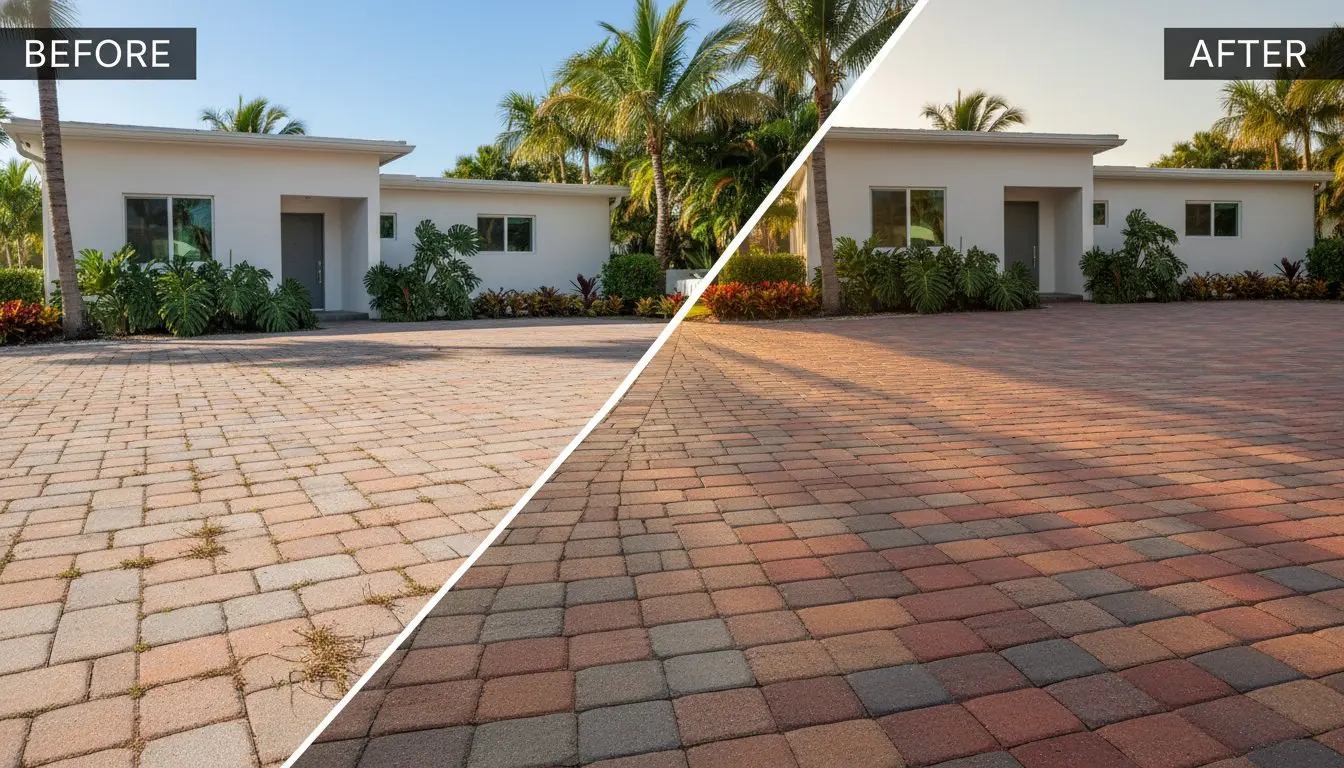
The intense Florida sun can strip the color from your driveway in less than three seasons, leaving your expensive hardscaping looking aged and neglected. If you’re seeing weeds pushing through the joints or stubborn oil stains that won’t budge, you aren’t alone. Most Palm Beach County homeowners realize that professional paver sealing is a necessity to protect their investment from our unique climate. We understand how disappointing it is to watch your property’s vibrant curb appeal fade into a dull, chalky gray under the relentless UV rays and heavy humidity.
In this 2026 buying guide, you’ll learn how to choose the right breathable sealant to prevent moisture failure and keep your surfaces looking vibrant for the long term. We’ll preview the essential differences between film-forming and penetrating products so you can make an informed decision for your home. By the end, you’ll know exactly how to find a local expert who can provide the precision and durability your property deserves.
Key Takeaways
- Learn how to defend your driveway from intense Florida UV rays and prevent weeds from taking over your paver joints.
- Understand the difference between penetrating and film-forming sealers so you can choose the right finish for your property’s aesthetic.
- Discover why professional paver sealing prevents common DIY disasters like trapped moisture and the unattractive white haze that ruins curb appeal.
- Get a practical checklist for vetting local contractors, including essential questions about licensing and the specific sealer brands they use.
- See how a specialized wash, sand, and seal process ensures long-term protection and a “like-new” appearance for your home.
Why Paver Sealing is Essential for South Florida Properties
Your outdoor living space is a significant financial investment. In South Florida, that investment faces a constant battle against the elements. Professional paver sealing isn’t just about making things look pretty; it’s a structural necessity. Without a protective barrier, the intense 2026 Florida UV rays and heavy tropical rains will quickly degrade the surface of your driveway, pool deck, or patio.
A high-quality paving stone is naturally porous. This means it acts like a sponge, soaking up water, motor oil, and organic debris. When left unsealed, these materials settle deep into the substrate, leading to permanent staining and structural shifting. Regular maintenance prevents the rapid growth of weeds, mold, and algae that often take over unmanaged joints. It also stabilizes the joint sand, which stops pavers from shifting or eroding during heavy summer downpours.
To better understand this concept, watch this helpful video:
The Impact of Palm Beach Humidity and Salt Air
Living near the coast brings unique challenges that inland properties don’t face. Salt air is highly corrosive. It accelerates the degradation of unsealed porous concrete by breaking down the binders that hold the material together. Our local humidity levels also create a perfect breeding ground for mold and mildew to thrive in the gaps between your pavers. Sealants play a vital role in preventing water intrusion. When water gets underneath the surface, it can cause “heaving,” where the ground shifts and makes your walkway uneven. A professional application creates a waterproof shield that keeps the joint sand stabilized and prevents the erosion that leads to expensive tripping hazards.
Preserving Color and Texture Over Time
Sun bleaching is a major concern for South Florida homeowners. Unsealed pavers lose their rich pigment quickly, turning a vibrant red or deep tan into a washed-out gray. Paver sealing blocks UV rays to keep those colors looking “like-new” for years. There is a big difference between protection and restoration. Protection keeps new pavers in top shape, while restoration involves deep cleaning and sealing to bring life back to older, faded surfaces. Making this a priority is a key part of paver sealing palm beach county maintenance. It ensures your residential or commercial assets maintain their curb appeal and overall market value through every season.
Choosing Your Finish: Comparing Paver Sealer Types
Selecting the right product is just as vital as the application itself. In our coastal environment, breathability is a non-negotiable feature. If a sealer doesn’t allow moisture vapor to escape, it can lead to a cloudy, white failure known as blushing. This occurs when water gets trapped beneath the surface layer. Most homeowners choose between two primary categories: penetrating and film-forming sealers.
Penetrating sealers provide what many call the “Natural Look.” These products soak deep into the material to provide structural protection without changing the appearance of the stone. They’re excellent for those who want to keep the original matte texture while still blocking stains and water. Conversely, film-forming sealers create a physical barrier on the surface. This is how you achieve the popular “Wet Look.” Following CMHA paver sealing guidelines ensures that you select a product compatible with your specific stone type and climate needs.
Matte, Satin, or High-Gloss: Which is Right for You?
Your choice of finish should complement your home’s architectural style. Matte finishes are currently trending for modern Florida landscapes. They offer a clean, sophisticated look that doesn’t distract from the surrounding greenery. Satin finishes provide a subtle sheen, offering a middle ground for those who want a slight glow. High-gloss finishes are a bold choice, often used to make the colors in a driveway pop. However, gloss levels affect heat absorption. On a pool deck, a high-gloss finish can make the surface significantly hotter for bare feet compared to a matte or penetrating sealer.
Solving the “Slippery Surface” Concern
A common fear with paver sealing is that the surface will become dangerously slick, especially when wet. This “skating rink” effect usually happens during DIY projects where the wrong product is used or applied too thickly. Professionals solve this by using non-slip additives, often referred to as shark grip. These are finely ground polymer beads mixed into the sealer to create a microscopic texture. This texture provides essential traction for pool decks and walkways without ruining the aesthetic. If you’re worried about safety, consulting with a local professional can help you find the right balance of protection and grip.
Whether you choose a water-based or solvent-based option, the goal remains the same: long-term durability. Water-based sealers have become the industry standard in 2026 due to their low VOC levels and excellent breathability. Solvent-based sealers are still used for their deep color enhancement, but they require expert handling to avoid trapping moisture in high-humidity areas like Palm Beach County. Professional paver sealing ensures the right balance between a beautiful finish and a safe, breathable surface.
Professional Sealing vs. DIY: Avoiding Costly Mistakes
Many homeowners think they can handle paver sealing over a single weekend. While hardware stores sell the supplies, they don’t sell the experience required to manage South Florida’s environmental variables. DIY projects often overlook the technical precision needed for a lasting bond. Professional grade equipment and specialized knowledge are what separate a successful project from a total loss. Taking a shortcut on your driveway or pool deck can lead to expensive repairs that far outweigh the initial savings of a do-it-yourself approach.
The “White Haze” Disaster Explained
The most common DIY failure is the appearance of a cloudy, white film across the surface. This “white haze” is often the result of trapped moisture or efflorescence. Efflorescence is a natural salt deposit that rises to the surface of concrete. If you apply a sealer over these salts, they get locked in permanently. Sealing damp pavers is the top cause of this failure. In Palm Beach County, our high humidity means pavers rarely dry as fast as they look. Stripping a botched sealer job is a labor-intensive process that requires specialized chemicals and significant time, making it much more costly than doing the job right the first time.
Why Cleanliness is 90% of the Job
You can’t achieve a professional finish on a dirty surface. Thorough driveway cleaning is the essential first step to ensure the sealant actually sticks. Any oil, rust, or mold left behind will be “locked in” once the sealer is applied. We use professional-grade cleaners to ensure a pH-neutral surface. This step is critical because chemical bonding only happens when the surface is free of microscopic debris and biological growth. If the surface isn’t perfectly prepared, the sealer will peel or flake off within months.
Joint sand stabilization is another area where DIYers often struggle. Using too much sand creates a mess that prevents the sealer from reaching the paver. Using too little sand leaves the joints weak and prone to erosion. Professionals use industrial-grade sprayers to ensure an even, saturated coat that rollers simply can’t match. Rollers often pull up the sand or leave thick, uneven puddles that take days to dry. Investing in professional paver sealing protects your property from these avoidable and expensive errors while ensuring a uniform, high-quality result.
The Homeowner’s Buying Checklist for Paver Sealing
Hiring a professional for paver sealing requires more than just comparing price tags. To protect your property and your wallet, you must verify that any contractor you hire carries the proper licensing and insurance for Palm Beach County. This isn’t just a formality; it’s your primary defense against liability should an accident occur on your driveway or pool deck. Always ask for a current certificate of insurance and a copy of their local business tax receipt before signing a contract.
The specific products and methods used will determine how long your results last. You should ask the contractor which brand and type of sealer they intend to apply. In 2026, high-quality water-based sealers are the industry standard for their breathability and environmental safety. Additionally, confirm their cleaning process. A truly professional service will use a combination of high-pressure cleaning for the pavers and soft washing techniques where necessary to ensure the surface is free of organic growth without damaging the stone’s integrity. Finally, ask what their warranty actually covers. A reliable warranty should protect you against product failure, such as peeling or flaking, rather than making vague promises about color longevity.
Red Flags to Watch Out For
Price is a major indicator of the quality of work you can expect. If a contractor offers a “too good to be true” low price, they’re likely skipping essential steps. The most common shortcut is the “splash and dash” method, where workers skip the deep cleaning and joint sanding phases entirely. Joint stabilization is a critical part of the process. If a company doesn’t mention replacing the sand in your paver joints, your stones will remain loose and vulnerable to shifting. This lack of prep work leads to premature sealer failure and an increase in weed growth within months.
Timing Your Project for Florida Weather
In Wellington and Boca Raton, we have to watch the radar closely. Successful paver sealing requires a “Dry Window” of at least 24 hours before and after the application. The chemical curing process is sensitive to our local climate. For a perfect bond, the air temperature should ideally be between 60 and 90 degrees Fahrenheit. If it’s too hot, the sealer can flash-dry, preventing it from soaking into the stone. Once the application is complete, you must stay off the surface for at least 24 hours. For driveways, we recommend waiting a full 48 to 72 hours before driving a vehicle onto the surface to ensure the sealer is fully hardened. If you want to ensure your project is timed perfectly for the best results, request a professional estimate from Pressure Pros of Palm Beach to get started.
Pressure Pros of Palm Beach: Expert Sealing for Palm Beach County
At Pressure Pros of Palm Beach, we understand that your outdoor surfaces are more than just stone and sand. They represent a significant part of your property’s total value. Our team provides professional paver sealing services tailored specifically to the harsh conditions of South Florida. We focus on Wellington, Delray Beach, and Boca Raton, bringing years of local experience to every project we touch. We don’t just apply a coat of sealer; we follow a rigorous process designed to protect your assets for the long haul.
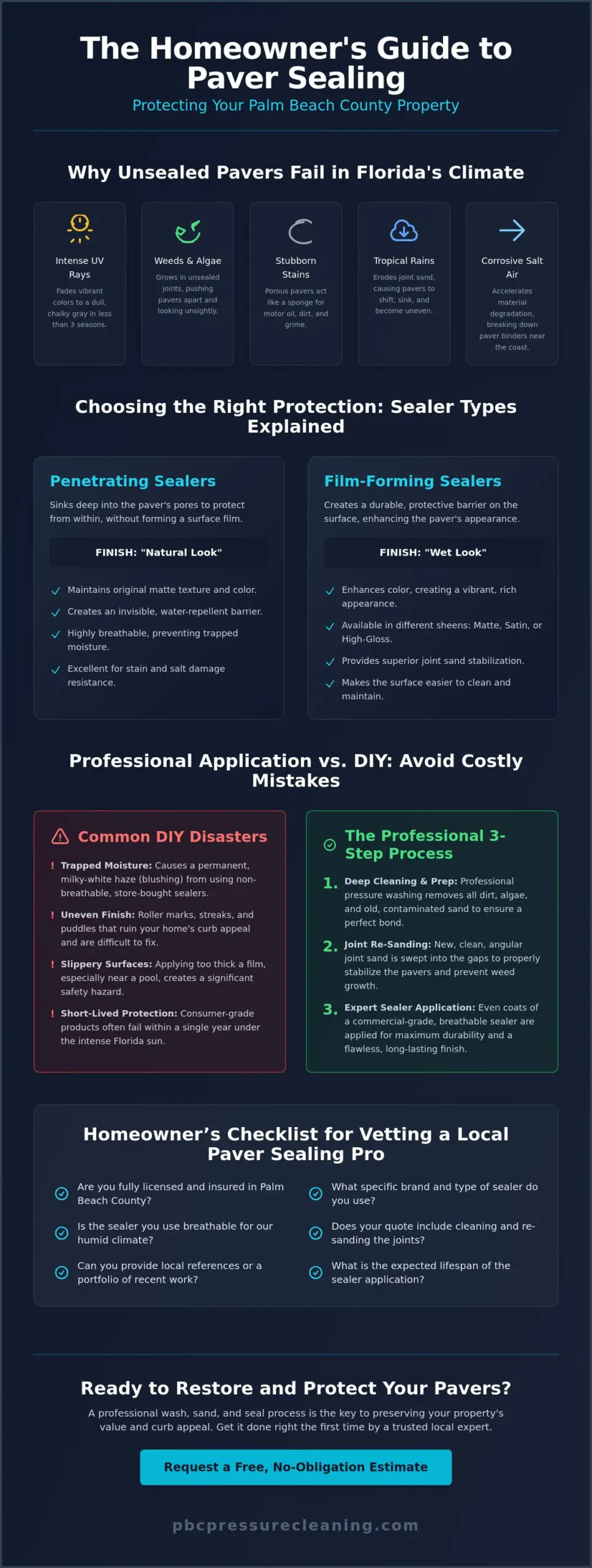
Our signature “Wash, Sand, Seal” three-step process ensures a flawless finish. First, we perform a deep pressure cleaning to remove every trace of mold, algae, and debris. Next, we carefully replace the joint sand to stabilize the pavers and prevent future erosion. Finally, we apply commercial-grade sealants that are chemically engineered to withstand the 2026 Florida UV standards. This methodical approach eliminates the guesswork and delivers a uniform look that stands up to our heavy tropical storms.
Many of our clients find that coordinating multiple maintenance tasks saves both time and money. If you’re planning a full exterior refresh, we provide strategic discounts when combining services. It’s often beneficial to schedule pressure washing before painting while our crew is already managing your hardscape restoration. This holistic approach ensures your entire property looks its best without the hassle of managing separate contractors.
Our Commitment to Quality and Asset Protection
We treat every driveway and pool deck like a long-term investment. Our commitment to precision means we never cut corners on preparation. The Pressure Pros of Palm Beach guarantee is simple: we provide results with no white haze and no peeling. By using the high-quality, breathable products discussed earlier in this guide, we ensure your pavers can breathe even in our high humidity. You get a durable, vibrant finish that protects the structural integrity of your home while maximizing your property’s curb appeal.
Get Your Free Estimate Today
Invest in Lasting Protection for Your Home
Maintaining your hardscape is about protecting your home’s long-term value and aesthetic appeal. By now, you understand how the right products and professional techniques prevent the rapid deterioration caused by Florida’s intense sun and heavy humidity. Choosing the correct finish and ensuring proper joint stabilization are the most important steps in keeping your outdoor surfaces functional and beautiful. Professional paver sealing is a strategic choice that saves you time and money by reducing the need for constant scrubbing and weed removal.
Choosing a local expert who understands Palm Beach County’s specific environmental pressures ensures your driveway or pool deck remains a durable asset. Pressure Pros of Palm Beach has served this community for years as licensed and insured professionals. We utilize specialized soft-wash and sealing equipment to deliver precision results that hardware store rollers simply cannot achieve. We are ready to help you restore the vibrant colors and structural integrity of your property.
Protect your pavers today; Request a free estimate from Pressure Pros of Palm Beach. Take the next step toward a clean, “like-new” exterior that you can be proud of every time you arrive home.
Frequently Asked Questions
How long does paver sealing last in Florida?
Professional paver sealing in Florida typically lasts between two and three years before a maintenance coat is required. The specific lifespan depends on the amount of direct sunlight and foot traffic the area receives. Regular maintenance helps extend this period, but our local UV rays and heavy humidity are particularly aggressive on protective coatings. You should inspect your driveway or patio annually to check for signs of thin spots or fading color.
Will sealing my pavers make them slippery when wet?
Properly applied sealer will not make your surfaces slippery if the correct techniques are used. We mix non-slip polymer additives into the final coat to provide essential traction for your family and guests. This is especially important for pool decks and inclined driveways where water often collects during our tropical downpours. Using a professional ensures the right ratio of additive is used to prevent a dangerous “skating rink” effect on your property.
How long should I wait to seal new pavers?
You should wait at least 30 to 90 days before sealing new pavers to allow for proper curing. This waiting period allows the natural process of efflorescence to complete, where salt deposits rise to the surface of the stone. Sealing too early can trap these white salts beneath the surface, leading to a permanent cloudy appearance. It’s best to let the pavers breathe through at least one full rainy season before applying protection.
Can you seal pavers that have already turned white or cloudy?
You cannot seal over pavers that are already white or cloudy without causing further damage. The existing failed sealer must be chemically stripped and the surface thoroughly cleaned before any new product is applied. Applying a new layer over a “white haze” will only lock in the moisture and lead to further peeling. Restoration requires a professional approach to remove the old film without damaging the underlying stone or concrete material.
Does paver sealer prevent weeds from growing?
Sealing significantly reduces weed growth by hardening the joint sand into a semi-solid state. While it doesn’t act as a permanent herbicide, it creates a physical barrier that makes it much harder for seeds to take root in the joints. This process also prevents ants from nesting and stops the sand from washing away during heavy Palm Beach County rainstorms. It makes your long-term maintenance much faster and more effective.
Is it better to use a water-based or solvent-based sealer?
Water-based sealers are generally superior for the Florida climate due to their high breathability. They allow moisture vapor to escape the stone naturally, which is vital in our humid environment. Solvent-based products are much more likely to blush or turn white when moisture gets trapped beneath the film. In 2026, most local professionals prefer water-based options because they are environmentally friendly and offer long-lasting protection without the high risk of moisture failure.
Can I pressure wash my pavers after they have been sealed?
You can pressure wash sealed pavers, but you should always use a low-pressure setting or a soft-wash approach. High-pressure streams can prematurely wear down the protective film and eventually strip the sealer away. We recommend using gentle detergents and a wide-fan spray tip to maintain the “like-new” appearance of your hardscape. This keeps the surface clean from organic growth without compromising the structural integrity of the sealant bond.
What is the best time of year to seal pavers in Palm Beach County?
The best time for paver sealing in Palm Beach County is during the dry season, typically from November through April. This period offers the predictable dry window needed for the chemicals to cure properly without being interrupted by rain. Avoiding the daily summer thunderstorms is essential for a successful bond. If you attempt to seal during the humid months, you run a much higher risk of moisture getting trapped in the substrate during application.
Recent Comments