How to Respond to an HOA Warning Letter for a Dirty Roof
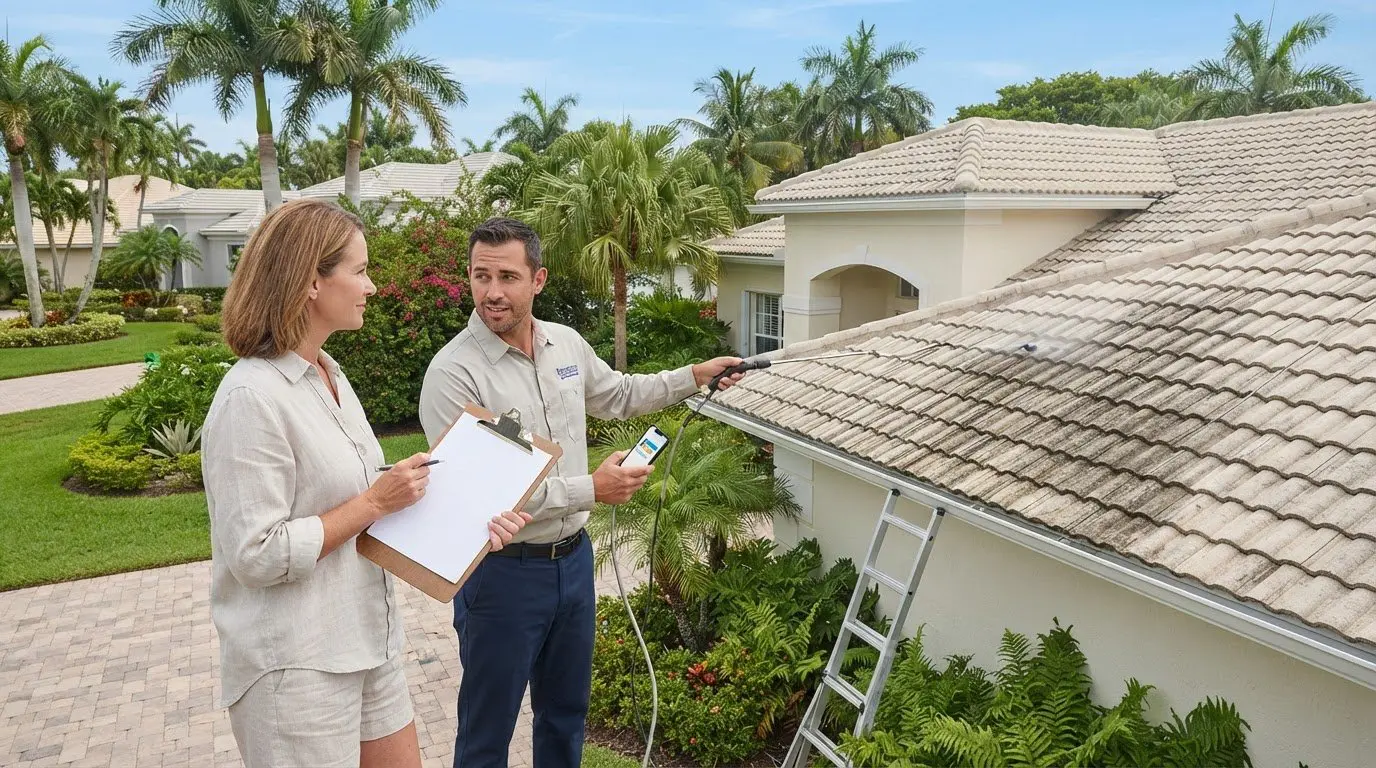
An HOA roof warning is easier to handle as a documented maintenance task than as an argument to win. If you’re wondering how to respond to an HOA warning letter for dirty roof concerns, start by checking what the notice says, what correction it requests, and any response or action date it gives.
It’s understandable to feel concerned about possible fines or an escalating disagreement, especially when the notice is unclear. A calm, written reply keeps the conversation focused on the issue. Save a copy of the notice, note the steps you take, and keep records of roof cleaning or other corrective work.
This guide explains how to review the notice, ask focused questions, and document your response without making assumptions about HOA rules or legal outcomes. It also covers safe ways to address roof staining and why high-pressure DIY cleaning can be risky. Pressure Pros of Palm Beach uses a soft-wash, no-pressure approach to remove roof algae, dirt, and stains across Palm Beach County. Use these steps to choose a practical next move and keep a clear record of your efforts.
Key Takeaways
- Compare the notice with your HOA documents. Gather dated photos, correspondence, and roof-cleaning records before replying.
- For how to respond to an HOA warning letter for dirty roof concerns, keep your message brief, respectful, and focused on questions and next steps.
- Consider roof access, surface, and staining before choosing a cleaning approach. Don’t rush into DIY pressure washing.
- Save service records and before-and-after photos, then send the HOA a factual update without assuming the outcome.
Received an HOA Warning About a Dirty Roof? Start With the Facts
Receiving a roof warning can be unsettling, but pause before assuming the notice proves every allegation or means the roof is damaged. An HOA warning is an association notice, not a court order. What it asks you to do depends on the wording and on the documents and procedures that apply to your community. The general role of a Homeowner association can provide background, but your own community documents and the notice are the relevant starting points.
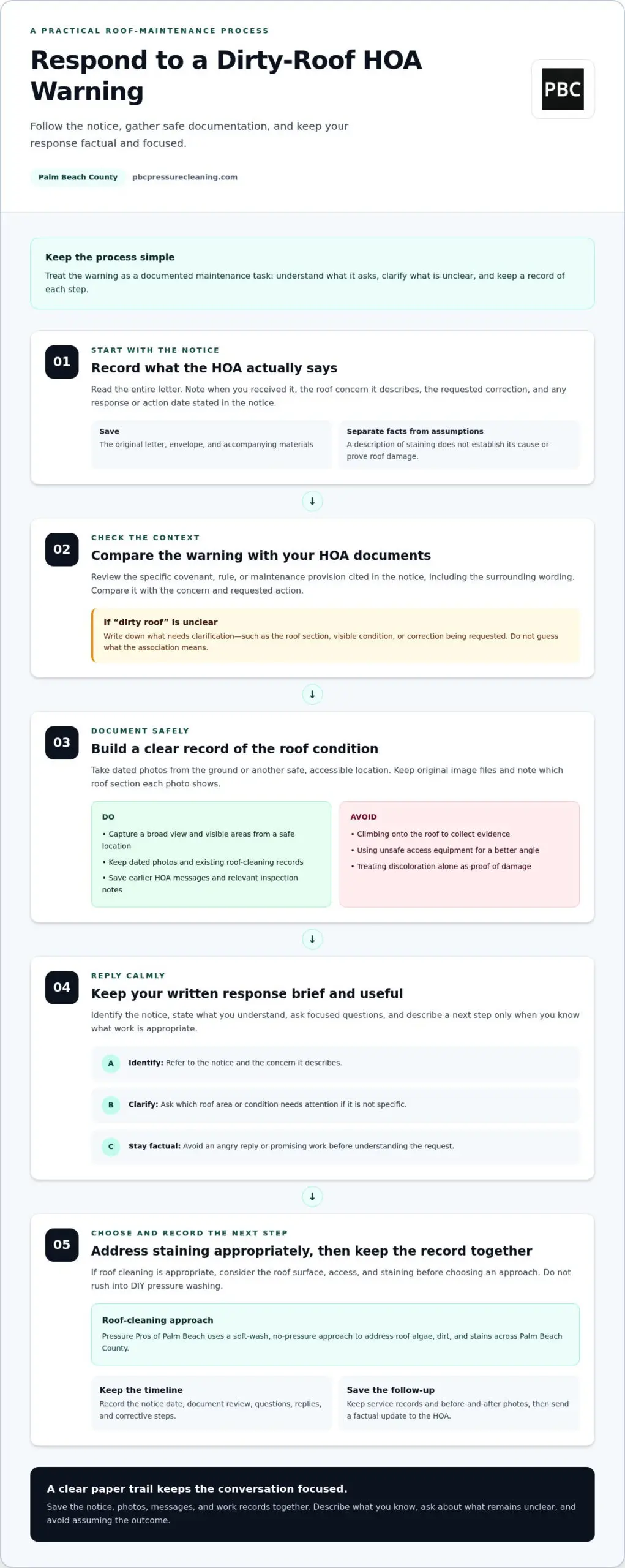
Before replying, note when you received the letter, the concern it describes, the requested remedy, and any date by which it asks you to respond or act. Keep the original letter and any envelope or accompanying materials. You’ll have a clearer basis for deciding how to respond to an HOA warning letter for dirty roof concerns once you separate what the notice states from what you still need to understand.
What does a dirty-roof warning usually ask you to address?
Look for a specific roof area, visible staining, or maintenance concern. If the letter uses broad wording such as “dirty roof,” note that and ask which section or condition the association means rather than guessing.
Keep observations separate from conclusions. The notice may describe discoloration, but that alone doesn’t establish its cause, prove roof damage, or explain who is responsible. Roof algae and stains can be maintenance concerns without being automatic evidence of damage. If you take photos, date them and use safe, ground-level viewpoints. Don’t climb onto the roof to collect evidence.
What should you do first after receiving the letter?
Read the entire notice, including any cited community documents, maintenance rules, or references to earlier correspondence. Then review the relevant documents and compare their wording with the concern and requested action in the letter. HOA documents and procedures differ, so don’t assume that another community’s process or a general deadline applies to yours.
- Record the date you received the notice and any response or action dates it states.
- Save the letter and related messages together, along with dated roof photos.
- Write down questions about the exact location, visible staining, or requested correction.
Avoid ignoring the notice, replying in anger, or promising to complete work before you understand what’s being requested. If the concern is roof staining and cleaning appears appropriate, professional roof cleaning may be a practical corrective option. First clarify the issue and the request. Then you can respond calmly and document your next steps without making assumptions about legal outcomes.
Review the HOA Letter and Gather Roof Evidence Before Replying
Once you’ve identified what the notice says, build a clear record before sending a detailed reply or arranging work. A careful review helps you address the concern actually raised instead of reacting to a broad phrase or guessing what the association expects.
Which documents and details should you review?
Start with the specific covenant, rule, or maintenance provision cited in the notice. Read the surrounding language in your community documents to understand the context. Then check whether the letter identifies a particular roof area, describes visible staining, requests a specific correction, or gives instructions for responding.
Make a short list of what’s clear and what isn’t. For example, the notice may mention roof discoloration without identifying the roof slope or the action it expects. Note any stated timeframe and communication method, but don’t assume that a deadline or process from another community applies to yours. If the wording or your rights remain unclear, consider getting advice from a qualified legal professional instead of guessing about local law.
How can you document the roof condition safely?
Take clear, dated photos from the ground or another safe, accessible location. Get a broad view of the roof, then closer views of areas you can see without climbing or using unsafe access equipment. Keep the original image files and note where each photo was taken and which section of the roof it shows. Don’t walk on the roof for a better angle.
Collect records that help show the sequence of events. These may include:
- The original notice and any earlier HOA messages about the same concern.
- Existing inspection notes or reports related to the roof’s visible condition.
- Available roof-cleaning records, including the date of past work.
- Notes about weather or access limitations when they affect inspection or cleaning plans.
A simple timeline can keep the details straight: the date you received the notice, when you reviewed the cited rule, questions you sent, replies you received, and any corrective steps taken. Save copies of messages and records in one place. This makes it easier to explain your next steps accurately, without claiming more than your evidence shows.
If your records point to roof staining and cleaning is appropriate, Pressure Pros of Palm Beach provides soft-wash, no-pressure roof cleaning to address algae, dirt, and stains. You can review the roof cleaning approach and talk with the local team about your roof as you consider a practical next step.
How to Write a Calm, Useful Response to an HOA Roof Warning
A short, factual reply can acknowledge the notice and clarify what the HOA is asking you to address. When deciding how to respond to an HOA warning letter for dirty roof concerns, identify the notice, describe what you understand, ask focused questions, and outline your next step only when you know what work is appropriate.
What should an effective response include?
Refer to the notice by its date and quote or briefly describe the roof condition it identifies. If the location, requested action, or cited rule isn’t clear, ask the HOA to clarify. You can request details without claiming the notice is invalid or agreeing with facts you haven’t confirmed.
Once you understand the concern, state a realistic next step. For example, you might say you’re reviewing the roof condition and will provide an update after deciding whether cleaning is suitable. Don’t promise a completion date or outcome before you’ve arranged the work and understand what it involves.
Here’s a simple example to adapt to your situation:
Subject: Response to roof notice dated [date]
Hello [name or HOA representative],
I’m acknowledging receipt of the notice dated [date], which refers to [condition or roof area described]. Could you clarify [specific question about the location, requested action, or cited rule]? I’m reviewing the condition and will follow up with an update about my next steps. Thank you, [your name]
Keep the tone respectful and stick to what you know. Save a copy of your message and any reply with the notice and your roof records.
What should you avoid saying or doing?
Threats, unsupported accusations, and generic online templates can distract from the actual concern. Tailor your response to the notice and your community documents. Don’t say the roof has been cleaned until the work is complete and you have records to support that statement.
Cleaning may address visible algae, dirt, or stains, but it doesn’t automatically settle every HOA concern or legal question. Keep the cleaning record and describe what was done without promising the HOA will consider the matter resolved. High-pressure equipment can pose a risk to roofing materials, so don’t use it without understanding that risk. Pressure Pros of Palm Beach uses a soft-wash, no-pressure approach for roof cleaning. If roof staining is the concern, you can talk with Pressure Pros of Palm Beach about roof cleaning as you consider a suitable next step.
Choose a Safe Roof-Cleaning Plan Instead of Rushing Into DIY
An HOA notice can create pressure to clean quickly, but rushing onto a roof or choosing a method based on appearance alone can add risk. Before taking action, consider safe access, the roof surface, the type and location of visible staining, and whether the cleaning method suits the condition. A professional assessment can help you make that decision without turning a maintenance concern into avoidable damage.
Why can rushed DIY roof cleaning make the problem worse?
Roof work involves fall and access risks, and wet surfaces can make them more serious. Don’t climb onto the roof to inspect or clean it, and don’t use ladders or other access methods you can’t handle safely. A stain visible from the ground also doesn’t identify the roof material or tell you which treatment is suitable.
Pressure washing can damage roofing materials, so don’t assume equipment used on a driveway or patio is appropriate for a roof. Avoid applying unverified chemicals, too. The wrong approach can affect the roof surface without addressing the staining. If you’re unsure what the roof is made of or how to proceed, pause before attempting DIY cleaning.
When is professional soft-wash roof cleaning a practical option?
Professional roof cleaning may be a practical corrective step when visible algae, dirt, or stains are the concern and cleaning is suitable for the roof’s condition. A professional can assess the visible buildup and consider a method that fits the surface, rather than relying on a quick spray or an assumed treatment.
Pressure Pros of Palm Beach uses a soft-wash, no-pressure approach to remove roof algae, dirt, and stains. For Palm Beach County homeowners, this is a local option for addressing roof discoloration without high-pressure roof washing. Cleaning may improve the roof’s appearance, but it can’t guarantee HOA approval or resolve every issue raised in a notice. Keep your response and cleaning records factual, and follow up with the association based on what was actually done.
If you’re deciding how to respond to an HOA warning letter for dirty roof concerns, include a cleaning plan only after you understand the roof condition and the requested correction. Learn more about professional roof cleaning, or talk with Pressure Pros of Palm Beach about your roof before starting a cleaning job.
Document the Work and Follow Up With the HOA
Once roof cleaning is complete, keep a clear record of what was done and send the HOA a concise update. This documents your maintenance steps, but it doesn’t guarantee a particular decision or mean every concern in the notice has been resolved. Stay factual and let the association explain whether it needs anything else.
What records should you keep after roof cleaning?
Save the work date, service paperwork, and clear before-and-after photos taken from safe viewpoints. Keep copies of messages sent to or received from the HOA with the original notice. Together, these records show the timeline and describe the visible change without relying on memory.
Be precise about the work performed. If the service addressed algae, dirt, or staining, describe that work without claiming the roof was repaired or every issue was corrected unless those facts are established. For details about Pressure Pros of Palm Beach’s soft-wash, no-pressure approach, see the roof cleaning service.
How should you follow up if the HOA still has concerns?
Send a brief update that identifies the notice, states when cleaning took place, and notes that you’ve attached or retained relevant photos and service documentation. Ask whether the HOA has a remaining concern and what specific next step or information it is requesting. Keep the exchange courteous and save each response with your records.
If the association raises a dispute about your rights, the governing documents, or potential penalties, don’t treat a cleaning receipt as a legal answer. Consider getting guidance from a qualified legal professional rather than guessing about how local rules apply.
A documented follow-up is a practical part of how to respond to an HOA warning letter for dirty roof concerns, but the HOA decides how it will address its notice. Pressure Pros of Palm Beach provides residential and commercial roof cleaning across Palm Beach County, using a soft-wash, no-pressure method to address algae, dirt, and stains. If cleaning is an appropriate next step, contact Pressure Pros of Palm Beach to request an inspection or estimate.
Take the Next Step With a Clear Plan
A roof warning is easier to address when you take it one step at a time. Review the notice and relevant community documents, keep dated records of the roof’s condition, and reply with calm, specific questions. If cleaning is appropriate, document the work and follow up with the HOA without assuming it guarantees a particular decision.
Knowing how to respond to an HOA warning letter for dirty roof concerns also means choosing a suitable cleaning approach instead of rushing into risky DIY work. Professional roof cleaning can remove algae, dirt, and stains, refresh the roof’s appearance, and support regular property maintenance. Pressure Pros of Palm Beach serves Palm Beach County with a soft-wash, no-pressure approach.
If cleaning may be the right next step, request a local roof-cleaning estimate from Pressure Pros of Palm Beach. A thoughtful plan can help you care for your roof and maintain your property’s curb appeal while keeping the HOA conversation clear and documented.
Frequently Asked Questions
Should I respond to an HOA warning letter about a dirty roof?
Yes. A calm response can acknowledge the notice and help clarify what the HOA wants you to address. Read the full letter, note any stated response date, and check the documents or rules it references. You can ask focused questions without agreeing with details you haven’t confirmed. When deciding how to respond to an HOA warning letter for dirty roof concerns, keep a copy of your reply and any follow-up messages with the original notice.
What should I say in a response to an HOA roof-cleaning notice?
Identify the notice by its date, acknowledge receipt, and briefly describe the roof concern as the HOA stated it. If the location, requested correction, or cited rule is unclear, ask for that information respectfully. State your next step only when you understand the issue and have a realistic plan. Avoid arguments, unsupported claims, or promises about when work will be finished if you haven’t arranged it.
Can an HOA make me clean my roof?
Whether an HOA can require a particular action depends on the community’s governing documents, the notice, and applicable procedures. Don’t rely on a general answer or assume that rules from another association apply to yours. Review the specific provision cited in the letter and ask the HOA to explain its request if needed. If you’re unsure about your rights or a potential penalty, consider speaking with a qualified legal professional.
How do I prove that my roof has been cleaned?
Keep the service paperwork and note the date the cleaning took place. Save clear before-and-after photos taken from safe, accessible viewpoints, along with copies of your messages to and from the HOA. In your update, describe only the work that was completed and attach records if useful. Don’t claim the roof was repaired or that the HOA has accepted the work unless you have information establishing that.
Is pressure washing safe for a roof?
High-pressure washing can create a risk of roof-surface damage, so don’t assume equipment used on other surfaces is suitable for roofing. The right cleaning approach depends on the roof condition and material. Pressure Pros of Palm Beach uses a soft-wash, no-pressure approach for roof algae, dirt, and stains in Palm Beach County, including Wellington, Royal Palm Beach, Loxahatchee, Westlake, Lake Worth, Greenacres, Palm Beach Gardens, West Palm Beach, Jupiter, Juno, Tequesta, and Riviera Beach.
Should I clean my roof myself before replying to the HOA?
Don’t rush into DIY roof cleaning before you understand the concern and a suitable cleaning method. Climbing onto a roof can create access and fall risks, and stains alone don’t identify the roof material or appropriate treatment. Avoid walking on the roof or applying unverified chemicals. You can acknowledge the notice and explain that you’re reviewing the condition before deciding on next steps, without promising work prematurely.
What if the HOA warning does not explain which roof area is dirty?
Ask the HOA to identify the roof area and describe the condition it wants you to address. Refer to the notice date and keep the question brief and factual. Meanwhile, take dated photos from the ground or another safe location, but don’t climb onto the roof to investigate. Save your request and the HOA’s reply with the original notice so you have a clear record of the communication.
Recent Comments