Soft Wash Roof Cleaning vs. Pressure Washing: Which Is Best for Your Florida Home?
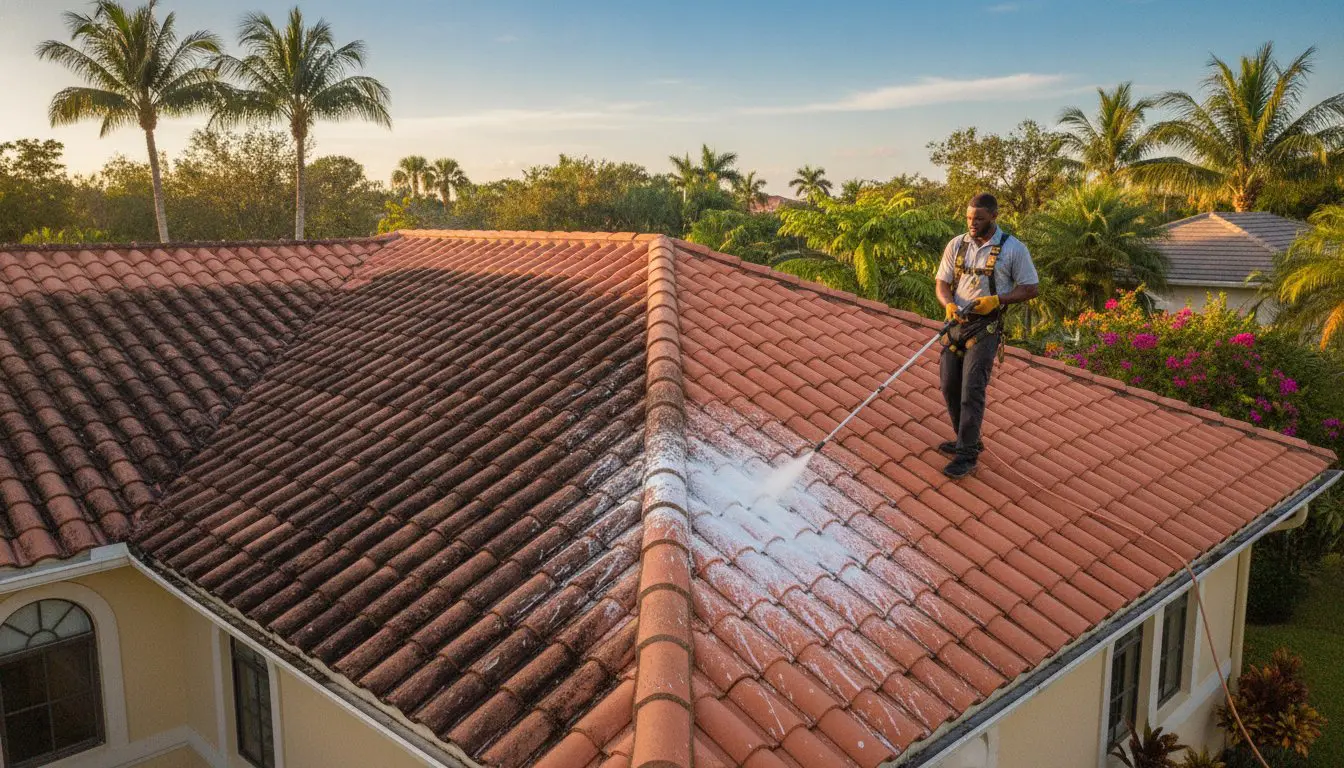
Blasting your roof with high-pressure water to remove black streaks is often the fastest way to shorten its lifespan and void your manufacturer’s warranty. If you’ve noticed those dark, vertical stains on your shingles, you’re likely dealing with Gloeocapsa magma, a hardy algae that feeds on the limestone in your roof. It’s frustrating to see your home’s curb appeal decline, especially when you start receiving notices from your HOA or insurance provider. When deciding between soft wash roof cleaning vs pressure washing, it’s important to understand that more power isn’t always better for your home’s exterior.
We understand that your home is your most significant investment, and you want to protect it without causing accidental damage. This article will show you why soft washing has become the industry standard for maintaining roof integrity while delivering a like-new appearance. You’ll learn how this low-pressure method safely eliminates organic growth at the root, ensuring you stay compliant with insurance mandates and avoid the high cost of a premature roof replacement. We’ll break down the technical differences so you can make an informed decision for your Palm Beach County property.
Key Takeaways
- Learn the critical differences in soft wash roof cleaning vs pressure washing, including why low-pressure methods are the only safe way to treat delicate roofing materials.
- Understand the science of chemistry over force and how specialized solutions kill organic growth at the root to prevent rapid regrowth.
- Protect your home’s value and manufacturer’s warranty by following industry standards that warn against using high-pressure equipment on shingles.
- Discover material-specific care for local Palm Beach County homes, specifically how to avoid surface pitting on concrete and clay tile roofs.
- Identify the essential credentials to look for when hiring a professional service to ensure your property is protected and legally compliant.
Understanding the Basics: Soft Wash vs. Pressure Washing
Many homeowners assume that a clean roof requires intense physical force. They see those unsightly black streaks and think they need to blast them away. However, the debate between soft wash roof cleaning vs pressure washing isn’t just about how much water you use. It’s about how you treat the biological growth that’s actually eating your shingles. Those dark stains aren’t just dirt; they’re a living organism called Gloeocapsa Magma. This cyanobacteria feeds on the limestone filler in asphalt shingles, meaning it’s literally consuming your roof from the inside out.
To properly restore your property, you have to do more than just make it look better for a few months. Real cleaning means killing the roots of the algae rather than just stripping away the visible top layer. If you only remove the surface growth, the spores remain deep within the porous material, ready to return even faster than before. This is why understanding the specific mechanics of each method is vital for long-term property protection.
To better understand this concept, watch this helpful video:
What Is Pressure Washing?
Pressure washing is a mechanical cleaning process that relies on high-impact water streams. Most professional units operate at 2500 PSI (pounds per square inch) or higher. This intense force is excellent for hard, non-porous surfaces. We frequently use pressure washing for concrete driveways, brick sidewalks, and commercial dumpster pads where heavy grime and oil buildup require significant agitation. While the “blasting” effect is satisfying to watch, it’s often destructive on delicate surfaces. On a roof, this level of pressure can strip away protective granules, crack tiles, and force water under the shingles, leading to leaks and structural rot.
What Is Soft Wash Roof Cleaning?
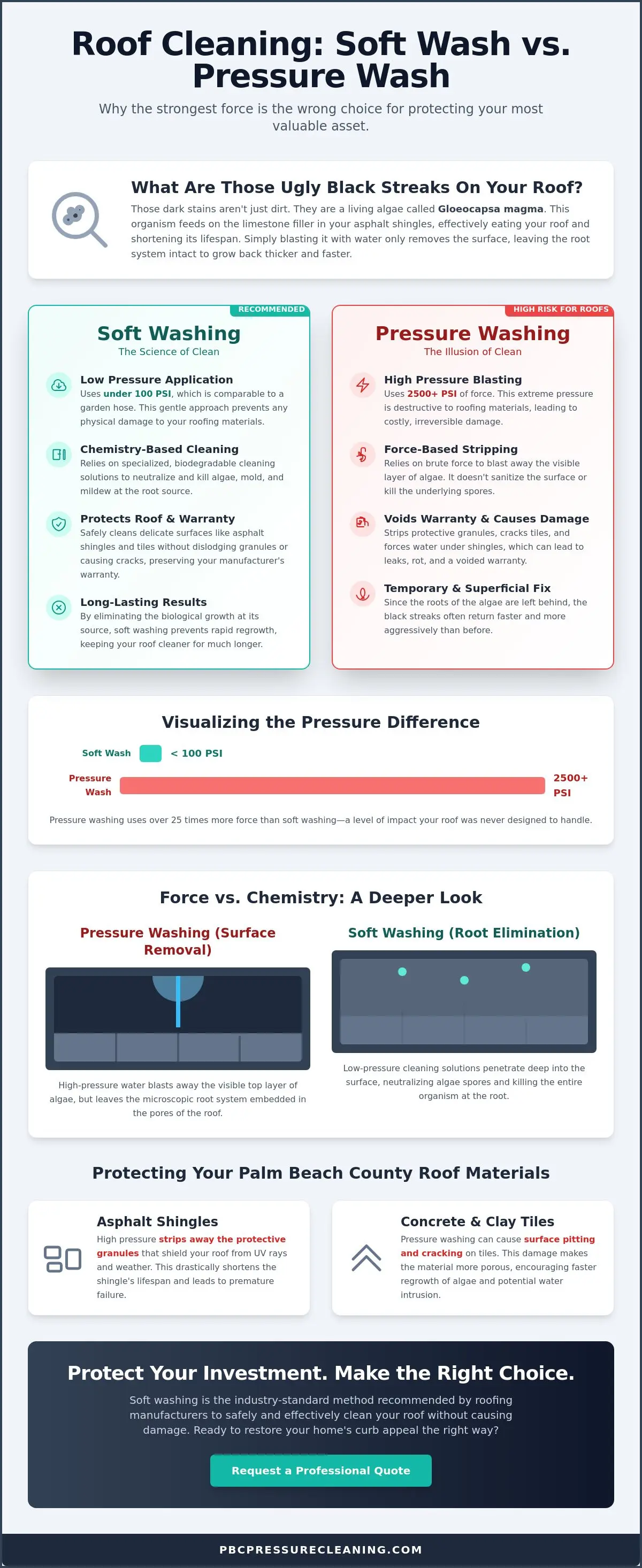
Soft washing is a completely different approach that prioritizes chemistry over physical force. Instead of high-pressure water, this method uses specialized, biodegradable surfactants and algaecides to neutralize organic growth. The application pressure is extremely low, usually staying under 100 PSI. This is comparable to the pressure of a heavy rainstorm or a standard garden hose. What is soft washing? It’s a process that allows the cleaning solution to do the heavy lifting, soaking into the material to kill algae, mold, and lichen at their source. For Palm Beach County homeowners, soft wash roof cleaning has become an essential part of modern home maintenance because it protects the integrity of the roof while restoring its original appearance.
The Science of Clean: Force vs. Chemistry
When evaluating soft wash roof cleaning vs pressure washing, it’s helpful to view the process through a lens of sanitization rather than just surface removal. High pressure relies on mechanical force to blast away debris. This approach often fails because it doesn’t address the microscopic spores rooted in the porous surfaces of your roof. Gloeocapsa Magma is a hardy cyanobacteria that feeds on the limestone filler used in asphalt shingles, leading to the premature breakdown of your roofing materials. Simply stripping the top layer of this growth with water pressure leaves the biological “roots” intact, allowing the stains to return quickly.
To compare these methods effectively, we look at three main factors:
- Impact on Surface: High pressure can dislodge shingle granules or pit concrete tiles. Soft washing uses a gentle spray that preserves the material’s integrity.
- Longevity: Because soft washing kills the algae at the root, the results typically last two to three times longer than pressure washing.
- Safety: Soft washing eliminates the need for high-powered equipment that can damage structural components or force water into sensitive areas.
How Chemistry Outperforms High Pressure
Soft washing functions like a medical treatment for your home. While pressure washing “strips” the surface, soft washing “sanitizes” it. By killing the organic matter at its source, professional soft washing results in a roof that stays clean much longer than one treated with high pressure. Specialized equipment is used to maintain precise chemical ratios, ensuring the solution is strong enough to kill the algae but gentle enough to protect your property. This methodical approach follows the Asphalt Roofing Manufacturers Association guidelines, which explicitly recommend low-pressure chemical cleaning to avoid shingle damage.
The Risk of High-Pressure Water Intrusion
One of the most significant dangers of using a standard pressure washer on a roof is water intrusion. High-pressure streams can easily lift shingles or force water under the edges of tiles. This trapped moisture often migrates into the attic space, where it creates a perfect environment for hidden mold growth. It’s a common mistake to assume that “more power” equals a better clean; in reality, excessive force is the leading cause of roof leaks during the cleaning process. By choosing a low-pressure method, you eliminate the risk of structural damage while achieving a superior level of cleanliness.
Why Pressure Washing Your Roof is a Costly Mistake
A common misconception among Florida homeowners is that their roofs are indestructible. Because a roof can survive a tropical storm, many assume it can handle the force of a pressure washer. This is a dangerous line of thinking that often leads to thousands of dollars in avoidable damage. When you compare soft wash roof cleaning vs pressure washing, the primary concern is the physical integrity of your roofing materials. Asphalt shingles are engineered with a layer of ceramic-coated granules that provide essential UV protection. Blasting these shingles with high pressure dislodges those granules, leaving the underlying bitumen exposed to the harsh sun and accelerating the deterioration process.
The Asphalt Roofing Manufacturers Association (ARMA) is very clear on this subject. They recommend low-pressure chemical cleaning as the only safe method for maintaining an asphalt roof. Ignoring these standards doesn’t just damage the shingles; it can void your 30-year roof warranty in a single afternoon. If you ever need to file a claim for material defects or storm damage, manufacturers often send inspectors to look for signs of high-pressure cleaning. If they find evidence of granule loss or shingle lifting caused by a pressure washer, they have the right to deny your claim entirely.
Warranty and Insurance Implications
Insurance companies in Palm Beach County are becoming more proactive about roof maintenance. Many providers now use high-resolution drone inspections to evaluate the condition of a home before renewing a policy. If an adjuster sees signs of “pitting” or “scarring” from improper cleaning, they may view the roof as a liability. Keeping professional documentation that proves you used a low-pressure soft wash method protects your property value and your coverage. This methodical approach to maintenance is vital for all exterior surfaces, including paver sealing palm beach county, where using the correct pressure ensures the longevity of the stone and the stability of the sand joints.
Structural Damage to Tiles and Shingles
The risks aren’t limited to asphalt shingles. Florida’s popular concrete and clay tiles are highly susceptible to an “etching” effect when hit with high-pressure water. This creates microscopic pits that trap moisture and algae spores, ensuring the roof gets dirty again much faster. Using a pressure washer can effectively age your roof by 5 to 10 years in just a few hours. Furthermore, pressure washing typically requires a technician to walk across every square foot of the roof to be effective. This heavy foot traffic frequently leads to cracked or broken tiles. Soft washing allows professionals to apply cleaning solutions from a ladder or the ground, significantly reducing the risk of structural damage from foot traffic.
Protecting Your Palm Beach Investment: Material-Specific Care
Palm Beach County homes often feature beautiful tile roofs that define the local aesthetic. In communities like Boca Raton and Wellington, these roofs are a significant part of a property’s value. However, maintaining them requires a specific understanding of how Florida’s climate interacts with different materials. When you weigh the options of soft wash roof cleaning vs pressure washing, you have to account for the porous nature of concrete and clay. High-pressure water isn’t just unnecessary; it’s often the catalyst for long-term structural issues.
Florida’s intense sun also creates a “heat-island” effect on your property. Algae growth doesn’t just look bad; it turns your roof into a dark heat sink that absorbs thermal energy. A dark, algae-covered roof can increase attic temperatures by up to 20 degrees. This spike in heat forces your air conditioning system to work harder, which increases your monthly energy bills and puts extra strain on your HVAC components. Keeping your roof clean is as much about energy efficiency as it is about curb appeal.
Tile Roof Cleaning: A Local Florida Necessity
Tile roofs are durable against wind but remarkably fragile when faced with concentrated water pressure. Some contractors mistakenly claim that tile can handle high pressure because it feels “hard.” In reality, high-pressure streams cause surface pitting on concrete tiles, which removes the protective finish and makes the surface even more porous. Effective tile roof cleaning requires a strict “no-pressure” approach to preserve the original color and finish. We pay close attention to the “laps” where tiles overlap. This is where organic debris and moisture collect, creating a breeding ground for pests and rot if not treated with the correct algaecides.
Asphalt Shingle Care in High Humidity
Asphalt shingles face a different set of challenges in our coastal environment. The relentless humidity in Palm Beach County creates a perfect breeding ground for lichen and moss. These organisms have root-like structures that can physically pull shingles apart if they’re left untreated. A standard rinse won’t solve the problem. We use specific soft wash ratios tailored to the local climate to neutralize these growths without damaging the delicate shingle granules. While we recommend professional pressure washing for non-roof surfaces like driveways and sidewalks, your roof requires a much gentler, chemical-based solution.
If you’re ready to protect your home’s value and lower your cooling costs, schedule a professional roof inspection today to ensure your property receives the specialized care it deserves.
Choosing the Right Professional Roof Cleaning Service in Palm Beach County
Finding a reliable contractor in South Florida requires more than a quick search for a local service. You need a team that understands the legal and technical requirements of working in our unique environment. When you’re finalizing your decision on soft wash roof cleaning vs pressure washing, the credentials of the company matter as much as the method they use. A professional service should provide a clear checklist of their qualifications before they step onto your property. We recommend vetting any contractor based on these essential criteria:
- Current Florida business license and comprehensive insurance coverage.
- Documented experience with dedicated low-pressure soft wash systems.
- A solid portfolio of successful projects within Palm Beach County.
- Written protocols for property and landscape protection.
In Florida, hiring an unlicensed or uninsured contractor is a significant risk. If a worker is injured or your property is damaged during the cleaning process, you could be held liable for the costs. We maintain full compliance with state regulations to give our residential and commercial clients total peace of mind. We also believe in the value of a comprehensive maintenance plan. Many homeowners find that bundling services like exterior painting with a professional roof clean is the most efficient way to restore property value and aesthetic appeal in a single visit.
Our Plant Protection Protocols
One of the biggest concerns with chemical cleaning is the safety of your landscaping. Cheap, inexperienced cleaners often overlook the vulnerability of Florida palms, hibiscus, and manicured lawns. We use a methodical plant protection protocol to ensure your garden remains healthy. Our team pre-wets all surrounding vegetation to saturate the soil and leaves, which prevents the accidental absorption of cleaning solutions. After the treatment, we perform a thorough post-rinse and apply professional-grade neutralizers. Investing in a quality service prevents the high cost of replacing dead landscaping that often follows “bargain” cleaning jobs.
The Pressure Pros Difference
Our reputation in Palm Beach County is built on years of hands-on experience and a commitment to detail. We understand that every home is an investment that requires precise care. Our “no-pressure” guarantee applies to every roof we treat, ensuring that your shingles or tiles are never subjected to destructive force. We focus on delivering tangible results that protect your assets and satisfy even the strictest HOA requirements. Our team is hardworking and detail-oriented, ensuring every job meets our high standards for quality and safety.
Ready to restore your home’s curb appeal safely? Request a free roof inspection and quote today to see how our specialized approach can extend the life of your roof.
Ensure Long-Term Protection for Your Florida Home
Maintaining your home’s exterior in South Florida requires a strategic approach to combat aggressive organic growth. The decision between soft wash roof cleaning vs pressure washing determines whether you are merely rinsing the surface or truly sanitizing your property. By prioritizing low-pressure chemistry over destructive force, you protect your shingles from granule loss and ensure your manufacturer’s warranty remains valid. This methodical approach keeps your roof clean up to three times longer than traditional high-pressure methods.
Our team brings years of specialized local experience to every project. We are fully licensed and insured in Palm Beach County, providing the professional reliability your investment deserves. As certified soft wash professionals, we utilize a specialized plant protection protocol to keep your palms and flowers safe while delivering a like-new finish to your roof. We focus on practical results that improve your curb appeal and protect your asset’s value.
Protect your home and request a free roof cleaning quote today!
We look forward to helping you maintain your home’s beauty and structural integrity for years to come.
Frequently Asked Questions
Is soft washing bad for my plants and landscaping?
Professional soft washing is safe for your landscaping when proper protection protocols are followed. We pre-wet all surrounding plants to saturate the soil and leaves; this prevents them from absorbing the cleaning solution. After the application, we perform a thorough post-rinse and use professional-grade neutralizers. This methodical approach ensures your Florida palms and flowers remain healthy while your roof gets a deep, restorative clean.
How long does a soft wash roof cleaning last in Florida?
A professional soft wash typically keeps a Florida roof clean for one to two years. Because this method kills the algae at the root rather than just rinsing the surface, the results often last two to three times longer than traditional pressure washing. Your specific timeline depends on factors like humidity, nearby tree coverage, and how much shade your home receives throughout the day.
Will soft washing remove the black streaks on my roof?
Yes, soft washing is the most effective way to eliminate those unsightly black streaks. These stains are caused by a cyanobacteria called Gloeocapsa magma, which thrives in our humid climate. When comparing soft wash roof cleaning vs pressure washing, the chemical treatment is superior because it neutralizes the biological growth completely, restoring your roof’s original appearance without damaging the underlying materials.
Can I pressure wash my own roof to save money?
We strongly advise against DIY pressure washing for roofs. High-pressure water can easily strip away protective shingle granules or crack delicate tiles, leading to expensive structural leaks. Additionally, walking on a wet roof is extremely dangerous for anyone without professional safety equipment and training. Investing in a professional service prevents accidental damage that could cost far more than the cleaning itself.
How often should I have my roof cleaned in Palm Beach County?
Most homeowners in Palm Beach County find that an annual or biennial cleaning schedule works best. Our intense South Florida humidity and salt air create an ideal environment for algae and lichen to return. Regular maintenance prevents organic growth from taking hold, which protects your shingles from premature aging and keeps your property in compliance with HOA and insurance requirements.
Does soft washing void my roof warranty?
When deciding between soft wash roof cleaning vs pressure washing, remember that soft washing is the only cleaning method that preserves your manufacturer’s warranty. The Asphalt Roofing Manufacturers Association (ARMA) explicitly recommends low-pressure chemical cleaning for asphalt shingles. In contrast, using high pressure is often cited as a reason for warranty denial. Choosing the industry-standard method ensures your 30-year warranty remains intact.
What is the difference between power washing and pressure washing?
The main difference is the water temperature. Power washing uses heated water to blast through grease and heavy grime on hard surfaces like driveways. Pressure washing uses cold water at high force for general cleaning. Neither of these methods is safe for your roof. Soft washing remains the only professional choice for delicate surfaces because it uses low pressure and specialized chemistry instead of force.
How much does professional soft wash roof cleaning cost?
The cost of a professional soft wash depends on the square footage of your roof, the pitch, and the level of organic growth present. While it has a different upfront cost than a simple rinse, the long-term value is much higher. A professional clean extends the life of your roof and prevents the need for a premature replacement, making it a vital investment in your property’s value.
Recent Comments