
Exterior Cleaning for Property Insurance Photos
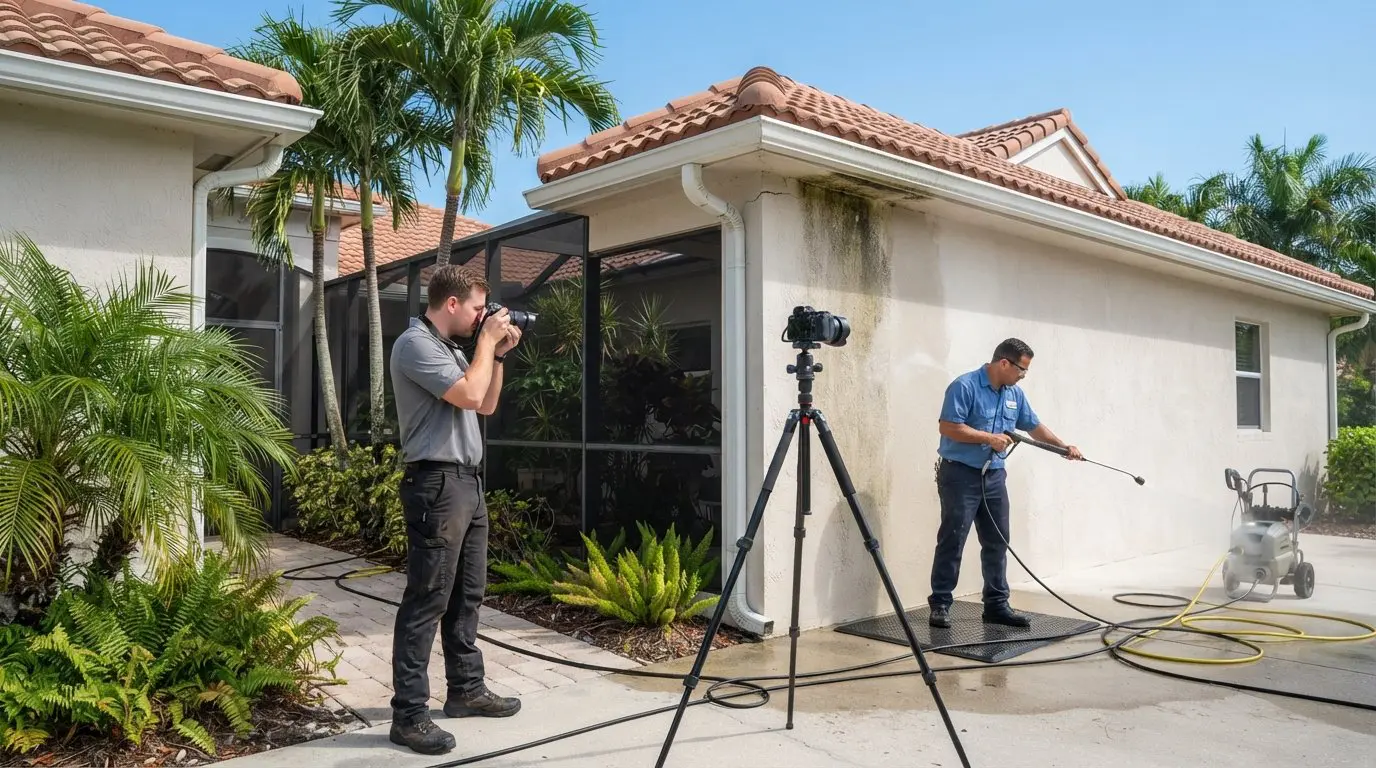
Clean surfaces can make property insurance photos clearer, but cleaning should never hide or alter evidence of damage. Exterior cleaning for property insurance photos can remove dirt, algae, and debris that obscure visible surfaces, while careful documentation preserves an honest record of the property’s condition. If damage is present, photograph it before cleaning and capture clear views from several angles.
It’s understandable to want photos that show a property clearly, especially when stains and buildup make exterior details harder to see. The goal is clarity, not a cosmetic makeover: photos should accurately show the surfaces, their condition, and any areas of concern. This guide explains what to clean, what to document first, and how to prepare useful photos without overlooking existing damage.
You’ll also learn when professional exterior cleaning may help, which surfaces need a gentler approach, and how to plan the work for your property. A practical sequence can make the exterior easier to assess while keeping the record straightforward and accurate.
Key Takeaways
- Photograph existing damage before cleaning so the record reflects the property’s condition beforehand.
- Match the cleaning approach to the surface and the buildup to avoid making photos clearer at the expense of surface care.
- Use consistent angles and framing in before-and-after photos to show what changed and what remains visible.
- Plan cleaning around the property’s features, including landscaping, hardscaping, and drainage.
- For large, delicate, or heavily soiled areas, professional cleaning can help prepare exterior surfaces for clear documentation.
Exterior cleaning for homes, HOAs, and commercial properties
Homeowners aren’t subject to one universal maintenance rule across standard insurance policies. Policy wording varies, so review your own policy and any written notice from your insurer for requirements covering the roof, gutters, and exterior.
Visible roof wear, heavy debris, stained siding, or neglected parking areas may draw attention during an exterior review. These conditions don’t automatically mean cancellation. The insurer’s decision depends on its review and your policy terms.
To see how exterior photos can support an insurance review, watch this video:
For a home, start with surfaces visible from the street and yard. A clear driveway, clean siding, and roof free of loose debris can make exterior details easier to see. Photograph suspected damage before cleaning to document the condition before surface buildup changes.
HOAs need a shared plan for common areas and individual homes. A property manager can identify which buildings, walkways, entrance signs, and parking sections need attention first. For example, cleaning a stained entry drive may make its surface condition easier to see, while photographing each building separately keeps records organized by address or building name.
Commercial properties have different priorities. A storefront review may focus on the façade, entrances, loading areas, and parking stalls. Mark these areas in the property file, then capture wide views and close-up details. Consider customer access and business operations when arranging cleaning.
Parking areas often collect tire marks, grime, and other visible residue. Cleaning can make the surface easier to see in photos, but it shouldn’t conceal cracks, stains, or other conditions relevant to the record. Photograph each area beforehand and note its location, such as the north entrance or loading bay. After cleaning, take comparison photos from similar positions.
For residential and commercial properties alike, use a simple documentation sequence:
- Record the building address or property name with the photo set.
- Take broad exterior views before close-ups of individual surfaces.
- Photograph visible concerns before cleaning begins.
- Keep before-and-after images grouped by the same area.
In Palm Beach County, landscaping, hardscaping, drainage, and local requirements can shape a property-specific cleaning plan. A home with planted beds beside its pavers needs different preparation from a commercial lot with open parking lanes. Matching the work to these features helps maintain a useful, accurate visual record.
Pressure washing and surface cleaning
Pressure washing can damage siding or roofing if the pressure, spray angle, or technique isn’t suited to the material. Before cleaning, identify the surface and assess its condition. Fragile, loose, or visibly damaged areas need particular care.
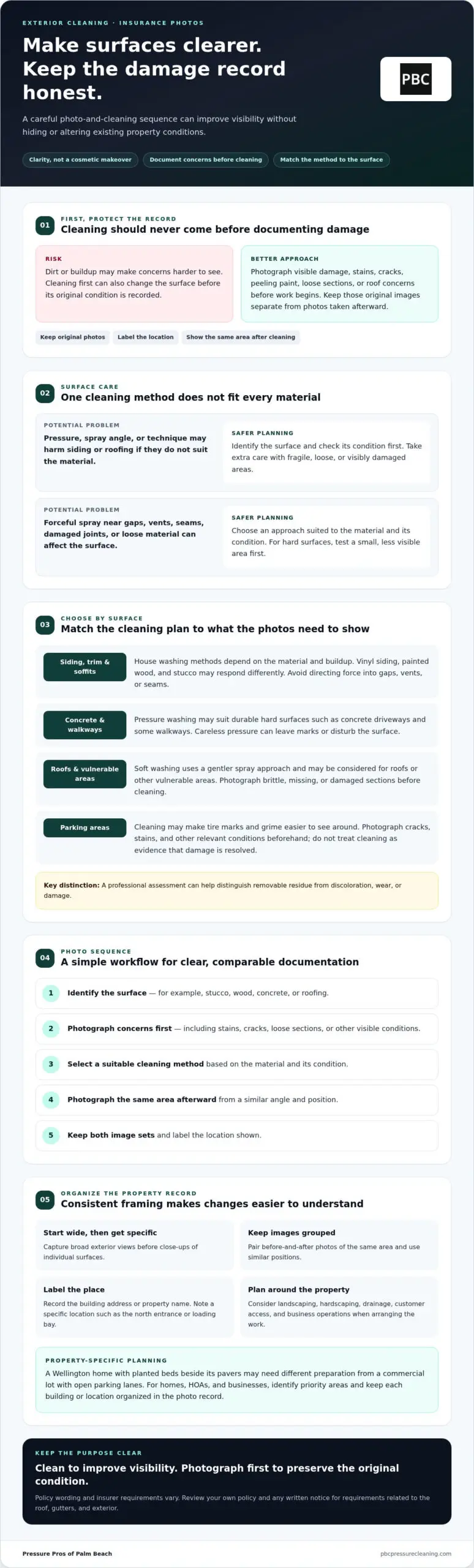
Planning exterior cleaning for property insurance photos starts with an accurate record. Photograph the area before cleaning, including peeling paint, cracked siding, lifted edges, or roof stains. Keep those images separate from photos taken afterward. This preserves a clear sequence without suggesting cleaning resolved existing damage.
Residential house washing usually focuses on siding, trim, soffits, and exterior entry areas. Dirt on vinyl siding may respond differently from buildup on painted wood or stucco. The right method depends on the surface, the stain’s location, and nearby features such as windows and planted beds. Avoid directing force into gaps, vents, or seams.
Pressure washing can suit durable hard surfaces, such as concrete driveways and some walkways. A driveway with tire marks, for example, may look clearer after cleaning. Careless pressure, however, can leave marks or disturb the surface. Test a small, less visible area first, and avoid spraying damaged joints or loose material.
Soft washing uses a gentler spray approach for surfaces that shouldn’t receive forceful, direct pressure. It’s often considered for roofs and other vulnerable exterior areas. The method still needs to suit the material and its condition. If a roof has brittle, missing, or damaged sections, photograph those concerns before cleaning.
The right approach depends on the needs of each surface. Green buildup on siding, grime on concrete, and dark roof marks call for different methods. A professional assessment can help distinguish removable residue from discoloration, wear, or damage. That distinction matters when photos document the property’s condition.
Use this sequence to prepare a surface for clear documentation:
- Identify the material, such as stucco, wood, concrete, or roofing.
- Photograph existing stains, cracks, loose sections, and other visible concerns.
- Select a cleaning method suited to that material and condition.
- After cleaning, photograph the same area from a similar angle.
- Keep both sets of images and label the location shown.
For a Wellington home with stained siding, house washing may improve visibility without treating a roof or driveway as the same surface. A commercial property may need separate approaches for its façade and concrete entrance. If the suitable method isn’t clear, talk with a local exterior cleaning professional about the surfaces and photo goals.
Before-and-after exterior cleaning photos
Before-and-after images show how cleaning changed a surface, not whether damage disappeared. Keep the original photos, take comparison shots from matching positions, and label each image with its location and timing.
Exterior Areas for Insurance Photos
Include the roof, siding, exterior walls, doors, windows, foundation, and visible drainage features. Add driveways, walkways, and detached structures when they’re part of the property being documented. Insurers may request different views depending on the policy, property, and state. Follow the photo instructions in the insurer’s request, and capture any area it specifically identifies.
For a useful set, take a wide view of each side of the home, followed by closer photos of visible concerns. A front elevation photo establishes context; a close-up can show a stained wall or damaged trim. Keep both views so the location and details are clear.
Application and Renewal Photos
For an application or renewal, photograph the full exterior from several sides. Include the roof as visible from the ground, siding, entryways, attached structures, and the driveway or walkway. Then document visible wear, such as peeling paint, cracked paving, or a missing roof section. Follow any checklist from your insurer, as requested views can vary.
Use a consistent routine: clean the camera lens, take photos in clear daylight, and include the property address in the file names. For before-and-after sets, stand in the same place and frame the same feature. Keep original files unchanged, and avoid filters or edits that alter how surfaces appear.
Safe Roof Condition Photos
Photograph roof condition from the ground, capturing clear views from different sides of the house. Include the roofline and surrounding features, then take closer ground-level views where the roof remains visible. Don’t climb onto the roof or lean out of an upper-story window to take a photo. A roof surface can be slippery or unstable.
If trees or the building’s angle block a view, record what’s visible from a safe location and follow your insurer’s photo instructions. Never remove debris or disturb a roof feature just to improve an image. Photograph visible concerns before cleaning, then keep those records with any later images.
After cleaning, repeat the original framing as closely as possible. Matching the angle helps distinguish a change to the surface from a change in camera position. Keep the before-and-after files together, label the roof side shown, and preserve every image that records an existing condition.
Customized cleaning for property-specific needs
A useful cleaning plan starts with the property, not a standard checklist. A stucco home with planted beds needs different preparation from a retail building with paved access lanes. Planning exterior cleaning for property insurance photos also means deciding which surfaces to clean and which conditions must remain visible in the record.
Before work begins, identify each surface and assess its condition. Note whether the property includes stucco, painted trim, concrete, pavers, or roof surfaces. Photograph concerns that cleaning could change, then choose an approach suited to each material. This keeps the photo record clear without treating every surface alike.
Landscaping affects where water and cleaning runoff may travel. A home with shrubs beside a walkway needs care around the planting beds. Hardscaping matters too: concrete, sealed pavers, and a wooden deck each have different surface needs. Include these features in the plan so the work stays focused on the intended areas.
Check drainage before cleaning begins. Look at slopes, drains, and places where water collects. A low spot beside a garage, for example, may handle runoff differently from an open driveway. Photograph the area beforehand and note drain locations so the work sequence accounts for them.
Local requirements and shared-space rules can shape a cleaning plan. For a homeowners association, coordinate access and cleaning areas according to its procedures. Consider these requirements alongside landscaping, hardscaping, and drainage. A site-specific plan keeps work organized around the property’s features.
For commercial sites, divide the exterior into practical zones. A storefront façade, loading entrance, and parking area serve different purposes. Record the surface and condition in each zone, then plan around access needs. This helps property managers connect each image to the right area.
Residential planning can be just as detailed. A Wellington home might have pavers beside a pool deck, painted trim beneath roof edges, and garden beds along the driveway. Plan for each surface separately and document visible wear before cleaning. A useful exterior cleaning for property insurance photos plan preserves those records while addressing buildup that obscures the surface.
A practical planning sequence includes:
- List surfaces and visible concerns by property area.
- Note nearby landscaping, drainage paths, and hardscaping.
- Choose an approach suited to each surface and its condition.
- Group before-and-after records by location.
Thoughtful planning helps prevent delicate surfaces from being treated like concrete and keeps drains beside work areas from being overlooked.
Pressure Pros of Palm Beach plans projects with consideration for landscaping, hardscaping, drainage, and local requirements. These features help guide how work is organized across the property, alongside the surfaces and visible concerns already identified. Tying the plan to the site helps account for nearby planting beds, runoff paths, paved areas, and applicable requirements.
Before work begins, consider how these features relate to the areas being cleaned and photographed. Note where access or water movement could affect the sequence, and clearly identify the intended cleaning areas. A consistent record of each area’s condition helps property managers understand what was addressed while preserving visibility of relevant concerns. Adjust the scope to the property rather than assuming the same preparation suits every site.
Pressure Pros of Palm Beach: Roof Cleaning
Pressure Pros of Palm Beach provides roof cleaning for property owners preparing exterior photos. Roof buildup can make surfaces harder to assess, while a clean roof can make its visible condition clearer. Photograph existing concerns before scheduling cleaning, and keep those original images with your property records.
For roof surfaces that need a gentler approach, Pressure Pros of Palm Beach provides soft-wash, no-pressure roof cleaning to remove buildup without forceful direct pressure. Cleaning isn’t a substitute for documenting damage or following your insurer’s photo instructions. Pressure Pros of Palm Beach also provides pressure cleaning, power washing, and exterior painting for applicable exterior surfaces.
If roof buildup is affecting your property photos, contact Pressure Pros of Palm Beach to discuss roof cleaning and request a free estimate.
Prepare Your Property for the Next Photo Review
Make exterior photo records part of routine property care. Keep original images in a clearly named folder, organize them by area, and add new photos after maintenance. This gives homeowners and property managers a practical visual record to refer to when preparing for a future insurance review.
Planning exterior cleaning for property insurance photos means balancing a clear view with an accurate record of the property. Keep images of existing concerns, and follow the photo instructions for your application or renewal. Cleaning can improve the visibility of a surface, but it shouldn’t replace documentation or be treated as evidence that damage has been resolved.
When exterior buildup makes a roof hard to assess, Pressure Pros of Palm Beach offers Roof Cleaning. The company also provides Power Washing and Exterior Painting for applicable exterior surfaces. Choose the service that fits the surface and the work you need, then keep your photos with your property records.
A clear plan helps you care for your property and keep useful records. Take the next step when you’re ready.
Frequently Asked Questions
How should homeowners prepare a house exterior for insurance inspection photos?
Start by reading your insurer’s photo instructions and identifying any requested views. Before making changes to the property, save existing records, such as dated maintenance notes or photos showing a concern. Move movable items, like patio chairs or parked vehicles, only if they block a requested area. Include the property address and photo dates with your files. If an inspector has scheduled a visit, make access points clear and avoid staging anything that could misrepresent the home’s condition.
Can dirty siding, gutters, or roofs affect homeowners insurance coverage or premiums?
Dirty surfaces alone don’t automatically determine coverage or premiums. Insurers assess property condition according to their policies and review practices, so visible buildup may prompt questions or closer attention to the surface beneath it. For example, staining may make a roof harder to assess in photos. Keep maintenance records and respond to written requests with accurate information. Don’t assume cleaning changes coverage or pricing; refer to your policy documents for the terms that apply.
Recent Comments