
How to Wash and Prep Your Palm Beach Gardens Home for Paint
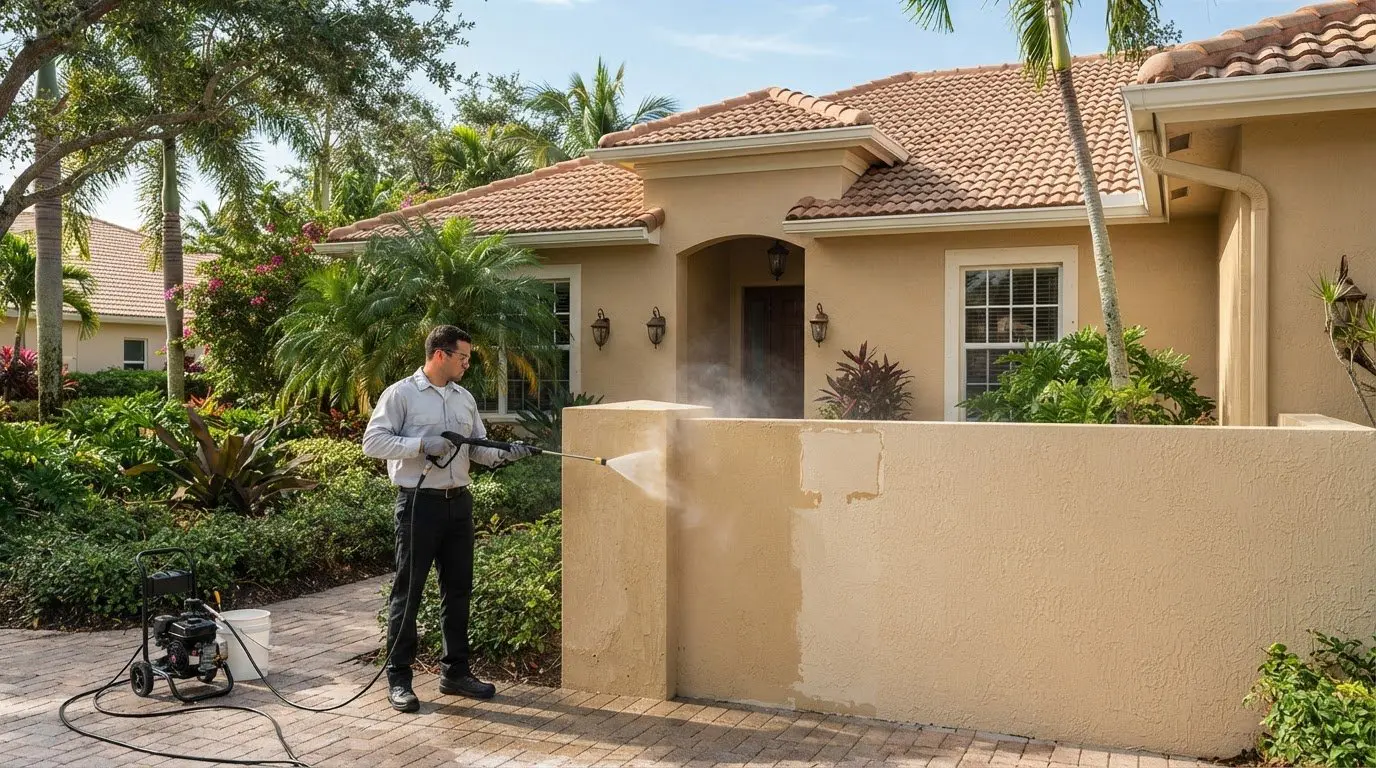
Exterior paint may last 7-10 years, depending on the climate, surface material, and paint quality. In Palm Beach Gardens, full exterior house wash and paint prep means removing dirt, mildew, chalk, and loose paint before new paint goes on. After washing, allow at least 24-48 hours for the home to dry before painting.
That cleaning step matters: painting over grime or mildew can undermine the finish, while an aggressive wash can damage the surface. Careful preparation creates a clean, sound base for paint and supports a neater, longer-lasting result.
This guide covers practical exterior paint-prep steps, from removing buildup and addressing peeling paint to letting surfaces dry and choosing suitable painting weather. You’ll also learn what affects paint lifespan and when a professional wash can help prepare your property. A clear process helps protect your home’s appearance and avoid common mistakes.
Key Takeaways
- Start with a close inspection so you can spot grime, mildew, chalking, and loose paint before they affect the finish.
- Use a careful washing approach suited to the exterior surface; excessive pressure can cause damage instead of improving paint adhesion.
- Remove only loose, peeling paint, then prepare bare or repaired areas so primer and paint can bond properly.
- Choose a dry, suitable weather window and make sure the surfaces are fully dry before applying primer or paint.
- For a thorough exterior wash or painting preparation, professional pressure cleaning can help tackle stubborn buildup across the home.
How long will an exterior paint job last?
Exterior paint may last 7-10 years, depending on climate, surface material, and paint quality. On wood, two coats of good-quality paint can last up to 15 years. In Palm Beach Gardens, salt, humidity, surface condition, and preparation all influence how well paint holds.
To see how washing can prepare a home’s exterior, watch this Lowe’s Home Improvement demonstration:
- Inspect the surfaces before washing. Walk around the home and note chalky paint, mildew, peeling edges, and cracks in stucco or siding. Salt residue can collect on coastal-facing surfaces, so include shaded corners and areas beneath eaves. A full exterior house wash and paint-prep plan for Palm Beach Gardens should account for the surface material and existing coating, not just visible dirt. Painting over chalk or mildew can interfere with adhesion and shorten the useful life of the new finish.
- Clean with controlled pressure. A pressure wash can remove dirt, mildew, and loose paint, but excessive force can damage stucco, siding, paint, landscaping, and electrical fixtures. Use a surface-appropriate method and avoid directing water into openings or electrical components. Roofs and windows need methods suited to those materials; don’t assume one pressure setting is safe for every surface. For vulnerable areas, a gentler wash may reduce the chance of damage while loosening buildup.
- Remove loose paint, then prepare bare spots. Scrape peeling edges until the remaining paint is firmly attached; the goal isn’t to strip every sound layer. Sand rough transitions so they don’t show through the finish. Apply primer or sealer to bare wood to help limit moisture and support adhesion. Stucco may need primer when it’s new, chalky, porous, patched, repaired, or previously failing. Let cleaned surfaces dry completely before priming.
- Seal gaps and address surface flaws. Replace failed caulk and use exterior paintable caulk on seams and cracks to help keep moisture out. Patch damaged stucco before painting, then prime repaired and bare areas as needed. Salt and humidity can challenge exterior coatings, so clean residue first and avoid sealing damp surfaces. Good preparation helps protect the exterior rather than covering problems that can reappear through fresh paint.
- Plan the work and confirm local requirements. Homeowners can compare contractors by reviewing their stated licensing and insurance, written scope, and preparation steps. Palm Beach Gardens permit needs and HOA rules can vary by project and community, so check the city and association before washing or changing exterior colors. Handle wash water and cleaning chemicals carefully: keep runoff from entering storm drains, protect nearby plants, and follow product-label directions. For local information about Palm Beach Gardens exterior services, consult the city page.
Pressure washing exterior walls before painting
Wash exterior walls before repainting to remove salt, dirt, and loose residue. Let every surface dry completely before applying primer or paint.
- Inspect the walls and set up carefully. Check stucco and siding for cracks, loose paint, open seams, and damaged areas before washing. Keep the spray away from gaps, vents, and electrical fixtures. Move or cover nearby items that water could damage. A pressure washer rated at least 2,000 PSI is recommended for exterior house painting, but that rating doesn’t mean every wall should receive that much force.
-
Wash Walls to Remove Salt Residue
Rinse exterior walls methodically, starting at the top and working downward. Salt residue can cling to surfaces near the coast, so pay attention to exposed walls, corners, and areas beneath windowsills. Use a nozzle and distance that clean without cutting into stucco or lifting sound paint. Check the rinse water and wall appearance as you work; stubborn buildup may need a gentler repeat rather than a closer, harder spray.
- Match pressure to the wall material. Stucco can be damaged by a concentrated spray, while siding seams can let water behind panels. Begin with a wider spray pattern and test an inconspicuous area. Keep the sprayer moving instead of aiming at one spot. Don’t use pressure to force water into cracks or strip firmly attached paint. The aim is a clean surface, not a bare wall.
-
Allow Washed Walls to Dry
Wait at least 24-48 hours after pressure washing before painting. Shade, humidity, airflow, and the wall material affect how quickly moisture leaves the surface. Check corners, cracks, and shaded sections, where water can linger. Don’t rely only on a dry-looking wall; apply primer or paint only when the exterior is completely dry. Damp surfaces can interfere with adhesion and compromise the finish.
- Keep the painting schedule practical. Plan to paint within a month after washing, because dirt and grime can build up again. Before starting, inspect the walls for fresh dust, residue, or loose paint. Reclean any affected areas and let them dry before applying primer. If washing exposes cracks or failed caulk, address those areas before painting instead of covering them with a new coat.
For help preparing exterior walls for repainting, talk with a local professional about pressure washing.
For coastal homes, pressure washing can remove salt residue before painting. Let exterior surfaces dry completely before applying primer or paint. An overly aggressive nozzle can damage the exterior.
Exterior painting weather and drying conditions
Choose weather that allows paint to apply evenly and dry without rain. In Palm Beach Gardens, temperature, humidity, sun, and coastal moisture can all affect the finish.
-
Check Weather and Temperature Conditions
Check the forecast and the surface temperature before opening paint. Sherwin-Williams advises avoiding exterior painting above 90°F, while Lowe’s advises painting below 85 degrees Fahrenheit. The recommended range in the research is between 50 and 90 degrees, with low humidity. These ranges make the conditions on the wall as important as the air temperature.
Look for steady conditions, not just a suitable reading at midday. A wall in direct sun can heat faster than one in shade, and temperature changes can affect paint application. Follow the paint label’s guidance. If the forecast or surface conditions fall outside it, choose another painting window.
-
Time Paint Application for Suitable Weather
Plan each section so the paint can dry before rain or evening moisture arrives. Sherwin-Williams says exterior paint typically needs at least 24 hours to fully cure before exposure to rain. Check the forecast for that period, not only the hours during application. Avoid starting a large wall if weather could interrupt the work before the finish has time to cure.
Work in manageable areas and follow the product label for recoat and drying instructions. Drying times vary by paint type and conditions, so follow the product label. Acrylic latex may have different label directions, so use the product’s stated timing rather than assuming every finish dries alike. Keep windows protected from fresh paint and allow coatings to dry before removing covers.
-
Account for Coastal Weather Challenges
Clean salt residue from coastal-facing walls before painting, since deposits can interfere with a clean surface. Palm Beach Gardens humidity can slow drying, especially on shaded walls or in still air. Check corners, areas beneath eaves, and other spots that stay damp longer. Don’t apply paint while moisture remains on the surface.
Choose exterior paint suited to the wall and local exposure. The research identifies 100% acrylic or elastomeric paints for coastal homes, with durability, flexibility, and UV protection among their benefits. Elastomeric coatings are less breathable than acrylic paint and can trap moisture vapor if applied incorrectly. Match the coating to the surface and follow its application directions.
- Apply paint with an eye on changing conditions. Start when the wall is dry and temperatures fit the paint label. Keep checking weather as work progresses, especially when clouds, rain, or high humidity approach. Consistent conditions help the finish dry more evenly across siding, stucco, trim, and areas around windows. For project-specific guidance, talk with a local exterior painting professional.
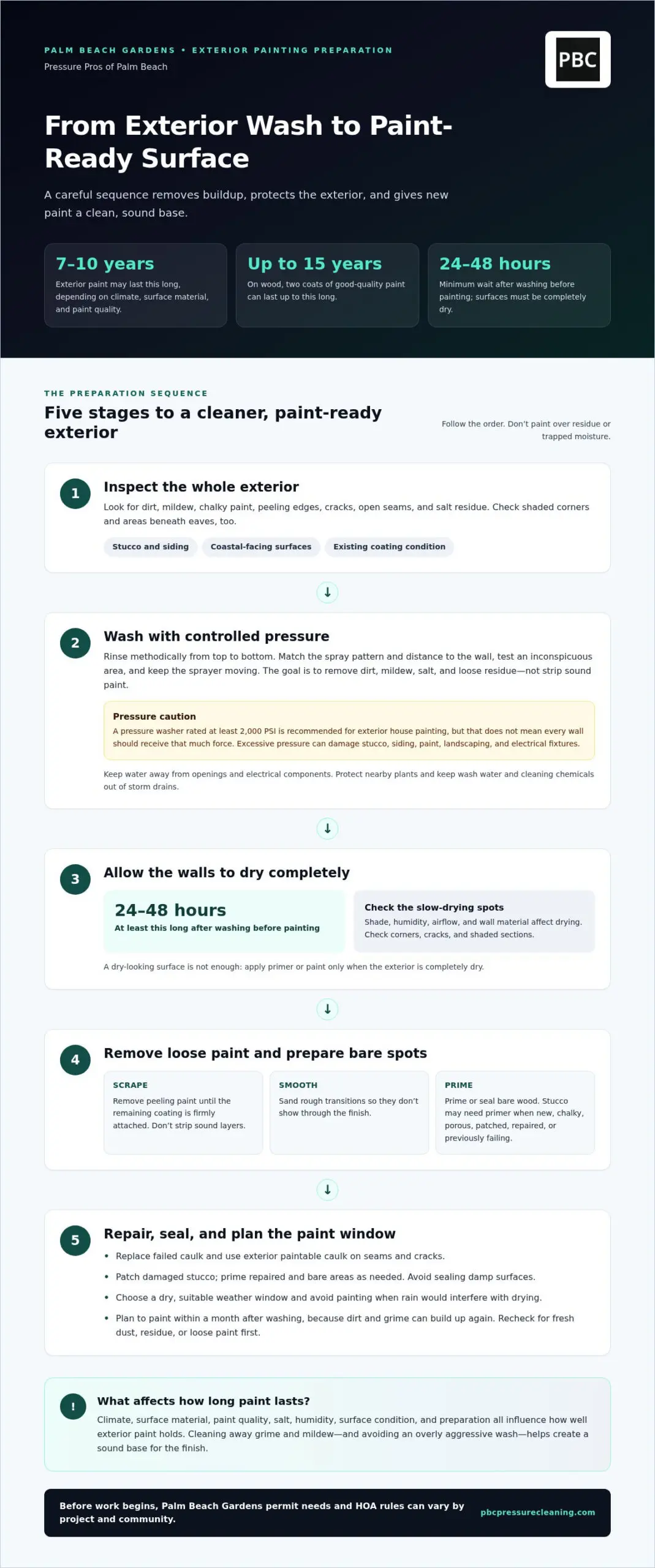
Removing dirt, grime, mildew, and peeling paint
A clean, stable surface is essential before painting. Start with visible buildup, then address loose coating. Stop if cleaning exposes damage that needs attention.
- Identify the type of buildup. Look for mildew, dirt, chalky residue, rust stains, and peeling paint before choosing a cleaning method. Shaded stucco, siding seams, and the undersides of shutters can hold grime that’s easy to miss from the driveway. Treat each spot according to its condition. A uniform rinse won’t remove every stain, and stronger pressure can harm a surface that only needs gentler cleaning.
- Clean mildew with care. Lowe’s gives a mildew-cleaning mixture of 1 quart of household bleach in 3 quarts of water. Apply a suitable cleaning solution carefully and follow its label directions. Protect nearby surfaces from unwanted splashes, and rinse the wall thoroughly. For tougher spots, a safe cleaning agent such as TSP may be used. Don’t paint over visible mildew or cleaning residue.
- Use pressure without causing damage. Pressure washing can remove dirt, mildew, and loose paint, but an aggressive nozzle can gouge stucco or force water behind siding. Start with a cautious test on an inconspicuous area. Keep the spray moving, and watch how the surface responds. If paint lifts beyond already loose edges or stucco begins to erode, stop and switch to a gentler cleaning approach.
- Scrape peeling paint, not sound coating. Use a scraper to remove loose and peeling areas; the goal isn’t to strip all existing paint. On exterior wood, scrape in the direction of the grain to avoid tearing its fibers. Feather rough edges with sanding so the transition won’t stand out under fresh paint. Check shutters, trim, and corners for lifting edges before moving on.
- Prepare each exposed area for paint. After cleaning and scraping, let the surface dry fully. Prime bare or repaired spots as needed, and address cracks or failed caulk before applying finish coats. If rust staining remains, targeted rust removal can help clean affected areas; avoid spreading stains across nearby paint. A careful final inspection helps catch missed mildew, loose flakes, and visible surface damage before painting begins.
Power washing is also recommended for exterior surfaces to remove dirt and mildew. Adding Jomax or Clorox to the wash will kill mildew and help prevent it from recurring.
Pressure Pros of Palm Beach: Roof Cleaning
Pressure Pros of Palm Beach provides Roof Cleaning for homeowners preparing their property’s exterior for painting or routine upkeep. Roof stains and buildup can make a clean home look neglected, even after the walls have been washed. A roof cleaning can address that visible buildup and help create a more consistent appearance across the property.
For exterior walls, Pressure Pros of Palm Beach also provides pressure cleaning and exterior painting. Professional help can be useful when roof access feels unsafe, stains cover broad areas, or you want washing and painting planned together. Matching the method to each surface helps avoid treating a roof like a wall.
Contact Pressure Pros of Palm Beach to discuss roof cleaning or exterior painting for your property.
Plan Your Next Exterior Refresh
Planning a full exterior house wash and paint prep in Palm Beach Gardens starts with identifying which surfaces need cleaning, painting, or both. This helps you prioritize work based on your property’s condition and goals instead of treating every exterior area as the same project. Homeowners might start with visible stains or worn paint. Property managers can use the same approach to identify priority areas across a building.
Pressure Pros of Palm Beach provides roof cleaning, power washing, and exterior painting. If roof stains, wall buildup, or worn paint affect your property’s appearance, match the service to the surface and the work needed. Sharing your priorities helps focus the discussion on your exterior maintenance needs.
Choose a plan that fits your priorities and supports your property’s upkeep. A thoughtful exterior refresh can help keep your Palm Beach Gardens property looking cared for.
Start by deciding what needs attention first, then discuss the work with Pressure Pros of Palm Beach.
Frequently Asked Questions
What does a full exterior house wash and paint preparation service include?
Paint preparation generally includes inspecting the exterior, washing away dirt and mildew, and identifying loose paint or surface flaws. It may also involve scraping peeling areas, addressing failed caulk, and priming bare or repaired spots. For example, chalky stucco may need different preparation than painted wood siding. The work depends on the surfaces and their condition, so clarify which cleaning and preparation tasks are included.
What steps are included in preparing an exterior for painting after washing?
After washing, inspect walls for residue, loose paint, cracks, and failed caulk. Scrape paint that is no longer firmly attached, smooth rough edges, and address surface flaws. Prime bare wood and repaired areas as needed. A repaired stucco patch, for example, may need primer before the finish coat. Follow a practical sequence: clean first, prepare defects next, and paint only when surfaces are dry and ready.
How long should exterior walls dry after washing before painting in South Florida humidity?
Allow at least 24-48 hours after pressure washing, then make sure the walls are completely dry before painting. South Florida humidity, shade, airflow, and surface material affect drying. A shaded stucco wall or a damp corner may need longer than a sun-exposed section. Check those slower-drying areas rather than relying only on the elapsed time. If moisture remains, wait before applying primer or paint.
Contact Pressure Pros of Palm Beach to discuss exterior cleaning or painting for your property.
Recent Comments