
Exterior Stucco Painting Services in Wellington for Lasting Exterior Protection
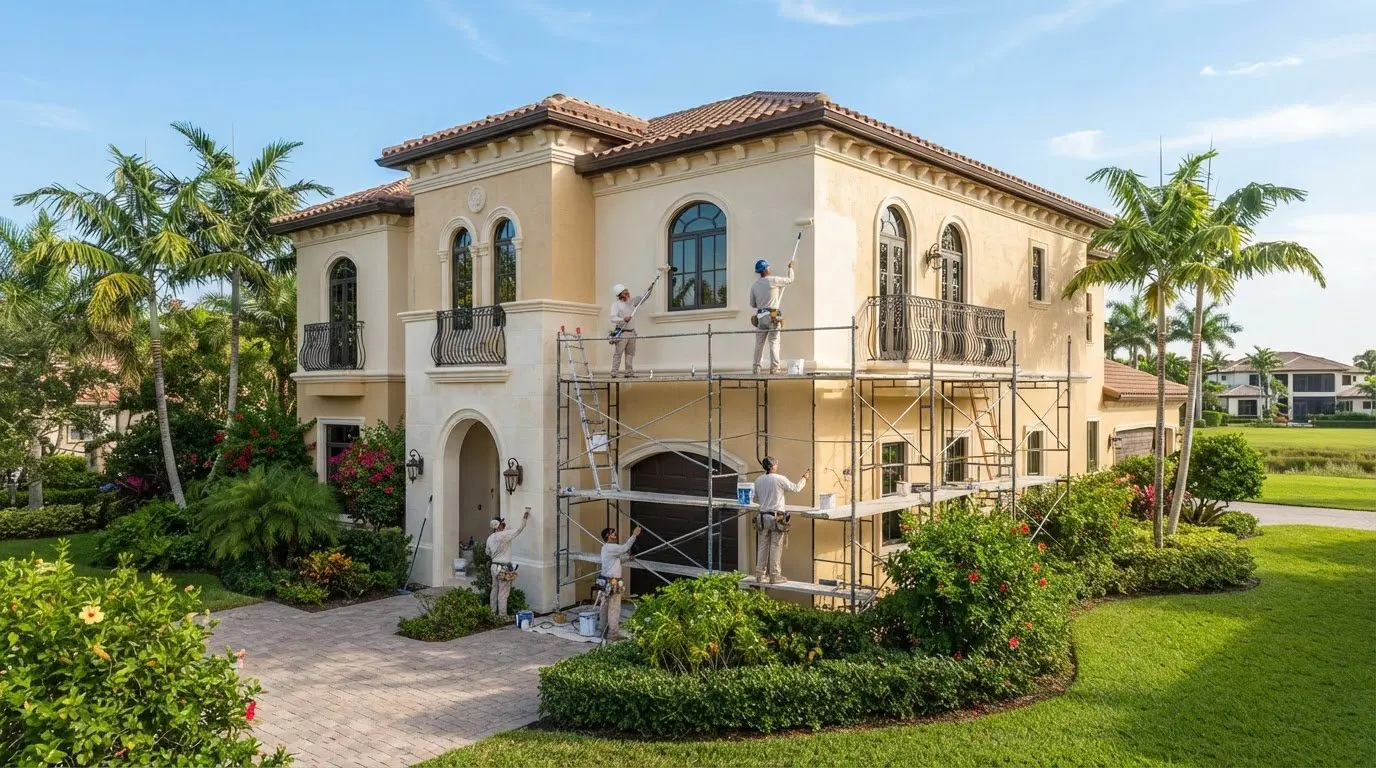
Stucco paint isn’t a forever finish. In Wellington, stucco typically needs repainting every five to 10 years, while commercial stucco surfaces are generally repainted every seven to ten years. The right timing depends on paint quality, sun and weather exposure, and maintenance, so fading, chalking, peeling, or cracking can signal that it’s time to assess the surface. Professional exterior stucco painting services in Wellington can help protect large exteriors while refreshing their appearance.
South Florida’s heat, humidity, strong sun, and changing weather can wear down exterior stucco. This guide explains how to spot paint failure, what professional stucco painting involves, and how preparation and coating choices affect the finish. You’ll also learn what to consider for residential and commercial properties, and when to plan exterior stucco painting services in Wellington.
Key Takeaways
- Look for fading, chalking, peeling, and cracks to help spot when a stucco exterior may need attention.
- Address damaged areas and moisture concerns before painting, then apply paint over a properly prepared and primed surface.
- Choose a stucco coating that helps resist weather exposure while allowing moisture to escape.
- Plan the project around the building’s condition: surface preparation and repair needs affect the work sequence and timeline.
- For large Wellington properties, professional exterior painting can help refresh curb appeal and support ongoing exterior maintenance.
What does professional stucco painting include for commercial buildings and large exterior surfaces?
Professional stucco painting starts with an exterior inspection, surface preparation, and identifying any repairs needed before painting. For property owners comparing exterior stucco painting services in Wellington, the condition of each wall helps determine the preparation required.
For a local perspective, review exterior painting in Wellington alongside the condition of your building’s stucco.
To see the basic process for painting stucco walls, watch this video:
Surface Preparation and Repair Needs
Inspect stucco from ground level and around accessible areas before painting. Cracks, bulges, chalky residue, peeling paint, and deteriorated patches can signal preparation or repair needs. On a commercial building, check each elevation and high-traffic entrance rather than judging the exterior from a single wall. Clean, sound surfaces help primer and paint adhere more evenly.
Look for failed sealants and signs of moisture, too. Address these conditions before painting: a fresh coat cannot fix underlying damage, and loose or chalky material can interfere with adhesion. At home, note the affected wall and visible symptoms. For a large commercial property, record each area so the preparation can be planned consistently.
Crack Patching Before Painting
Crack repair and patching belong before primer and paint. Minor stucco repairs, such as filling cracks and holes, take an average of 1 to 5 hours. The exact work depends on the condition and extent of the damaged areas. Patching first creates a more consistent surface and prevents open cracks or holes from being simply covered by the new finish.
Extensive stucco repair takes at least 24 hours because each layer must set and dry before another layer is applied. That sequence matters on large surfaces, where coating too soon can compromise the finished work. After repairs, the wall should be prepared and primed before painting. Elastomeric coatings may suit some stucco projects, but the surface condition and moisture concerns should guide the coating choice.
For commercial painting, inspect the entire exterior before work begins. Sound stucco may need less patching than walls with widespread cracks, bulges, or failed sealants. A clear sequence is to inspect, prepare, repair, prime, and then paint. This helps property owners understand what needs attention and supports a consistent finish across large wall surfaces.
How does stucco painting help extend the life of the exterior?
Stucco can last an average of 50 years or longer, and up to 100 years when properly installed and maintained. Painting supports ongoing surface maintenance, but it doesn’t replace repairs or correct moisture problems. To compare warranties and reviews for Wellington stucco painters, read the written coverage terms and look for review examples describing preparation, communication, and completed work.
Plan the Project Around Its Scope
The project schedule depends on the stucco’s condition, the repairs needed, surface preparation, and coating sequence. Begin by inspecting and documenting affected walls, cracks, moisture concerns, and texture differences. Then plan repairs, allow materials to set and dry, prepare and prime the surface, and apply the finish coating. Painting should follow repairs, not cover them.
Large commercial buildings may involve several elevations, while a home may have only a few damaged areas. Access, surface condition, and the number of repair steps all affect the schedule. Request a written scope that outlines the work sequence and how updates will be shared. This helps property managers track progress and distinguish repairs from painting.
Read Warranty Terms in Detail
Most stucco siding contractors offer a 15-year warranty for their work. That market figure isn’t a promise that every warranty covers the same items. Compare the written duration, what workmanship it covers, any exclusions, and the process for reporting a concern. Reviews can add context: look for specific comments about project communication, repaired areas, finish consistency, and how the completed work matched the agreed scope.
Also check whether a review describes a stucco project similar to yours. A large commercial exterior with varied textures presents different coordination needs than a small residential wall. Reviews that explain the property type and work performed can help you assess relevant experience more clearly than a brief rating alone. An insured contractor is another consideration when comparing providers, but review the actual project documents rather than relying on general claims.
Project Steps and Examples
A practical stucco painting sequence begins with inspecting the surface and addressing cracks. Next, apply a primer suited to the prepared stucco, then follow with the selected exterior coating. Project examples using elastomeric or waterproof primer show how primer choice can form part of the coating system. The actual steps depend on the wall’s condition, existing finish, and moisture concerns.
During planning, keep a record of the selected texture, coating, repair locations, and work stages. These details help owners compare the completed surface with the agreed scope and maintain a useful property record. To discuss the condition and sequencing needs of a Wellington exterior, share your stucco painting project details.
Exterior coatings for heat, humidity, sunlight, and weather exposure
Wellington’s heat, humidity, strong sunlight, and changing weather make coating selection important for stucco maintenance. An appropriate exterior coating adds a protective layer, while the right primer and application process depend on the wall’s condition and exposure.
Choose the coating system based on the stucco, not color alone. An estimate should account for chalking, existing paint, texture, and exposure to direct sun or regular rain. A sun-exposed commercial wall, for example, may show different wear from a sheltered residential wall. These details guide surface preparation and finish selection.
Primer helps prepare stucco for paint, but it requires a clean, sound surface. Washing can remove dirt and loose residue; assess chalking because painting over powdery material can interfere with adhesion. After cleaning, prepare the surface for primer and paint according to the wall’s condition and the product instructions.
Stucco coatings should help keep water out while allowing moisture to escape. That balance matters in Wellington’s humid climate: trapped moisture can affect the coating and the underlying surface. A coating that blocks water but prevents outward moisture movement may not suit every wall. The stucco, existing finish, and any moisture concerns all factor into the choice.
Elastomeric coatings are flexible and can stretch as a building settles, which may help reduce some surface cracking. They are an option, not a substitute for repairing damage or addressing moisture problems. On a large commercial building, assess broad wall areas, repaired patches, and textured details before choosing a finish. Consistent application helps create a uniform appearance.
Sun and weather exposure also affect how a painted exterior ages. Strong sunlight can contribute to fading, while rain and surface condition influence coating performance. Assess each Wellington elevation separately: a wall in direct sun may weather differently from one in shade. Preparation, product selection, application, and maintenance all contribute to how the coating performs over time.
Before work starts, clarify which walls are included, what washing and preparation are planned, and how repairs will be handled. Note the stucco texture and any chalking or uneven wear. These observations help align the estimate with the property and make coating options easier to compare for Wellington’s climate.

Exterior painting for Wellington and South Florida’s climate
Wellington’s strong sun, humidity, and changing weather make exterior planning about more than color. Walk around the property and note which walls receive direct sunlight, which stay shaded, and where rain exposure is most noticeable. These details help homeowners and property managers describe the building’s needs and plan a consistent finish.
Florida HOA rules for exterior paint colors vary by community. Review your community’s written guidelines and approval process before choosing a color or scheduling work. This can help avoid delays if a proposed shade or finish requires review.
Sunlight, shade, and surrounding surfaces can make a color look different across Wellington homes. Compare color choices against the building in different lighting, rather than judging a small sample in one spot. For a commercial property, consider how the finish will look across connected walls and entrances, where visible differences can affect the overall appearance.
Weather matters when planning the work. Schedule preparation and coating for suitable conditions, and make sure the exterior is ready before painting begins. Property managers can coordinate access to different elevations and communicate the work sequence to occupants. Clear planning helps keep the project organized and reduce interruptions.
Assess stucco painting services near Wellington, Florida, through relevant project examples and detailed reviews, not ratings alone. Look for feedback about communication, care around the property, attention to the agreed scope, and the finished appearance. Photos of similar stucco buildings can also show how a company handles large exterior surfaces.
Keep a record of the building’s current color, visible fading, and any community requirements. A property manager, for example, can photograph each elevation and note areas needing attention before discussing the project. This gives the painting conversation a clear starting point and helps align expectations among owners, residents, or business tenants.
For Wellington property owners, plan around the building and its community requirements. Review color rules, consider how the finish looks in different light, and organize access before work begins. These steps help keep the project on track and create a more cohesive exterior appearance.
Pressure Pros of Palm Beach: Roof Cleaning
Pressure Pros of Palm Beach provides exterior painting and roof cleaning for Wellington property owners. If stucco walls show fading, chalking, or peeling, exterior painting can refresh the finish after proper surface preparation. Roof cleaning addresses a different part of the property by removing visible buildup and keeping the roof looking cared for.
Consider these needs as part of maintaining the whole exterior. A commercial property manager, for example, can plan stucco painting while assessing the roof’s appearance. Roof cleaning does not replace stucco preparation or painting, but it can complement broader exterior upkeep.
Contact Pressure Pros of Palm Beach to discuss exterior painting or roof cleaning for your Wellington property.
Plan Your Next Exterior Maintenance Step
Use your inspection notes to decide which exterior surfaces need attention first. For property owners considering exterior stucco painting services in Wellington, a clear scope helps align preparation, coating choices, and scheduling with the building’s needs. If you manage a commercial property, gather observations from each elevation before planning the work.
Pressure Pros of Palm Beach offers exterior painting, roof cleaning, and power washing. These services address different surfaces, so identify whether your priority is refreshing stucco, cleaning the roof, or washing other exterior areas. Share what you have observed to discuss the next step for your property.
Take the first step toward a well-maintained exterior. Share your priorities and plan the work around your property.
Frequently Asked Questions
How often does stucco need to be repainted?
Stucco typically needs repainting every five to 10 years. For Wellington homeowners, direct sun, weather exposure, paint quality, and upkeep influence the timing. Check the exterior for fading, peeling, or a dull, uneven finish. A wall with heavier sun exposure may show wear sooner than a shaded area, so assess each side of the property rather than relying only on the last paint date.
How do contractors ensure consistent color and finish across large buildings?
Contractors plan the work across connected wall sections and use the same selected paint color and finish throughout the project. On a large commercial building, consistent preparation and application help avoid noticeable differences between elevations. Property managers can also identify matching existing colors before work begins and review how the finish looks across repaired areas, textured sections, and broad walls in different lighting.
How does stucco painting impact curb appeal and overall property image?
An even stucco finish can make a home or commercial property look cared for and cohesive. Repainting a faded front elevation, for example, can give an entrance a cleaner appearance, while a coordinated finish can make a multi-building property feel more orderly. Paint also adds an exterior coating, but the result depends on preparing the surface and addressing visible damage first.
How many coats of paint does the exterior of a house need?
A home’s exterior may need two coats of paint. Coverage depends on the stucco’s condition, color change, surface texture, and application. A strongly contrasting new color may need particular attention to achieve an even appearance. Include the planned number of coats in the project scope, and distinguish primer from finish coats.
How much does it cost to get the outside of your house painted?
The price depends on the property and is provided after a quote request. Cost factors include exterior size, stucco condition, preparation needs, access, and the selected coating system. An exterior needing extensive patching or with difficult-to-reach walls requires a different scope from a sound, simple surface. Share property details and visible wear so the estimate reflects the work needed.
Which paints and primers work best for Florida stucco homes?
Choose a stucco coating that helps keep water out while allowing moisture to escape. Apply it to a clean, sound, prepared surface over a primer suited to the stucco. Elastomeric coatings may suit some projects, but repairs and moisture concerns should guide the choice.
Recent Comments