
Red Flags in an Exterior Painting Quote That May Add Costs
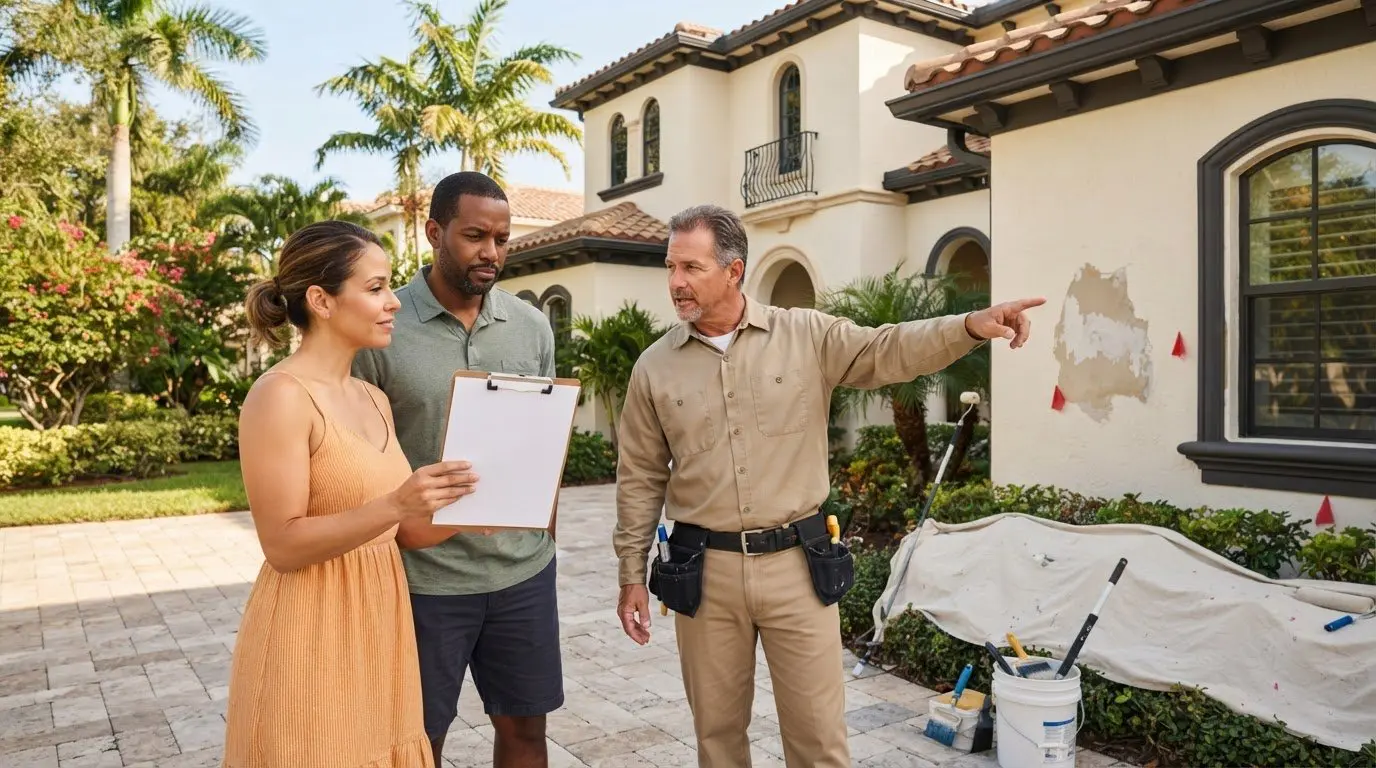
A low exterior painting quote can turn into an expensive surprise if it leaves out surface preparation, materials, or work that may be billed as an extra. The main red flags in an exterior painting quote are vague scope, unclear paint details, missing contractor information, and unexplained charges. For homeowners in Palm Beach County, paint quality matters too: a low bid that relies on unsuitable products or skips preparation may not protect the exterior as intended.
It’s reasonable to compare quotes and look for good value, but the total alone doesn’t show what’s included. A clear estimate should identify the surfaces to be painted, how they’ll be prepared, the planned paint and materials, what cleanup covers, and how additional work will be handled.
This guide explains how to spot missing contractor details, vague scope, hidden costs, and paint-quality concerns before choosing a quote. You’ll also learn how to compare estimates on equal terms, understand what you’re paying for, and choose exterior painting that supports your property’s appearance and protection.
Key Takeaways
- Look for complete contractor contact details and a physical address, then review recent project references and photos to assess workmanship.
- Compare the written scope, preparation steps, materials, timeline, and cleanup so you can tell whether quotes cover the same work.
- Clarify which extra charges could apply, such as surface repairs, additional materials, or specialized equipment, before agreeing to the project.
- Check that the quote identifies the exterior paint product and doesn’t rely on a one-coat promise that may not suit the surface or color change.
- Choose based on the value and clarity of the work, not just the lowest bid, and contact Pressure Pros of Palm Beach about exterior painting for your property.
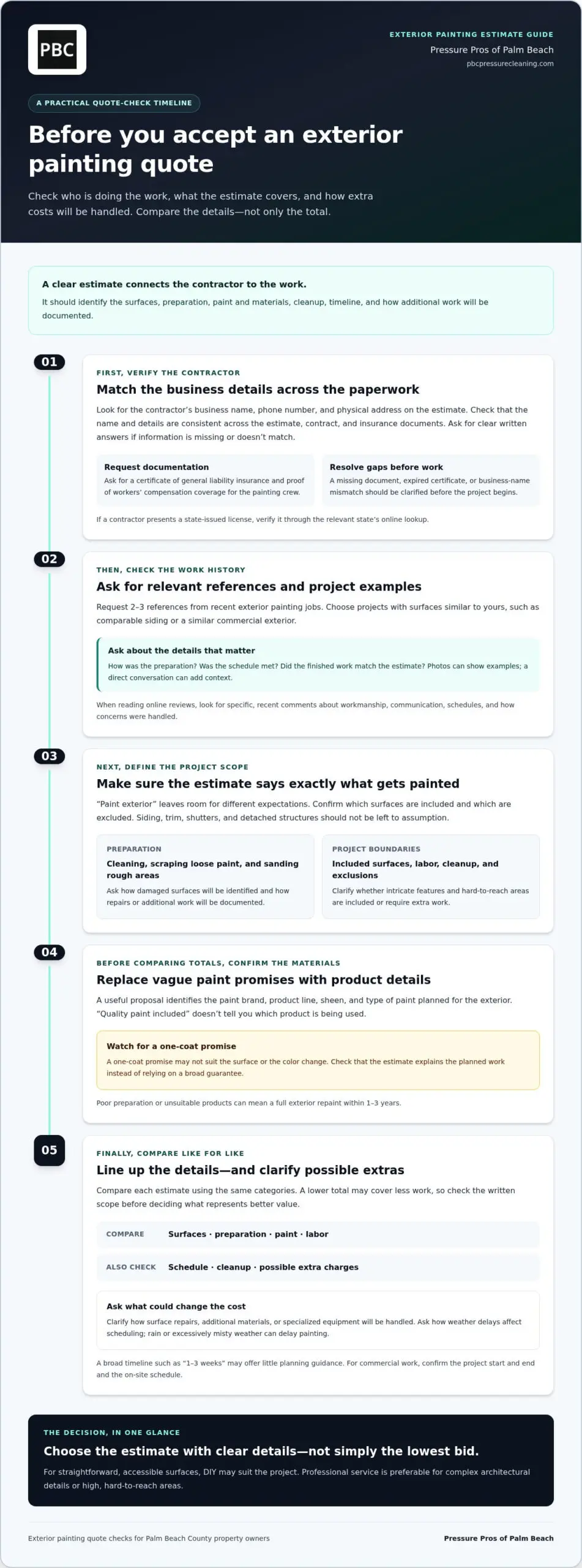
1. Missing contractor contact information or physical address
A missing business address or incomplete contact details are red flags in an exterior painting quote. A written estimate should identify the contractor and provide reliable contact information, such as a business phone number and physical address. If the address is missing, ask for it before discussing payment or signing. Hesitation to provide basic business details can make it harder to resolve questions about the work later.
Check that the business name, phone number, and address match across the estimate, contract, and insurance documents. For example, a quote under one business name and an insurance certificate under another needs an explanation. Clear communication matters before work starts and if a concern arises after painting. Keep the estimate and related messages together so you can refer to the agreed details.
Ask for 2–3 references from recent exterior painting jobs. Choose references for projects similar to yours, such as a house with comparable siding or a commercial building with similar exterior surfaces. Ask about the finished work, preparation, schedule, and whether the final scope matched the estimate. Photos can help show the contractor’s work, but a direct conversation can explain how the project went.
Online reviews can offer another useful perspective. Read several rather than relying on a single rating, and look for specific comments about workmanship, communication, schedules, and how concerns were handled. Recent, detailed feedback gives more context than a brief comment without project details. Repeated complaints about unfinished work or missed commitments deserve attention, especially if the contractor’s response offers no clear resolution.
Ask for a certificate of general liability insurance and proof of workers’ compensation coverage for the painting crew. Check that the business name on those documents matches the contractor named in the estimate. A missing document, expired certificate, or name mismatch should be resolved before work begins. These documents clarify the coverage in place; a verbal assurance is not a substitute.
If a contractor presents a state-issued license, verify it through the relevant state’s online lookup. Experience should also be supported by examples, not just broad claims. Ask about the contractor’s experience with exterior projects and request photos or references showing similar work. A clear answer should relate that experience to the surfaces and scope in your estimate.
Take these steps before paying a deposit or approving the schedule. A trustworthy estimate connects a named contractor to reachable contact details, relevant references, and matching documentation. If details are missing or inconsistent, pause and get clear written answers before moving forward.
2. Insufficient detail about surface preparation and project scope
A quote that says only “paint exterior” leaves important decisions open. It should identify the included surfaces, their condition, preparation steps, materials, painting work, and cleanup. For example, a proposal might include siding but exclude trim, shutters, or a detached structure. If those boundaries aren’t written down, you may face added charges or disagreements about what the completed job should include.
Preparation deserves a clear description of its own. Look for steps such as cleaning, scraping loose paint, sanding rough areas, and identifying damaged surfaces that may need attention before painting. Ask how the contractor will handle each surface rather than accepting a general phrase like “prep as needed.” Preparation and surface repairs can affect the project and its cost. The quote should explain what’s included and how additional work will be documented.
Materials need enough detail for a fair comparison. A useful proposal identifies the paint brand, product line, and sheen, along with the type of paint planned for the exterior. It should describe the surfaces to be covered and distinguish labor from materials and extra fees. “Quality paint included” doesn’t tell you which product is planned. Specific details let you compare estimates without assuming they cover the same work.
Weather, season, and location can affect exterior painting quotes. Regional costs and seasonal demand vary, and prices tend to rise during high-demand seasons. Rain or excessively misty weather can delay painting, so compare the stated timeline and how weather delays affect scheduling. A quote with a broad window such as “1–3 weeks” gives little guidance for planning.
Compare estimates line by line using the same checklist: surface area, preparation, paint, labor, schedule, cleanup, and possible charges. If one estimate includes extensive preparation and another omits it, their totals don’t represent equivalent work. Intricate architectural features and hard-to-reach areas may require extra work, so check whether they’re included.
DIY painting may suit a straightforward, accessible surface, but professional service is preferable for complex architectural details or high, hard-to-reach areas. For commercial work, an agreement can state when the project begins and ends and describe the on-site schedule. These details help property managers plan for access and daily operations.
Before accepting a vague estimate, request a written scope naming the surfaces, preparation steps, products, cleanup, and timeline. Poor preparation or improper products can force a full exterior repaint within 1–3 years. To clarify the scope for your property, talk with a painting professional about the surfaces and work you expect.
3. What Are Hidden Painting Costs?
An unusually low bid can look appealing, but it may leave out work that later appears as an extra charge. A quote that sits 25–40% below competing bids is a potential warning sign, not proof of poor workmanship. Compare the written scope first. If one residential estimate excludes prep work, cleanup, or materials included in others, its lower total may reflect less work rather than better value.
Shortcuts can be hard to spot in a brief proposal. A contractor may plan to use lower-quality paint, reduce surface preparation, or leave listed surfaces out of the job. Each choice can affect the finish and its protection of the exterior. Ask for a written explanation of the work behind the estimate, including preparation and materials. If the explanation doesn’t match the proposed scope, get the details clarified before agreeing.
Look for extra charges that could change the final amount. A quote, for example, may not cover moving outdoor furniture, extensive cleanup, travel, specialized equipment, premium paint, surface repairs, or additional materials. Ask which items are included or excluded and how added work will be priced. A clear approval process for changes helps prevent unexpected charges once work is underway.
Make sure the estimate separates the main project from possible add-ons. A house with peeling areas may need more preparation than one with sound surfaces. If repairs or extra preparation are outside the original scope, the quote should explain how the contractor will identify them and get approval before proceeding. This lets you distinguish agreed work from a proposed change instead of facing an unexplained bill.
Payment terms also affect your exposure. The agreement should state the payment schedule and connect payments to clear project stages. Don’t pay the entire project amount before work begins. A contract should also explain how either party can end the agreement and what happens to any deposit. For large industrial and commercial painting projects, a 30% down payment for materials is described as standard practice, but that example shouldn’t be treated as a rule for every job.
Before you decide, compare each estimate against the same checklist: preparation, materials, labor, timeline, cleanup, extra fees, and payment schedule. If a bid is 25–40% below others, ask what accounts for the difference, then compare the written answers. Choose value and clear workmanship terms over a low total alone. A complete quote makes it easier to plan the project and understand which added work could affect the final bill.
4. Paint quality and exterior durability
A fresh finish can look even on day one yet wear early if the paint or preparation doesn’t suit the exterior. Quality paint generally costs more but can offer greater durability and a better finish. The quote should identify the paint brand, product line, and sheen so you can compare actual materials rather than rely on broad phrases like “premium paint.”
One coat isn’t automatically enough for every color change or surface. A promise of one coat when painting dark over light is a warning sign, since the result may lack even coverage. Ask the painting contractor to state the expected number of coats and explain how the existing color and surface condition affect that plan. A clear, accurate proposal ties the coat count to the job, not simply to a sales promise.
Exterior paint needs to be formulated for weather resistance, which affects the project’s price. The lowest-cost product may not be the most reasonable choice if it means hiring someone to repaint in a couple of years. A properly completed exterior paint job often lasts 7–15 years, but surface condition, preparation, product choice, and exposure all matter. Treat that range as context, not a promised lifespan for every property.
Check product and labor coverage separately. Reputable coatings commonly offer 5–15 years of product support, while labor warranties commonly range from 1–5 years. Those figures describe different types of coverage. The contract should state what the warranty covers, how long it lasts, and what steps apply if a covered issue appears. Don’t assume product support covers workmanship, or that a labor warranty covers the paint itself.
A reasonable payment schedule should be written into the agreement before work starts. A deposit of 10–30% is described as reasonable, and you shouldn’t pay the entire project amount upfront. The contract should state when later payments are due and connect them to agreed project stages, rather than leaving payment timing open-ended.
For painting projects, compare the finish and expected durability as well as the total. Ask for product details, planned coats, surface preparation, and written warranty terms in the same proposal. These details help you judge whether a lower bid reflects a genuine difference in scope or a paint-quality compromise. They also give you a clearer basis for choosing a contractor to protect your exterior and property’s appearance.
Pressure Pros of Palm Beach: Roof Cleaning
Pressure Pros of Palm Beach provides exterior painting for homeowners and commercial property managers comparing quotes or planning to refresh a property. Discuss the surfaces to be painted, the project scope, and an estimate for your property with the team. Clear details help you understand the planned work before making a decision.
Roof cleaning is also available when a stained or dirty roof needs attention as part of broader exterior upkeep. Keep it as a separate service from painting, with its own scope and estimate. For painting details, visit the exterior painting services page.
Contact Pressure Pros of Palm Beach to discuss your exterior painting or roof cleaning needs.
Make Your Next Painting Decision With Confidence
Use the written estimate as a working record for the property, not just a document to approve. Save the version you reviewed, note any agreed changes, and keep the final scope with project communications. This helps homeowners remember what was agreed and gives property managers clear records for future maintenance decisions.
Recognizing red flags in an exterior painting quote is a useful first step; the next is choosing work that fits your property’s needs. Pressure Pros of Palm Beach offers exterior painting, roof cleaning, and power washing for residential and commercial properties. A conversation about your exterior can help you identify the service that best matches your current project.
Take the next step at your own pace, with a clear plan for your property.
Frequently Asked Questions
What Are Hidden Painting Costs?
Hidden painting costs are charges beyond the work a homeowner understood the estimate to cover. They can arise when a newly discovered condition changes the job or the original wording leaves room for interpretation. Before approving the quote, agree on a written change process: describe the added task, its effect on the schedule and total, and who must approve it. Keep the updated scope with the original estimate.
What should a detailed exterior painting quote include?
A detailed quote should identify the property, the areas to be painted, the planned products, and the work sequence. It should also explain how changes discovered after work starts will be handled. For example, if a walkthrough reveals that a surface differs from what the estimate assumed, the proposal should show how that difference will be reviewed and approved before the scope changes.
What surface preparation should an exterior painting estimate include?
The estimate should describe preparation based on the visible condition of each surface. For example, it can explain how the crew will handle loose coating, bare spots, chalky areas, or mildew where present, and whether priming is included. Ask for preparation details by surface, such as siding versus trim, so the plan reflects the actual condition rather than a generic “prep” allowance.
Should an exterior painting quote include labor, materials, repairs, and cleanup separately?
Yes. Separating labor, materials, surface work, and cleanup makes the scope easier to understand and provides a clearer record if the work changes. It also distinguishes agreed painting work from newly proposed tasks. If additional surface work becomes necessary, for example, a written update can show which part of the project changed instead of blending it into one unexplained total.
What exclusions or hidden charges should homeowners look for in a painting quote?
Look for exclusions involving areas you expect to be painted, such as shutters, trim, railings, or detached structures. Check whether the proposal explains how nearby surfaces will be protected and what cleanup is included. These details can matter on homes with patios, driveways, or closely spaced exterior features. Ask for each exclusion to be stated plainly so you can decide whether to include it in the project before signing.
Recent Comments