How to Choose a Rust Remover for Sprinkler Stains on Walls
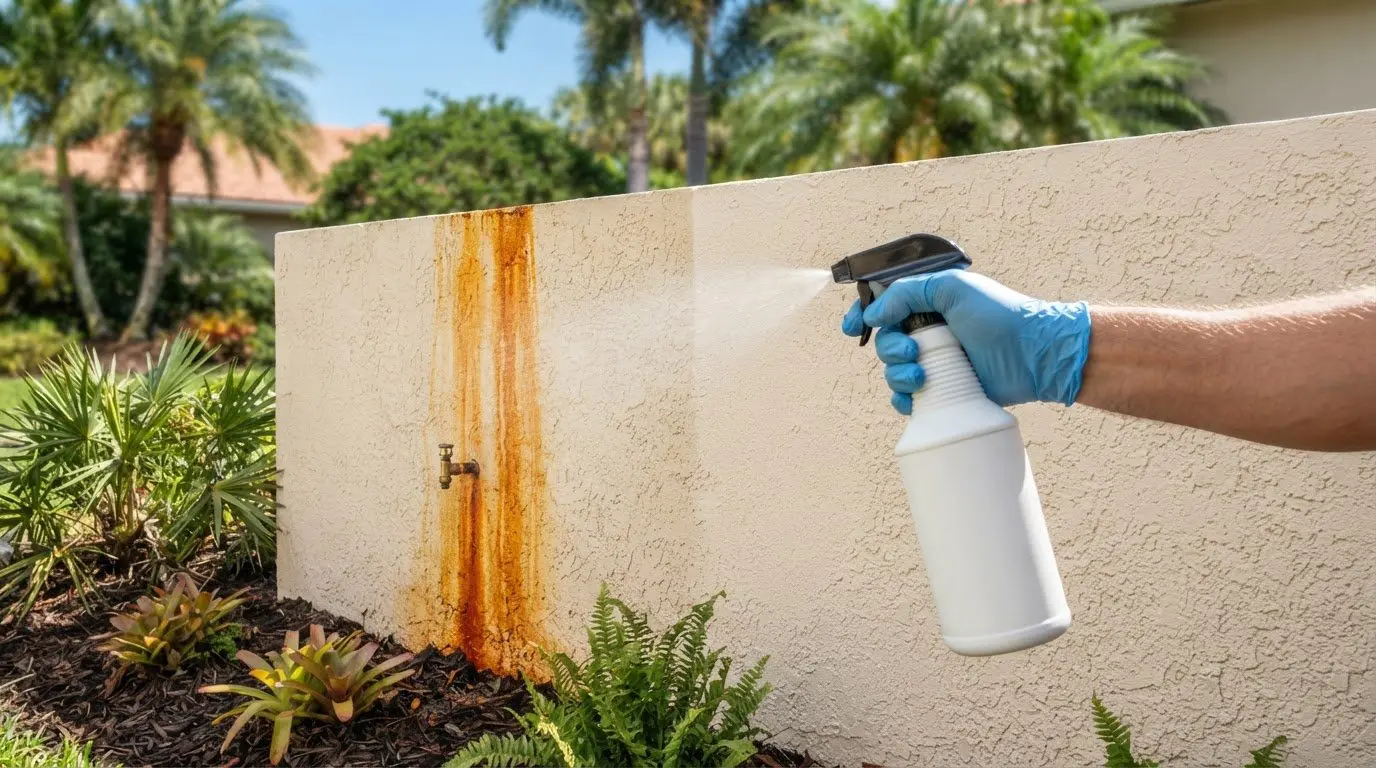
Bleach isn’t the answer to orange sprinkler rust stains: it won’t dissolve the iron deposits causing them. In Wellington, Florida, the best method for removing sprinkler rust stains from walls is to use a rust remover suited to the surface, apply it to a dry wall, and rinse it thoroughly before it dries.
It’s tempting to reach for a familiar household cleaner when rust streaks make an exterior look neglected. But the wrong product, especially a harsh acid, can damage the finish instead of removing the stain.
Learn which cleaners suit concrete and masonry, why vinegar and other homemade methods may disappoint, and how to apply a rust remover carefully. You’ll also find ways to reduce repeat staining by keeping sprinkler spray off walls and other hard surfaces.
Key Takeaways
- Bleach won’t dissolve iron rust, so choose a cleaner designed for sprinkler stains instead of relying on a household shortcut.
- Apply rust remover to a dry surface, follow its label, and rinse it thoroughly before it dries.
- Match the cleaner to the wall material, since strong acids can etch concrete or discolor paint.
- Vinegar and other homemade methods may not be the best fit for stubborn sprinkler stains; learn what to consider before trying them.
- Prevent recurring orange streaks by adjusting sprinkler heads so they don’t spray walls and other hard surfaces.
Applying rust remover to a dry surface
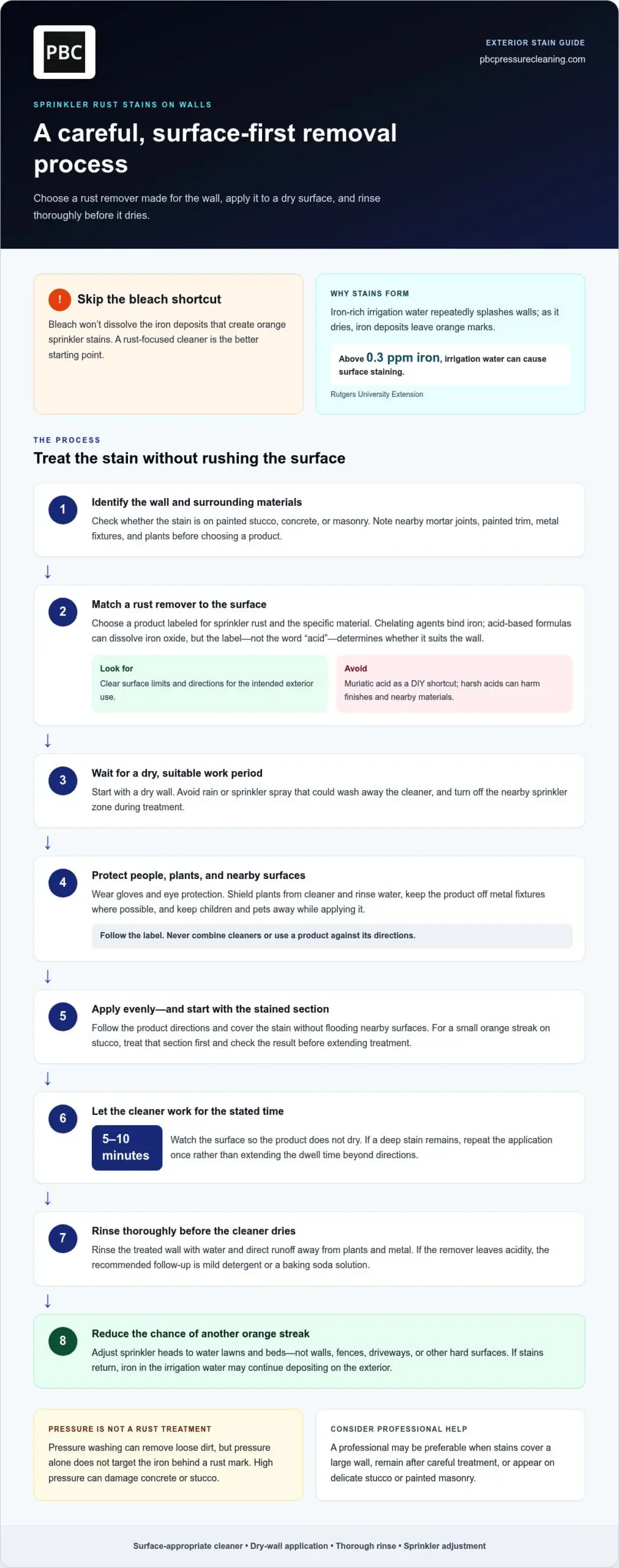
Sprinkler rust stains form when iron-rich irrigation water repeatedly splashes exterior walls, leaving orange iron deposits as it dries. Rutgers University Extension identifies irrigation water above 0.3 ppm iron as capable of causing surface staining.
For the best result, apply a surface-appropriate sprinkler rust remover to a dry wall, let it sit for 5-10 minutes, then rinse it thoroughly before it dries. Deep stains may need one repeat application.
Wear gloves and eye protection, follow the cleaner’s label, and protect nearby plants from runoff. Keep children and pets away from the area while applying the product.
Hire a professional when stains cover a large wall, remain after careful treatment, or appear on delicate stucco or painted masonry. Don’t increase pressure on a wall or driveway to chase rust: high pressure can damage concrete or stucco.
- Identify the surface and stain. Check whether the wall is painted, stucco, concrete, or masonry, then choose a rust remover labeled for that material. Note nearby metal fixtures and plants before starting, since unsuitable acids can affect both.
- Choose a dry, suitable work period. Wait until the wall is dry, and avoid starting when rain or sprinkler spray could wash away the cleaner. Turn off the nearby sprinkler zone for the cleaning period so the treated area stays dry during application.
- Protect the surrounding area. Put on gloves and eye protection, and shield plants from cleaner and rinse water. Keep the product off metal fixtures where possible, and never combine cleaners or apply a product contrary to its label.
- Apply the rust remover evenly. Follow the label’s directions and cover the stained section without flooding nearby surfaces. For example, treat a small orange streak on stucco first, rather than coating the entire wall before checking the result.
- Allow the stated dwell time. Let the cleaner work for 5-10 minutes, watching the surface so the product does not dry. If the stain remains deep, repeat the application once instead of extending the dwell time beyond the directions.
- Rinse before the cleaner dries. Thoroughly rinse the treated wall with water, directing runoff away from plants and metal. If the remover leaves acidity, the recommended follow-up is mild detergent or a baking soda solution.
- Prevent another sprinkler mark. Adjust sprinkler heads to water lawns and beds, not walls, fences, driveways, or other hard surfaces. If orange streaks keep returning despite adjustment, the irrigation water may contain iron that continues to deposit on the exterior.
Chemicals and acids that dissolve rust on concrete and masonry
Iron oxide gives sprinkler stains their orange color, but cleaners work in different ways. An acid-based formula can help dissolve deposits, while a chelating agent binds iron so residue can be lifted from the surface. Understanding the difference helps you choose a product for both the stain and the wall material, rather than relying on the cleaner’s name alone.
- Check the active ingredient and intended use. Look for a product specifically made for sprinkler rust on concrete or masonry. The label should identify the surfaces it addresses and explain how to use it. A general rust cleaner may target iron, but its directions may not suit a wall finish or exterior application.
- Understand what a chelating agent does. Chelators attach to iron in the stain, helping separate it from the surface so it can be removed. This can be a useful option when you want a rust-focused product without assuming that a stronger acid will work better. Follow the product’s stated surface limits.
- Consider acid-based formulas carefully. Mild acids can dissolve iron oxide, which makes them common in rust removers. The word “acid” alone doesn’t tell you whether a formula suits a specific wall. Compare the label’s named materials with your surface, such as unpainted concrete block versus coated masonry.
- Keep muriatic acid out of DIY stain treatment. It’s a poor shortcut for sprinkler marks because the chemical can harm nearby materials and fixtures. A product formulated for rust stains gives clearer use directions for the intended job. Don’t use a stronger chemical simply because an orange deposit looks difficult to remove.
- Choose for the whole installation, not only the stained patch. A masonry wall may include mortar joints, painted trim, metal fasteners, or a coated finish. Read the product directions with those neighboring materials in mind. For example, a cleaner intended for bare concrete may not be suitable where the same wall meets painted trim.
- Use cleaning pressure for the right purpose. Pressure washing can remove loose dirt, but pressure alone doesn’t target the iron chemistry behind a rust mark. Avoid treating a stubborn orange stain as ordinary grime. Select a rust-focused cleaner first, and use washing only as directed for that particular surface.
For a stubborn stain across mixed masonry, discuss exterior cleaning options before choosing a treatment that could affect the surrounding finish.
Choosing a rust remover for the surface
The best method for removing sprinkler rust stains from walls depends on more than the orange mark. First identify the wall’s finish and construction. Painted stucco, exposed brick, and concrete block each call for different considerations when choosing a cleaner.
- Determine whether the stain is on a coating or the masonry itself. Painted stucco has a finish layer that can change in color or sheen. On exposed brick, the brick face and mortar joints both matter. A product’s directions should account for the surface actually being treated, not just the material beneath it.
- Look closely at painted areas before selecting a product. Check whether paint is peeling, chalky, or already damaged around the orange streak. A cleaner suitable for sound painted masonry may not be suitable for a worn coating. Don’t treat flaking paint as though it were bare concrete.
- Consider the wall’s texture and joints. Brick faces, porous block, and smooth painted surfaces hold staining differently. Mortar joints also create narrow grooves where deposits can remain visible. Choose a product whose directions describe the relevant masonry type, including joints, instead of relying on a label that only says “exterior.”
- Check whether the source may be rusty metal. An orange mark directly below a fastener, railing, or fixture may come from that metal rather than sprinkler water. Removing the visible stain won’t address a continuing source at the same spot. Look for a clear drip path or contact point before deciding the stain is irrigation-related.
- Use the product’s named surface categories. “Concrete,” “brick,” and “painted masonry” aren’t interchangeable label terms. If the instructions name only concrete, don’t assume they cover a painted brick wall. Compare the wording with the wall’s actual finish and construction, including any coating or decorative texture.
- Account for color and appearance. Light-colored paint can make even a small change in shade noticeable. Brick can vary naturally in color, so compare the stained area with nearby bricks rather than judging one mark alone. Choose a cleaner with directions that fit the finish and desired appearance.
- Choose a professional approach for complex finishes. Large stained areas, multiple wall materials, or delicate decorative coatings can make product selection harder. In those cases, the best method for removing sprinkler rust stains from walls is one that addresses the stain without compromising the finish. Avoid guessing with a stronger chemical or abrasive tool.
Homemade rust-removal methods and vinegar
Vinegar is a common DIY choice because its acetic acid reacts with some iron oxide. It may loosen a light surface mark, but sprinkler stains can be stubborn, particularly after repeated irrigation. For persistent orange streaks, a cleaner made for sprinkler rust is usually more suitable.
- Try vinegar only on a small, compatible test area. Choose an inconspicuous spot on the same material and finish. Apply a little vinegar, leave it briefly, then rinse and let the patch dry. Check for changes to paint, masonry, or color before considering any larger treatment.
- Don’t assume vinegar suits every wall. Its acidity can affect sensitive coatings or surfaces, and a homemade cleaner has no label specifying safe materials. Painted stucco, for example, needs particular care. If the test patch dulls or discolors, rinse it and don’t apply vinegar across the stain.
- Use a purpose-made rust remover for persistent marks. A mild acid or chelating agent in a product designed for sprinkler stains targets iron deposits more directly. Follow the label for the exact surface and application. This is a better next step than repeatedly applying vinegar to a deep orange streak.
- Keep baking soda in the right role. Baking soda is not a rust-dissolving treatment like an acid-based remover. A baking soda solution may help neutralize leftover acidity after rust removal, as may mild detergent. Follow the cleaner’s directions, rinse the area thoroughly, and don’t combine household products.
- Avoid abrasive scrubbing on paint and stucco. Hard scrubbing can mark a coating or roughen a finished surface without removing iron embedded in the stain. If you test a homemade method, use gentle contact on the small patch. Stop if the finish changes or the orange mark remains.
- Don’t use pressure as a substitute for rust treatment. Pressure washing may only fade rust, while increased pressure can damage concrete or stucco. Vinegar and forceful washing also don’t stop iron-rich irrigation water from reaching the wall. Treat the stain with a suitable product, then redirect sprinkler spray.
- Prevent a repeat before trying another home remedy. Adjust sprinkler heads so irrigation waters lawns and beds rather than walls, fences, or driveways. If orange marks return, repeated exposure is still depositing iron. Fixing the spray pattern addresses the cause; another vinegar application treats only the visible stain.
Pressure Pros of Palm Beach: Roof Cleaning
Pressure Pros of Palm Beach provides roof cleaning for homeowners and property managers dealing with exterior buildup and a weathered roof appearance. Sprinkler rust on a wall needs treatment suited to that surface, while roof cleaning addresses the roof. The right service depends on where the staining and buildup are.
If the roof also needs attention, explore professional roof cleaning as part of maintaining your property’s appearance. For wall stains that remain after careful treatment, pressure cleaning or rust removal may be relevant to the exterior surface. Contact Pressure Pros of Palm Beach to discuss your property and the appropriate exterior cleaning service.
Keep Your Exterior Looking Well Maintained
Use the best method for removing sprinkler rust stains from walls as part of a broader plan to care for your property’s exterior. A clean, well-maintained surface supports curb appeal, and careful treatment helps prevent a stain from becoming a larger finish problem.
As you plan exterior maintenance, consider the whole property rather than focusing on one mark. If recurring discoloration or other visible buildup affects your home or commercial building, Pressure Pros of Palm Beach provides exterior cleaning, including roof cleaning, pressure cleaning, and paver sealing. Choose a service that fits the affected surface and your upkeep priorities.
Taking a measured approach can help you protect the appearance of your property and make maintenance decisions with confidence. Contact Pressure Pros of Palm Beach to discuss your exterior cleaning needs.
A clearer exterior starts with a thoughtful plan for the surfaces you want to maintain.
Frequently Asked Questions
Will bleach remove rust stains?
No. Bleach doesn’t dissolve the iron oxide behind orange sprinkler rust stains, so it’s unlikely to remove the deposit. Using it may waste effort and expose nearby surfaces or plants to an unsuitable cleaner. Instead, choose a rust remover labeled for the stained material. A painted stucco wall, for example, needs a product suitable for painted surfaces, not a general-purpose bleach solution.
Homemade Rust Removers: Do DIY Methods Work?
Some homemade methods may affect a light surface mark, but they’re less dependable on established sprinkler stains. Vinegar’s acidity can react with iron deposits, yet it may also affect the wall’s finish. Baking soda is more useful for neutralizing leftover acidity after treatment than for dissolving rust. Test any DIY method in an inconspicuous area, and never mix household cleaners.
What Are the Two Main Solutions for Irrigation Rust Stains?
There are two practical approaches: remove deposits already visible on the surface, and reduce the iron-rich irrigation water reaching it. For existing marks, use a rust remover suited to the wall. To prevent new stains, redirect sprinkler heads away from buildings. If staining returns, water treatment may address iron in the irrigation supply, while surface cleaning removes only the visible deposit.
How do you remove sprinkler rust stains from brick, stucco, or concrete?
Identify the material first, then choose a rust remover labeled for that surface. Brick, stucco, and concrete may respond differently to the same cleaner. Apply it as directed and rinse thoroughly before it dries. Avoid aggressive pressure that could damage stucco or concrete. If the brick is painted or sealed, account for that coating when choosing a product.
Which rust stain removers are safe and effective for walls?
Choose a remover made for sprinkler rust and approved for the wall’s material. Products with mild acids or chelating agents are designed to dissolve or bind iron deposits. Check that the directions cover the exact finish, especially painted masonry. A cleaner suitable for unpainted concrete may not be appropriate for painted stucco or a wall beside sensitive plants.
Can oxalic acid or muriatic acid damage exterior wall surfaces?
Yes. Acid-based cleaners can damage surfaces if they’re too strong or left on too long. Muriatic acid can etch concrete and corrode metal fixtures. Oxalic acid is also an acid, so its suitability depends on the product and surface directions; don’t assume it’s harmless to paint or masonry. Choose a rust remover compatible with the wall and follow its label instead of applying raw acid.
Recent Comments