
How to Remove Green Algae from Wood Siding with Bleach
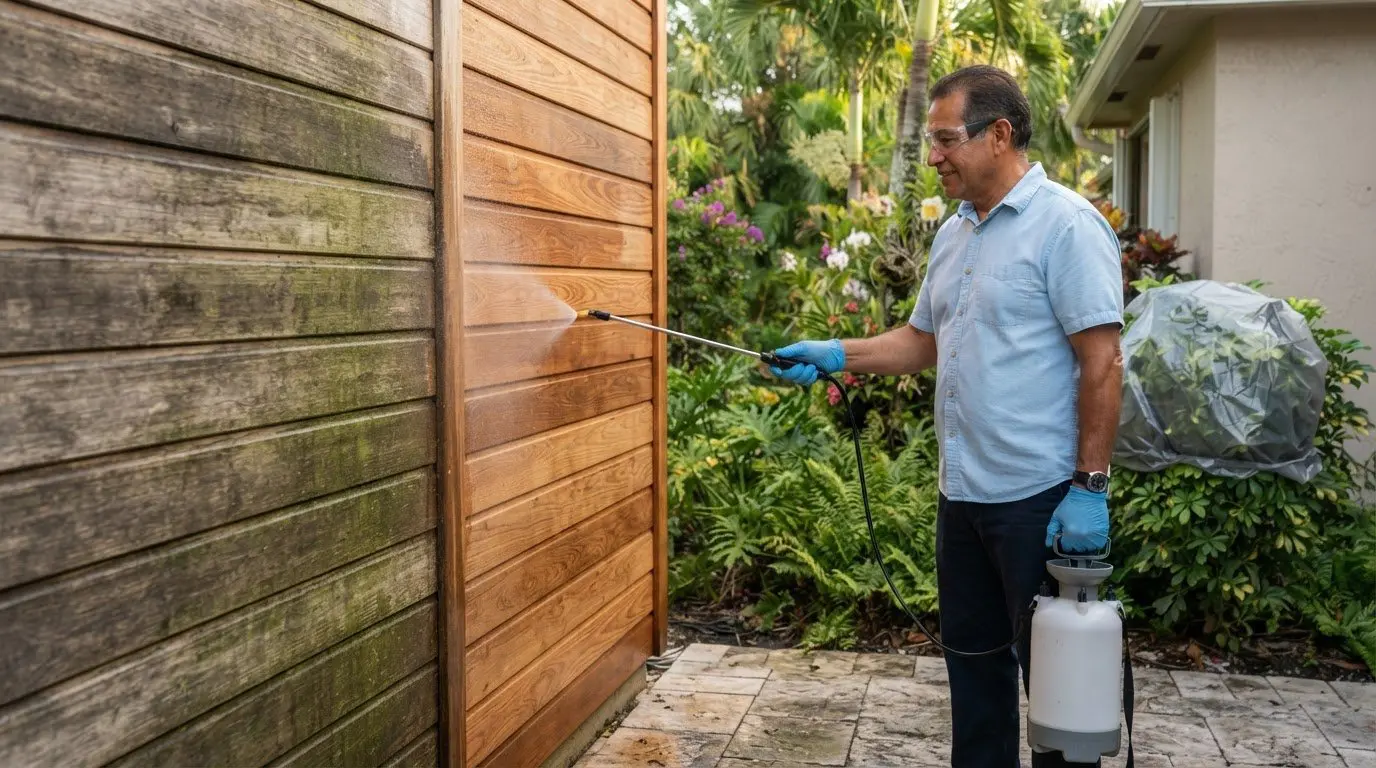
For cedar siding, remove green algae, mold, and mildew with a 25% bleach solution mixed with water, applied using a hand sprayer that holds 1-1.5 gallons. Let the treatment sit for about 20 minutes before rinsing, and repeat the cleaning a couple of times where growth is heavier. This is a practical way to learn how to get rid of green algae on siding without power washing cedar, which can strip away previous staining.
Green algae can make wood siding look neglected, but rushed cleaning may damage the finish or strip stain. If you’re wondering how to get rid of green algae on siding, start by matching the cleaning method to the material and its finish. Wellington homeowners can use the steps below to prepare, clean, rinse, and reduce the damp, shaded conditions that encourage growth to return.
Key Takeaways
- Identify the affected wood siding and check its finish before choosing a cleaning approach.
- Apply the bleach-and-water treatment carefully, taking steps to limit contact with nearby plants.
- Rinse the siding thoroughly and repeat treatment on stubborn growth rather than relying on aggressive washing.
- Reduce damp, shaded conditions and address water splashing from damaged gutters or downspouts to help limit regrowth.
- Consider professional exterior cleaning when growth covers a large area or careful DIY cleaning feels difficult.
How Do I Remove Algae, Mold, and Mildew from Wood Siding?
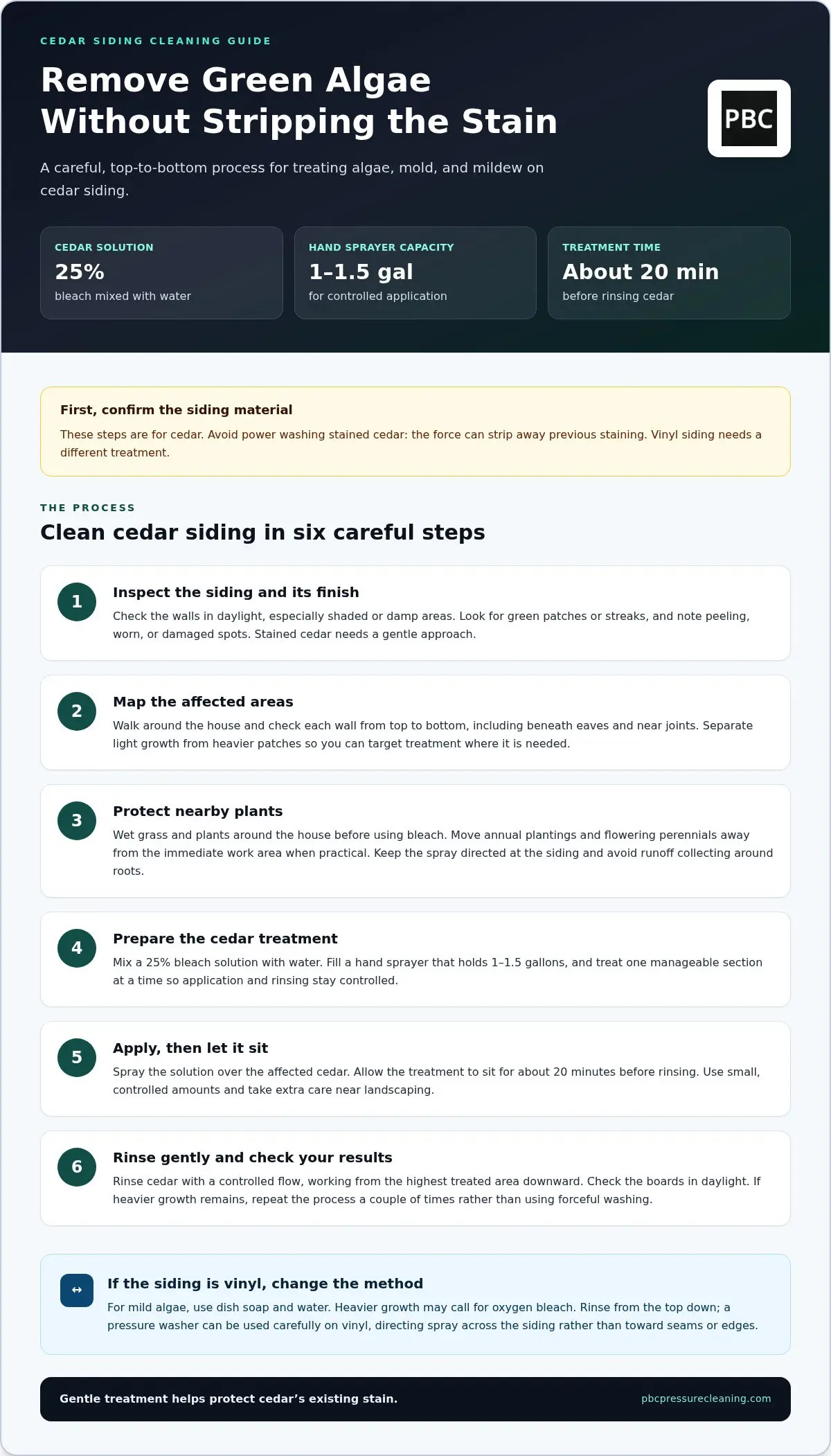
For vinyl siding, wash mild green algae with dish soap and water; use an oxygen-bleach solution for heavier growth, then rinse from the top down. For cedar siding, use a 25% bleach solution mixed with water, apply it with a 1-1.5-gallon hand sprayer, and allow about 20 minutes before rinsing. Protect nearby plants before using bleach.
-
Identify Algae, Mold, and Mildew
Inspect the siding in daylight, especially shaded walls and areas that stay damp. Green growth may appear in patches or streaks; mold and mildew can cause darker or lighter discoloration. Since their appearance can overlap, note where the growth occurs and whether it sits on the surface or follows seams and board edges.
Check the siding’s finish before choosing a cleaning method. Stained cedar needs gentle treatment: power washing can strip away stain. Note any peeling, worn, or visibly damaged areas, and don’t treat those spots as though they have the same finish as intact boards.
-
Assess the Extent of Algae Growth
Walk around the house and inspect each wall from top to bottom. Look beneath eaves, near joints, and anywhere shade or moisture may linger. Note sections with light growth and those with heavier patches. This helps you apply cleaner only where needed instead of repeatedly treating clean boards.
Check whether staining is limited to one section or appears across several walls. Heavier growth may require repeating the cleaning process. Before preparing a bleach solution, note nearby grass, shrubs, annual plantings, and flowering perennials. Their location determines where to wet plants first and where to take extra care during application.
-
Take Cleaning Safety Precautions
Before using bleach, wet the grass and plants around the house to help protect them from contact with the solution. When practical, move annual plantings and flowering perennials away from the immediate work area. Otherwise, take extra care nearby: bleach can harm landscaping, so use small amounts and direct the spray at the siding.
Plan the work area before filling the 1-1.5-gallon hand sprayer. Keep the solution away from plants, and avoid letting runoff collect around their roots. These precautions matter most near garden beds and flowering plants directly below the siding. Treat one manageable area at a time so you can control application and rinse the treated surface thoroughly.
-
Remove Green Algae Step by Step
To learn how to get rid of green algae on siding, prepare the cedar treatment as a 25% bleach solution mixed with water. Fill a hand sprayer with a capacity of 1-1.5 gallons, then apply the solution across the affected wood. Work methodically over the stained area and avoid power washing cedar, which can remove previous staining.
Allow the treatment to sit for about 20 minutes, then rinse the siding. Check the boards after rinsing. If heavier algae, mold, or mildew remains, repeat the cleaning process a couple of times rather than switching to forceful washing. For vinyl, use the appropriate cleaner for the growth and rinse from the top down.
Rinsing and repeating the treatment
Rinse vinyl siding from top to bottom with a garden hose or pressure washer. For wood siding, use a controlled rinse. Avoid power washing cedar, which can strip stain.
-
Rinse Siding from Top to Bottom
Start at the highest treated section and work downward, rinsing each course before moving below it. This carries loosened algae and cleaner down the wall rather than over sections you’ve already rinsed. Use a garden hose if it provides enough flow to clear residue from the siding.
For vinyl, a pressure washer can rinse away cleaner and loosen heavier algae. Direct the spray across the siding rather than toward seams or edges. Don’t power wash cedar: the force can strip stain. A garden hose is a gentler way to rinse wood siding.
Check the wall as you rinse for suds, streaks, or cleaner around overlaps and trim. Rinse those areas again before stopping. Working from top to bottom also makes it easier to see which lower sections need attention as runoff reaches them.
-
Repeat the Treatment
Once rinsing is complete, inspect the siding in good daylight. Compare treated sections with nearby boards and look for green patches remaining after loose residue has washed away. Heavy algae, mold, or mildew may require repeating the cleaning process.
Focus another application on the remaining stained area instead of coating the entire wall again. Follow the cleaner’s appropriate treatment process, then rinse from the top down. For vinyl treated with a bleach solution, let it stand for 10 to 15 minutes before rinsing. Keep nearby plants protected during any repeat application.
Don’t increase spray pressure or scrub aggressively just because a mark remains. Forceful washing can strip stain from cedar. On vinyl, an even rinse helps remove loosened buildup and cleaner. If growth remains after repeated cleaning, reassess the surface and treatment rather than applying cleaner indefinitely.
To pressure wash siding without damage, match the method to the material. Use a garden hose on cedar, and avoid power washing stained wood. A pressure washer can rinse vinyl, but direct the spray carefully and watch the seams as you work.
For broad areas or siding that needs careful, even rinsing, talk with a local pressure-cleaning professional about the right approach for your exterior.
Bleach-and-water treatment
Reserve diluted chlorine bleach for the heaviest stains on vinyl siding, and use small amounts. For cedar siding, follow its separate 25% bleach-solution treatment rather than applying vinyl instructions automatically.
- Choose the treatment for the siding material. For mild algae on vinyl, dish soap and water may be enough; heavier growth may call for oxygen bleach. Reserve diluted chlorine bleach for the heaviest vinyl stains, and apply it sparingly because it can harm landscaping. Cedar uses a 25% bleach solution mixed with water, so identify the material before preparing any cleaner.
Choose the cleaner for the specific siding type; a product suitable for one material isn’t automatically right for another. Identify the affected wall and its finish, then treat only the material and growth you’ve found. Don’t default to a heavy-stain bleach treatment for every green mark.
- Wet nearby grass and plants before applying a bleach solution. This helps protect them from runoff or overspray. Pay close attention to beds directly beneath the stained wall, where drips may land as cleaner runs down the siding.
When practical, move annual plantings and flowering perennials away from the immediate work area. If they remain near the wall, take extra care: direct the solution onto the siding, use small amounts, and avoid coating foliage or letting excess cleaner run into a garden bed.
- Apply the selected treatment to the stained section in a controlled way. On vinyl with the heaviest stains, dilute chlorine bleach with water and use only a small amount. For cedar, use the stated 25% bleach solution mixed with water. Keep the application even, and avoid soaking areas that show no algae.
Allow the vinyl cleaning solution to stand for 10 to 15 minutes before rinsing. Don’t extend that period based on appearance alone. Keep nearby plants wet and protected while the solution sits, especially beneath the treated section. For cedar, follow its separate treatment process rather than borrowing the vinyl dwell time.
- After the appropriate dwell period, rinse the treated siding thoroughly. On vinyl, start at the top and work downward so cleaner and loosened residue leave the wall in order. Watch runoff near flower beds and grass, and rinse any areas that received overspray.
Inspect the siding after rinsing. If heavy growth remains, repeat the process on the affected patch rather than increasing the bleach concentration or treating clean boards. Protect nearby plants during each application. Avoid power washing cedar, which can strip stain.
Preventing algae from returning
Reduce the shade and lingering moisture that encourage green growth. Check the siding, nearby plants, gutters, and downspouts for conditions that keep the wall damp.
- Inspect gutters and downspouts for breaks, loose sections, or water spilling near the wall. Faulty drainage can splash water down siding and leave damp streaks where algae may return. After rain, look for visible runoff marks and note where they appear beside affected boards.
Address the water path so it no longer splashes against the house. After rainfall, check the same wall to see whether water still runs down the siding. Cleaning algae without addressing a leaking or broken gutter leaves the moisture source in place.
- Trim trees and shrubs close to the house when they shade the siding. Shade can slow drying, especially on a wall that already stays damp. More sunlight on vinyl siding can help it dry and reduce conditions that support green algae.
Start by checking the north side and other shaded walls. See whether branches or dense shrubs block sunlight from reaching the siding. Trim nearby growth enough to improve light and airflow, while keeping branches and leaves from touching the siding.
- Track which siding areas stay damp after rain or remain shaded. Compare a green-stained section with a nearby wall that gets more sunlight. Note whether the affected area is below a gutter, beside a downspout, or behind close-growing shrubs.
Use what you observe to target prevention. If a shaded wall stays moist, focus on nearby trees and shrubs. If water streaks appear below a gutter, inspect the drainage path. Addressing the likely cause is more useful than repeatedly cleaning every wall.
- After rainfall, recheck the same wall for fresh water trails. Inspect the gutter edges, downspout connections, and siding beneath them. A new splash mark can show that water is still reaching the wall, even after visible algae has been removed.
Also check for damp sections beneath overhanging branches or beside shrubs. Compare these spots with exposed siding that dries in sunlight. The difference can help reveal whether shade, moisture, or both are contributing to recurring growth.
- Keep a simple record of recurring spots, such as “north wall below the downspout” or “shaded siding behind the shrubs.” Use those locations to guide your next inspection. If green patches return in the same place, check nearby water and shade conditions first.
Prevention works best when you address the cause at the wall. Correct broken gutters or downspouts that splash water, and trim nearby trees and shrubs to let more sunlight reach the siding. These changes help the surface dry between wet periods.
Pressure Pros of Palm Beach: Roof Cleaning
Pressure Pros of Palm Beach provides Roof Cleaning for property owners dealing with visible buildup on their roofs. Siding algae is a separate surface issue, but a home’s exterior may need attention in more than one area. If roof discoloration is also affecting your property’s appearance, professional roof cleaning can address that concern without treating roof and siding as the same job.
For siding, use the material-specific cleaning steps above and avoid aggressive washing on stained cedar. If the buildup covers a broad area or you’re unsure how to clean the surface carefully, talk with a professional about your property’s exterior cleaning needs.
Keep Your Exterior Ready for the Seasons Ahead
A clean siding surface is a good starting point for ongoing exterior care. Notice where moisture collects and shade lingers, then address those conditions as part of routine property maintenance. Knowing how to get rid of green algae on siding helps you make an informed choice, but the right approach depends on the surface and its finish. Avoid forceful methods that could damage stained wood.
When exterior maintenance extends beyond siding, Pressure Pros of Palm Beach offers Roof Cleaning, Exterior Painting, and Power Washing. Power washing isn’t suitable for stained cedar siding, but it may fit other cleaning tasks. Choose a service that matches the surface and the work required instead of applying one method across the property.
Take the next step toward a cleaner, well-maintained exterior at a pace that works for your property.
Frequently Asked Questions
What causes green algae to grow on house siding?
Green algae tends to develop where siding stays damp and shaded. The north side of a house can be especially prone on vinyl siding because it often receives less direct sunlight. For example, a wall beneath dense tree cover may stay wet longer after rain than an exposed wall. Look for recurring green patches in shaded areas or places where water regularly splashes against the exterior.
What cleaners remove algae from siding safely?
The suitable cleaner depends on the siding material and the severity of the growth. Mild algae on vinyl can be cleaned with dish soap and water; heavier growth may call for oxygen bleach. Cedar requires a different treatment, so don’t assume a vinyl cleaner is suitable for stained wood. Identify the material and finish first, follow the cleaner’s directions, and keep the solution off nearby surfaces.
Can you use vinegar, bleach, or oxygen bleach on siding?
Oxygen bleach is an option for heavy algae on vinyl, while diluted chlorine bleach is reserved for the heaviest vinyl stains and should be used sparingly. Cedar siding may need a treatment suited to its material. Don’t assume vinegar will clean algae safely on every siding type. Avoid combining cleaners, and follow product directions for the specific surface.
Can siding cleaners harm plants, pets, or nearby surfaces?
Yes. Chlorine bleach can harm landscaping, and overspray or runoff may reach plants beneath the wall. Wet nearby grass and plants before applying cleaner, and take extra care around annual plantings and flowering perennials. As a precaution, keep pets away from the work area and follow the cleaner’s label. Rinse accidental splashes from nearby surfaces promptly with water.
How do you remove algae from wood, fiber cement, and aluminum siding?
Use a material-specific approach rather than applying one cleaning recipe to every wall. For cedar, the described treatment is a 25% bleach solution mixed with water; avoid power washing stained cedar. Fiber cement and aluminum require care suited to their particular finish, so consult the siding manufacturer’s cleaning instructions before choosing a cleaner. Test a small, inconspicuous area first to check for visible changes.
How do you prevent green algae from returning to siding?
Focus on keeping the affected wall drier and better exposed to sunlight. After rain, inspect shaded areas and note where damp streaks appear. Then check whether nearby vegetation blocks light or water runs down from above. Use these observations to guide upkeep rather than repeatedly treating every wall. If green growth returns in the same spots, revisit the conditions around those sections.
Recent Comments