
How to Remove Oil Stains From Concrete With Detergent and Stain Removers
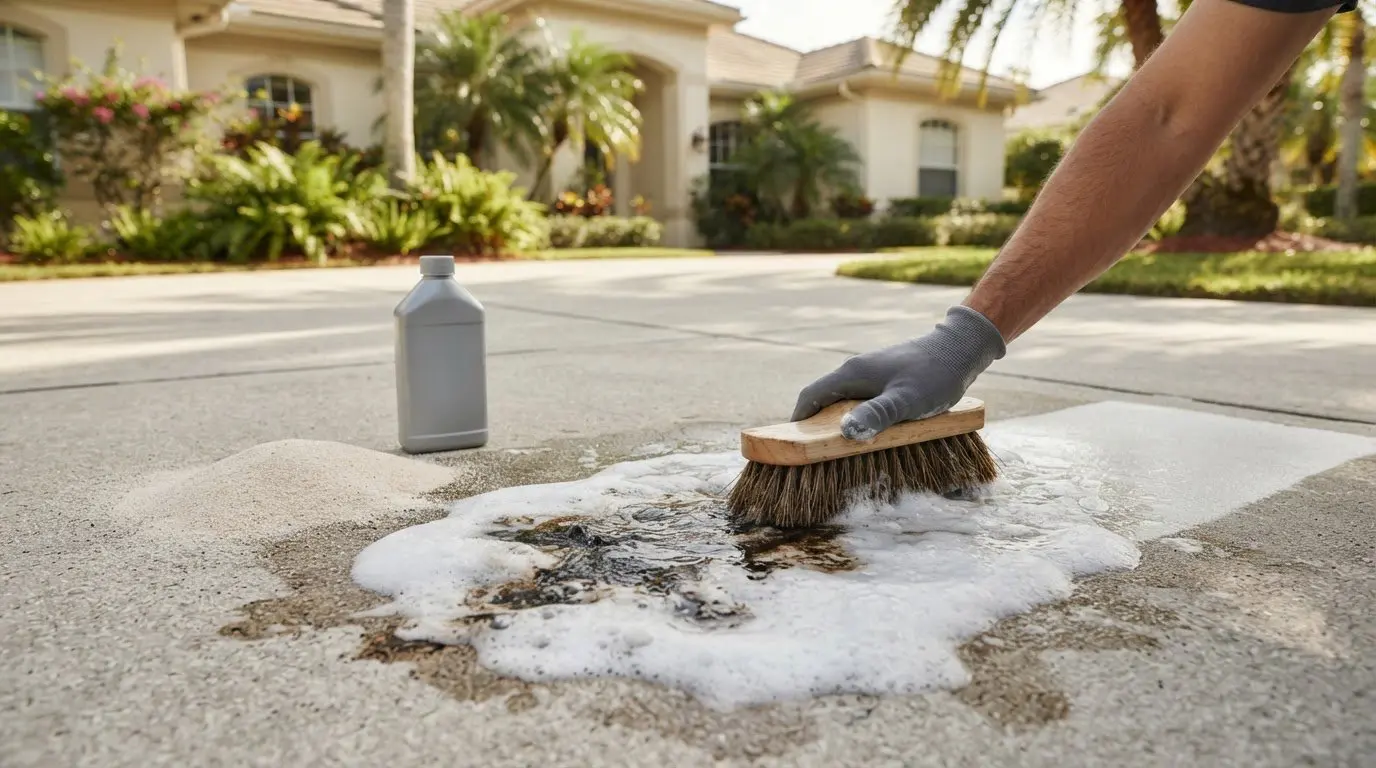
A professional stain remover isn’t always the first step: fresh oil may lift with detergent and careful scrubbing. To remove oil stains from a concrete driveway, blot or absorb excess oil, scrub the spot with diluted dish detergent and a stiff nylon brush, then rinse it clean. Let the detergent sit for about an hour before rinsing if the mark needs more time to loosen.
A dark patch that remains after cleaning is frustrating, especially when oil has soaked into the concrete. This guide covers how to treat surface oil with detergent, when to try a concrete-safe degreaser, and why older or stubborn marks may need repeated treatments. It also explains how to handle absorbents and cleaners carefully, avoid spreading oil, and decide when professional pressure cleaning can refresh the surrounding concrete. Start with a suitable, gentle method, then reassess before repeating treatment or trying a stronger cleaner.
Key Takeaways
- Start with a treatment suited to the stain’s age and how deeply oil has soaked into the concrete.
- Choose a concrete-safe oil and grease remover, and follow its label directions for application and cleanup.
- Use controlled cleaning methods to avoid pushing oil into a wider area or across nearby surfaces.
- Persistent marks may need another treatment, so assess the concrete after each round before proceeding.
- Professional pressure cleaning can help refresh the surrounding driveway when careful DIY treatment isn’t enough.
Cleaning surface-level oil and grease with detergent
For fresh surface oil, absorb the excess first, then use diluted detergent and a stiff nylon brush. Work in a contained area so oil, cleaner, and rinse water don’t spread across nearby concrete.
-
Apply Dish or Laundry Detergent
Blot fresh oil with a cloth, then cover any remaining liquid with plain cat litter or another absorbent. Sweep it up carefully before cleaning. Mix a few drops of dish soap into a gallon of water, or use laundry detergent as directed on its label. Avoid colored cat litter, which may stain concrete. This method is suitable for surface spots on driveways, garage floors, and concrete pavers.
-
Follow the Cleaning Steps and Dwell Time
Apply the detergent solution to the stain and let dish or laundry detergent sit for about an hour. Scrub with a stiff nylon or bristle brush, working from the stain’s outer edge toward its center. Rinse with hot water, keeping the flow contained. Check the spot after rinsing; a dark mark may need another round rather than harder scrubbing.
- For a deeper mark that detergent doesn’t lift, use a poultice to draw oil toward the surface. One option combines baking soda with water or acetone; spread it about 1/4 inch thick. Let it dry for several hours or overnight, depending on humidity and temperature, then sweep it away. Acetone can affect some finishes, so test a hidden spot first. Polished or decorative concrete needs extra care: abrasive scrubbing or strong solvents can dull or discolor its finish.
- A pressure washer can refresh surrounding concrete after stain treatment, but spraying an untreated oil spot may spread oil. After applying and scrubbing engine degreaser, one suggested minimum is 500 psi; keep the spray controlled and follow the cleaner label. Oil-stain removers can affect concrete finishes, plants, or pets, so protect nearby surfaces, keep people and animals away, and use the product’s stated precautions. Don’t let runoff carry oil or cleaner toward street gutters; collect it where practical and follow local disposal guidance.
- Dispose of used absorbent and collected cleaning residue according to local disposal guidance, rather than sweeping it into a gutter. To prevent repeat stains, place a drip tray beneath a parked vehicle, clean fresh spills promptly, and keep absorbent material handy. On pavers or garage floors, check joints and edges too, as oil can settle beyond the visible spot.
Professional oil and grease stain removers
If detergent leaves a dark mark, try a degreaser labeled for concrete instead of mixing stronger household cleaners. Apply it as directed, and keep it on the stain rather than spreading it across the driveway.
- Choose an oil and grease remover labeled for concrete and suited to the stain. Engine degreasers target oily residue, while some concrete cleaners are designed to draw oil from porous surfaces. Before using a product, read its label for surface compatibility, application steps, and cleanup directions. Never combine separate cleaners, as their ingredients may react or leave residue.
- Test the product in a discreet spot before treating a visible area of the driveway. Concrete varies in texture and finish, and a cleaner may leave a light or dark patch. Apply a small amount as directed, complete the specified rinsing or removal steps, then inspect the area once dry. Don’t skip this test on colored or decorative concrete.
- Apply the remover only to the stained area, using the label’s specified amount and method. Some degreasers need time to loosen grease: one suggested dwell time for engine degreaser is 10-20 minutes. Simple Green degreaser has been recommended with a 15-minute soak, but product formulations and instructions vary. Follow the actual container directions, and don’t let the cleaner dry on the surface.
- Scrub gently with a stiff nylon brush if the product directions call for agitation. Work from the edge of the stain inward, then rinse in a controlled manner. Keep rinse water from carrying oily residue across clean concrete or toward street gutters. Some degreasers work poorly below 60°F (15°C), so warmer conditions can help the cleaner work as intended.
- Let the treated spot dry before judging the result. Wet concrete can hide discoloration, so inspect it again when dry. If the stain remains, repeat the product’s treatment process rather than leaving it on longer than its label allows. Deep, old oil marks may have penetrated below the surface, beyond the reach of surface cleaning. Consider a poultice designed for concrete if its label indicates it is suitable.
For stubborn staining beside rust marks, talk with a local professional about the concrete surface and the safest next cleaning approach.
A contributor says the concrete grease-cleaning method is intended for an area of 2 square meters. A contributor also describes mixing kerosene and GUNK Concentrate engine degreaser at a 9:1 ratio for cleaning a greasy concrete area. Treat that as a reported approach, and follow the cleaner’s directions before use.
Repeating treatment if stains persist
An oil mark may remain after its first cleaning because oil can penetrate concrete’s pores. Repeating a suitable treatment may gradually reduce the visible residue. Inspect the surface between treatments instead of immediately applying stronger chemicals.
- Let the treated area dry fully before deciding whether it needs another round. Damp concrete can make a remaining mark difficult to judge; a dry surface reveals its actual outline. Check the center and edges against nearby concrete. If the patch has faded, repeat the same method before switching products. Changing cleaners with every attempt makes it harder to tell what is helping.
- Repeat the product’s application and cleanup steps rather than extending its dwell time. A stain that remains after detergent may respond to another careful detergent treatment, or to a concrete-safe degreaser if its label indicates suitability. Scrub without grinding the brush aggressively into the surface. Rinse in a controlled direction, then let the concrete dry before assessing the result.
- For a deep stain, consider a concrete-safe poultice after surface cleaning stops improving the mark. A baking soda poultice can draw oil toward the surface as it dries; remove the dried material before reassessing. Use one treatment method at a time, and don’t combine a poultice with solvents or degreasers. On polished, colored, or decorative concrete, test a hidden area before repeating treatment.
- Use solvent cleaning cautiously, and only with a product suitable for concrete. A recommendation to try solvent cleaning three or four times is not a reason to exceed the label or keep using an unsuitable solvent. Follow the product’s specified removal method after each application. Stop if the finish changes, the stain spreads, or the surface is damaged.
- Set realistic expectations for older marks. Oil stains that have dried may need multiple treatment rounds, and some can remain visible even after repeated cleaning. One reported concrete stain was still visible after 15 years. That example shows why complete removal can be difficult, particularly when oil has soaked deeply into porous concrete.
- Check the spot again after a few days, as a stain treated with laundry detergent may reappear. If the dark patch returns, repeat the treatment that helped and inspect the surface again once dry. Don’t coat the area before cleaning is complete, since remaining oil can affect the finished appearance.
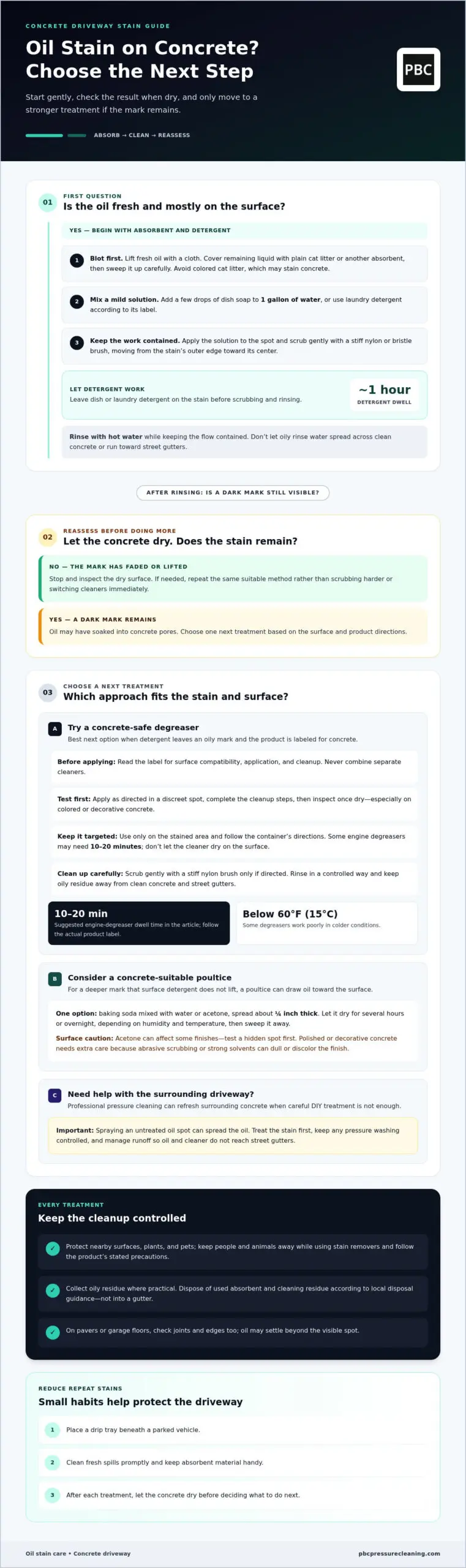
What steps and dwell time should you use when cleaning oil stains from a concrete driveway?
- Identify the fluid and stain age before choosing a treatment. Transmission fluid can become harder to remove as it remains on concrete. For fresh oil, blot excess liquid with a cloth, then use an absorbent. A small spot can be covered with cat litter for 30 minutes before sweeping it away. For a larger fresh spill, leave litter overnight.
- Use baking soda when you need a simple absorbent for a small fresh mark. Leave it on the oil for 30 minutes, then sweep it up. This first step reduces surface residue before detergent or a degreaser. Don’t scrub dry oil outward, because that can enlarge the visible patch.
- Apply a concrete-safe detergent or degreaser according to its label, then allow the stated dwell time. For example, Simple Green degreaser has been recommended with a 15-minute soak. Product directions take priority, since formulas differ. Scrub with a suitable brush only when the cleaner’s instructions call for agitation.
- Make a baking soda poultice for oil that has penetrated the concrete. Mix baking soda with water or acetone, then spread the paste about 1/4 inch deep over the mark. Let it dry for several hours or overnight. Humidity and temperature affect drying time, so wait until the poultice is dry before removal.
- Remove dried poultice with a broom or controlled pressure washing. Direct the spray at the treated spot: washing over an untreated oil mark can spread residue across the driveway. If the treatment calls for it, follow with detergent and water. Let the concrete dry before judging the result.
- Use solvent-based methods cautiously, and don’t combine them with other cleaners. One suggested poultice uses two parts hydrated lime powder and one part turpentine, left overnight. After scraping off the paste, scrub the area with detergent and water. Solvents can affect finishes and create fumes, so follow product precautions and protect nearby surfaces.
- Treat gasoline spills differently from ordinary motor oil. Gasoline is flammable and harmful to the environment, so clean spills promptly and keep ignition sources away. Don’t use gasoline as a concrete cleaner; its odor can linger for weeks or even months. Keep runoff from carrying fuel or cleaning residue into street gutters.
Pressure Pros of Palm Beach: Roof Cleaning
Pressure Pros of Palm Beach provides pressure cleaning for exterior surfaces when oil treatment leaves the surrounding concrete looking dirty or uneven. Controlled cleaning can refresh the broader driveway, but pressure washing alone may not draw out oil that has soaked into concrete. Treat the stain first, and keep runoff away from street gutters.
For property owners in Palm Beach County, professional pressure cleaning can help maintain driveways and other exterior areas. Roof cleaning is also available for roofs with accumulated surface grime, a separate maintenance need from concrete stain treatment. Choose the service that fits the surface and cleaning goal, rather than expecting one method to address every mark.
Contact Pressure Pros of Palm Beach to discuss pressure cleaning for your property.
Keep Your Driveway Ready for What Comes Next
A clean driveway supports your property’s overall appearance, but it’s only one part of exterior upkeep. If you need to remove oil stains from a concrete driveway, choose a method suited to the stain and surface, then consider how the rest of your property looks. A tidy entrance, clean exterior surfaces, and a maintained roof can make a property feel cared for without relying on a single cleaning task.
Pressure Pros of Palm Beach provides exterior services across Palm Beach County, including power washing, roof cleaning, and exterior painting. Each addresses a different need: exterior washing refreshes surfaces, roof cleaning removes accumulated grime, and exterior painting updates worn finishes. For broader cleaning of your driveway or other exterior areas, contact Pressure Pros of Palm Beach to discuss a practical next step for the surface and your cleaning goal.
Choose a next step that suits your property. A clear plan can help maintain curb appeal and keep exterior upkeep manageable.
With the right care, your property can stay clean, welcoming, and well maintained.
Frequently Asked Questions
What is the best way to remove fresh oil stains from a concrete driveway?
For fresh oil, absorb the liquid before adding water or cleaner. On broom-finished concrete, kitty litter, sawdust, or sweeping compound can soak up excess oil. Lift away the absorbent without dragging it across clean areas, then treat the remaining mark with detergent. If the spill is transmission fluid rather than motor oil, act promptly, as it can become harder to remove the longer it remains on concrete.
How do you remove old, set-in motor oil stains from concrete?
Old motor oil usually needs a concrete-safe degreaser or poultice, and one cleaning may not lift the discoloration. Test the method on an inconspicuous spot first, especially on decorative concrete. A poultice draws oil toward the surface as it dries. If the stain remains after careful treatment, repeat applications may reduce it, though deeply absorbed oil can leave a lasting shadow.
Which household cleaners or degreasers work best on oil stains in concrete?
Dish soap or laundry detergent is a practical first cleaner for surface residue. If household detergent leaves an oily mark, try a degreaser labeled for concrete. Products such as Simple Green degreaser are used for oil stains, but follow the directions on the specific container rather than assuming all formulas work alike. Don’t mix cleaners, and test any product on a less visible area before treating a prominent part of the driveway.
How do you use cat litter, baking soda, or sawdust to absorb a concrete oil spill?
Choose an absorbent that suits the spill and surface. Cat litter or sawdust can cover excess oil on rough concrete, while baking soda can absorb a small surface spill. On broom-finished concrete, spread the material over the oily area and lift it carefully so residue doesn’t smear outward. Avoid colored cat litter, which can mark concrete. Absorbents help manage fresh oil, not oil that has penetrated deep into the slab.
Recent Comments