
How to Clean a Wood Deck Without a Pressure Washer: A Step-by-Step Guide
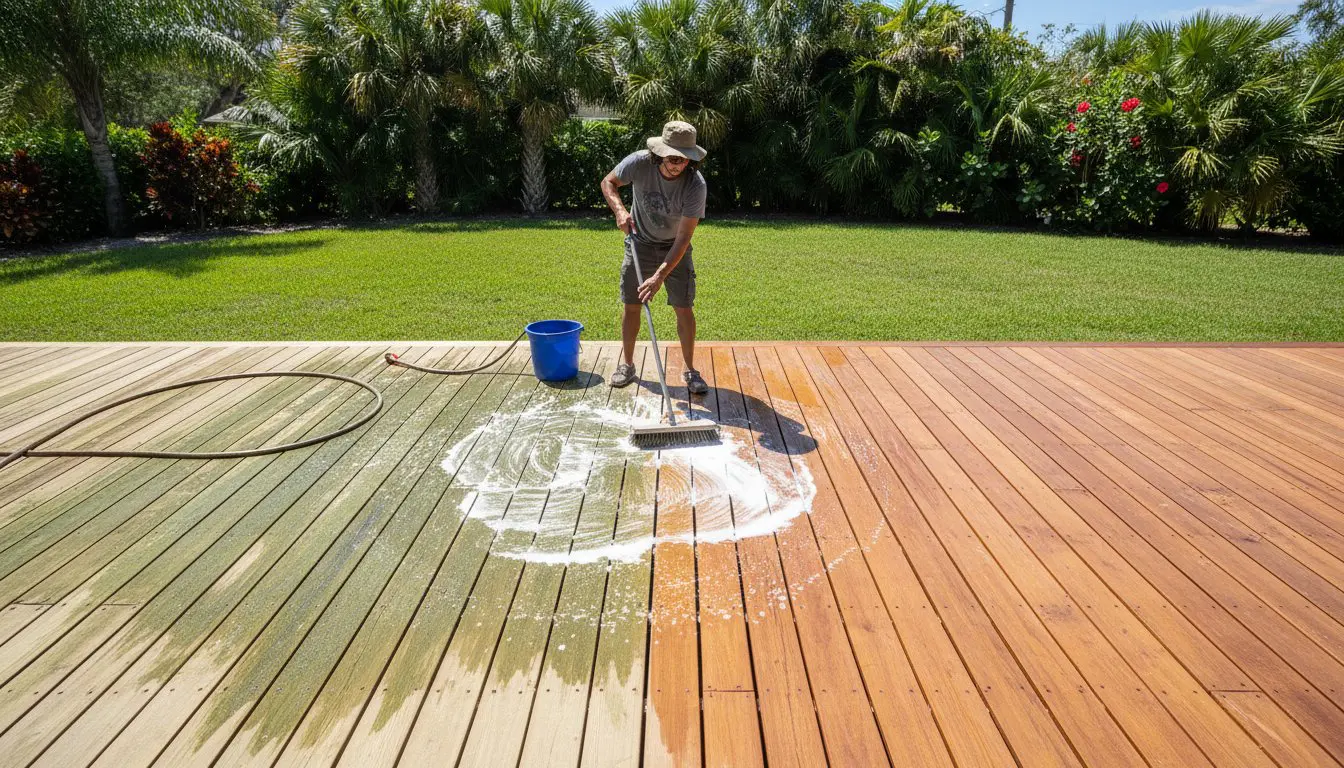
Is your wood deck looking less like an outdoor oasis and more like a grimy, green-streaked surface? You know it needs a deep clean, but the thought of blasting it with a high-pressure washer-and potentially splintering the wood-is a major concern for many homeowners. You’re right to be cautious. The great news is that learning how to clean a wood deck without a pressure washer is not only possible but is often the safest and most meticulous method for restoring its natural beauty and protecting your valuable investment.
While these DIY methods are effective, a professional cleaning and sealing service provides unmatched value and long-term protection. For a guaranteed thorough result, working with an outdoor living specialist is key. For example, the certified professionals at Don Beto & Company have the expertise to restore and protect decks as part of a complete maintenance plan.
In this step-by-step guide, we will provide the clear, professional instructions you need to get the job done right. You’ll discover effective, affordable cleaning solutions that safely remove stubborn algae, mildew, and dirt without harming your deck, surrounding plants, or pets. Our goal is to empower you with a reliable DIY approach for a beautifully clean deck and to help you understand when calling a certified professional is the best choice for an outstanding, flawless finish.
Key Takeaways
- Protect your investment by understanding why learning how to clean a wood deck without pressure washer is crucial to prevent permanent damage like splintering and costly repairs.
- Discover a thorough 5-step method that details how to clean a wood deck without pressure washer using simple tools and effective cleaning solutions.
- Learn targeted techniques for eliminating stubborn mold and algae, a key part of how to clean a wood deck without pressure washer.
- Even when you know how to clean a wood deck without pressure washer, recognize the signs that a DIY job isn’t enough and it’s time to call a professional.
Why Clean Your Deck Without a Pressure Washer? (And When You Shouldn’t)
A pressure washer seems like the fastest way to blast away dirt and grime from your deck. While powerful, this method comes with significant risks that can permanently damage your wood surfaces. Many homeowners seek information on how to clean a wood deck without a pressure washer specifically to avoid these costly mistakes and protect their valuable outdoor living space. This approach prioritizes the long-term health of your deck over a quick, but potentially destructive, cleaning.
Choosing the right method means understanding the trade-offs. While hand-scrubbing gives you complete control for a gentle clean, it requires significant effort. For a truly deep and safe clean, professionals use a technique called soft washing, which combines specialized cleaning solutions with low-pressure rinsing to deliver outstanding results without the risk of damage.
The Risks of High-Pressure Washing on Wood
Using high PSI (Pounds per Square Inch) on softwood like pine or cedar is a recipe for disaster. The intense stream of water can splinter the surface, create ugly gouges, and cause a “fuzzy” texture by shredding the wood grain. This high pressure also forces water deep into the boards, undermining proper wood preservation by trapping moisture that leads to rot and mildew. What starts as a simple cleaning job can quickly turn into an expensive repair project.
The Reality of Cleaning by Hand: Effort vs. Reward
The manual approach is the foundation of how to clean a wood deck without a pressure washer. It requires a good deck brush and some classic elbow grease, but it offers unmatched control. This method is ideal for routine maintenance, such as removing light layers of pollen, dirt, and fresh spills. However, it may not be practical for very large decks or for tackling years of built-up, stubborn algae and grime, where the physical effort may not yield the desired results.
Essential Prep Work: Gathering Your Tools & Cleaning Solutions
A thorough, professional-level clean starts long before you mix your first bucket of solution. Proper preparation is the key to achieving outstanding results and protecting your property investment. Taking the time to gather the right equipment and clear the area ensures an efficient, safe, and effective cleaning process. This meticulous approach is fundamental to how to clean a wood deck without a pressure washer and avoid damaging the wood surface.
Your Non-Pressure Washing Toolkit
Having everything on hand prevents multiple trips to the store and keeps your project on track. Before you begin, assemble a simple but effective toolkit designed for manual cleaning.
- Stiff-Bristled Deck Brush: Choose a brush with a long handle for better leverage and synthetic bristles. Avoid wire brushes, as they can gouge and splinter the wood.
- Garden Hose with Spray Nozzle: A high-pressure or jet-setting nozzle provides the force needed to rinse away loosened grime and cleaning solutions.
- Essential Accessories: You will need at least two buckets (one for the cleaning solution, one for rinsing), a pump sprayer for even application, and crucial safety gear like rubber gloves and safety goggles.
Choosing Your Deck Cleaner: DIY vs. Commercial
The right cleaning solution depends on the level of dirt, mildew, and stains on your deck. For light, annual cleaning, a simple solution of distilled white vinegar and water can be effective. However, for more significant buildup, you’ll need a more robust product. While there are many guides on how to clean a deck without a pressure washer that detail various homemade pastes, a commercial oxygen bleach cleaner is often the safest and most effective choice. Unlike chlorine bleach, which breaks down wood fibers and is toxic to surrounding plants, oxygen-based cleaners target dirt and mildew without causing damage.
Preparing the Deck Area
A clean, clear workspace is a safe and efficient one. Before applying any water or cleaners, you must completely prepare the surface and surrounding area. This step is non-negotiable for a professional outcome.
- Clear the Deck: Remove all furniture, grills, planters, rugs, and decorative items.
- Sweep Thoroughly: Use a push broom to sweep away all loose debris, including leaves, pine needles, dirt, and cobwebs.
- Protect Your Landscaping: Cover any nearby plants, shrubs, or grass with plastic sheeting to protect them from runoff from your cleaning solution.
The 5-Step Method for Cleaning Your Wood Deck by Hand
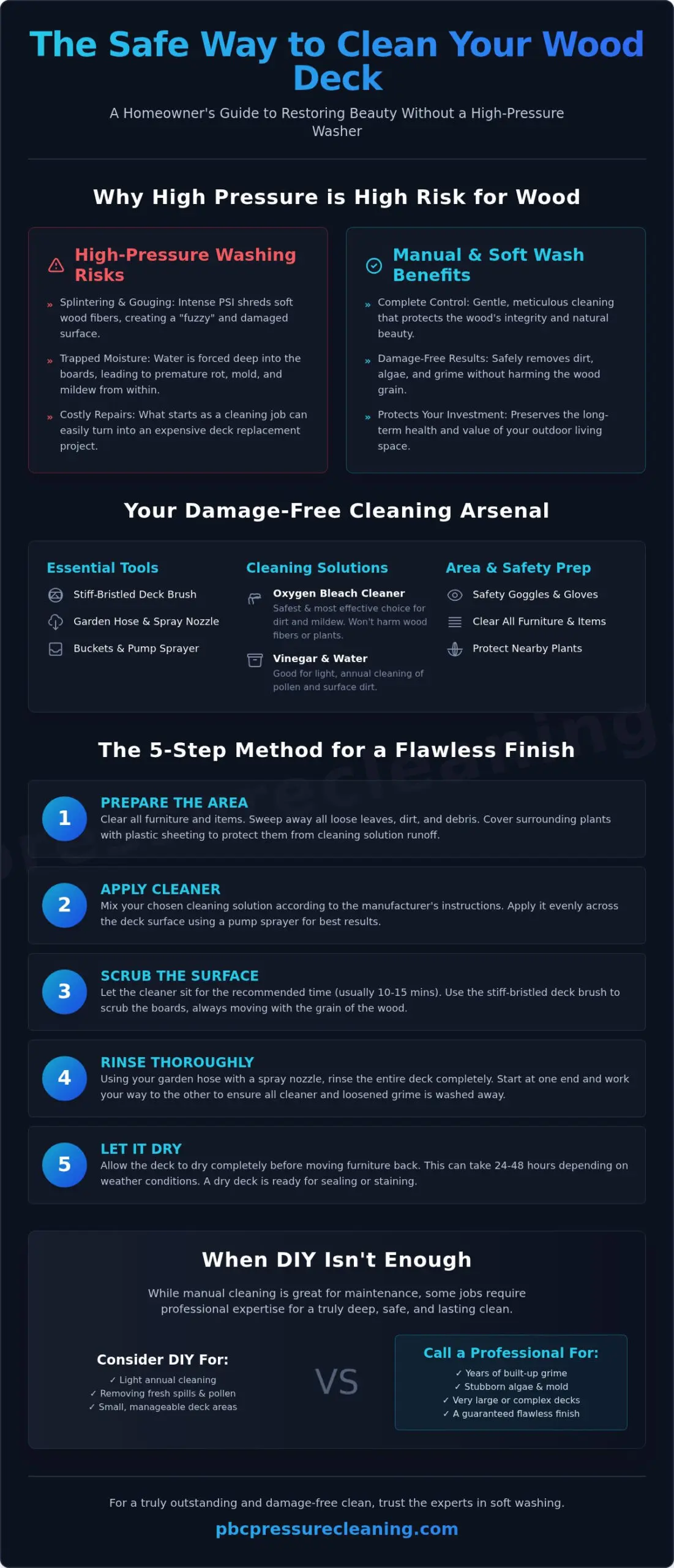
When high-pressure equipment isn’t an option, a meticulous, hands-on approach is the best way to restore your deck’s appearance. This professional method requires some elbow grease but delivers outstanding, damage-free results. The most critical part of this process is to work in small, manageable sections-about 4×4 feet at a time-to prevent the cleaning solution from drying on the surface. Following these steps ensures a thorough and uniform clean that protects your investment.
Step 1: Wet the Deck Surface
Before applying any cleaner, thoroughly rinse a section of your deck with a standard garden hose. This initial rinse does two important things: it prevents the cleaning solution from drying out too quickly on the wood, and it allows the cleaner to penetrate the grime and mildew more evenly. A saturated surface is the first step to an effective and safe clean.
Step 2: Apply Your Chosen Cleaning Solution
Using a garden pump sprayer for even distribution, apply your selected wood deck cleaner to the pre-wetted section. Allow the solution to sit and work on the grime for 10-15 minutes, or as directed by the product’s label. Never let the cleaner dry on the wood.
Pro Tip: On hot or windy days, you may need to lightly mist the area with water to keep it damp while the solution does its job.
Step 3: Scrub with the Grain
With a stiff-bristled deck brush, begin scrubbing the section parallel to the direction of the wood grain. Applying firm, consistent pressure helps the cleaner work deep into the surface to lift embedded dirt. This technique is crucial for how to clean a wood deck without a pressure washer because it effectively removes buildup without scratching or damaging the delicate wood fibers.
Step 4: Rinse Thoroughly and Immediately
As soon as you finish scrubbing a section, use your hose and a high-pressure nozzle to rinse the area completely. Start at the highest point of your deck and work your way down, pushing all the loosened grime and residual cleaning solution off the boards. A thorough rinse is essential to prevent a filmy residue from being left behind, which can attract more dirt.
Step 5: Repeat the Process in Sections
Now, simply move to an adjacent, uncleaned section and repeat steps 1 through 4. Overlap your sections slightly to ensure there are no missed lines or patches. Continuing this systematic process across the entire deck guarantees a consistent, professional-grade finish and avoids any blotchiness that can occur from the cleaner drying unevenly.
Tackling Tough Stains: Mold, Mildew, and Algae
Even with regular sweeping, your wooden deck is exposed to moisture, which creates a perfect breeding ground for stubborn biological growth. These grimy green and black stains not only ruin your deck’s appearance but can also create dangerously slippery surfaces and, if left untreated, cause long-term damage to the wood. Understanding what you’re dealing with is the first step toward restoring your deck’s beauty.
Identifying the Green and Black Stains
Before you can effectively treat these unwanted stains, you need to identify them. While they often appear together, each has distinct characteristics:
- Algae: This growth typically appears as a green, sometimes slimy, film on the wood’s surface. It thrives in damp, shady areas and is a primary cause of slippery decks.
- Mildew: A type of surface fungus, mildew often presents as powdery patches of gray, white, or black spots. It flourishes in areas with high humidity and poor air circulation.
- Mold: More aggressive than mildew, mold appears as fuzzy or slimy patches of black or green. It indicates a more persistent moisture problem and can penetrate the wood, eventually causing rot.
Effective Solutions for Biological Growth
The solution for how to clean a wood deck without a pressure washer effectively lies in choosing the right cleaning agent and applying some manual effort. For widespread issues, we recommend a commercial-grade deck cleaner specifically formulated with oxygen bleach. Unlike chlorine bleach, which can damage and discolor wood fibers, oxygen bleach targets and kills the spores without harming your deck.
Apply the cleaner according to the manufacturer’s directions, let it sit for 10-15 minutes, and then perform a thorough scrubbing with a stiff-bristled deck brush. For minor spots, a stronger solution of one part white vinegar to one part water can be effective. The key is a meticulous scrub to ensure all spores are physically removed from the wood grain.
Tips for Preventing Future Growth
Once your deck is clean, taking preventative steps is crucial to protect your investment. The most effective long-term strategy is to make the environment less hospitable for mold, mildew, and algae.
- Improve Sunlight and Airflow: Trim back overhanging tree branches and nearby shrubs to allow more sunlight to reach the deck surface. Ensure there is proper ventilation underneath the deck to prevent moisture from getting trapped.
- Ensure Proper Drainage: Keep gutters clean and direct downspouts away from the deck to minimize standing water.
- Seal Your Deck: Applying a high-quality water-repellent sealant is the best defense. A proper seal prevents moisture from penetrating the wood, effectively starving mold and mildew of the water they need to grow.
While these DIY methods are effective, a professional cleaning and sealing service provides unmatched value and long-term protection. For a guaranteed thorough result, the certified professionals at Pressure Pros of Palm Beach have the expertise to restore and protect your deck.
When DIY Isn’t Enough: Knowing When to Call a Professional
While knowing how to clean a wood deck without a pressure washer is an excellent skill for routine maintenance, some restoration jobs require professional equipment and expertise. Tackling a severely weathered or stained deck on your own can lead to uneven results or even permanent damage. Choosing a professional service isn’t a failure-it’s a smart decision to protect your property and achieve a truly outstanding finish.
Signs Your Deck Needs a Professional Touch
Even the most dedicated DIY efforts can fall short. It’s time to call in an expert when you encounter situations that go beyond a simple surface clean. Consider professional help if:
- The Job is Overwhelming: For very large or multi-level decks, the sheer time and physical labor required for a thorough manual cleaning become impractical for most homeowners.
- Deep-Set Stains Won’t Budge: Stubborn grease from a grill, rust marks, or deep-set mildew stains often require specialized cleaning agents and techniques that aren’t available over the counter.
- The Wood is Severely Weathered: If your deck has turned a deep, uniform gray, it means the surface wood fibers have been damaged by years of UV and moisture exposure. This requires a restorative cleaning process that goes beyond simple scrubbing.
The Benefits of a Professional Soft Wash Service
A professional soft wash service is the ultimate solution for cleaning a wood deck safely and effectively. Unlike high-pressure washing that can gouge, splinter, and permanently damage wood, soft washing uses specialized, biodegradable cleaners to do the heavy lifting. We apply these solutions at a very low, safe pressure to break down dirt, grime, and organic growth at its source. This meticulous approach ensures a deep, uniform clean that revitalizes your deck without harming the wood fibers.
A professional soft wash kills mold, mildew, and algae at the root, meaning your deck stays cleaner for much longer compared to a surface-level scrub. The result is a beautiful, consistent finish achieved in a fraction of the time.
Protecting Your Investment
A professional cleaning is one of the best ways to protect your investment in your outdoor living space. Our thorough process creates a perfectly prepared surface for a new coat of stain or sealant to properly adhere, extending its life and protective qualities. During the service, our trained technicians can also spot and alert you to potential issues like loose boards or early signs of rot, saving you from more expensive repairs down the line.
Don’t let a challenging cleaning job detract from your home’s beauty and value. Let the experienced team at Pressure Pros of Palm Beach restore your deck safely and effectively. Get a flawless, lasting clean. Request your free estimate today.
Protect Your Investment: The Final Word on Deck Cleaning
As you’ve seen, knowing how to clean a wood deck without pressure washer is an excellent skill that can protect your wood from damage while restoring its natural beauty. With the right preparation, cleaning solution, and a bit of effort, you can effectively remove surface-level dirt, grime, and even some tough stains. This manual approach gives you complete control, ensuring a gentle yet thorough clean for your valuable outdoor space.
However, when the job feels overwhelming or deep-set mildew and algae persist, a professional touch is the most effective solution. For homeowners in Palm Beach County, protecting your investment means turning to trusted experts. The licensed and insured professionals at Pressure Pros of Palm Beach bring over 43 years of experience to every project, specializing in safe, no-pressure soft washing techniques that deliver meticulous results without risking damage to your property.
Don’t let a dirty deck detract from your home’s appeal. Tired of scrubbing? Let the pros restore your deck safely. Contact Pressure Pros of Palm Beach for a free quote! Reclaim your beautiful outdoor living space today.
Frequently Asked Questions About Cleaning a Wood Deck
Can I use chlorine bleach to clean my wood deck?
We strongly advise against using chlorine bleach on your wood deck. While it kills mildew, this harsh chemical damages and weakens wood fibers, which can lead to a splintered surface over time. It is also harmful to surrounding plants and landscaping. For a safer and more effective clean, choose an oxygen-based bleach cleaner. This option is specifically formulated to remove grime and organic growth without damaging the integrity of your deck, thereby protecting your valuable investment.
How often should I clean my wood deck?
For most homeowners, a thorough deck cleaning should be performed annually to remove the build-up of dirt, mildew, and algae. However, in humid climates like Palm Beach County, or if your deck is located under trees that drop debris, you may need to perform a deep clean twice a year. Consistent maintenance prevents permanent staining and wood decay, ensuring your deck remains a beautiful and safe extension of your home for years to come.
What is the best and safest homemade deck cleaner?
A safe and effective homemade cleaner can be made by mixing one cup of powdered oxygen bleach into one gallon of warm water until it is fully dissolved. You can also add a small amount of pH-neutral dish soap to help lift stubborn grime. This solution is powerful enough to remove mildew and dirt but is biodegradable and much gentler on wood fibers and nearby vegetation than chlorine bleach. Always test your cleaning solution on a small, hidden area first.
Will this hand-scrubbing method work on composite decks too?
Yes, this manual cleaning method is perfectly safe and highly effective for composite decking. In fact, gentle hand-scrubbing is often the manufacturer-recommended way to clean composite materials, as high-pressure washing can sometimes cause damage. Since composite decks are less porous than wood, you will find that grime and mildew are often easier to remove. The same cleaning solutions and soft-bristle brushes will deliver outstanding results without risking harm to the surface.
How long does it take to clean a deck without a pressure washer?
The time required depends on your deck’s size and condition. For an average deck of about 300 square feet with moderate dirt, expect to spend between 3 and 5 hours on the entire process. Learning how to clean a wood deck without a pressure washer takes more physical effort, but this meticulous approach prevents wood damage from high pressure. Heavily stained or larger decks will naturally require more time to achieve a thorough, professional-level result.
Do I need to sand my deck after cleaning it?
Sanding is not always necessary after you clean your deck. You should only consider sanding if the cleaning process has raised the wood grain, creating a “fuzzy” or rough texture on the boards. Sanding is also a crucial preparation step if you plan to apply a new coat of stain or sealer. This creates a smooth, uniform surface that allows for optimal adhesion and a flawless finish. If the wood is smooth and you are not re-sealing, you can skip this step.
Recent Comments