Exterior Cleaning for Palm Beach Rental Property Portfolios
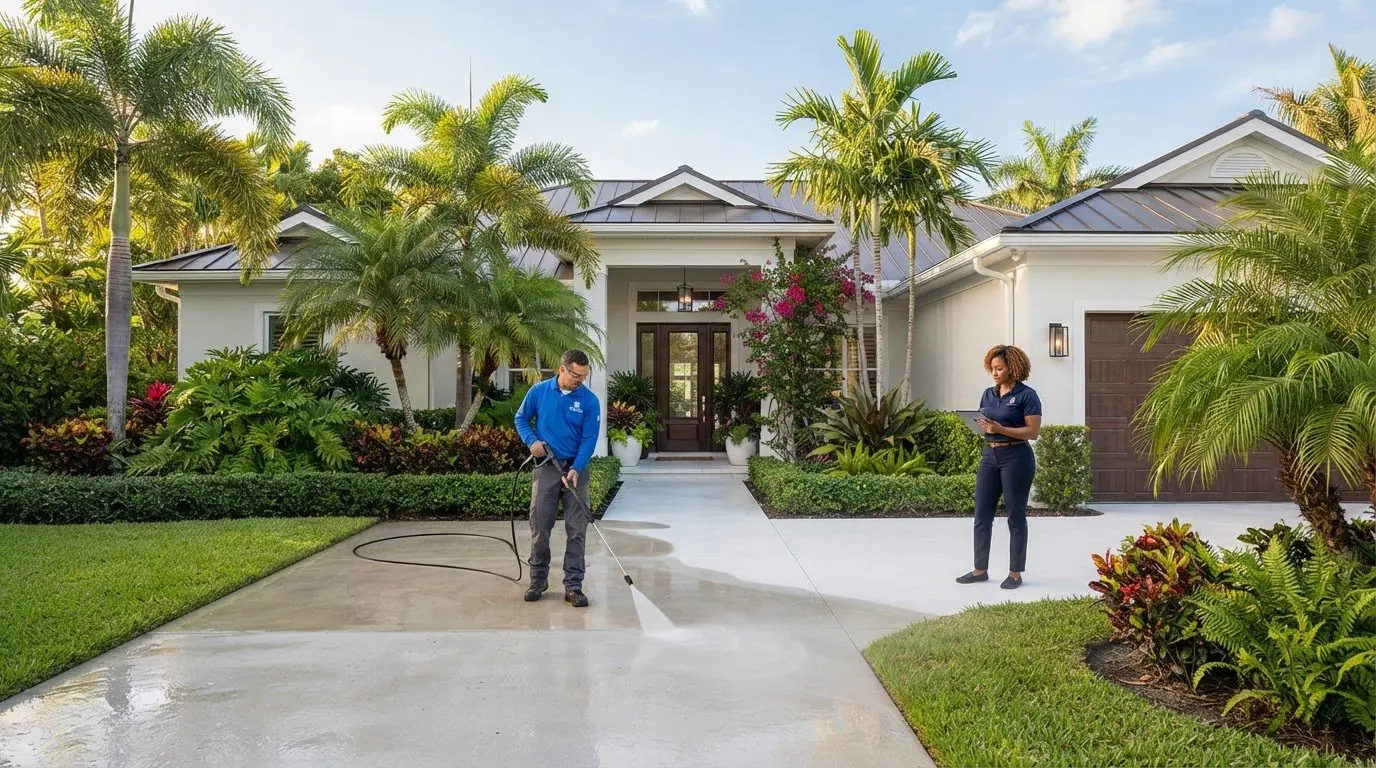
A clean exterior helps keep a rental property ready for its next resident, not just looking occupied. Managing exterior cleaning for a portfolio of rental properties works best with a planned schedule for siding, walkways, and driveways, plus extra attention before a home is listed or turned over. Peak moving season for rental properties in the United States runs from May through August, so planning exterior work ahead of that period can help keep properties presentable when demand is high.
It’s easy for dirt, mildew, and stained paving to build up across several properties while day-to-day maintenance takes priority. A consistent plan makes those issues easier to spot and helps managers coordinate cleaning around property use, access, and turnover dates.
This guide explains which exterior areas to prioritize, how to organize routine cleaning and inspections, and what to weigh when choosing between DIY work and professional service. It also covers tracking work orders and photos across a portfolio, so maintenance decisions are clearer and properties stay ready for residents.
Key Takeaways
- Prioritize siding, walkways, and driveways where dirt, mold, or mildew affect a property’s appearance.
- Build exterior cleaning into routine inspections so maintenance needs are easier to identify and plan.
- Use clear work orders and property photos to track completed work and outstanding cleaning needs.
- Coordinate cleaning across properties while accounting for each site’s surfaces, access, and turnover schedule.
- Professional power washing or roof cleaning can help address exterior buildup across rental properties.
Power washing siding, walkways, and driveways
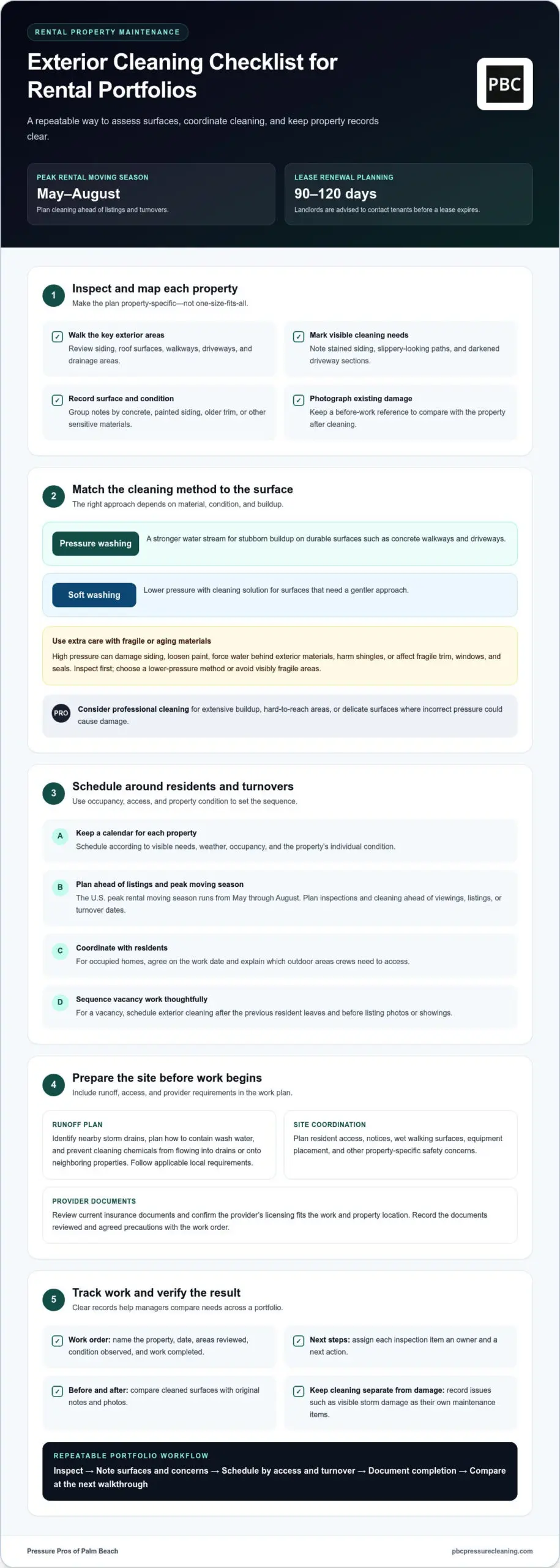
For rental exteriors, match the cleaning method to each surface. Pressure washing uses a stronger water stream to remove stubborn buildup from durable surfaces such as concrete walkways and driveways. Soft washing uses lower pressure with cleaning solution, making it gentler on surfaces that need less force. The right method depends on the material, its condition, and the type of buildup.
Walk each property before scheduling work. Note stained siding, slippery-looking paths, and darkened driveway sections, then record their locations in the maintenance plan. Concrete may tolerate more pressure than painted siding or a weathered entry. Treating every surface alike can cause damage, uneven results, or missed areas. Clear notes help cleaning crews focus on the surfaces that need attention.
Environmental requirements depend on where runoff goes and which cleaning chemicals are used. Before work begins, identify nearby storm drains, plan how to contain wash water, and prevent chemicals from flowing into drains or onto neighboring properties. Follow applicable local requirements for the site. For example, a driveway that slopes toward a street drain needs a runoff plan before washing starts.
High pressure can damage siding, loosen paint, force water behind exterior materials, or break fragile trim. On roofs, forceful washing can harm shingles or dislodge surface materials. Windows may crack or develop leaks if water hits seals or glass too directly. Older buildings need extra care because aging paint, mortar, and cladding may already be weak. Inspect first, then choose a lower-pressure method or avoid washing visibly fragile areas.
A practical portfolio workflow keeps cleaning focused and repeatable. Start at the property entrance, then inspect walkways, driveway edges, and siding from several angles. Mark the areas needing work, note sensitive materials, and photograph existing damage before cleaning. Afterward, compare the surfaces with your original notes. This helps distinguish remaining stains from pre-existing wear and gives the next inspection a useful reference.
- Group requests by surface, such as concrete, painted siding, or older trim.
- Schedule around access needs, resident notices, and upcoming property turnovers.
- Record runoff concerns and areas that require gentler treatment.
Peak moving season for rental properties in the United States runs from May through August. Plan inspections and exterior cleaning ahead of a listing or turnover, so walkways and driveways are ready for viewings. In Palm Beach, a property-specific plan also helps managers coordinate access without treating every building as identical. Reserve professional cleaning for extensive buildup, hard-to-reach areas, or delicate surfaces where incorrect pressure could cause damage.
Rental property owners should check for leaks under sinks, around water heaters, behind washing machines, and near outdoor spigots after freeze-thaw cycles.
Routine cleaning schedules and property inspections
Set a repeatable inspection process for each property, then schedule cleaning around visible needs, weather, and occupancy. Consistent records help managers distinguish routine upkeep from issues that need prompt attention.
Routine Cleaning Schedules
Use a property-by-property calendar rather than assuming every exterior needs the same work. During each walkthrough, note the condition of siding, roof surfaces, paths, and drainage areas. Inspect siding and roofs for winter storm damage before spring rainfall can worsen existing problems. Include exterior drainage in the routine, and keep grounds clear of trash and debris.
Contractor Requirements to Verify
Before work begins, review current insurance documents and confirm that the provider’s licensing fits the work and property location. Ask how the crew will manage resident access, wet walking surfaces, equipment placement, and other site-specific safety concerns. Record the documents reviewed and agreed precautions with the work order, so managers can refer to the same details during later visits.
Turnover and Occupied Rental Coordination
For occupied homes, coordinate the work date with residents and explain which outdoor areas crews need to reach. For a vacancy, place exterior cleaning after the previous resident leaves and before listing photos or showings. Landlords are advised to contact tenants about renewals 90 to 120 days before a lease expires, which can help managers plan upcoming maintenance and turnover needs.
Use the inspection as a practical checklist, not just a quick visual scan. Record a blocked drainage path, debris near an entrance, or visible storm damage on the roof. Assign each item an owner and next action. If cleaning is appropriate, add the location and surface to the schedule; if the issue concerns damage, keep it separate from cleaning tasks.
Keep the schedule useful by noting what changed since the previous inspection. A simple entry can name the property, date, areas reviewed, condition observed, and work completed. This makes it easier to compare properties without assuming they need identical attention. One building may need drainage cleared, while another needs exterior cleaning before it is marketed.
Before confirming a visit, match the plan to resident access and the property’s current condition. Share the work area and expected sequence with the crew, then document completion during a follow-up walkthrough. If you’re organizing exterior maintenance across Palm Beach rentals, discuss your property’s cleaning needs with a local professional.
Make inspections cover safety and routine upkeep as well as visible exterior conditions. Rental property managers should test smoke and carbon monoxide detectors during every inspection. Include exterior drainage in routine maintenance to help protect against moisture damage, and keep the grounds free from trash and debris.
Regular cleaning of rental properties should include sweeping, mopping, and vacuuming all floors. Regular cleaning of rental properties should include cleaning windows and wiping down surfaces. Regular cleaning of rental properties should include sanitizing kitchens and bathrooms.
Work orders and photo documentation
A clear work order connects an inspection finding to a specific action. For each Palm Beach County rental, record the property, exterior area, observed condition, requested work, and access notes. “Clean the front walkway” gives a crew a location and task; “clean exterior” leaves too much open to interpretation. Add a photo when stains, debris, or surface wear need clarification.
Document spring walkthrough findings with photos or video for insurance records, maintenance planning, and future repairs. Capture each area before work starts, then keep the images with the property’s inspection notes. A photo of a stained driveway, for example, shows its condition before cleaning and helps managers compare the result afterward.
Build each work order around observable details, not assumptions. Describe where the issue appears, what it looks like, and the requested outcome. If dark buildup marks one side of a building, identify that side and include a photograph showing its position. Note nearby entrances or resident-use areas so the work can be planned around access.
- Property: Use the address or portfolio’s property name.
- Location: Identify the surface and its position, such as the rear patio or east-facing wall.
- Condition: Describe visible dirt, staining, or debris without guessing at its cause.
- Requested action: State the cleaning task and any areas to avoid.
- Documentation: Attach inspection and completion photos to the same record.
Consistent images make records easier to interpret. Photograph the full area for context, then take a closer view of a specific stain or damaged-looking section. Keep the angle and framing similar in before-and-after photos. A wide driveway image shows the overall surface, while a closer image records a particular discolored patch. Avoid presenting a cropped detail without context.
After the work, update the order with its completion status and any remaining observations. If a mark remains, note its exact location rather than labeling the entire job unsuccessful. This distinction helps managers separate cleaning results from existing surface wear. It also gives the next inspection a clear reference instead of relying on memory or scattered messages.
Store work orders by property and use a consistent naming style, such as the property name, exterior area, and inspection date. Keep resident access notes with the related task, not in an unrelated record. During portfolio reviews, managers can identify open requests, completed cleaning, and recurring exterior concerns without sorting through separate photo folders.
Portfolio-wide exterior cleaning programs
A useful system for managing exterior cleaning for a portfolio of rental properties starts with budgeting by property, surface, observed condition, and planned task. Track each work order against its property record, then compare completed work with outstanding needs.
Climate and local jurisdiction affect cleaning plans in different ways. Exposure, shade, moisture, and nearby drainage shape site needs, while local rules may govern runoff and cleaning chemicals. Apply the requirements for each property’s location before scheduling work.
Start with a portfolio-wide inventory. Record each property’s exterior surfaces, occupancy status, access notes, and visible cleaning concerns. A Wellington rental with broad concrete paths needs a different plan from a shaded building with painted siding. Use inspections to assign tasks based on condition rather than copying the same scope across every address.
Build a shared schedule that separates planned cleaning from urgent requests. Group properties by location when coordinating visits, for example, but keep a separate work order for each address. This keeps task details clear while making scheduling easier. Include the surface, requested work, access arrangements, and target timing in each record.
Track the budget using each property’s work history and current condition. Compare completed tasks with the approved work order, and record additional areas identified during the visit. This gives managers a clear basis for adjusting allocations as conditions change. Tying spending and completed work to individual addresses also makes portfolio reviews more useful.
- Assign each property a unique record and inspection history.
- Group similar tasks for scheduling, while preserving site-specific scopes.
- Track requested, scheduled, completed, and follow-up work separately.
- Compare photographs and notes to identify recurring cleaning needs.
Local conditions matter. A shaded walkway may collect different buildup than an open driveway, while drainage layouts affect where wash water can travel. In Palm Beach County, assess each property rather than assuming one cleaning approach suits every site. Confirm applicable local requirements for runoff and chemical use before approving work. Keep that information with the address and work order.
Review the program after each completed visit. Check whether the work matched the requested scope, whether access went smoothly, and whether new observations belong in the property record. If several addresses show similar needs, use that pattern to plan future scheduling. If one property differs, keep its task separate instead of expanding the scope automatically.
A portfolio plan works best when records support decisions, not just filing. Connect each scheduled task to a property, condition, and completion note. This helps managers organize exterior upkeep and prepare homes for occupancy while keeping site-specific needs in view.
Pressure Pros of Palm Beach: Roof Cleaning
Pressure Pros of Palm Beach provides roof cleaning for rental properties with visible buildup affecting their exterior appearance. For managers handling several addresses, add roof cleaning to the property’s work order and record the roof’s condition during inspection. This keeps the task connected to the right building and makes it easier to coordinate with other exterior maintenance.
Professional roof cleaning is a practical next step when a roof needs attention beyond routine ground-level cleaning. Review the property’s exterior notes, identify the roof as the priority, and plan the work around resident access. You can learn more about roof cleaning services for Palm Beach properties.
Contact Pressure Pros of Palm Beach to discuss roof cleaning for your rental property.
Make Exterior Care Part of Your Next Portfolio Plan
A practical approach to managing exterior cleaning for a portfolio of rental properties starts with choosing the next useful action for each address. Review your property records, note upcoming turnovers, and prioritize work that supports how each home is used. A consistent plan keeps exterior maintenance connected to your broader property management goals.
When cleaning needs call for professional help, Pressure Pros of Palm Beach provides roof cleaning and power washing for rental property exteriors. The company also offers exterior painting when a property needs a fresh finish. Matching the service to the property’s condition helps you plan maintenance without treating every building alike.
Use your next portfolio review to identify priority properties and define the work each needs. Then discuss those needs with Pressure Pros of Palm Beach, a local provider of exterior services in Palm Beach County.
A clear next step can make ongoing property care easier to organize.
Frequently Asked Questions
What exterior cleaning services should rental property managers schedule?
Schedule services based on each property’s surfaces and visible condition. Roof cleaning can address roof buildup, while power washing or pressure cleaning can refresh suitable exterior surfaces and paved areas. Paver cleaning may suit stained patios or walkways, and exterior painting may be appropriate when the finish needs attention beyond cleaning. A property with a clean roof but marked driveway, for example, may need only targeted surface cleaning.
How often should rental properties have siding, roofs, gutters, and driveways cleaned?
There is no single schedule that fits every rental property. Set cleaning timing according to visible buildup, surface condition, shade, drainage, and how the property is used. Inspect gutters for leaves or blocked flow, and check driveways and siding for accumulating dirt or stains. A shaded building with persistent buildup may need attention sooner than an open property that stays clean between inspections.
How should property managers inspect and document exterior cleaning work?
Use a consistent inspection record for each property, with dated photos and a clear description of the areas reviewed. After cleaning, compare the same views and note any remaining marks or changes in surface condition. If a driveway stain remains, record its location and appearance rather than assuming the entire surface needs another cleaning. Keep completed records available for future maintenance decisions.
Recent Comments