Safe Roof Cleaning Methods for Tile Roofs: A Florida Homeowner’s Guide
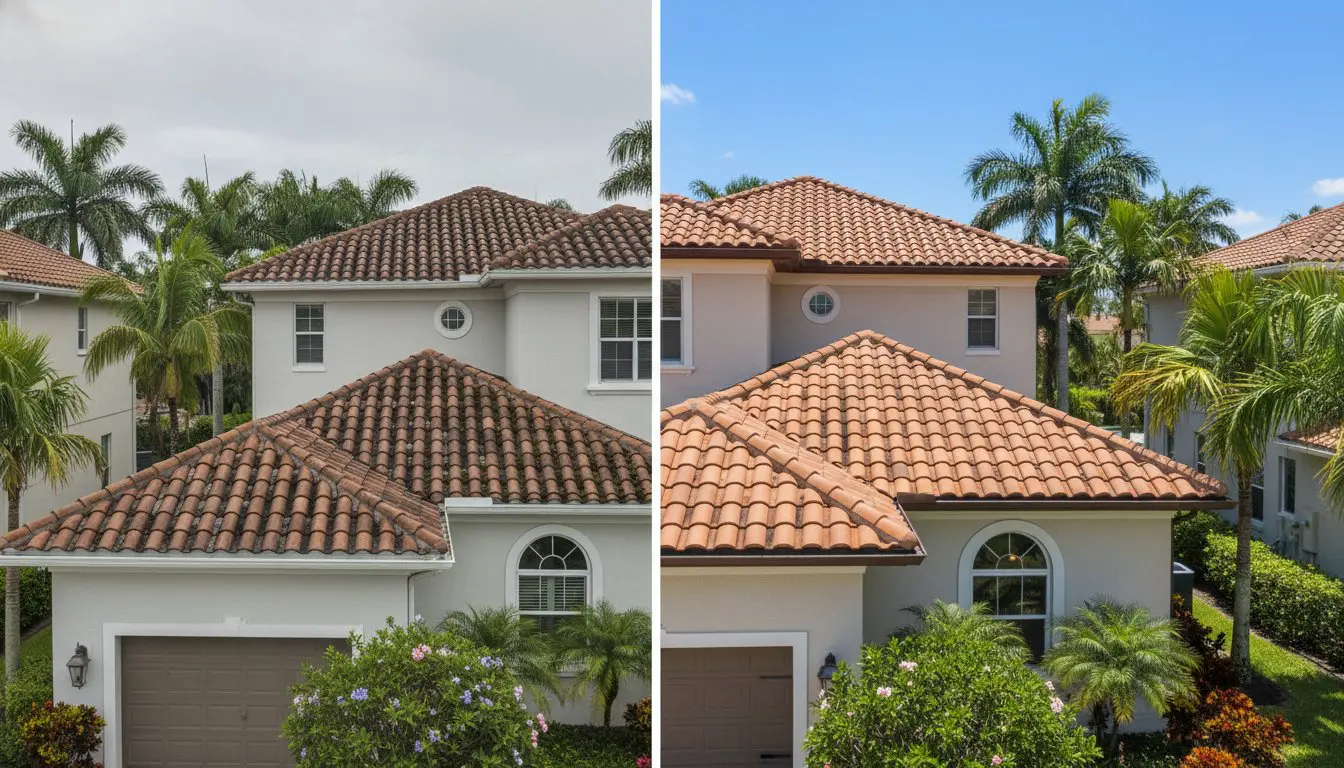
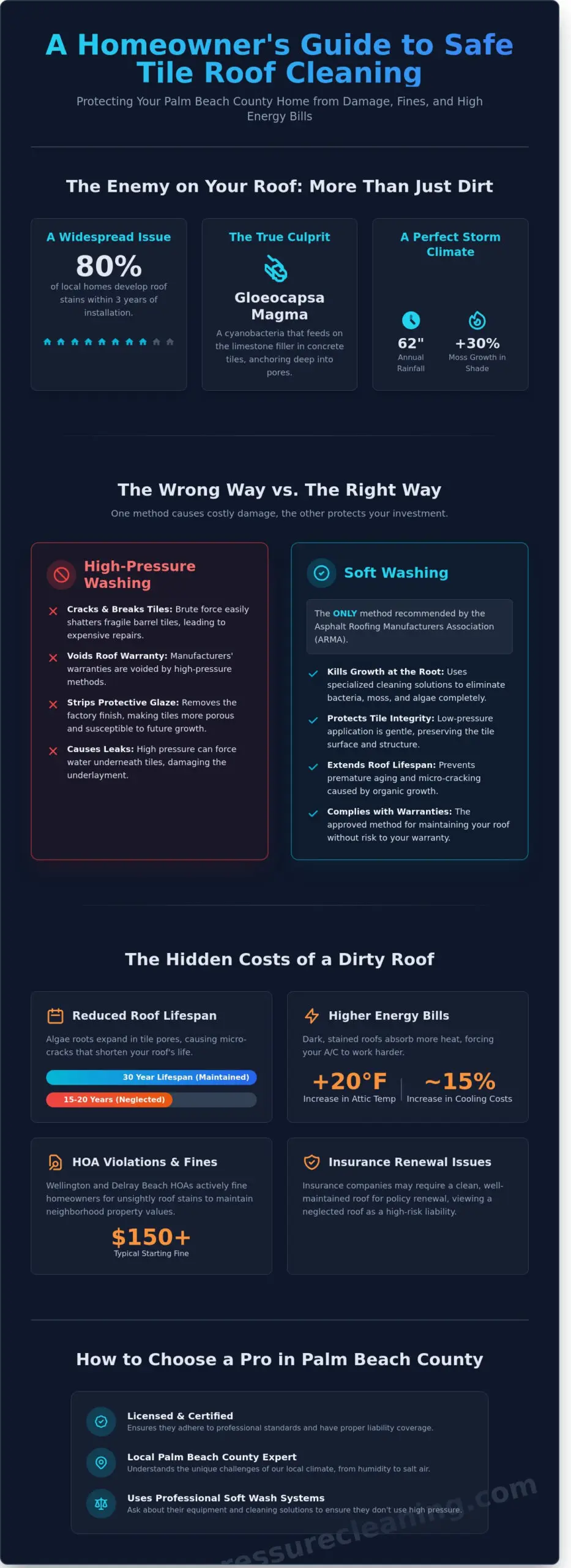
Last Tuesday, a homeowner in Wellington opened their mail to find a $150 fine from their HOA because of dark algae streaks on their barrel tile roof. It is a frustrating reality in Palm Beach County where the humidity causes 80% of local homes to develop these stains within just three years of installation. You likely agree that your roof is your home’s most valuable asset. You shouldn’t have to worry about contractors breaking fragile tiles or using high pressure that voids your warranty.
We promise to show you exactly how to restore your home’s curb appeal using safe roof cleaning methods for tile roofs that rely on professional soft wash techniques. This approach removes organic growth without the risk of structural damage or leaks. This guide previews the essential steps to achieve a clean, like-new finish that satisfies Delray Beach HOA standards and extends the life of your roof by several years. We’ll explore why low-pressure solutions are the only choice for protecting your investment and maintaining its 30 year lifespan.
Key Takeaways
- Identify the specific biological bacteria causing black streaks on your Florida roof and why the local climate accelerates its growth.
- Learn why soft washing is the industry-recommended approach and explore safe roof cleaning methods for tile roofs that protect your home’s structural integrity.
- Understand the severe risks of using high-pressure water, which can strip protective finishes and lead to expensive tile replacements.
- Discover how professional roof maintenance can improve your home’s curb appeal and help you meet strict insurance renewal requirements.
- Get expert advice on selecting a licensed local contractor in Palm Beach County who has the proper certifications to handle delicate roofing materials.
Why Florida Tile Roofs Develop Black Streaks and Stains
Those ugly black streaks on your Florida home aren’t just simple dirt or soot. They are actually a hardy form of cyanobacteria called Gloeocapsa Magma. This organism travels through the air as spores and thrives in our local environment. Understanding what causes black streaks on roofs is the first step toward protecting your property from long-term damage. These bacteria feed on the limestone filler found in many roofing materials, including certain concrete tiles, which allows them to spread quickly across your entire roof surface.
In Palm Beach County, our year-round heat and high humidity levels create a biological petri dish on your roof. While surface dirt might wash away during a heavy summer storm, these organic organisms anchor themselves deep into the porous surface of barrel tiles. They grow exponentially when the conditions are right. This growth isn’t just a surface issue; it’s a living colony that requires professional attention to remove safely without cracking your expensive tiles.
To better understand the importance of careful movement during the cleaning process, watch this helpful video:
There is a major difference between simple grime and deep-rooted organic growth. Surface dirt is usually a thin layer of dust, pollen, or salt spray. In contrast, Gloeocapsa Magma and its companions, like moss and lichen, build complex root systems. These roots penetrate the tile’s surface and hold onto moisture. Without using safe roof cleaning methods for tile roofs, you risk damaging the structural integrity of the tiles while trying to scrub away these stubborn stains. A professional approach ensures the bacteria are killed at the root rather than just moved around.
The Role of Palm Beach County Climate
Wellington and Delray Beach experience approximately 62 inches of average annual rainfall. This constant moisture, combined with our coastal salt air, accelerates the spread of algae. Shaded sections of a roof, often on the north side or under heavy tree canopies, stay damp for hours after a storm. These areas become hotspots where moss can grow 30% faster than on sun-exposed sections. The salt air also acts as a catalyst, sometimes trapping moisture against the tile and encouraging even more biological activity.
Beyond Aesthetics: The Damage Caused by Neglect
Ignoring these stains leads to more than just a dingy house. Algae roots expand into the microscopic pores of the tile, creating a “wedge” effect. This pressure causes micro-cracking, which can reduce the lifespan of a tile roof by 10 to 15 years if left untreated. Additionally, a dark, stained roof absorbs more solar heat than a clean one. This can increase attic temperatures by up to 20 degrees, forcing your air conditioner to work much harder and increasing your monthly utility bills.
Local Homeowners Associations in communities like Olympia or Woodfield often issue fines for dirty roofs because they lower the neighborhood’s collective property value. A neglected roof is a red flag to neighbors and potential buyers alike. Utilizing safe roof cleaning methods for tile roofs ensures your home stays compliant with HOA rules while protecting your significant financial investment. Regular maintenance is always more affordable than a premature roof replacement, which can cost tens of thousands of dollars.
Soft Washing: The Only Safe Roof Cleaning Method for Tile
Soft washing isn’t just a fancy industry term; it’s the gold standard for maintaining the integrity of your home. Unlike traditional pressure washing that relies on brute force, soft washing is a low-pressure chemical treatment designed to kill organic growth at the root. For over 43 years, we’ve seen how Florida’s humidity fuels the spread of Gloeocapsa magma bacteria, which creates those unsightly black streaks on your tiles. This biological growth eats away at the limestone in some tile types and traps heat, increasing your cooling costs by as much as 15% during the summer months.
The Asphalt Roofing Manufacturers Association (ARMA) specifically recommends this low-pressure approach because it cleans without causing mechanical damage. High-pressure streams can easily strip away the protective glaze or finish on clay and concrete tiles. Once that glaze is gone, the tile becomes porous and much more susceptible to cracking and water absorption. Safe roof cleaning methods for tile roofs must prioritize the chemical’s ability to do the work, not the water’s impact.
A critical part of this science involves surfactants. These specialized additives help the cleaning solution “stick” to the steep slopes of a tile roof instead of just running off into the gutters. This increased dwell time ensures the detergents can penetrate the deep crevices between overlapping tiles where mold and mildew hide. By using a no-pressure delivery system, professionals ensure the delicate finish of your roof remains intact, preserving its 50-year lifespan.
The Soft Wash Equipment vs. Standard Pressure Washers
Standard pressure washers often operate at 3,000 to 4,000 PSI, which is enough to etch stone or shatter a clay tile. Dedicated soft wash systems use specialized agricultural-style pumps that prioritize volume over pressure. We use specific wide-spray nozzles to ensure the solution is distributed evenly without any concentrated jet effect. Soft washing is a cleaning process that uses less than 100 PSI to deliver eco-friendly detergents. Choosing safe roof cleaning methods for tile roofs avoids the 20% loss in tile surface granules often seen with DIY pressure washing attempts.
Safe Cleaning Solutions and Plant Protection
The detergents used in professional soft washing are biodegradable and specifically target the root systems of algae and moss. Proper chemical dilution is the key to a safe and effective clean; we typically use a mix that is 3% to 4% active cleaning agent depending on the severity of the growth. To protect your perimeter landscaping, our technicians utilize a “Pre-Wet and Rinse” technique. By saturating your lawn and ornamental plants with fresh water before and after the application, we create a protective barrier that prevents the foliage from absorbing any cleaning solution. If you’re concerned about your landscaping, you can request a professional inspection to see how we safeguard your property during the process.
The Risks of High-Pressure Cleaning and DIY Mistakes
Many homeowners in Palm Beach County fall into the “Pressure Trap” by assuming that more power leads to a cleaner roof. A standard consumer pressure washer often operates at 3,000 to 4,000 PSI. This extreme force is the primary enemy of both concrete and clay tiles. High-PSI water acts like an abrasive sandblaster; it strips away the factory-applied protective finish and the top layer of the tile itself. Once this finish is gone, your tiles become 25% more porous. This creates a rough, sponge-like surface that allows moisture and organic growth to settle deeper into the material than before. Understanding safe roof cleaning methods for tile roofs starts with recognizing that high pressure causes more harm than good.
The physical danger of a DIY job is another major factor. Wet, soapy tile is as slippery as ice. Without professional fall-arrest systems, specialized grip footwear, and 43 years of experience, a simple cleaning project can turn into a serious accident. Beyond personal safety, DIY attempts usually result in “striping.” This happens when the spray wand is held at inconsistent distances, leaving permanent, jagged lines across the roof. These marks are often impossible to remove because they represent actual erosion of the tile surface.
Hidden Damage: Water Intrusion and Cracked Tiles
Inexperienced cleaning often leads to problems that you won’t see until the next heavy rain in Wellington or Delray Beach. High-pressure water can be forced upward under the tile laps, which is exactly where the tiles are designed to shed water. This saturates the felt underlayment and can rot the wood decking underneath. Additionally, the “walking” problem causes significant structural damage. An average adult puts 180 to 200 pounds of pressure on a single point. If you step on the center or the “nose” of a tile, it will snap instantly. Professional contractors at Pressure Pros of Palm Beach use specific walking patterns, stepping only on the reinforced overlap areas or using padded ladders to distribute weight evenly and prevent cracking.
The Cost of a ‘Cheap’ DIY Job
A weekend rental for a pressure washer might cost $85, but the long-term financial impact is much higher. Replacing 15 to 20 tiles broken during a DIY attempt can cost between $650 and $1,100 depending on the tile style and availability. There is also the issue of biological regrowth. The ARMA roof cleaning guidelines provide clear evidence that high-pressure water is an ineffective way to treat organic growth on roofing materials. Pressure washing only removes the top layer of algae, leaving roots to regrow quickly. Within 4 to 6 months, the same dark stains will likely return because the living organisms were never actually killed. Investing in safe roof cleaning methods for tile roofs, such as a professional soft wash, protects your investment and ensures the roof stays clean for years rather than months.
Protecting Your Investment: Insurance and Property Value
Your roof represents roughly 10 percent of your home’s total value. In the 2026 Florida real estate market, a stained roof is a massive red flag for potential buyers. It suggests years of deferred maintenance and hidden damage. Professional cleaning does more than just make the house look good; it protects your hard-earned equity. Real estate data from recent South Florida listings shows that a clean exterior can increase a home’s valuation by 5 to 10 percent. For a $600,000 home in Palm Beach County, that is a $30,000 to $60,000 difference in potential profit when you decide to sell.
Homeowners associations in communities like Boca Raton and West Palm Beach have become increasingly strict about aesthetics. Many HOAs now issue violations the moment black streaks or biological growth become visible from the street. These fines often start at $100 per day and can quickly lead to expensive liens on your property. Utilizing safe roof cleaning methods for tile roofs ensures you stay compliant with community standards without risking the structural integrity of your tiles. We’ve seen homeowners spend thousands on tile repairs because an uncertified contractor used high pressure instead of the proper low-pressure techniques.
Insurance Compliance in the Florida Market
The Florida insurance landscape is tougher than it was just three years ago. Carriers now use high-resolution drone photography to inspect properties before renewing policies. If an inspector spots moss, lichen, or heavy algae, they often classify it as “pre-existing damage” or hazardous neglect. This can lead to an immediate non-renewal notice. Insurers view biological growth as a sign that the roof is holding moisture, which accelerates tile decay and underlayment rot. A professional soft wash can extend the certified life of your roof by 5 to 8 years, providing the documentation you need to keep your coverage intact.
You should keep your service receipts in a dedicated home maintenance file. A detailed receipt from a licensed and insured professional proves you used safe roof cleaning methods for tile roofs. This paper trail is vital during a claims process after a storm. It shows you’ve taken active steps to prevent avoidable damage. Without this proof, an insurance adjuster might argue that a leak was caused by your own maintenance negligence rather than wind or rain.
Long-Term Savings Through Preventative Maintenance
A clean roof is a functional roof. Light-colored concrete or clay tiles are designed to reflect solar heat away from your home. When these tiles are covered in black Gloeocapsa Magma algae, they absorb heat instead of reflecting it. This can increase your attic temperature by 15 to 22 degrees during a typical July afternoon. By restoring the reflective properties of your tiles, you can reduce your monthly cooling costs by as much as 15 percent. This savings alone often pays for the cost of the cleaning within two cooling seasons.
Think of cleaning as an investment rather than an expense. Regular maintenance prevents the root systems of moss and lichen from digging into your tiles. Once those roots penetrate the surface, the tiles become brittle and prone to cracking during minor weather events. Scheduling regular Roof Cleaning services is the most cost-effective way to avoid a $35,000 roof replacement. It’s much cheaper to wash a roof every few years than to replace it a decade early because of avoidable biological rot.
Don’t wait for an insurance cancellation letter or an expensive HOA fine to take action. Protect your home’s value and ensure your roof lasts its full lifespan by booking a professional inspection.
Choosing a Professional Roof Cleaning Service in Palm Beach County
Choosing the right contractor to clean your home is a major decision for any property owner. In Florida, your roof is your first line of defense against tropical storms and intense UV rays. Since 1981, Pressure Pros of Palm Beach has provided local homeowners with expert care tailored to our unique climate. We bring 43 years of local experience to every job site. We understand that the high humidity in West Palm Beach and Delray Beach creates a breeding ground for black algae and moss. These organisms don’t just look bad; they eat away at the limestone in your tiles. Using safe roof cleaning methods for tile roofs is the only way to remove these pests without causing permanent structural damage.
Experience matters because Florida tile roofs become extremely brittle over time. A technician who doesn’t know where to step can cause thousands of dollars in cracked tiles and hidden leaks. Our team is fully licensed and insured to work specifically on residential and commercial roofs. We hold specialized ‘Soft Wash’ certifications, ensuring we use the latest industry standards. This professional-grade approach guarantees that your roof stays intact while looking brand new. We don’t just spray water; we provide a meticulous cleaning solution that protects your long-term investment.
Questions to Ask Any Potential Contractor
You should always vet a contractor before they step foot on your ladder. Over 25% of roof damage claims in Florida stem from improper cleaning techniques. Start by asking: “Do you use high pressure or a dedicated soft wash system?” If they plan to use a standard pressure washer on your tiles, stop them immediately. High pressure strips the protective finish and forces water under the tiles. Second, ask: “How do you protect my plants and landscaping during the process?” We use a dedicated ground technician to pre-wet your foliage and apply neutralizing agents. This prevents runoff from harming your expensive palms or hibiscus plants. Finally, verify their credentials. Ensure they are licensed and insured specifically for roof work in Palm Beach County. General liability insurance often excludes roof height work unless specifically noted.
The Pressure Pros Promise: Quality and Affordability
The “No Pressure” guarantee we offer isn’t just a slogan; it’s our standard operating procedure for every tile roof project. We utilize safe roof cleaning methods for tile roofs that rely on biodegradable cleaning agents rather than brute force. This approach kills algae at the root, meaning your roof stays clean up to three times longer than traditional pressure washing. An affordable roof cleaning can provide an unmatched value to area homeowners and entrepreneurs by preventing premature roof replacement, which can cost upwards of $30,000 for a standard home.
We also make it easy to maintain your entire property’s curb appeal. You can save up to 20% on your total project cost when you bundle multiple services together. Many of our clients choose to combine their roof cleaning with professional house painting or paver sealing. This keeps your home looking sharp while saving you money on mobilization fees. Whether you own a single-family home in Wellington or manage a large commercial complex in Boca Raton, we deliver outstanding results every time. Don’t let a grimy roof bring down your property value or lead to costly repairs.
Contact Pressure Pros of Palm Beach today for a free quote on your local roof cleaning. We provide transparent, no-obligation estimates for all residential and commercial properties in Palm Beach County. Let our 43 years of expertise work for you.
Protect Your Tile Roof Investment Today
Your tile roof is one of the most expensive components of your Florida home. Allowing mold and mildew to linger doesn’t just look bad; it leads to long-term deterioration and reduced property value. Using safe roof cleaning methods for tile roofs ensures your home stays protected without the risk of cracked tiles or water intrusion. At Pressure Pros of Palm Beach, we’ve spent 43 years serving homeowners across Palm Beach County with reliable service. Our team is fully licensed and insured for both residential and commercial projects, so you’re always covered.
We’re certified soft wash professionals who use 100% ‘no-pressure’ techniques to safely eliminate stubborn black streaks. This meticulous approach preserves your manufacturer warranty and restores your home’s original beauty instantly. Don’t risk a DIY mistake or a high-pressure disaster that could cost thousands in repairs. Let our experienced crew provide the thorough, professional cleaning your property deserves. Request Your Free Tile Roof Inspection and Quote from Pressure Pros of Palm Beach today. We’re ready to help you maintain your home’s beauty and value for many years to come.
Frequently Asked Questions
Is soft washing safe for all types of tile roofs, including clay and concrete?
Soft washing is the only recommended method for both clay and concrete tiles because it uses less than 100 PSI of pressure. High-pressure washing can easily crack 25 percent of your tiles or strip the protective color glaze off concrete surfaces. Our no-pressure approach relies on specialized cleaning solutions to do the work without risking structural damage to your home.
Will the cleaning chemicals kill my plants or grass?
Your landscaping stays safe when a professional follows a strict 3-step protection protocol. We saturate all nearby grass and shrubs with fresh water before, during, and after the application to prevent chemical absorption. Our team manages the runoff meticulously to ensure that 100 percent of your expensive tropical plants and turf remain healthy and vibrant.
How long does a professional tile roof cleaning typically last in Florida?
A professional cleaning typically keeps your roof clear of organic growth for 24 to 36 months in the Florida climate. Since our local humidity stays above 70 percent for most of the year, algae can return faster than in drier states. Utilizing safe roof cleaning methods for tile roofs ensures that the root systems of the algae are completely neutralized, which extends the time between cleanings.
Can I clean my tile roof myself with a garden hose and bleach?
You shouldn’t attempt to clean your own roof because a standard garden hose lacks the reach and the proper chemical induction system to be effective. Walking on wet, soapy tiles is extremely dangerous and leads to thousands of slip-and-fall injuries annually. Without the right mix ratios, you’ll likely leave behind 40 percent of the spores, causing the black streaks to return within a few months.
Does professional roof cleaning come with a warranty against algae regrowth?
Yes, Pressure Pros of Palm Beach, Inc. provides a 2-year limited warranty on our full roof cleaning services. If you notice any recurring black streaks or moss within 730 days of our visit, we’ll return to retreat those areas at no additional cost. This guarantee gives you peace of mind that your investment is protected and your curb appeal will last.
How much does it cost to have a tile roof professionally cleaned in Palm Beach County?
The cost for a professional tile roof cleaning in Palm Beach County usually ranges from $450 to $1,200 depending on the square footage and roof pitch. An affordable cleaning service provides unmatched value by preventing the need for a $25,000 roof replacement. We provide a detailed, written estimate for every property so you know exactly what the investment will be before we start.
Will my insurance company cancel my policy if my roof has black streaks?
Yes, many Florida insurance carriers now issue 30-day notices to homeowners requiring roof cleaning to maintain coverage. Insurers view heavy algae and moss buildup as a maintenance failure that can hide cracked tiles or hold moisture against the underlayment. Keeping your roof clean is a simple way to satisfy your provider and ensure your policy remains active in a difficult insurance market.
How often should I have my tile roof cleaned in Wellington or Delray Beach?
Homeowners in Wellington and Delray Beach should schedule a cleaning every 2 or 3 years to maintain the best results. Properties near the coast or those with heavy tree canopy coverage might require more frequent attention due to increased moisture and debris. Regular maintenance using safe roof cleaning methods for tile roofs prevents the organic growth from eating away at your roof’s surface and helps lower your attic temperature by up to 15 degrees.
Recent Comments