What Causes Black Streaks on Your Roof? Understanding and Removing Roof Algae
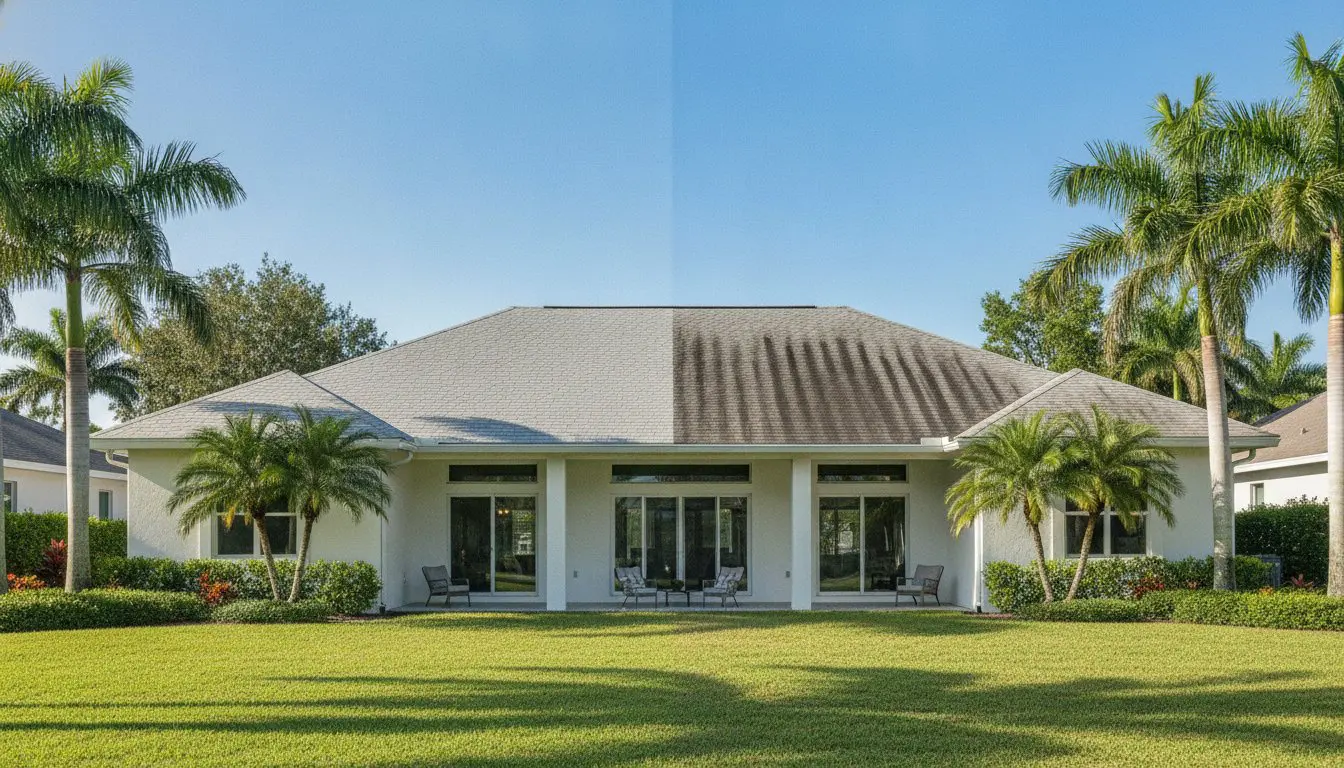
What if those ugly black stains on your shingles aren’t actually dirt or soot, but a living organism that’s slowly eating your investment? If you’ve spent time wondering what causes black streaks on roof surfaces, you’re not alone. Many homeowners in our humid climate face this exact issue, watching as their curb appeal vanishes and their energy bills begin to climb. It’s a common frustration that can lead to stressful HOA fines and even failed insurance inspections if left unaddressed.
The truth is that these streaks are usually a hardy type of algae called Gloeocapsa magma. This organism thrives in our local heat and moisture, feeding on the limestone filler in your shingles. You’ll learn exactly how this biological growth affects your property’s value and the safest methods to eliminate it. We’ll also explain why avoiding high pressure is critical for protecting your warranty and preventing structural deterioration. By the end of this guide, you’ll understand how a professional soft wash can restore your home’s appearance and help you avoid the costly 25 percent rule for roof replacements. Our goal is to provide the practical knowledge you need to protect your asset and maintain a beautiful property.
Key Takeaways
- Identify the specific living organism responsible for dark stains and why it’s more than just a cosmetic issue for your home.
- Understand what causes black streaks on roof shingles by exploring how limestone filler acts as a primary food source for hungry algae.
- Discover why the unique humidity of Palm Beach County creates a perfect environment that accelerates bacterial growth on your property.
- Learn the critical differences between damaging high-pressure methods and the gentle, effective results of professional soft washing.
- Find out how regular maintenance from a local roof cleaning expert can help you avoid failed insurance inspections and costly HOA fines.
Understanding Those Dark Stains: Is It Dirt, Mold, or Algae?
Many homeowners in Palm Beach County look up and see dark, unsightly marks and assume their roof is simply getting old. You might think it’s soot from a chimney or debris from nearby trees. However, if you’ve noticed these marks appearing in long, dripping patterns, you’re seeing something much more complex than simple dirt. Understanding what causes black streaks on roof shingles is vital for any property owner looking to maintain their home. These stains are frequently misidentified as “roof rot” or “mold,” but those terms don’t accurately describe the biological process happening on your shingles.
The Anatomy of a Streak
These stains typically appear as vertical lines running from the peak of your roof down to the gutters. This happens because the bacteria hitches a ride on rainwater. As moisture flows down the shingles, the bacteria colonize those damp paths. You’ll often notice the heaviest growth on the north side of the house or under heavy tree cover. These areas stay damp longer because they receive less direct sunlight. This persistent moisture creates a perfect breeding ground. The problem doesn’t stay localized for long; it spreads through airborne spores. If your neighbor has these streaks, your roof is likely next. It’s a community-wide issue that requires a professional touch to resolve.
The Difference Between Dirt and Biological Growth
Unlike simple dust or dirt, these stains won’t wash away during a heavy Florida rainstorm. In fact, rain often makes the problem worse by providing the hydration the bacteria needs to grow. The specific culprit is Gloeocapsa magma, a hardy cyanobacteria that produces a dark, weather-resistant outer coating. This pigment acts like a sunblock, protecting the organism from harsh UV rays while it feeds. Gloeocapsa magma is a limestone-consuming cyanobacteria common in humid climates.
Because this is a living organism and not just surface debris, it requires a specialized approach to remove. Professional roof cleaning is designed to kill the bacteria at its root rather than just blasting away the visible pigment. Blasting the roof with high pressure can actually damage the shingles further without solving the underlying biological problem. Leaving these stains alone allows the bacteria to continue breaking down your roofing materials, which eventually leads to granule loss and reduced energy efficiency. By addressing the root cause, you protect your investment and restore your home’s curb appeal.
The Science Behind the Streaks: Meet Gloeocapsa Magma
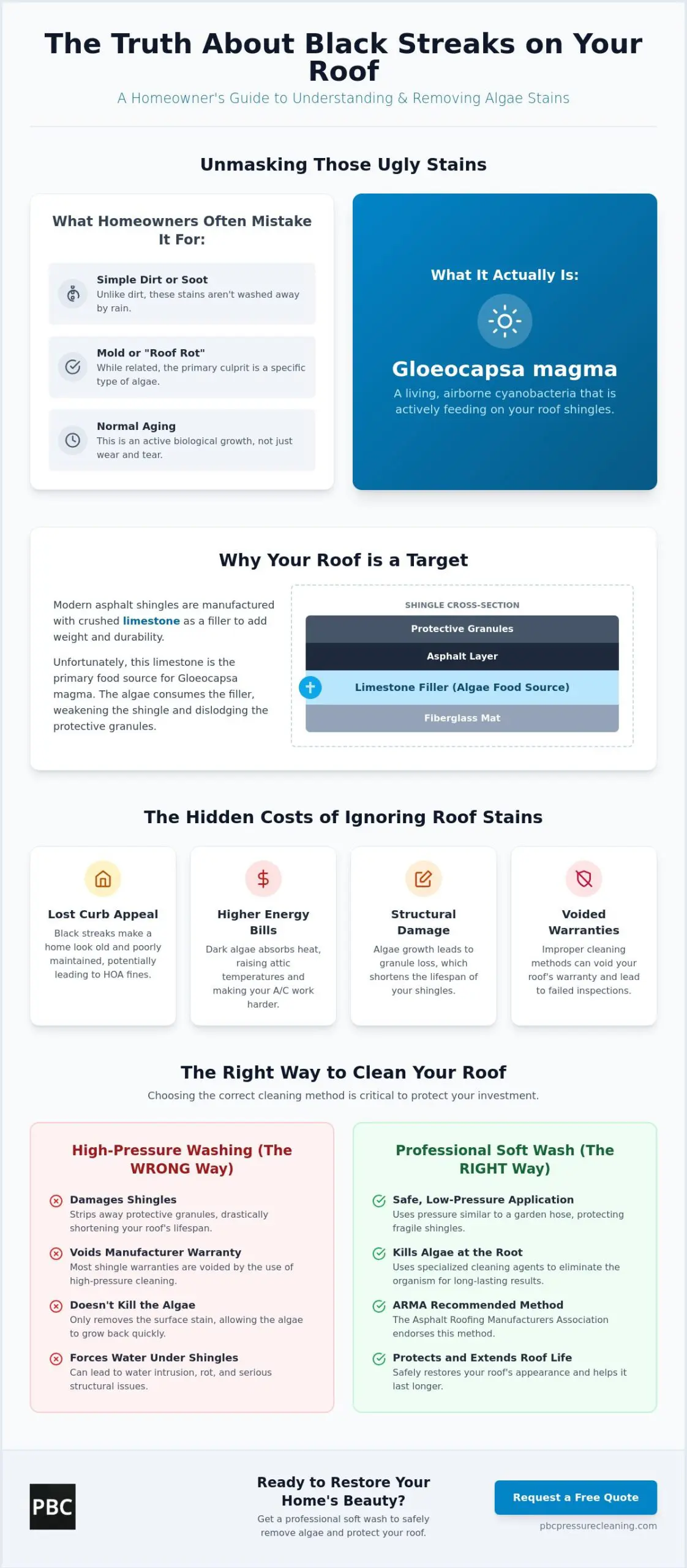
To understand what causes black streaks on roof surfaces, you have to look closer at the materials protecting your home. Most modern roofs use asphalt shingles. These shingles aren’t just made of asphalt and fiberglass. Manufacturers use crushed limestone as a filler to add weight and durability to the product. While this makes the shingles strong, it also provides a steady food source for a specific type of algae. Understanding what causes black streaks on roof shingles helps you realize that this isn’t just a cosmetic cleaning project; it’s essential asset maintenance.
As the bacteria colonies grow, they literally eat the limestone filler. This process isn’t just a surface stain. It’s a slow degradation of the shingle’s physical structure. As the limestone is consumed, the bond holding the protective granules in place weakens. You might notice these granules accumulating in your gutters after a heavy rain. According to the Asphalt Roofing Manufacturers Association (ARMA), this discoloration is a common issue that requires specific care to resolve without damaging the roof’s integrity or voiding your warranty.
Why Modern Shingles are More Susceptible
Industry standards shifted decades ago from organic felt mats to fiberglass-reinforced mats. To give these fiberglass shingles the necessary bulk and fire resistance, manufacturers increased the limestone content significantly. This shift means newer roofs often show streaks much faster than older generations did. There’s a frustrating irony here. Many “energy efficient” shingles are designed to reflect sunlight, but once the black algae takes over, the dark pigment absorbs solar heat. This raises your attic temperature and forces your air conditioner to work harder, leading to higher monthly utility costs.
Granule Loss and Structural Integrity
The granules on your shingles serve two critical purposes: they reflect UV rays and provide fire resistance. When biological growth disrupts these granules, your roof loses its primary defense system. Once granules are gone, the underlying asphalt is exposed to rapid degradation from the harsh Florida sun. This process significantly shortens the lifespan of your roofing system.
- Algae feeding loosens the ceramic granules.
- Exposed asphalt becomes brittle and prone to cracking.
- Shingles begin to curl at the edges, creating gaps for moisture.
Biological growth causes shingles to curl or become brittle over time. If you’re seeing significant granule loss in your downspouts, it’s time to schedule a professional assessment to stop the damage before it leads to a full replacement.
Why Florida Homeowners Face a Unique Challenge
Living in Palm Beach County offers many benefits, but our tropical climate is the primary reason why local roofs deteriorate faster than those in other parts of the country. While the previous sections explained the biological nature of algae, it’s important to understand how our environment accelerates this growth. The combination of high humidity and intense sunshine creates a “petri dish” effect on your shingles. During our frequent afternoon rain showers, moisture gets trapped in the porous surface of the shingle. When the sun comes back out, it warms that water, creating a perfect incubator for the bacteria.
Tropical storms and our lush local foliage also play a significant role in spreading the problem. Wind from storms can carry spores for miles, meaning a single infested house in a neighborhood can soon lead to a dozen more. This is particularly evident in communities with dense landscaping, as trees provide the shade and additional moisture that algae loves. In areas like Wellington and Boca Raton, this has become a widespread concern that goes beyond simple aesthetics. Understanding what causes black streaks on roof shingles in Florida helps you realize that you aren’t just fighting dirt; you’re fighting a climate-driven biological invasion.
The Heat Factor in South Florida
The dark pigment produced by Gloeocapsa magma doesn’t just look bad. It changes the thermal properties of your home. A clean roof is designed to reflect a portion of the sun’s energy, but a roof covered in black streaks acts like a heat sink. In the peak of summer, black roofs in the Florida heat can reach temperatures over 150 degrees. This extreme heat transfers directly into your attic and living spaces. This puts a massive strain on your HVAC system, leading to higher monthly energy bills and potential equipment failure. Investing in a clean roof is a practical way to improve thermal regulation and lower your cooling costs.
Local HOA Regulations and Property Value
Because these stains are so visible, many Palm Beach County HOAs mandate regular cleaning to maintain community standards. If you live in a governed community, those dark streaks can lead to official notices and potential fines. Beyond the threat of penalties, these stains have a measurable impact on your property value. Appraisers and potential buyers often view a stained roof as a sign of neglect or impending failure. Scheduling professional roof cleaning serves as a vital investment protection measure. It ensures your home makes a positive first impression while avoiding the stress of compliance issues.
Soft Wash vs. Pressure Washing: The Best Way to Clean Your Roof
When you see those dark marks, your first instinct might be to grab a pressure washer. But understanding what causes black streaks on roof shingles—a living algae colony—changes how you should treat them. Mechanical force might blast away the surface pigment, but it doesn’t solve the underlying biological issue. Instead, professional contractors use a method called soft washing. This process relies on a low-pressure chemical application rather than raw power. It’s the difference between using a garden hose and a fire hose on your delicate roofing materials. By treating the root cause, we ensure a deeper clean that actually protects the shingle’s lifespan.
The Dangers of High Pressure
High-pressure washing is the primary cause of premature roof failure in South Florida. Most residential pressure washers operate at around 3000 PSI. Using that level of force on asphalt shingles can strip away 10 years of life in just 10 minutes. The pressure blasts the protective ceramic granules right off the shingle, leaving the asphalt exposed to the sun. Even worse, the high-velocity water can be forced under the shingles or into the decking, causing hidden leaks and structural rot. You can read more about these specific pressure washing risks to understand why force is never the answer for your roof. Many manufacturers will even void your warranty if they find evidence of high-pressure cleaning.
The Soft Wash Advantage
Soft washing is the only method recommended by major industry authorities. It uses a specialized chemical solution to kill the algae at its root. Because the solution is applied with less pressure than a standard rainfall, it’s completely safe for your shingles. These cleaners are designed to seep into the porous surface of the shingle to kill the microscopic spores that pressure alone can’t reach. This thorough treatment ensures your roof stays cleaner for two to three times longer than a simple rinse. It’s a more methodical approach that yields better long-term results for your property.
The longevity of your results depends entirely on the method you choose. Pressure washing often leaves behind invisible roots, allowing the black streaks to return in just a few months. Soft washing eliminates the biological culprit entirely. This investment protection measure keeps your shingles healthy and your curb appeal high for years, not just weeks. If you want to stop the cycle of growth and protect your home’s value, it’s time to request a professional soft wash quote and get the job done safely.
Professional Roof Cleaning in Palm Beach County: The Pressure Pros Advantage
Understanding what causes black streaks on roof shingles is the first step, but choosing the right partner to remove them is just as important. In Palm Beach County, our specialized soft wash process is designed specifically for the unique needs of Florida tile and asphalt shingle roofs. We don’t just rinse away the surface stains. We apply a methodical treatment that neutralizes the biological growth at its source. This approach ensures your roof remains clean and structurally sound without the risks associated with high pressure. Hiring a licensed and insured local contractor is vital for your home’s protection, as it provides peace of mind that your investment is in professional hands.
Property protection is a cornerstone of our service. We understand that your landscaping is a significant part of your home’s value. During the cleaning process, our team takes specific steps to safeguard your plants and lawn. This includes pre-wetting foliage and using neutralizing agents to ensure that our specialized cleaners only target the algae on your roof. Many homeowners find additional value in bundling their roof service with exterior house washing. This comprehensive approach removes salt air residue and grime from your siding, providing a uniform look that dramatically improves your property’s overall appearance.
Experienced Local Service
We have a long history of serving neighbors in Wellington, Royal Palm Beach, and Delray Beach. Local property owners trust us because we use professional-grade equipment that DIY rentals simply cannot match. Consumer-grade machines often lack the precision needed to safely apply soft wash solutions at the correct concentrations. To see the difference our experience makes, you can request a free estimate for your local roof cleaning today. We focus on delivering tangible results that protect your asset’s value for the long term.
Maintenance Beyond the Roof
A clean roof is often the centerpiece of a larger property restoration. To truly transform your home, consider how a fresh roof pairs with professional paver sealing for your driveway or pool deck. If your home’s exterior still looks tired after cleaning, our painting services can provide a total refresh that makes the entire structure look new again. We aim to be your reliable partner for all exterior maintenance needs, focusing on quality and cost-effectiveness. Schedule a professional inspection today to identify what causes black streaks on roof surfaces and prevent further damage to your home.
Protect Your Home with Professional Roof Care
Knowing what causes black streaks on roof shingles is the first step toward preserving your home’s exterior. These dark stains are living organisms that actively consume the limestone in your shingles, leading to granule loss and shortened roof life. By choosing a specialized soft wash instead of damaging high pressure, you ensure your property remains protected and your energy efficiency stays high. This simple maintenance step prevents costly HOA fines and keeps your curb appeal at its peak.
As a licensed and insured Florida contractor, Pressure Pros of Palm Beach uses specialized soft wash technology to deliver deep, lasting results. We’ve served Palm Beach County for years, focusing on practical solutions that maintain your asset’s value. Don’t let algae compromise your investment or lead to a failed insurance inspection. You can easily Request a Free Roof Cleaning Estimate from Pressure Pros of Palm Beach to get started. We look forward to helping you restore your home’s beauty and ensuring your roof lasts for its full intended lifespan.
Frequently Asked Questions
Is the black stuff on my roof dangerous to my health?
The dark growth on your shingles isn’t typically considered a direct threat to human health, but it can act as an irritant for people with sensitive respiratory systems. The real danger is to your property’s structural health. These colonies trap moisture and allergens against your home, which can eventually migrate toward your attic and living spaces if left unmanaged.
Will cleaning my roof with bleach kill my plants?
Professional soft washing won’t harm your landscaping when performed by an experienced contractor. We take specific precautions by thoroughly pre-wetting all nearby foliage before, during, and after the application. We also use neutralizing agents to ensure that the cleaning solution only affects the biological growth on your shingles and doesn’t impact your lawn or garden.
Does roof cleaning void my shingle warranty?
Using a high-pressure washer on asphalt shingles will almost certainly void your manufacturer’s warranty. However, the soft wash method is the industry standard approved by major roofing associations. This gentle approach effectively removes what causes black streaks on roof surfaces while following the safety guidelines required to keep your warranty coverage fully intact.
How often should I have my roof cleaned in Florida?
Most homeowners in South Florida need a professional roof cleaning every two to three years. Our local humidity and frequent tropical rainfall create a constant “petri dish” environment for algae. Regular maintenance prevents the growth from reaching a stage where it causes permanent granule loss or leads to stressful HOA compliance notices.
Can I just wait for the rain to wash away the black streaks?
Rain won’t wash away these streaks because the algae is firmly rooted into the limestone filler of your shingles. Rainfall actually provides the moisture that these organisms need to thrive and spread across your roof. You need a specialized chemical treatment to kill the spores at their root and stop the biological growth cycle.
How much does professional soft wash roof cleaning cost?
The total for a professional soft wash varies based on the size of your home, the pitch of the roof, and the severity of the algae growth. Every property has different requirements, so we provide a detailed estimate after a brief inspection. This ensures you get a fair price for a service that protects your home’s value and longevity.
What happens if I ignore the black streaks on my roof?
Neglecting these stains leads to accelerated granule loss and higher energy bills due to increased heat absorption. Over time, the algae will make your shingles brittle, which can result in leaks and premature roof failure. You also risk facing fines from your HOA and potential issues with your homeowners insurance coverage during a four-point inspection.
Is it better to clean or replace a roof with black stains?
If your shingles are structurally sound and still within their functional lifespan, cleaning is the much better option. A professional soft wash can restore your roof’s appearance and thermal performance for a small fraction of the cost of a full replacement. We only recommend a replacement if the underlying materials are physically damaged or have reached the end of their service life.
Recent Comments