
Painting Homes in Addison Mizner Style with Spanish Influences
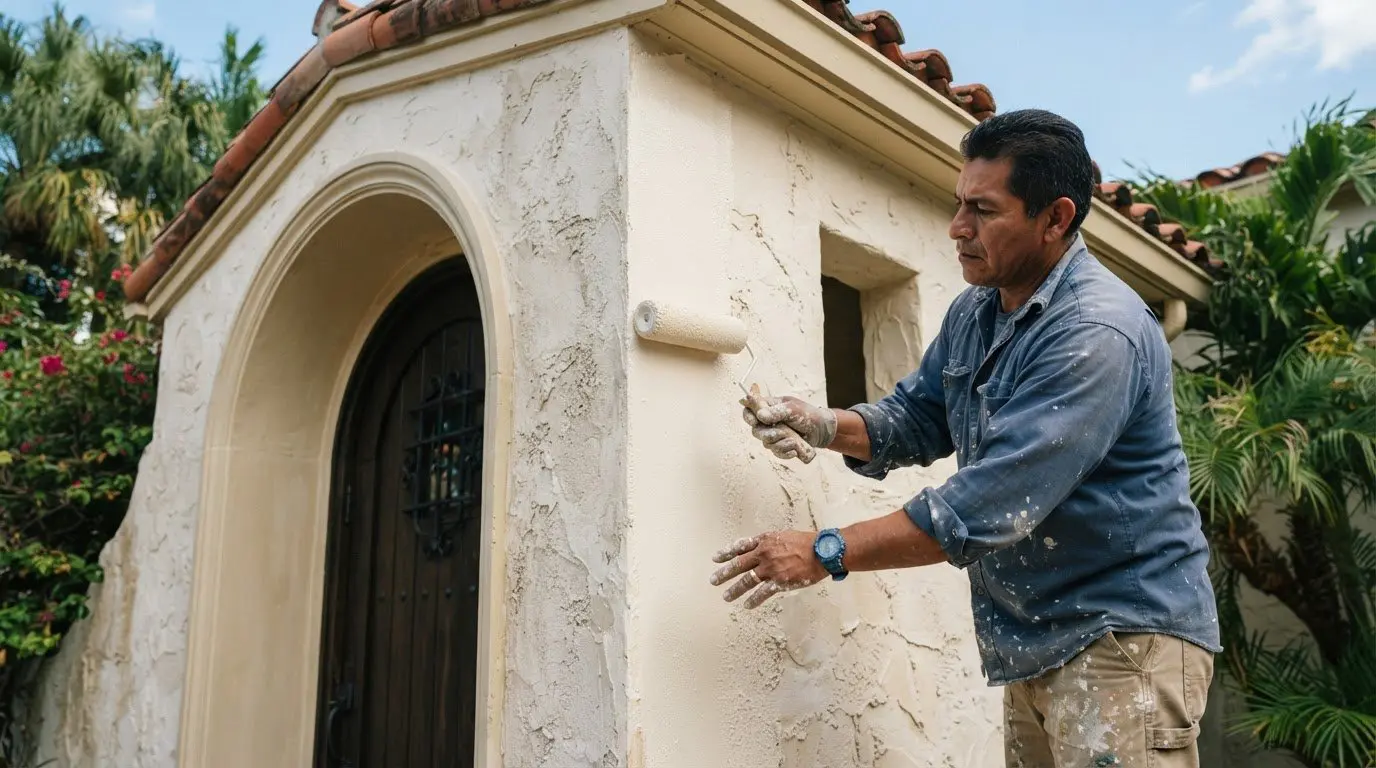
The paint palette should support the architecture, not compete with it. The best results when painting homes with Addison Mizner architectural style come from coordinating stucco with Spanish and Mediterranean details such as red tile roofs and wrought iron. Warm, restrained exterior colors help these features feel connected rather than pieced together.
That balance matters because Mizner’s Florida style draws on several influences. Spanish and Spanish Colonial forms meet Mediterranean details and South Florida’s indoor-outdoor character, so a color that suits one feature may feel out of place across the façade. The goal is not to make every surface the same shade, but to create a cohesive exterior that lets arches, trim, and other architectural details stand out.
This guide explains how those influences shape practical painting choices, from the main stucco color to accents and trim. You’ll learn what to consider when choosing a palette, how materials and architectural details affect the result, and when professional exterior painting can refresh the property while preserving its distinctive character.
Key Takeaways
- Recognize how Spanish and Spanish Colonial influences shape Mizner-style homes, from stucco walls to tile roofs and wrought-iron details.
- Use Mediterranean architectural features to guide color choices that complement arches, courtyards, and other distinctive details.
- Consider how South Florida’s indoor-outdoor character influences the look and feel of an exterior palette.
- Learn which colors and finishes can help the home’s architectural features stand out without competing with one another.
- See when exterior painting or professional cleaning can help refresh the property’s appearance and maintain its curb appeal.
Mizner’s Spanish and Spanish Colonial influences
Addison Mizner’s Spanish influence appears in more than surface decoration. His Palm Beach designs drew on old Spain, Venice, and Moorish capitals such as Granada and Seville. Stucco walls, red tile roofs, and wrought-iron details created a composition in which color could connect broad wall planes with smaller architectural accents. When painting homes with Addison Mizner architectural style, consider how each color relates to those fixed materials.
Spanish Colonial references also shaped Mizner’s work, but his buildings were interpretations rather than simple copies. La Bienvenida, for example, included a ceiling inspired by one at the University of Salamanca library. That attention to Spanish precedents suggests a restrained approach to exterior color: let arches, deep openings, and textured stucco provide visual interest instead of adding competing colors to every feature.
For wood, iron, and trim on a Mediterranean Revival home, choose exterior paint suited to each material and its condition. Muted trim can frame an arch without overpowering the stucco, while a compatible protective finish helps painted wood and iron maintain a consistent appearance. A simple scheme might use one main wall color, a complementary trim shade, and a restrained accent on a door or grille.
Spanish Village in Boca Raton offers a local example of this architectural tradition. The Mizner Development Corporation planned the neighborhood as a development of at least one hundred homes, and twenty-two were completed. The homes used the Mediterranean Revival style and housed families of contractors connected with the corporation. Ten houses survive, making the neighborhood a useful reference for the style’s scale and character.
A Mizner-style home brings together Spanish, Mediterranean, and Florida influences, while a Spanish Colonial or Mediterranean Revival home may emphasize a different mix. The painting approach should follow the actual building, not just its label. For example, a stucco façade with a tile roof and iron grille calls for colors that relate those elements while respecting the home’s individual details.
Boca Raton and Palm Beach historic districts do not have one universal paint-approval process for every property. Whether review applies depends on the address, historic designation, and local rules for exterior changes. Identify the applicable district process before choosing new colors, especially if changing a visible façade or trim scheme.
Start with the materials that will stay in place. A red tile roof, existing ironwork, and stone or cast-stone trim can guide wall and accent colors. View paint samples beside these features in daylight. This makes it easier to tell whether a warm stucco shade complements the roof and architectural details or clashes with them.
Mizner’s Spanish and Spanish Colonial influences call for a considered palette, not a single formula. Assess the stucco texture, roof, woodwork, iron details, and surrounding setting together. A coordinated scheme can clarify arches and entrances while keeping the façade visually calm. The best choice supports the home’s particular details and preserves its coherent architectural character.
Addison Mizner’s Mediterranean-style architecture
Mizner’s Mediterranean designs combine architectural features that shape how an exterior reads. Their forms and materials can guide a coordinated paint plan.
Defining Exterior Colors and Finishes
Mizner’s Mediterranean architecture pairs stucco walls with features such as arched windows, courtyards, trellises, and glazed tile. Color can clarify those shapes or distract from them. A calm wall color lets arches and columns hold attention, while carefully chosen accents define entrances and trim. Treat the façade as a composition, not a collection of unrelated surfaces.
Paint Colors for South Florida Mizner-Style Homes
Warm, muted colors suit the Mediterranean character of a South Florida Mizner-style home. Consider soft ivory, sandy beige, or restrained terracotta for stucco, then compare samples with the roof, tile, and surrounding materials. Mizner’s designs included bougainvillea-covered trellises and fountains, so choose colors that sit comfortably beside these natural tones rather than competing with them.
Preparing and Painting Stucco
Stucco needs a clean, sound surface before painting. Loose material, dirt, or peeling paint can undermine the finish. Assess the wall, clean it appropriately, and let it dry. Address surface damage before applying a coating suited to exterior stucco. On a home with arched windows or textured walls, careful application preserves crisp edges and avoids obscuring architectural detail.
Painting Mistakes That Undermine Architectural Details
Common mistakes include using too many competing colors, coating tile or iron unintentionally, and leaving uneven paint around arches. A bright accent across every trim feature can flatten the façade instead of emphasizing its forms. Use samples beside actual stucco and tile, then review them in daylight. For an intricate elevation, a professional exterior painting plan can help coordinate surfaces and precise edges.
A practical painting sequence keeps the work organized and protects the details of a Mizner-style façade:
- Inspect stucco, trim, and other painted surfaces for dirt, peeling, or damage.
- Clean the surfaces and let them dry before preparing them for paint.
- Choose a main wall color, then compare trim and accent samples against the home’s tile and fixed materials.
- Paint broad wall areas first, then finish around arches, trim, and other architectural features with care.
For example, the arched windows and columns found in Mizner’s Mediterranean designs benefit from clean edges and a restrained contrast with surrounding walls. Discuss an exterior painting plan for a home where surface preparation or detailed architectural features make the work more involved.
Addison Mizner’s design for the Everglades Club introduced Mediterranean-style architecture to Palm Beach, Florida. Mizner Mediterranean designs featured courtyards with fountains, trellises with climbing bougainvillea, arched windows, glazed tile floors, spiraling marble columns, and expansive interiors with grand proportions. This variety of forms and surfaces shows why a measured exterior palette can complement the architecture without drawing attention away from its details.
Addison Mizner designed La Ronda, a Mediterranean Revival mansion in Bryn Mawr, Pennsylvania, in 1929. Addison Mizner built the William Gray Warden Residence in Palm Beach, Florida, in 1922. Addison Mizner designed Villa Flora in Palm Beach, Florida, which was built in 1923. He designed El Mirasol, the Edward T. Stotesbury mansion in Palm Beach, Florida, in 1919; the mansion was demolished in the 1950s.

Mizner’s Florida architectural style
Addison Mizner’s Florida architecture was designed around South Florida’s warm climate and outdoor living. Courtyards, arcades, and loggias connect indoor rooms with open-air spaces, so an exterior color scheme needs to work across shaded passages and sunlit walls. That connection between building and setting is central to making paint choices feel appropriate to the home.
Mizner’s influence helped define Palm Beach during the 1920s, and his approach reached beyond the building itself. He considered interior decoration and gardens part of an architect’s work. For painting, that broader view means considering how the façade relates to nearby courtyards, planted areas, and outdoor walkways. A shade that looks balanced on a large wall may appear stronger beneath an arcade, where shadows deepen its appearance.
The Everglades Club in Palm Beach, designed by Mizner in 1918, illustrates the local roots of this style. Its setting reflects the close relationship between architecture and South Florida’s landscape. On a Mizner-influenced home, assess how direct sun, shaded loggias, and courtyard walls affect the appearance of a chosen color. Viewing samples in each setting helps reveal changes that a single front-facing test may miss.
Repainting a historic-style home does not involve one universal permit or HOA approval requirement across South Florida. The steps depend on the property’s address, historic designation, and applicable neighborhood rules. Before selecting colors, identify whether the home is within a historic district and review any HOA covenants governing exterior changes.
Florida’s humidity, salt air, and strong sun can affect an exterior finish. Moisture on a poorly prepared surface can contribute to peeling, salt deposits can affect exposed finishes, and sunlight can fade color over time. For a coastal Palm Beach home, consider surface condition and exposure alongside the palette. Choose an exterior coating intended for the surface and prepare walls carefully before application.
A practical review can keep painting decisions aligned with Mizner’s indoor-outdoor design:
- Compare color samples on a courtyard wall, a sunlit façade, and a shaded loggia.
- Look at how the selected shade relates to existing tile, ironwork, and garden surroundings.
- Inspect painted surfaces for peeling, chalky residue, or moisture before planning new coverage.
- Keep the palette consistent across connected areas, while using restrained contrast to define openings and trim.
These checks matter because one home may include bright exterior walls, shaded arcades, and enclosed courtyards. A color that looks soft on a sunny façade, for example, can appear darker beneath a covered walkway. Compare these areas to preserve a unified look while accounting for how Palm Beach light and shade shape the architecture.
Spanning the early 20th century, Mizner’s South Florida influence joined courtyards, arcades, and loggias with a broader vision in which interiors and gardens belonged to architectural design.
What are the defining exterior colors and finishes of Addison Mizner architecture?
There is no fixed paint palette for every Addison Mizner home. The recognizable effect comes from coordinating painted stucco with materials such as red tile, wrought iron, and cast stone. These lasting surfaces provide the strongest color references. A successful scheme treats the façade as a composition rather than assigning a separate accent to every detail.
Mizner’s workshops produced architectural elements as well as buildings. By the end of the 1920s, Mizner Industries made tiles, handmade pottery, wrought-iron fixtures and grilles, and cast-stone columns and surrounds. These materials show why paint should play a supporting role. For example, a restrained wall color can let an ornate iron grille or sculpted column remain a focal point.
First identify which exterior surfaces are painted and which have their own finish. A tile roof already contributes a strong color, while ironwork and cast stone add contrasting textures. Choose a stucco shade that relates to these fixed features, then select trim colors that define window surrounds and entrances without dividing the façade into too many competing blocks.
Finish also changes how color reads. Smooth trim beside textured stucco creates a visible distinction, even when the shades are closely related. Arches, columns, and deep window openings cast strong shadows that change the appearance of painted surfaces throughout the day. Review samples beside actual roof tile and ironwork, not just on a small paint card.
Keep each material’s character intact. Glazed tiles, wrought-iron grilles, and cast-stone surrounds each contribute a distinct surface quality to a Mizner-inspired exterior. Painting over these details can hide their texture or make different materials look uniform. Keep paint on the intended painted surfaces, with careful edges where stucco meets tile, iron, or stone.
A practical palette review can follow these steps:
- Identify the stucco, wood trim, ironwork, tile, and cast-stone features.
- Choose a main wall shade that complements the roof and existing masonry.
- Compare trim samples beside arches, columns, and window surrounds.
- Check the colors in both direct sunlight and shaded areas of the façade.
This approach works for historic examples and newer homes inspired by Mizner. A Palm Beach façade with red roof tile may call for different wall and trim choices than a building with another roof finish. The fixed materials guide the palette, but they do not require every home to use identical colors.
Before repainting, assess the existing coating and surface condition. Peeling paint, uneven edges, or a color scheme that overwhelms the architecture can affect the finished appearance. A coordinated exterior painting plan can refresh curb appeal while preserving the visual relationship between stucco and architectural details.
Pressure Pros of Palm Beach
Pressure Pros of Palm Beach helps homeowners and property managers turn a considered color plan into a refreshed exterior. Its exterior painting service can address worn or faded paint while keeping the home’s architectural character in view. Power washing and pressure cleaning can also remove exterior buildup where appropriate, helping surfaces look cleaner before painting is considered. For a Mizner-inspired property, attention to stucco, trim, and distinctive architectural features supports a more cohesive result. If you’re planning an exterior refresh, contact Pressure Pros of Palm Beach to discuss your property.
Plan Your Exterior Refresh with Confidence
Start by looking at the home as it stands today. Note which surfaces need fresh paint, which details should remain visually distinct, and whether weathered finishes affect the overall appearance. This gives you a practical starting point for painting homes with the Addison Mizner architectural style while respecting your property’s character.
Pressure Pros of Palm Beach provides exterior painting, power washing, and roof cleaning for different parts of an exterior refresh. The right work depends on the surfaces and their condition. A coordinated approach can maintain curb appeal without treating every material the same way.
Bring your goals and questions to a local professional, especially if you’re planning work across several exterior surfaces. A clear plan can make the next decisions easier and help you move forward at a pace that suits your property.
Thoughtful choices help your home’s distinctive style look considered and well maintained.
Recent Comments