
HOA Compliant Driveway Cleaning in PGA National
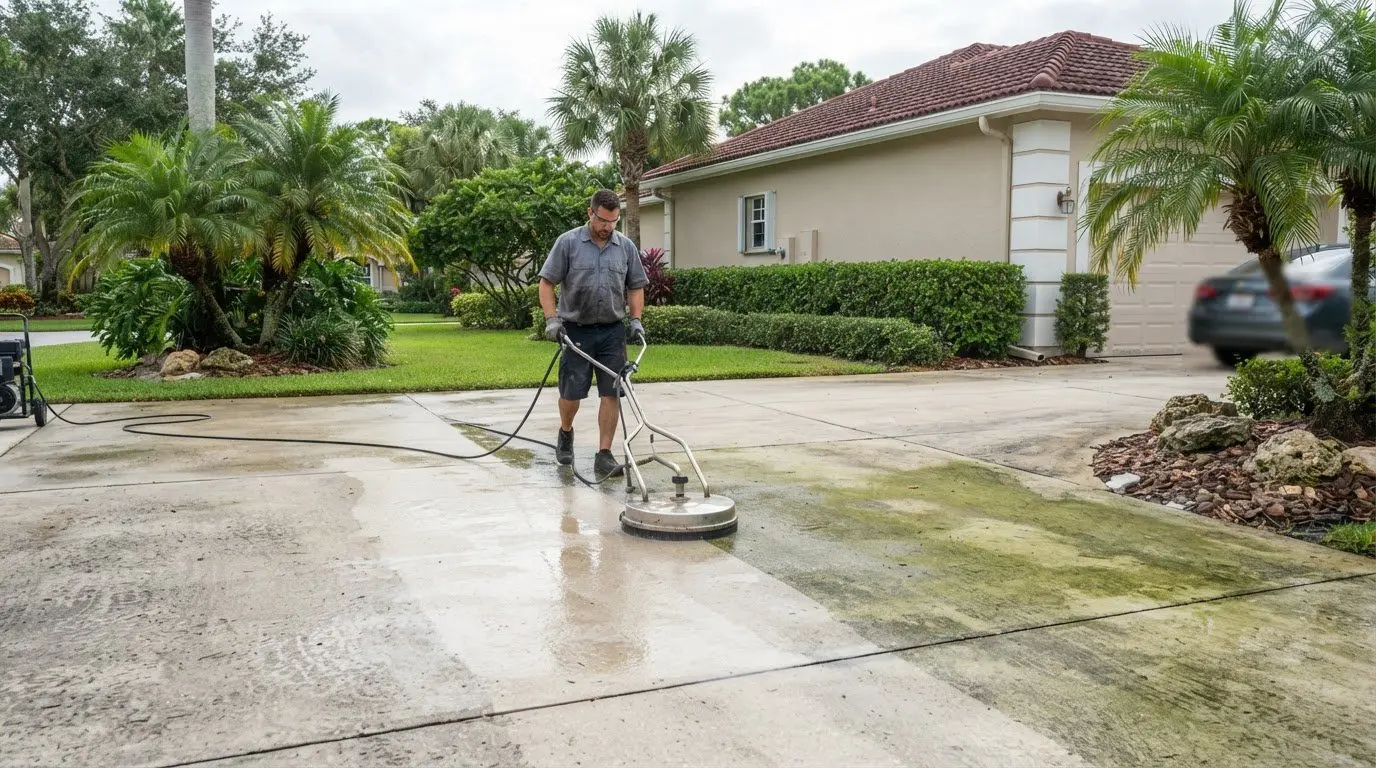
What if a clean driveway still falls short of your HOA’s expectations? In PGA National and Mirasol, the right approach depends on the surface and the stains: algae, oil, grime, and graffiti may each need different attention. HOA-compliant driveway cleaning in PGA National can improve the driveway’s appearance, while clear before-and-after photos document the work.
It’s understandable to want the driveway looking tidy without risking damage or creating an uneven finish. HOA requirements can vary, so this guide explains how to review the relevant community rules, what cleaning can address, and why careful methods matter. You’ll also learn what before-and-after photos can show for HOA work documentation, when professional cleaning is preferable to a DIY attempt, and how professional exterior cleaning can help maintain a property’s appearance.
Key Takeaways
- Take clear before-and-after photos from consistent angles to document driveway cleaning for HOA records.
- Different stains call for different cleaning approaches; algae, oil, grime, and graffiti may not respond to the same treatment.
- Review your community’s governing documents to understand driveway cleaning rules and who is responsible for the surface.
- Plan cleaning around visible buildup and local conditions rather than relying on a one-size-fits-all schedule.
- Professional cleaning can help address stubborn stains and reduce the risk of uneven results from a DIY attempt.
HOA work documentation with before-and-after photos
Before-and-after photos create a clear record of driveway cleaning in PGA National. They show the surface before work, the areas treated, and the result. If you’re responding to an HOA concern, dated photos can help show what changed. Keep them with the related notice or correspondence.
Start by identifying the area named in the HOA communication. If the notice mentions a stained driveway apron, photograph that section and the full driveway. Include landmarks such as the garage entrance or sidewalk edge to make the location clear. A close-up alone may not show where the surface is.
Use a repeatable photo sequence:
- Take a wide view showing the full driveway and its boundaries.
- Capture closer views of each cited stain or buildup area.
- After washing, photograph those same views from similar positions.
- Save the files with a date and a clear label, such as “driveway entrance.”
Matching angles make changes easier to assess. For example, a before photo might show an oil mark beside the garage, while the after photo shows the same spot. Keep the lighting and distance as consistent as practical. Don’t edit out discoloration or crop away relevant surface edges.
Make sure the photos distinguish the driveway from nearby shared or separate surfaces. Including a walkway, curb, or pool deck can help show which areas were addressed. If the HOA request concerns only a private driveway, label adjacent concrete separately. That way, the photos don’t imply that every visible surface received the same treatment.
Organize the record in a simple folder with the HOA notice, dated before-and-after photos, and a brief note identifying the work area. For example, write “front driveway, garage-side oil stain” rather than “cleaning complete.” A concise caption connects each image to the concern without making claims about areas outside the frame.
Keep the original files when possible, and submit copies in the format the association requests. If an HOA form or portal asks for specific views, follow those instructions. Requirements differ between communities, so the notice and governing documents determine what to submit. Photos document visible conditions; they don’t replace any separate approval or process the association requires.
A consistent record also helps track recurring trouble spots. If algae returns along a shaded driveway edge, dated images can show when that area was last cleaned. You can document nearby concrete, such as a pool deck, too, as long as you label it separately from the driveway. Clear labels, matching views, and an accurate work description make the record easier to understand.
Exterior cleaning services
Driveways can collect dust, algae, oil, and tire marks. Each stain responds differently, so one cleaning method may leave visible patches behind. A consistent result starts with identifying the surface and the type of buildup. Concrete, pavers, and painted exterior surfaces need different care. The cleaning plan should also separate a private driveway from nearby community walkways.
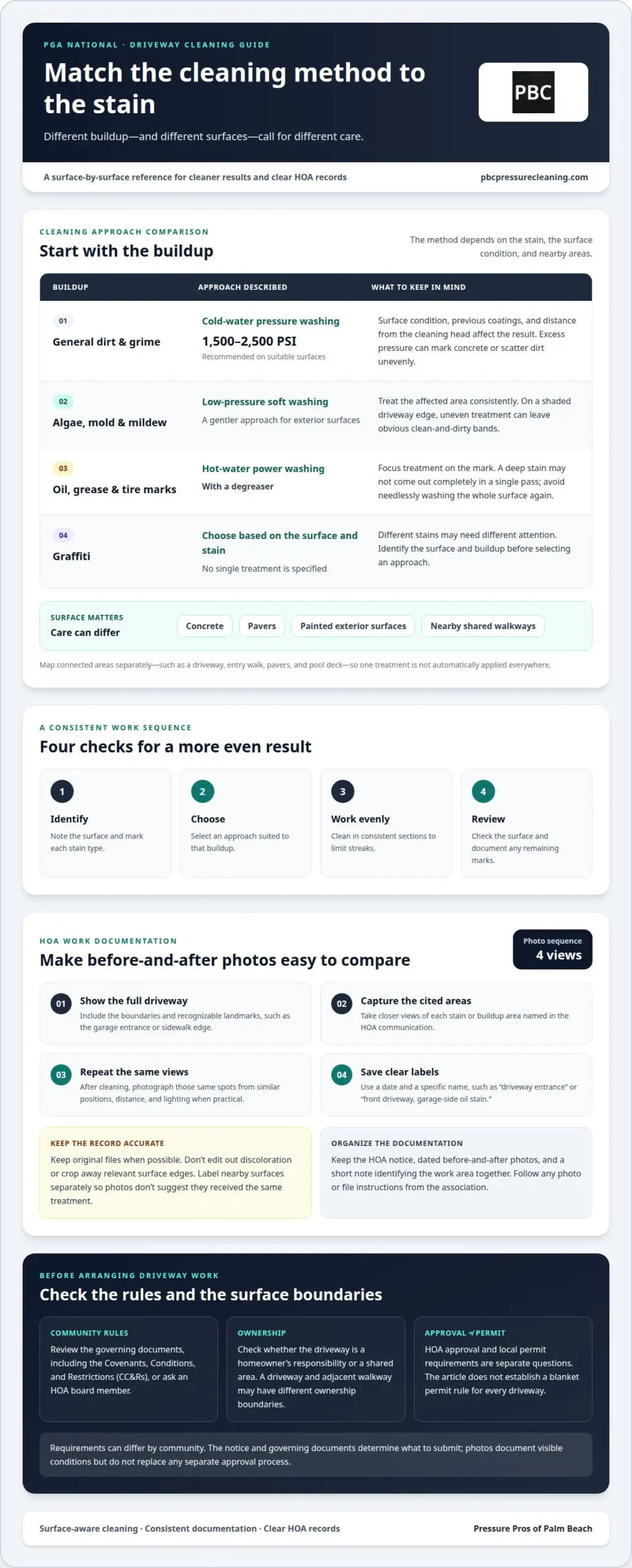
For general dirt and grime on suitable surfaces, cold-water pressure washing at 1,500-2,500 PSI is one recommended approach. Surface condition, previous coatings, and the distance from the cleaning head all affect the result. Excess pressure can mark concrete or scatter dirt unevenly, so technique matters alongside the setting.
Algae, mold, and mildew need a different approach from oil or tire marks. Soft washing uses low pressure to clean exterior surfaces while helping avoid damage from forceful spraying. On a shaded driveway edge, for example, the affected area should be treated consistently to avoid obvious clean-and-dirty bands. The suitable approach depends on the surface and buildup.
Oil, grease, and tire marks need targeted attention. Hot-water power washing with a degreaser is recommended for these deposits. A single pass may not remove a deep stain completely, so the treatment should focus on the mark without needlessly washing the whole surface again.
For connected exterior areas, map the work before starting. Note the driveway, entry walk, pavers, and any pool deck as separate surfaces. This helps prevent one treatment from being applied everywhere. A simple sequence can keep the job organized:
- Identify the surface and mark each stain type.
- Choose the cleaning approach suited to that buildup.
- Work in consistent sections to limit streaks.
- Review the surface after washing and document remaining marks.
For homeowners, careful surface-by-surface cleaning helps maintain curb appeal and supports clear HOA records. If grime, algae, or oil covers several exterior areas, request a driveway cleaning estimate for a plan suited to the surfaces involved.
Does PGA National require HOA approval or a permit for driveway pressure washing?
For a PGA National driveway, HOA approval depends on the community’s governing documents and the property’s ownership boundaries. If you’re unsure about pressure-washing rules, review the Covenants, Conditions, and Restrictions, often called CC&Rs, or ask an HOA board member. These sources can clarify whether the driveway is a homeowner’s responsibility or a shared area.
Ownership can affect who controls the cleaning decision. In some planned unit developments, homeowners own their driveway slabs. Responsibility then depends on the governing documents and ownership boundaries. A driveway beside a shared walkway may not have the same status as that walkway. Check each surface separately rather than assuming the whole paved area belongs to one party.
Keep HOA approval and a permit question separate. Approval concerns the community’s rules; a permit question concerns applicable local requirements. The available PGA National facts do not establish a blanket permit rule for every driveway. Don’t treat an HOA decision as a substitute for considering any separate local requirements that apply to the work.
Use a short review process before setting a cleaning date:
- Find the CC&Rs and any exterior-maintenance rules for your specific community.
- Identify whether the driveway slab is privately owned or shared.
- Mark nearby surfaces, such as a sidewalk or common-area pavement.
- Ask an HOA board member about any unclear approval process.
- Consider local permit requirements separately from HOA approval.
For example, if a notice concerns algae on a privately owned driveway, the CC&Rs may explain the owner’s maintenance duties. If the stain extends onto a shared walkway, the documents may assign responsibility differently. Property boundaries and the wording of the governing documents matter more than the appearance of one continuous paved surface.
If the HOA requires advance approval, provide a clear description of the affected area and planned work. Include before-and-after photos when documenting completed cleaning. If the documents don’t explain the process, ask an HOA board member which procedure applies before work begins. Keep any reply with the notice and cleaning records.
This document-based approach helps homeowners distinguish community rules from local permit considerations. For HOA-compliant driveway cleaning in PGA National, establish who owns each surface, what the CC&Rs require, and whether separate local requirements apply. That gives you a practical basis for planning the work and keeping records.
How often should a driveway be cleaned in PGA National’s climate?
There isn’t one cleaning interval that fits every driveway in PGA National. Timing depends on visible buildup, shade, vehicle use, drainage, and HOA expectations. A shaded strip that develops algae may need attention before an open, lightly used slab. Start with the surface, then consider how quickly grime returns after rain or routine use. Follow any maintenance schedule in your community’s governing documents.
Use visible changes as practical signals instead of waiting for the whole driveway to look heavily soiled. Dark algae along a garage-side edge, fresh oil spots, or a spreading tire mark can point to areas needing attention. Check the driveway periodically and note which sections collect buildup first. Dated photos of the same sections can help distinguish a recurring problem from a one-time stain.
Other community surfaces have reference schedules, but they don’t set a driveway timetable. High-traffic pool decks in HOA communities typically warrant cleaning 2-4 times per year. In humid climates, pool-deck and amenity-area surfaces are recommended for cleaning 3-4 times annually. Low-use perimeter sidewalks may require annual cleaning. These figures concern pool decks, amenity areas, and sidewalks, not private driveways.
For a driveway, build a simple condition-based routine:
- Note the driveway’s appearance during regular exterior checks.
- Record where shade, parking, or drainage coincides with buildup.
- Photograph recurring algae, oil, or tire marks from similar angles.
- Schedule cleaning when buildup becomes visible or an HOA notice identifies a concern.
- Review the result and note which areas may need closer monitoring.
A driveway beside mature trees may collect damp debris along one edge, while a frequently used parking area may show oil or tire marks sooner. These examples suggest where to inspect, not a fixed cleaning schedule. Cleaning too aggressively or often can be counterproductive, especially when a surface needs a gentler method. Match the approach to the material and buildup.
For PGA National homeowners, an HOA notice or a visible change can prompt a timely review. Compare the notice with your community’s maintenance rules, then document the driveway’s condition. A consistent record helps track buildup without assuming that pool-deck or sidewalk schedules apply to private concrete.
Pressure Pros of Palm Beach
Pressure Pros of Palm Beach cleans residential surfaces, including driveways, for property owners in Palm Beach County. Residential pressure cleaning can help address grime, algae, oil, and other visible buildup; the suitable approach depends on the driveway material and stain. If DIY efforts leave streaks or don’t address stubborn buildup, share the HOA concern and areas involved so the cleaning plan can reflect your property’s needs. The company also provides roof cleaning, paver sealing, and exterior painting.
For a professional next step, contact Pressure Pros of Palm Beach to discuss your driveway and request a free estimate.
Make driveway care part of your property plan
Think of HOA compliant driveway cleaning in PGA National as one part of maintaining your home’s exterior over time. A simple property-care plan can help you notice changes early, avoid rushed decisions after a concern arises, and keep maintenance aligned with your community’s expectations. Set a reminder to review the driveway during routine exterior upkeep, and keep the relevant community documents easy to find.
Choose the next step based on the driveway’s condition and the work involved. A small, manageable area may suit careful homeowner attention. Broad staining, recurring buildup, or a surface that needs controlled cleaning can make professional help a practical choice. The goal is a clean, even appearance without treating every surface the same way.
With a clear plan, you can maintain your driveway confidently and keep your home looking cared for. Take the next step at a pace that works for your property.
Frequently Asked Questions
Do you serve Palm Beach County?
Contact Pressure Pros of Palm Beach to confirm service availability for your address. Homeowners can discuss exterior cleaning for driveway grime, algae, or oil stains. Share the surface type and areas needing attention to clarify the work involved and keep the discussion focused on your property.
What Areas Do HOAs Require Homeowners to Keep Clean?
HOA maintenance rules can cover visible exterior areas such as driveways, walkways, patios, and building exteriors. Shared spaces, including pool decks and amenity areas, may be managed differently from privately owned surfaces. For example, a homeowner may be responsible for a driveway while the association manages a common walkway. The community’s governing documents define boundaries and maintenance expectations, which can differ between neighborhoods.
What Happens If You Ignore HOA Pressure Washing Rules?
Ignoring an HOA notice can lead to further action under that community’s governing documents. The notice may identify the concern and explain the response process. For example, a homeowner who leaves a cited driveway stain untreated could receive follow-up communication. The documents determine what steps the association can take, so don’t assume every community uses the same process or penalty. Keep notices and replies with your maintenance records.
What driveway cleaning rules does a community HOA or property owners association enforce?
Driveway rules depend on the governing documents for the specific community or property owners association. Those documents may describe exterior appearance expectations, maintenance responsibility, and approval procedures. Look for terms covering driveways, paved areas, or exterior maintenance. If the wording is unclear, ask an HOA board member how it applies to your property. Don’t treat one neighborhood’s requirements as rules for every address.
What cleaning methods and chemicals are allowed for driveways?
Allowed methods and cleaning products depend on the community rules and driveway surface. Governing documents may address exterior work, while the material affects which cleaning approach is suitable. For example, concrete and pavers may need different treatment. Don’t assume a product or pressure setting is acceptable everywhere. Review HOA instructions before work, especially if they mention chemicals, surface protection, or approval.
Are there restrictions on driveway cleaning hours, water runoff, or noise?
Cleaning hours, runoff, and noise expectations depend on community rules and applicable local requirements. Check HOA documents for quiet hours or contractor-work provisions, and consider where wash water will flow. For example, a driveway sloping toward a storm drain needs careful runoff planning. Don’t assume a neighboring community’s rules apply to your address. If a notice or rule is unclear, ask an HOA board member about its scope.
Recent Comments