
How to Clean Slippery Pool Deck Pavers Safely by Surface
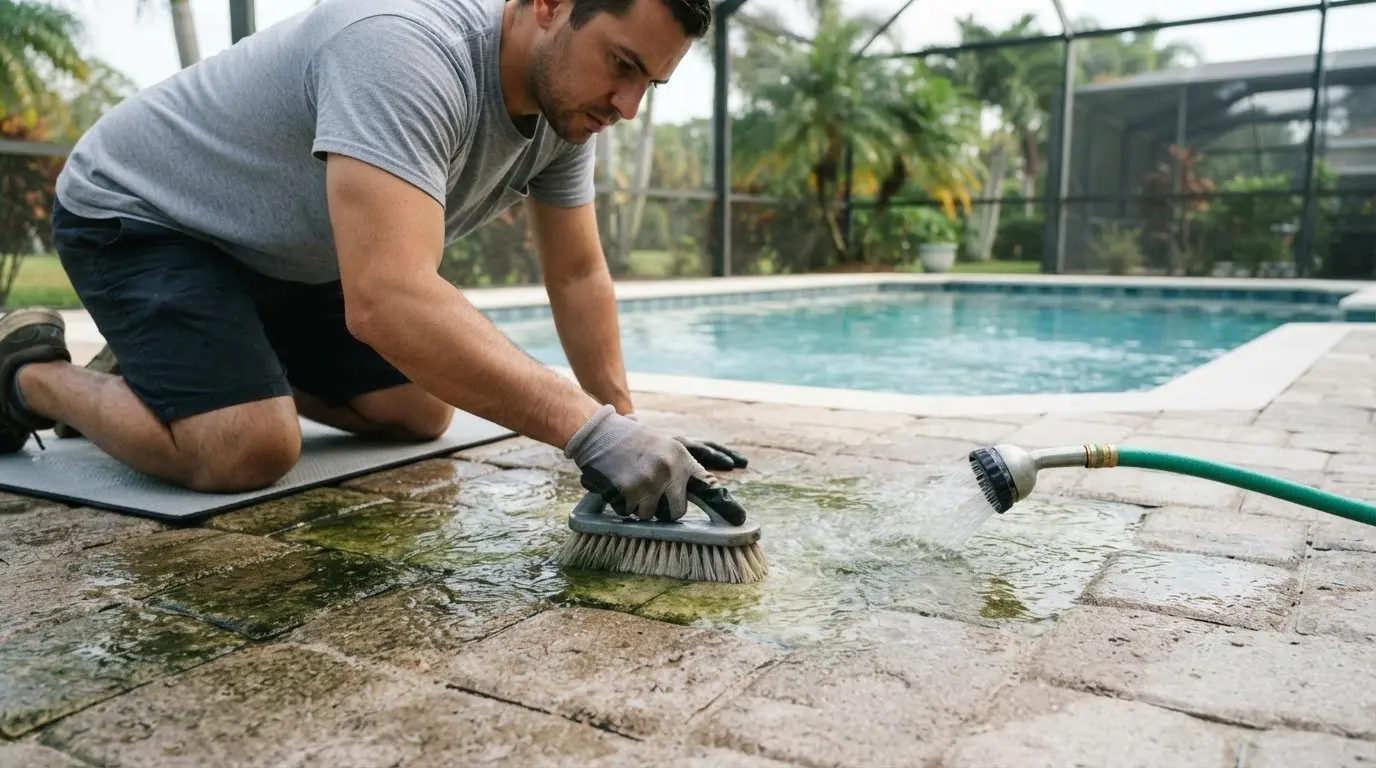
A garden-hose rinse may not be enough when pool pavers feel slick. Learning how to clean slippery pool deck pavers starts with identifying the surface and choosing a method that suits its finish, especially for stamped, painted, or coated decks.
In Wellington and across Palm Beach County, pool decks face regular use and outdoor exposure. Protecting the finish matters as much as removing visible grime.
This guide explains how to spot common causes of slippery pavers and clean different surfaces carefully. You’ll also learn when professional deck cleaning can help.
Key Takeaways
- Identify whether algae, body oils, or residue is making the deck slick so you can choose a suitable cleaning approach.
- Adjust pressure and cleaning tools to the finish, especially on stamped, painted, or coated surfaces.
- Avoid harsh chemicals and abrasive brushes that can damage pavers or nearby pool surfaces.
- Learn which cleaning and maintenance tasks are manageable at home and when professional deck cleaning can help.
- Understand how paver joints and sealers affect both surface condition and traction.
What about stamped, painted or coated decks?
Choose a cleaning method based on the deck’s finish, not just the visible grime. Excessive pressure can damage stamped concrete, painted surfaces, coatings, and paver joints.
- Identify the surface before washing. Look for stamped patterns, painted color, a visible coating, or sand-filled paver joints. These details affect how the surface responds to pressure. A jet that cleans bare concrete may strip paint or remove joint sand between pavers.
- Test a small, inconspicuous spot. Before washing a stamped, painted, or coated deck, try the selected method in a discreet area. Start at low pressure and inspect the surface after rinsing. If color lifts, the coating changes, or the concrete looks etched, stop and switch to gentler cleaning instead of continuing across the deck.
- Use a gentler method for light buildup. On poured concrete or Kool Deck, apply mild detergent or diluted algaecide and scrub with a stiff brush. Let the cleaner work as directed, then rinse thoroughly. This can remove light grime without aiming a concentrated stream at a delicate finish.
- Keep pressure low on pavers and coatings. Pool pavers can be pressure washed once or twice per season, using low pressure to limit damage and avoid removing too much joint sand. Stamped, painted, and coated decks also need lower pressure because a strong spray can strip color or coating. Soft washing relies on cleaner and gentle rinsing; pressure washing uses a stronger water stream. Choose the gentler method for fragile finishes.
- Control the washer if pressure washing is appropriate. Use a broad, even spray and keep the nozzle moving. Don’t hold the stream close to one spot. Excessive pressure or an unsuitable nozzle can etch concrete or dislodge paver joint sand. Rinse in a controlled direction, moving water away from the pool.
- Inspect and restore the joints after cleaning. After rinsing, look for gaps where joint sand has washed away. Replace missing sand with material suited to the paver system, following its directions. Depleted joints can leave the surface uneven and make later maintenance harder. Avoid directing another forceful spray at newly filled joints.
Before pressure washing stamped, painted, or coated decking, test a small spot. For light buildup, scrub poured concrete or Kool Deck with mild detergent or diluted algaecide.
Why Is My Pool Deck So Slippery?
Clean a slick deck by identifying the buildup, choosing a suitable cleaner, scrubbing gently, and rinsing thoroughly. To learn how to clean slippery pool deck pavers, first determine whether algae, oily residue, or another film is causing the problem.
-
Locate Algae and Residue Buildup
Walk the deck and identify slick areas before cleaning. Check shaded corners, damp edges near planters, paver joints, and spots regularly splashed by pool water. Look for green or dark patches, slimy film, sunscreen smears, and food or drink stains. Note where debris collects, but avoid stepping on slippery patches while inspecting. These clues help you target the cleaning.
-
Understand Slippery Buildup
Look closely to distinguish biological growth from oily residue. Algae and mildew can cling to damp paver texture, while a thin biofilm may feel slick before it becomes visibly discolored. Sunscreen, body oils, and pool chemicals can also leave residue. Wet, moss-covered brick creates a slipping hazard, so an even color doesn’t necessarily mean the deck is clean.
- Remove loose debris first. Sweep away leaves, grit, and other material before adding water. Debris can hide slick patches and spread across the deck during washing. Work from cleaner areas toward affected spots, keeping sweepings out of paver joints where possible. A clear surface also makes it easier to see whether a stain sits on top or in textured areas.
- Loosen growth with warm water and a soft brush. Wet a small area covered with algae or mildew, then scrub with steady strokes. A soft brush reaches textured concrete and paver faces without the scraping of a wire brush. Focus on the affected area rather than the whole deck. If the film remains, use a surface-appropriate cleaner as directed.
- Don’t rely on hosing alone. A garden hose can rinse loose dust, but water may spread algae or oily sunscreen film across the pavers. Oils need a suitable degreasing cleaner, while algae needs to be lifted from the surface texture. Apply the appropriate cleaner, scrub or let it sit as directed, then rinse thoroughly. Direct rinse water away from the pool.
- Recheck the surface after rinsing. Look again at the original slick spots, including shaded joints and splash zones. If algae remains embedded, repeat targeted cleaning with a suitable method rather than increasing pressure or using a harsher product. As you decide how to clean slick pool pavers, consider whether existing sealing or surface texture affects traction. For persistent buildup, professional pressure cleaning can address the deck with a surface-appropriate approach.
Avoiding harsh chemicals, wire brushes, and undiluted degreasers
For concrete and brick, begin with a mild detergent spot test. Natural stone, including travertine, needs a pH-neutral cleaner because acidic products can etch the surface.
- Identify the paver material before choosing a cleaner. Distinguish concrete, brick, and natural stone rather than treating every pool deck alike. For travertine and other natural stone, use only a pH-neutral product. An acidic cleaner can etch stone and cause visible damage, even if it removes a stain.
- Test mild detergent on a small spot. Mix a few drops into warm water, then dab the solution onto an inconspicuous paver. Check for a change in color or finish before applying it more widely. This is a useful first step for concrete or brick if you’re unsure how the surface will respond.
- Keep undiluted bleach away from the pool deck. Bleach can kill nearby grass, damage coping, and run into pool water. Don’t pour it onto pavers or let runoff flow toward the pool. For a small stain, use a surface-appropriate cleaner, apply it only where needed, and rinse thoroughly.
- Don’t use a wire brush on pavers. Choose a soft or nonmetal brush for routine scrubbing. A wire brush can scratch or mar a paver’s face, especially on decorative or coated surfaces. Scrub the affected area evenly, without aggressive, repeated strokes that could leave a visibly different patch.
- Dilute degreaser before treating oily marks. Sunscreen and body oils may need a degreasing cleaner, but undiluted product can be too harsh for pavers and nearby finishes. Follow the cleaner’s dilution directions, spot-test, then apply it to the oily mark. Scrub and rinse thoroughly to remove any residue from the walking surface.
- Prevent seasonal grime from building up. In summer, moisture and fallen leaves can linger in shaded areas and contribute to recurring grime. Sweep leaves away, then rinse the deck evenly with clean water to remove loose residue. A quick rinse won’t remove oil or algae; persistent film needs a suitable cleaner and gentle scrubbing.
- Stop if the surface reacts poorly. If a test patch changes color, looks etched, or feels rough after cleaning, don’t apply that product across the deck. Surface-specific care matters particularly for natural stone, colored concrete, and pavers beside pool coping. Choosing products carefully helps protect the finish while addressing stains.

Causes of slippery pool deck pavers
To find the cause, inspect where the deck stays damp, where pool water splashes, and how the sealer behaves when wet. Hire a professional if slickness keeps returning, the finish is delicate, or cleaning risks damaging pavers and joints.
- Trace moisture and shade. Check poolside corners, shaded edges, and areas that remain damp after splashing. Moisture can encourage algae and mildew on textured pavers, especially where leaves or other debris collect. Note whether slick patches follow a shaded strip or cluster around a splash zone. That pattern can point to recurring growth rather than a single spill.
- Look for biological film. Check for green growth, dark marks, or a thin film that feels slick underfoot. Algae and mildew can cling to surface texture, while biofilm may be hard to see at first. Wet, moss-covered brick can also become a slipping hazard. Inspect the surrounding area too, since cleaning only visible stains may leave nearby film behind.
- Consider sunscreen and body oils. Check walking paths between loungers, pool steps, and places where swimmers pause. Sunscreen and body oils can leave slippery residue without green discoloration. Water alone may shift this film rather than lift it from paver texture. Match the cleaning method to the residue instead of assuming every slick patch is algae.
- Inspect the sealer when wet. Notice whether the surface gets slicker after a splash, particularly if the finish looks glossy. Some glossy sealers can make wet pavers more slippery. A pool-deck sealant should include an anti-slip additive; without one, a smooth finish may reduce traction when wet. Don’t add another sealer layer before identifying the existing finish and its effect.
- Track when the slickness returns. After cleaning, observe whether the same spot becomes slippery again after pool use, fallen leaves, or repeated splashing. Recurring growth in shaded areas suggests moisture and debris are contributing. A one-time oily mark points to another cause. This pattern helps you choose a suitable treatment instead of repeatedly using the same method.
- Bring in professional help when the cause or surface needs careful handling. Consider professional cleaning when slickness returns after suitable cleaning, a delicate finish needs controlled treatment, or previous washing has affected paver joints. A professional can assess whether the issue calls for cleaning or attention to the sealer’s traction. This is especially useful when algae, oily residue, and a glossy finish overlap around the pool.
Pressure Pros of Palm Beach: Deck Cleaning
Pressure Pros of Palm Beach provides deck cleaning for poolside pavers with recurring slick buildup or finishes that need careful handling. Professional cleaning can be a practical next step when algae returns after routine care, paver joints are vulnerable to washout, or the surface is stamped, painted, or coated. The cleaning method should suit the deck material and finish, helping remove grime while protecting the pavers’ appearance. Learn more about professional deck cleaning for residential or commercial properties. For help with a slippery pool deck, contact Pressure Pros of Palm Beach to discuss your cleaning needs.
Keep Your Poolside Ready for the Next Swim
Make pool-deck care part of your regular property upkeep. Knowing how to clean slippery pool deck pavers safely helps you respond before slick areas become a recurring problem. Notice how the surface changes with use and weather, then choose care that suits its finish.
For buildup that keeps returning or a finish that needs careful treatment, Pressure Pros of Palm Beach can help with deck cleaning. The team also offers power washing, roof cleaning, and exterior painting for broader exterior maintenance needs. Keeping these projects on your maintenance list can support a clean, cared-for property.
Contact Pressure Pros of Palm Beach to discuss professional cleaning for your pool deck.
A well-maintained deck makes it easier to enjoy your outdoor space with confidence.
Frequently Asked Questions
Why You Need To Clean Your Pool Pavers?
Cleaning pool pavers removes accumulated dirt, pool chemicals, salt, and organic debris before they become harder-to-remove stains. A clean surface also makes it easier to spot changes in the pavers, joints, or sealer that need attention. For example, clearing leaf litter from a corner can help prevent it from staying damp and hiding early growth. Regular upkeep supports the deck’s appearance and makes surface problems easier to notice.
Is it a real safety problem?
Yes. Slippery algae, mildew, and moss-covered brick can contribute to slips and falls, especially when the deck is wet. Keep people away from a visibly slick patch until it has been cleaned and rinsed. Pay particular attention to routes between the pool steps, seating, and doors. If the slickness returns quickly or covers a large area, professional cleaning can help address it rather than relying on repeated rinsing.
Should the deck be sealed after cleaning?
Not automatically. Sealing depends on the paver material, existing finish, and condition of the surface; some glossy sealers can make wet pavers feel slicker. In Florida, pool-deck pavers are generally resealed about every 2 to 3 years, but the sealant should be compatible with the specific pavers and include an anti-slip additive. Clean pavers must dry for 24 to 48 hours before sealing.
Why doesn’t hosing it down work?
A hose can rinse loose dust and debris, but it may not remove algae or body oils attached to the pavers. Water can spread a thin film to nearby areas, leaving the deck slick after rinsing. For example, an oily mark near a lounge chair needs an appropriate cleaner and gentle scrubbing. Rinsing is useful after cleaning, but it won’t remove the residue on its own.
What causes pool deck pavers to become slippery?
Common causes include algae, mildew, moss, sunscreen, body oils, and residue from pool use. Damp shade and debris can encourage biological growth, while a glossy sealer may reduce traction when wet. Look at the pattern: green growth may appear in persistently damp areas, while oily residue often gathers near loungers or pool entry points. Identifying the likely cause helps you select a suitable cleaning method.
Can vinegar, bleach, or muriatic acid damage pool deck pavers or pool water?
They can damage pavers and nearby pool areas. Vinegar and muriatic acid are acidic, and acidic cleaners can etch natural stone such as travertine. Undiluted bleach near a pool can harm grass, damage coping, and run into the water. Don’t apply these products where runoff can reach the pool. Choose a surface-appropriate cleaner, spot-test it, and follow its directions.
Recent Comments