
Choose Between Wet-Look, Low-Gloss and Natural Paver Sealer Finishes
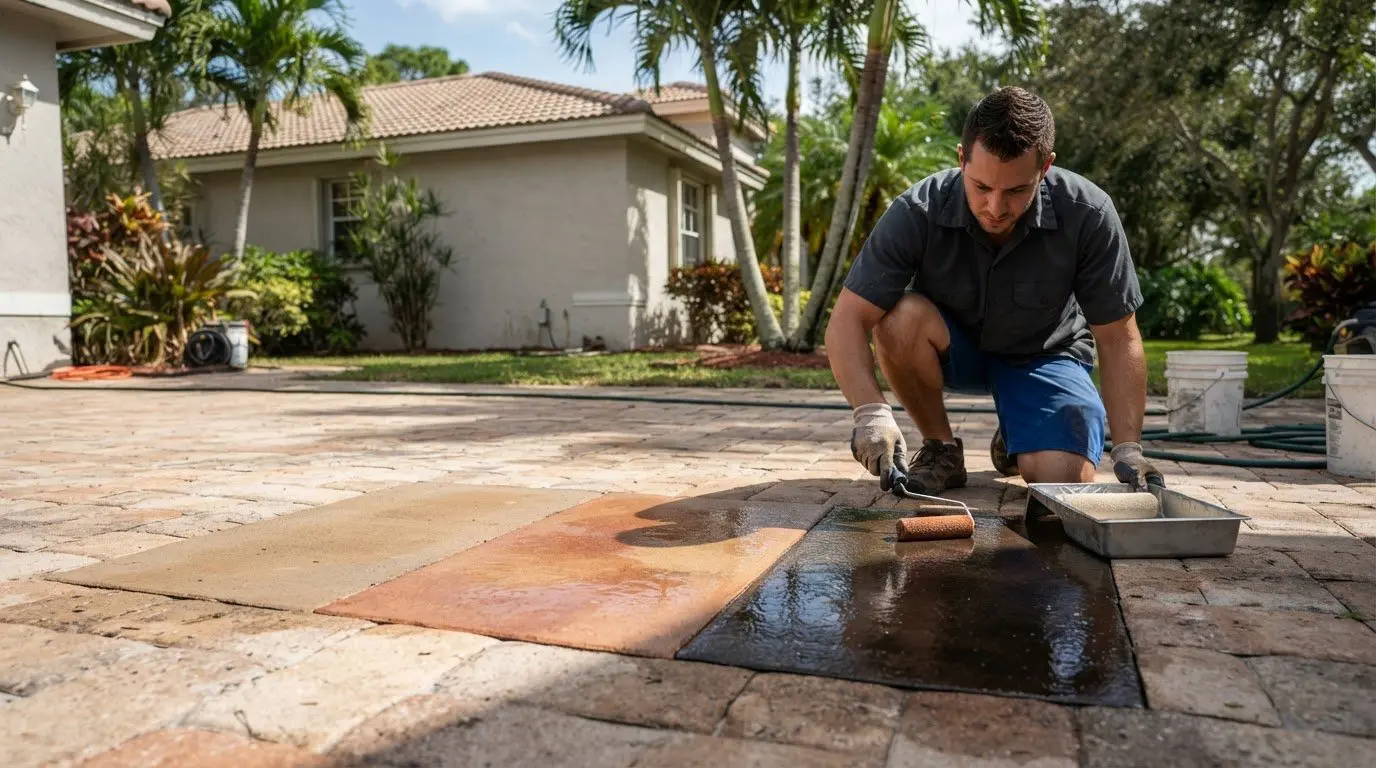
The shiniest finish isn’t always the best fit for your pavers. Knowing how to choose between wet-look and natural paver sealers starts with the look you want and where the surface is located: wet-look adds noticeable shine and deepens color, low-gloss gives a softer satin appearance, and natural finishes keep close to the pavers’ original look.
Appearance matters, but the finish can also affect how visible dirt and scuffs are and how the surface feels underfoot. Around pools, entry steps, and other areas where traction matters, a glossy finish may be less suitable than a lower-sheen option.
This guide compares wet-look, low-gloss, and natural finishes to help you match a sealer to your pavers, location, safety needs, and preferences. It also explains how Florida’s sun and humidity can affect the result, and why testing a small area first can show how the finish looks in shade and sunlight.
Key Takeaways
- Compare the finish on a small test area in both sun and shade before treating the full paver surface.
- Account for paver material, since concrete, brick, and natural stone can show different levels of color change.
- Give traction priority around pools, steps, and walkways, where a high-sheen finish may be less suitable.
- Plan sealing around Florida’s humidity, afternoon storms, and morning dew, which can affect curing and the final appearance.
- Start with clean, dry, even pavers; surface preparation helps the sealer finish look consistent.
Wet-Look vs Low-Gloss vs Natural Finish Paver Sealers: Which Finish Is Best?
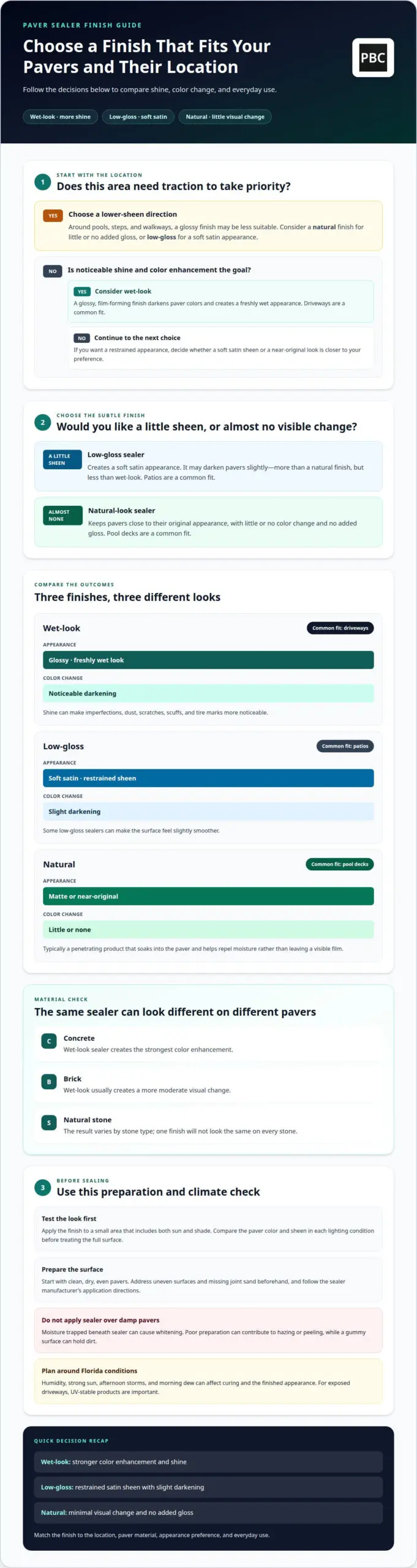
Wet-look, low-gloss, and natural finishes change the appearance of pavers after sealing. Compare shine, color change, and surface material before choosing.
Wet-Look Sealer
Wet-look sealer creates a glossy, film-forming finish that darkens paver colors and makes them look freshly wet. Concrete often shows a strong color change, while brick usually changes more moderately. Natural stone can react differently depending on its type. The added shine can highlight imperfections, dust, scratches, scuffs, and tire marks, making this finish a better fit for homeowners who want noticeable enhancement rather than a subtle appearance.
Low-Gloss Sealer
Low-gloss sealer gives pavers a soft, satin appearance without pronounced shine. It may darken the surface slightly, adding more color depth than a natural finish but less enhancement than wet-look sealer. For example, it can give a patio with mixed concrete pavers a mild sheen without a high-gloss effect. Some low-gloss sealers can also make the surface feel slightly smoother.
Natural-Look Sealer
Natural-look sealer keeps pavers close to their original appearance, with little or no color change and no added gloss. These sealers are typically penetrating products that soak into the paver and help repel moisture rather than leave a visible film. They suit homeowners who want to retain existing colors and texture instead of creating a glossy, darker finish.
| Finish | Appearance | Color change | Common fit |
|---|---|---|---|
| Wet-look | Glossy | Noticeable darkening | Driveways |
| Low-gloss | Soft satin | Slight darkening | Patios |
| Natural | Matte or near-original | Little or none | Pool decks |
On concrete, wet-look sealer creates the strongest color enhancement; on brick, expect a more moderate visual change. Natural stone varies widely, so the same finish won’t produce the same result across every stone type.
Sealer cost per square foot depends on the product, surface condition, preparation, and application needs; pricing is provided after a quote request. Compare the finish and care requirements alongside the quote, not just the initial product choice.
To test a finish, apply it to a small area that includes both shade and sun. Check how the paver color and sheen appear in each lighting condition before treating the full surface.
For application, start with clean, dry pavers and follow the sealer manufacturer’s directions for application. Address uneven surfaces and missing joint sand beforehand so the finish can wear more evenly.
Moisture trapped beneath sealer can cause whitening, including after heavy application or rain. Poor preparation can contribute to hazing or peeling, while a gummy surface can hold dirt. Don’t apply sealer over damp pavers.
Choose wet-look for stronger color and shine, low-gloss for a restrained sheen, or natural for minimal visual change.
Choosing a finish based on location, safety, and preferences
Choose a finish as part of the property’s overall exterior design, not as an isolated product decision. Compare the pavers with nearby materials, including house walls, coping, and garden paths. A highly reflective area may stand apart from a restrained exterior, while a quieter finish can help adjoining spaces feel connected.
Start by deciding what you want to stand out. If the paving pattern or original color should remain the focus, choose a subtle appearance. If you want the pavers to make a stronger visual statement, consider more color enhancement. For properties with several paved areas, set a consistent design direction before choosing finishes for individual zones.
Use this order to make the decision:
- Map the paved areas: Note where each surface sits and what it connects to, such as a driveway leading to a front walk.
- Set the visual priority: Decide whether the pavers should blend with nearby finishes or stand out as a feature.
- Account for everyday use: Consider who uses each area and how the property is occupied, including residents, guests, or customers.
- Choose a maintenance preference: Decide whether you’re comfortable maintaining a visibly enhanced finish or prefer a less noticeable change.
For mixed-use properties, make the decision by zone. A commercial entrance and a private patio may have different visual priorities, even if their pavers are similar. Consistency doesn’t mean using the same finish everywhere; it means making each choice feel intentional in its setting.
A practical way to choose between wet-look and natural paver sealer is to rank appearance, use, and upkeep before selecting a product. If two finishes seem equally suitable, test a small area and compare it with the surrounding exterior. View the sample from the approach people normally take, not just from directly above.
Match the product to the paver material and intended application. Follow the product directions and confirm compatibility with the paving supplier or manufacturer. This helps prevent choosing a finish based only on a sample image that may not represent your actual pavers.
If you’d like help planning the right finish for your property, talk with a paver-sealing professional.
Climate considerations, including freeze-thaw and UV exposure
Climate affects sealer choice, application timing, and the finished appearance. In Florida, humidity, strong sun, afternoon storms, and morning dew can all influence curing. In colder climates, repeated freezing and thawing makes moisture movement another key factor.
For Florida pavers, choose a formulation suited to high UV exposure. Sun can weather exterior coatings, so UV-stable products are important for exposed driveways and pool decks. A penetrating sealer can preserve a more natural appearance while helping reduce water absorption. Film-forming products may show more visible changes if moisture clouds the coating.
Humidity calls for careful timing and even application. Afternoon storms and heavy morning dew can slow curing and leave milky spots on new sealer. Don’t apply a coating when pavers are damp or rain is likely before it cures. Thin, even coats and breathable products can help moisture pass through without clouding the film.
In freeze-thaw areas, breathable sealer options can suit conditions where water enters pavers and freezes. The finish alone doesn’t determine how a surface handles moisture. Product compatibility, paver material, and application all matter. Confirm compatibility with the paving supplier or manufacturer before sealing.
Pay special attention to traction on wet pool decks, steps, and walkways. Wet-look coating can slightly reduce traction, particularly if applied too heavily. Surface texture, sealer thickness, application quality, and weather exposure all affect the result. Overapplying any film-forming sealer increases slip risk, so adding more coating isn’t a shortcut to better protection.
An anti-slip additive is an option for a glossy finish near water. Natural-look sealers preserve the original surface texture and are commonly used around pools, walkways, and high-traffic areas. Cleaning and maintenance still matter: a textured paver with dirt or organic buildup can feel different underfoot than a clean one.
Water-based sealers have a lower VOC concentration than solvent-based options. Solvent-based sealers also have a stronger smell and aren’t suitable for indoor applications. For outdoor projects, consider the coating’s intended use, ventilation needs during application, and expected weather conditions.
Local and HOA requirements for appearance, VOCs, and drainage can vary. Review applicable local requirements and association documents before selecting a finish. For a Florida property, consider UV exposure, humidity, rain timing, and wet-surface use together. This grounds the choice in practical needs as well as your preference for a subtle or darker appearance.
Wet-look and natural sealer characteristics
The main difference is how each finish changes the paver surface. Film-forming products create visible sheen, while penetrating sealers preserve a more natural appearance.
Wet-Look Sealer Characteristics
Wet-look sealers typically use film-forming acrylic or urethane to create shine and deepen color. Applied correctly, both wet-look and natural sealers can protect against UV, water, and stains. Wet-look finishes typically last 2-4 years before requiring reapplication, so homeowners should consider upkeep alongside the enhancement.
Natural-Look Sealer Characteristics
Natural-look sealers are typically penetrating products that soak into pavers rather than leave a visible film. They keep concrete pavers and natural stone closer to their original appearance while helping repel moisture. Their water-beading effect can last a couple of years before diminishing, but that timing describes the effect, not a guaranteed full sealer lifespan.
Material changes the result. Concrete pavers can show strong color enhancement under wet-look sealer, while brick often shows a more moderate change. Natural stone varies widely, so the same product may look different on different stone types. A natural finish usually suits homeowners who want to retain the original texture and color rather than create a glossy surface.
Protection and appearance are separate decisions. A glossy film may make water beads and color changes more visible, but a natural-looking finish can also provide UV, water, and stain protection when applied correctly. The finish alone doesn’t determine protection; product compatibility with the paver and proper application matter.
Maintenance also differs. Film-forming sealer wears at the surface, where traffic and cleaning can affect its appearance. Penetrating sealer doesn’t leave the same glossy layer, so fading shine isn’t a maintenance cue. Watch for changes in water beading, color, and surface appearance as signs to reassess the finish.
Switching from wet-look to natural may require removing the old sealer after cleaning the surface. Applying a penetrating product over a remaining glossy film can prevent it from reaching the paver as intended. Cleaning and preparation matter before changing finishes, not just before the first application.
Wet-look may suit a driveway where stronger color is the goal. For natural stone or concrete pavers where preserving the existing appearance matters more, a penetrating natural sealer may be a better fit. Choose based on the desired appearance, protection needs, and willingness to maintain a visible coating.
Pressure Pros of Palm Beach
Pressure Pros of Palm Beach helps homeowners and property managers maintain clean, well-kept exterior surfaces. If dirt or buildup makes paver color and condition difficult to assess, pressure cleaning can clear the surface before you choose a finish. Starting with clean pavers makes differences in color and texture easier to see. The right sealer still depends on your preferred appearance, paver material, and how the area is used.
For broader exterior maintenance, Pressure Pros of Palm Beach also provides power washing, roof cleaning, and exterior painting. Contact Pressure Pros of Palm Beach to discuss your property’s exterior cleaning needs.
Make the Finish Work for Your Property
Choosing a sealer is also an opportunity to plan how your outdoor space should look and function over time. Picture the pavers alongside nearby surfaces and consider how you use the area. A finish that suits a quiet garden path may not feel right for a busy entrance or poolside setting.
Choosing between wet-look and natural paver sealer means balancing appearance with practical use. If the pavers need cleaning before you can assess their condition, or you’re planning broader exterior upkeep, Pressure Pros of Palm Beach offers power washing, roof cleaning, and exterior painting.
Take the next step with a clear idea of the appearance and maintenance you prefer. Pressure Pros of Palm Beach can discuss your exterior needs and help you choose the right service for your property.
A considered choice can help your outdoor space feel cohesive and well cared for.
Frequently Asked Questions
Which Brick Paver Sealer Should You Choose?
Choose a sealer that suits the brick’s intended use and the appearance you want. A natural finish can preserve the existing look of a shaded garden path, while a feature driveway may suit more noticeable enhancement. Before applying a product, confirm its compatibility with the pavers through the paving supplier or manufacturer. Brick usually shows a moderate visual change, so don’t assume it will look like concrete after sealing.
Which Finish Is “Best”?
There isn’t one best finish for every property. Choose based on the surface’s purpose, your preferred look, and the demands of the location. For example, a poolside area calls for careful attention to traction, while a decorative driveway may prioritize color enhancement. If the surface serves different purposes, weigh safety and upkeep in its busiest or wettest areas before choosing.
What is the difference between wet-look and natural-look paver sealers?
Wet-look sealer creates more visible sheen and a stronger color change; natural-look sealer stays closer to the pavers’ original appearance. The difference matters most when the finished area sits beside untreated surfaces, such as a walkway connected to a patio. Consider how the transition will look, not just the sealed section. A standout finish may suit a feature area but feel less cohesive across adjoining pavers.
How does wet-look sealer change paver color and finish?
Wet-look sealer typically darkens pavers and adds a glossy appearance. On a driveway, deeper color can make the paving pattern more noticeable, but dust, scuffs, and tire marks may stand out too. It can also highlight existing imperfections. If the pavers have uneven coloring or visible marks, consider whether added contrast will suit the overall look before choosing a glossy finish.
How does natural-look paver sealer affect color and appearance?
Natural-look sealer generally keeps pavers close to their original color, with little or no added sheen. It can suit homeowners who want to preserve the existing appearance rather than make the paving look freshly wet. The outcome still varies by material, especially with natural stone. If color consistency matters, compare the result on representative pavers before deciding how the full area should look.
Do wet-look paver sealers make surfaces slippery, especially when wet?
Wet-look sealer can slightly reduce traction, especially when overapplied, so take extra care on wet pool decks and steps. The final grip depends on paver texture, coating thickness, and application quality. A glossy appearance alone doesn’t tell you exactly how the surface will feel. On wet or frequently used areas, prioritize traction; an anti-slip additive is an option for wet-look products.
Recent Comments