
How to Restore Faded Pavers: The Ultimate Guide for Palm Beach County Homeowners
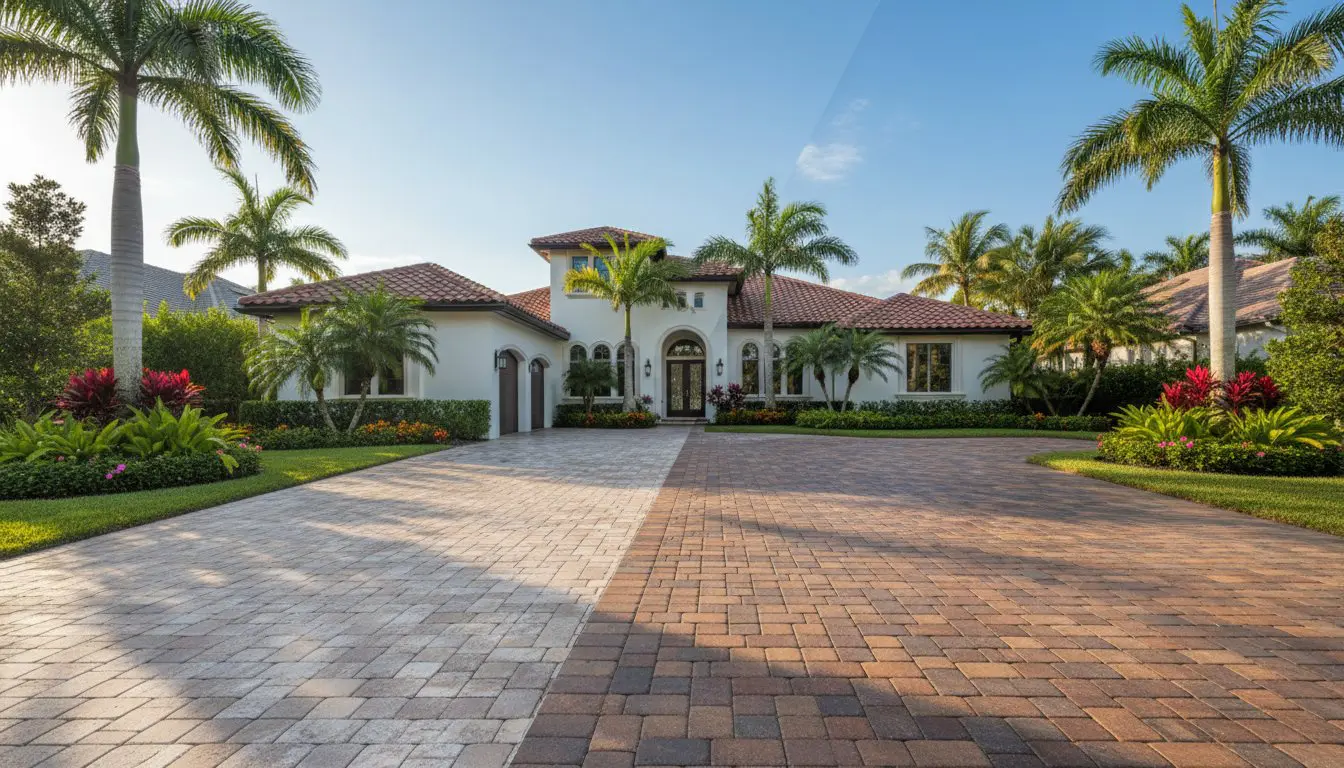
What if that dull, sun-bleached driveway isn’t actually ruined, but just needs the right professional intervention to look brand new again? Many homeowners in Palm Beach County assume that once their stones turn grey and chalky, a total replacement is the only option. You’ve likely spent hours looking at a white hazy film, known as efflorescence, wondering where your curb appeal went. It’s a common frustration here in Florida, where our outdoor surfaces face over 230 days of intense UV exposure and heavy tropical rain every year.
We understand that your home is your most significant investment, and seeing it lose its vibrancy is disappointing. In this guide, we’ll show you exactly how to restore faded pavers using the same professional secrets we’ve mastered over 43 years of serving local residents. You’ll discover how to bring back that deep, rich color and provide long-term protection against the elements. We’ll walk through the step-by-step restoration process, highlight common DIY mistakes to avoid, and explain why a professional seal is the most affordable way to boost your property value and keep it looking sharp for years to come.
Key Takeaways
- Understand how the intense South Florida UV rays cause pigment degradation and why your property needs specialized protection.
- Learn how to restore faded pavers using professional-grade color enhancers while avoiding the common pitfalls of DIY pressure washing.
- Discover our meticulous three-step process for deep cleaning and joint stabilization to bring back that “like-new” appearance.
- Protect your investment and boost curb appeal by applying high-quality sealers designed to withstand oil penetration and harsh weather.
- Find out why choosing a local Palm Beach County expert ensures your restoration is handled with the right licenses, insurance, and regional knowledge.
Why Do Pavers Fade? The Florida Climate Factor
Florida homeowners often notice their vibrant driveways turning a dull, chalky gray within 3 to 5 years of installation. This transition happens because the pigments used in concrete pavers are not permanent stains. Manufacturers typically mix iron oxide powders into the concrete during production. Over time, environmental stressors break the chemical bonds holding these pigments in place, leaving the surface looking washed out. Understanding these factors is the first step in learning how to restore faded pavers and protect your property investment.
To better understand how professional restoration works, watch this helpful video showing the transformation process:
The Impact of Intense UV Radiation
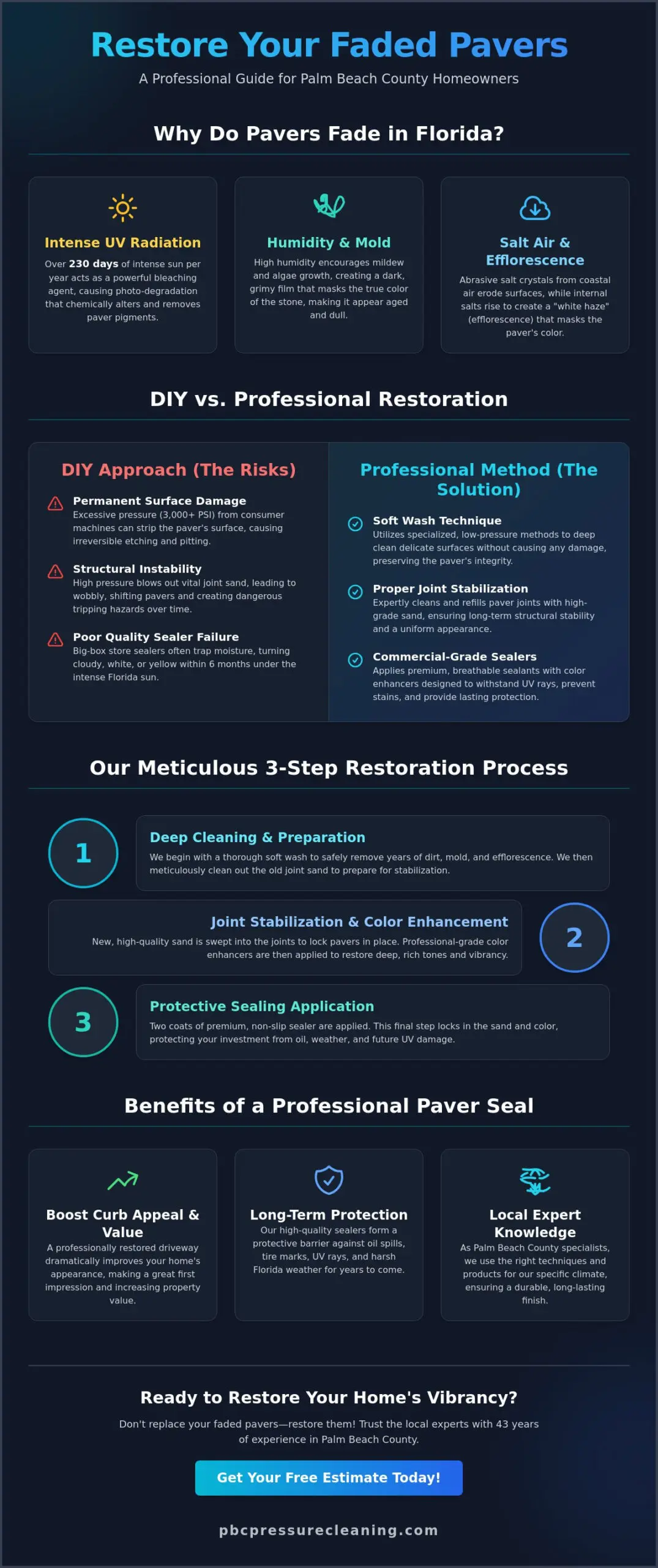
The sun in Palm Beach County is relentless. UV rays act as a powerful bleaching agent that penetrates the top layer of your masonry. In areas like Wellington, west-facing driveways are particularly vulnerable because they absorb the most intense heat during the hottest part of the day. UV degradation is the primary cause of pigment loss in Florida masonry. This process, known as photo-degradation, chemically alters the dyes until the original color simply vanishes. Without a protective seal, the sun eventually turns a rich terracotta or deep charcoal into a pale, lifeless shadow of its former self.
Humidity, Mold, and Salt Air
Moisture is another silent enemy of local curb appeal. Our high humidity levels encourage the growth of organic organisms like mildew and algae. These contaminants create a dark, grimy film that masks the true color of the stone, making it appear much older than it is. In coastal communities like Delray Beach, the air carries microscopic salt crystals. These crystals are highly abrasive. As the wind blows, they act like sandpaper on your driveway, slowly eroding the finished surface. Simple rain isn’t enough to clean these deeply embedded contaminants. In fact, rain often pushes dirt deeper into the porous concrete pores.
Sometimes, what looks like fading is actually a phenomenon called efflorescence. This is a natural process where salt minerals inside the concrete travel to the surface through evaporation. It creates a “white haze” that masks the underlying color. Many people assume their pavers are permanently ruined, but this mineral buildup can be professionally managed. When you are looking for how to restore faded pavers, it’s vital to distinguish between actual pigment loss and surface masking caused by Florida’s harsh salt air and mineral deposits.
DIY vs. Professional Paver Restoration
Many homeowners in Wellington and Delray Beach consider a weekend DIY project when they notice their driveway looking dull. While the initial cost of a rented pressure washer seems low, the long-term price of a mistake is often much higher. Learning how to restore faded pavers correctly requires more than just water and a nozzle. Without the right technique, you risk permanently damaging the surface of your stone and decreasing your home’s curb appeal.
The Risks of High-Pressure Mistakes
A common error involves using excessive pressure on older, brittle pavers. Most consumer-grade machines reach 3,000 PSI, which is enough to strip the “cream” coat right off the surface. This creates permanent etching and pitting, making the pavers feel rough and look even more porous. Professional teams use a soft wash approach for delicate surfaces to avoid this destruction. Additionally, high-pressure streams often blow out the stabilizing joint sand. According to the ICPI paver maintenance guidelines, maintaining this sand is vital for structural integrity. If you don’t replace it properly, your pavers will shift and wobble over time, leading to tripping hazards.
Product Quality: Consumer Grade vs. Professional Grade
The sealers you find at big-box hardware stores aren’t designed for the intense Palm Beach County sun. These products often trap moisture underneath, leading to a cloudy, white appearance or a yellow tint within 6 months of application. Professional-grade, breathable sealers allow vapor to escape while protecting against harsh UV rays. You can choose between a natural look or a high-gloss “wet look” without worrying about the finish peeling or cracking. Using the wrong product often means you’ll have to pay for a costly chemical strip later to fix the mess. Understanding how to restore faded pavers involves knowing the difference between a temporary shine and a long-lasting protective barrier.
Investing in a local paver sealing expert ensures the job is done right the first time. We use industrial-grade surface cleaners that provide a deep, uniform clean that a standard wand-style pressure washer simply can’t match. This specialized equipment removes deep-seated grime and organic growth without leaving “tiger stripes” or swirl marks on your driveway. When you consider the cost of equipment rental, materials, and potential repairs, professional restoration provides a much better value for your property investment. Our 43 years of experience allows us to identify the specific needs of your stone, ensuring a result that stays beautiful for years rather than weeks.
The 3-Step Process to Restore Faded Paver Color
Restoring the original luster of your driveway or patio requires more than a quick rinse with a garden hose. For Palm Beach County homeowners, the combination of intense UV rays and salt air creates a unique challenge that demands a methodical approach. Professional restoration involves a specialized sequence designed to strip away contaminants, stabilize the structure, and rejuvenate the pigments deep within the stone. Understanding how to restore faded pavers effectively means following a proven three-step system that ensures the results last for years rather than weeks.
Step 1: Deep Cleaning and Stain Removal
The restoration process begins with a meticulous deep cleaning to remove layers of oxidized pigment, dirt, and biological growth. We focus on eliminating stubborn oil, grease, and rust stains that have settled into the pores over time. Our team uses professional-grade, eco-friendly surfactants that penetrate the surface to kill mold and mildew spores at the root. This level of preparation is vital. Just as you must pressure wash before painting to ensure a clean bond, you must strip away every trace of South Florida grime before applying any restorative products. Without this thorough prep, the sealer will trap dirt underneath, resulting in a cloudy or blotchy finish.
Step 2: Re-sanding and Joint Stabilization
Once the surface is clean and dry, we address the joints. Over time, wind and rain wash away the original sand, which compromises the structural integrity of your installation. We apply high-quality polymeric sand to fill these gaps. This specialized sand contains additives that harden when misted with water, creating a flexible but firm bond. This barrier is essential for preventing weed growth and stopping ant hills from ruining your curb appeal. Properly filled joints also create a clean “frame” around each individual stone. This visual contrast is a key part of the process when learning how to restore faded pavers, as it makes the refreshed colors pop against a crisp, uniform border.
Step 3: Sealing for Color Revitalization
The final step involves applying professional-grade, color-enhancing sealers. These products are formulated to penetrate the paver surface and “wet” the internal pigments, bringing back the deep reds, charcoals, or tans that have been bleached by the sun. We apply multiple thin coats to ensure a consistent, professional finish across the entire surface. This saturation creates a rich, vibrant look that mimics the appearance of the pavers when they were first installed. Professional sealing is the only way to “lock in” color for years and provide a protective shield against future UV damage and oil penetration.
In our local climate, the drying and curing phase is the most critical part of the job. With humidity levels in Wellington and Delray Beach often exceeding 75%, we carefully monitor the weather to ensure the sealer has a full 24 to 48 hours to cure without moisture interference. This patience prevents the white, milky haze that often ruins DIY attempts in high-humidity areas.
Benefits of Professional Paver Sealing in Palm Beach County
Professional sealing is the essential final step when you’re learning how to restore faded pavers. In our local South Florida climate, pavers face constant threats from intense sun and heavy tropical rains. Applying a high-grade sealer provides an immediate boost to your home’s curb appeal. It transforms a dull, grayed-out surface into a vibrant feature that looks brand new. Beyond aesthetics, the sealer acts as a sacrificial barrier. This layer prevents oil, grease, and tire marks from penetrating the porous surface of the stone.
- UV Protection: Quality sealers block up to 98% of harmful UV rays. This prevents the pigments in your stones from bleaching out again under the Florida sun.
- Stain Resistance: Spilled motor oil or dark berry drops from local landscaping won’t soak into the concrete. They’ll bead up on the surface for easy removal.
- Joint Stabilization: The sealing process hardens the sand within the joints. This effectively stops the growth of weeds and moss while preventing invasive ants from building mounds.
- Easier Routine Maintenance: Most everyday dirt and dust will simply wash away with a standard garden hose, saving you hours of scrubbing.
Protecting Your Property Investment
A neglected driveway or patio quickly reduces a home’s appraisal value. Real estate data suggests that a clean, well-maintained exterior can increase a property’s perceived value by as much as 7%. When homeowners research how to restore faded pavers, they often realize that restoration costs a small fraction of a full replacement. Tearing out old stone and installing new material is a massive financial burden. Professional restoration and paver sealing palm beach county services provide a cost-effective way to extend the life of your hardscape by a decade or more.
Maintenance Savings Over Time
Sealed pavers stay cleaner for much longer than untreated ones. Without protection, the porous concrete acts like a sponge for moisture and grime. This leads to frequent, expensive deep cleanings to remove embedded mold. Once we apply a professional-grade sealer, the frequency of needed professional maintenance typically drops by 50%. You won’t need to hire a crew every few months to blast away stubborn mildew. To keep your new finish looking its best, we also suggest professional gutter cleaning. This prevents dirty roof runoff from cascading onto your pavers and causing secondary organic staining. Our team at Pressure Pros Of Palm Beach, Inc focuses on these meticulous details to ensure your investment lasts.
Don’t let your driveway lose its luster. Contact our expert team today to schedule a professional inspection and protect your pavers for years to come.
Choosing a Local Professional for Your Paver Restoration
When you research how to restore faded pavers, the most critical decision involves selecting a contractor who understands the unique environment of Palm Beach County. Our local climate presents specific challenges, including salt air, 90-degree humidity, and intense UV exposure that can quickly degrade inferior sealants. A contractor with local roots knows exactly which commercial-grade products withstand Florida’s weather without yellowing or peeling.
Selecting the right professional requires more than just a quick search. You should always verify that a company holds a current license and carries comprehensive insurance. This protects your property and ensures the team follows industry-standard safety protocols. An experienced professional will provide a detailed, transparent estimate that breaks down the steps of the process. Look for quotes that specify the type of cleaning agents used, the sand replacement method, and the specific brand of sealant applied to your driveway or patio.
Local expertise also matters when it comes to community standards. Many neighborhoods in Wellington and Delray Beach have strict HOA requirements regarding the appearance and maintenance of outdoor surfaces. A local contractor understands these regulations and ensures your restoration project meets every guideline, preventing potential fines or rework. This specialized knowledge provides a level of security that out-of-town companies simply cannot offer.
The Pressure Pros of Palm Beach Difference
Pressure Pros Of Palm Beach, Inc brings 43 years of experience to every project we undertake. We don’t believe in a one-size-fits-all approach. Instead, we use a meticulous process to evaluate the condition of your stone or concrete surfaces before we begin. Our team treats every driveway, patio, and pool deck with the same care we would give our own homes. You can see our commitment to high service standards by reviewing our work on deck cleaning in Wellington, FL, where we consistently deliver outstanding results for our neighbors.
Ready to Restore Your Curb Appeal?
Learning how to restore faded pavers is the first step toward protecting your home’s value. You don’t have to deal with the massive expense of a full replacement when a professional restoration can achieve the same beautiful look for a fraction of the cost. Our licensed and insured team is ready to provide the professional help you need to make your outdoor spaces look bright and new again.
Contact us today to schedule a free, no-obligation inspection of your property. We will assess the state of your pavers and provide a clear plan to bring back their original color and shine. Don’t let your property look dingy or neglected. Restore, don’t replace, your faded pavers today and enjoy a clean, beautiful home that stands out in the neighborhood.
Protect Your Property Investment with Professional Paver Care
The intense Florida sun and heavy seasonal rains eventually take a toll on every home’s exterior surfaces. Understanding how to restore faded pavers involves more than a simple spray with a garden hose. It requires a meticulous 3-step restoration process that includes deep cleaning, joint sanding, and high-quality sealing to lock in color. While many homeowners consider a DIY approach, professional service ensures the job is done right the first time without risking permanent damage to the stone.
Pressure Pros of Palm Beach has served the Palm Beach County community for 43 years. As licensed and insured certified professionals, we focus on delivering thorough results that enhance your curb appeal and protect your long-term investment. A professional restoration provides unmatched value to area homeowners by preventing future erosion and organic growth. You don’t have to settle for a dull, grimy driveway when a bright and beautiful transformation is just a phone call away.
Ready to bring your pavers back to life? Contact Pressure Pros of Palm Beach today for a free estimate! We’re ready to help you make your outdoor spaces look like new again.
Frequently Asked Questions
Can all faded pavers be restored, or are some too far gone?
Most faded pavers can be restored to a vibrant condition through a professional cleaning and sealing process. If your pavers have lost 50% of their original surface texture or are crumbling due to sub-base failure, replacement is likely necessary. For typical sun-bleached stones in Palm Beach County, our meticulous process shows you how to restore faded pavers to their original color while protecting the concrete for at least 3 years.
How long does the paver restoration process take from start to finish?
A standard paver restoration project typically takes 2 full days to complete, depending on the weather conditions. Day one involves a thorough deep cleaning and sand stripping to remove dirt and old sealer. On day 2, we apply the new sealer once the surface is 100% dry. High humidity levels in South Florida can occasionally add 24 hours to the drying time before the final sealing begins.
Is it better to use a “wet look” or a “natural look” sealer for faded pavers?
A “wet look” sealer is the best choice in 95% of cases for homeowners learning how to restore faded pavers because it chemically enhances the stone’s pigments. This type of sealer provides a rich, saturated appearance that mimics the look of the stone when it’s wet. A natural look sealer provides protection without changing the color, which won’t hide the grey, washed-out appearance of sun-damaged stones.
How often should I have my pavers professionally sealed in Florida?
You should have your pavers professionally sealed every 3 to 5 years to combat the intense Florida UV rays. Homeowners in Wellington and Delray Beach often notice significant fading after 36 months because the sun breaks down the protective barrier. Regular maintenance prevents the stones from becoming grimy and protects your investment from the 60 inches of annual rainfall we receive in Palm Beach County.
Will sealing my pavers make them slippery when wet, especially around a pool?
Sealing will not make your pool deck slippery if you use a professional-grade anti-slip additive. We mix a fine, transparent polymer grit into the sealer that creates a slip-resistant surface for your family. This is a critical step for safety in wet areas, ensuring you can walk safely around the pool even when the pavers are soaking wet. Our meticulous application provides outstanding results without the risk of falls.
Can I walk or drive on my pavers immediately after they are restored?
You should wait at least 4 hours before walking on your restored pavers and a full 48 to 72 hours before driving a vehicle on them. The sealer needs this specific time to cure properly and bond with the stone surface. Opening the area to traffic too early can leave permanent marks or compromise the protective finish, leading to a dingy and uneven appearance that ruins the restoration.
What is the best time of year to restore pavers in Palm Beach County?
The best time for paver restoration in Palm Beach County is during the dry season, which runs from November through April. During these months, the chance of rain is 70% lower than in the summer, allowing for a faster and more predictable curing process. Choosing an affordable restoration during these months ensures the sealer dries perfectly without the interference of daily afternoon thunderstorms or hurricane season moisture.
Does paver sealing really stop weeds from growing between the stones?
Professional sealing significantly inhibits weed growth by hardening the joint sand into a mortar-like consistency. This process blocks seeds from reaching the soil and makes it nearly impossible for weeds to take root in the gaps. While it doesn’t offer a 100% lifetime guarantee against every sprout, it reduces weed emergence by approximately 85% compared to unsealed pavers. This meticulous protection keeps your driveway looking clean and beautiful.
Recent Comments