How to Clean Tile Roof Without Damage: The Ultimate Florida Homeowner’s Guide
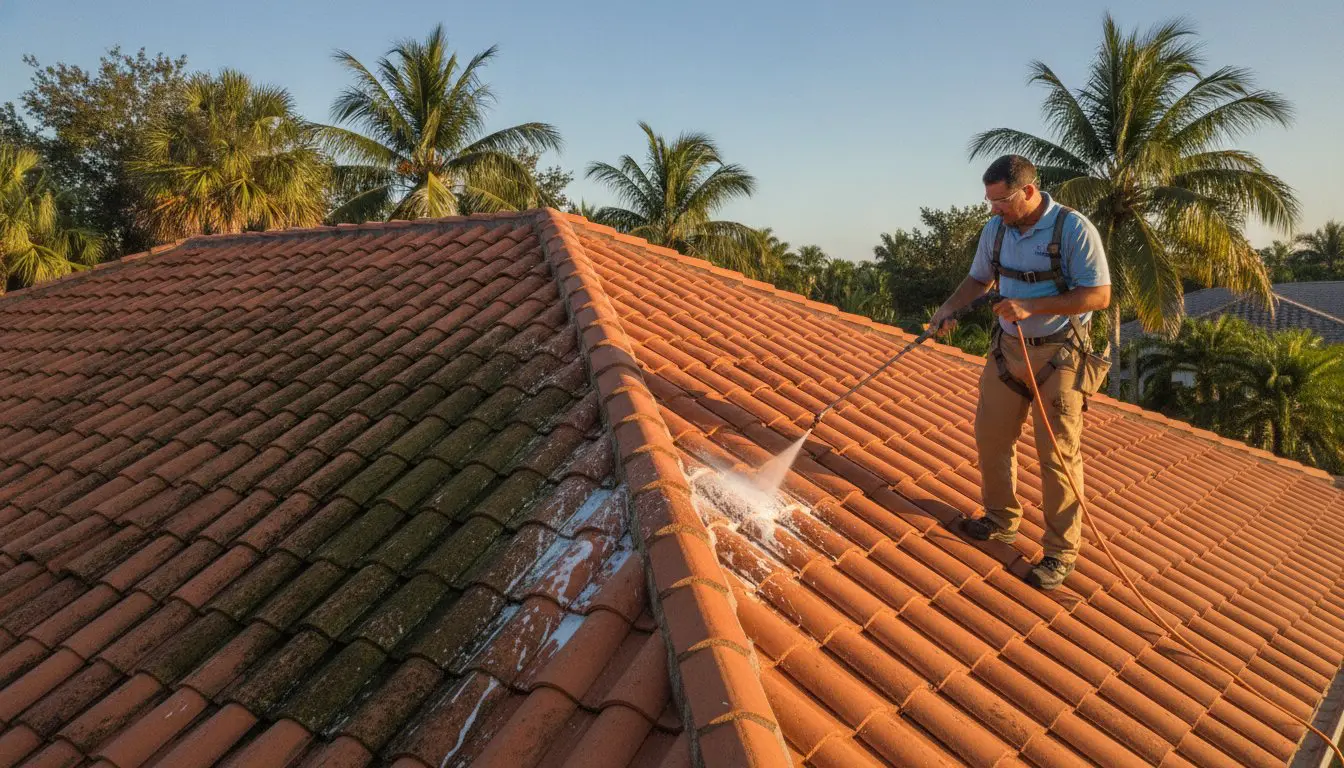
Did you know that a single afternoon spent cleaning your roof with a high-pressure hose could actually cost you more than the algae ever would? For many Florida homeowners, the sight of black streaks caused by Gloeocapsa magma leads to a frantic DIY attempt or a call to the cheapest contractor available. However, using the wrong methods often results in cracked clay or concrete tiles and voided manufacturer warranties. If you want to satisfy your HOA and protect your investment, you must understand how to clean tile roof without damage using modern, low-pressure techniques.
We know how stressful it is to balance property maintenance with the fear of causing expensive structural issues. It’s frustrating to receive a notice from your neighborhood association while worrying about the safety of walking on a slippery, sloped surface. In this guide, we’ll explain the professional “no-pressure” soft washing methods that safely restore your roof to its original beauty. You’ll learn how to maintain compliance with Florida’s 2026 insurance standards and the 15-year roof age threshold without risking a single broken tile.
Key Takeaways
- Understand why soft washing is the only industry-approved method for removing black algae without risking structural damage or voiding your manufacturer warranty.
- Discover the specific chemical solutions and techniques for how to clean tile roof without damage while protecting your home’s long-term asset value.
- Identify the critical “walk zones” on clay and concrete tiles to avoid cracking fragile shingles during your next roof inspection or maintenance session.
- Learn how professional roof cleaning helps you comply with strict Florida insurance mandates and HOA cleanliness standards.
- Find out the best ways to safeguard your landscaping and pool area from cleaning solution runoff during the restoration process.
Why Tile Roofs Are Fragile: Understanding the Risks of Improper Cleaning
Florida homes often feature clay, terracotta, or concrete tiles. Each material has a specific structural profile that dictates its durability. While concrete is heavier and generally more resilient, clay and terracotta are lighter and significantly more brittle. These materials are designed to shed water and resist wind, but they aren’t built to withstand heavy foot traffic or high-pressure water streams. Understanding these material differences is the first step in learning how to clean tile roof without damage.
The relentless Palm Beach sun and salt air accelerate the aging process of your roofing materials. Over time, constant UV exposure breaks down the molecular bonds in the tiles, making them prone to hairline fractures that you can’t see from the ground. High humidity in areas like Wellington further softens the substrate, making it easy for a standard pressure washer to cause permanent harm. Older tiles lose their flexibility, turning a once-sturdy roof into a fragile surface that requires a delicate, expert touch.
To better understand the physical risks involved, watch this demonstration on the proper way to navigate these surfaces:
Many homeowners don’t realize that tiles have a protective factory glaze. This finish reflects heat and prevents water absorption into the tile body. Using high pressure doesn’t just remove dirt; it strips away this vital layer. Once the glaze is gone, your roof becomes a porous sponge for moisture and organic growth. This leads to increased cooling costs and a shorter lifespan for the entire system. This is why professional roof cleaning focuses on chemical safety rather than mechanical force.
The Threat of Gloeocapsa Magma and Moss
Those black streaks on your roof aren’t just dirt or soot. They are a hardy type of algae called Gloeocapsa magma. It feeds on the limestone filler in your tiles, literally eating your roof from the inside out. In South Florida’s humidity, this biological colony grows rapidly. Moss is even worse. Its roots expand into the crevices between tiles, causing structural shifts that lead to leaks. Mastering the process of how to clean tile roof without damage starts with using soft washing to kill these organisms at the root without disturbing the tile placement.
Insurance and HOA Implications
Neglecting your roof is a major financial risk in today’s insurance market. Florida carriers now use drones to inspect properties for maintenance issues. If they see significant algae growth or black streaks, they may issue a non-renewal notice or mandate immediate cleaning. This is especially critical for roofs approaching the 15-year age threshold, where insurers have more flexibility to deny coverage. Communities in Boca Raton and Wellington also enforce strict HOA standards to maintain property values. A clean roof is an investment protection measure that ensures you stay in compliance with local regulations and preserve your home’s long-term asset value.
Soft Washing vs. Pressure Washing: Which is Actually Safe?
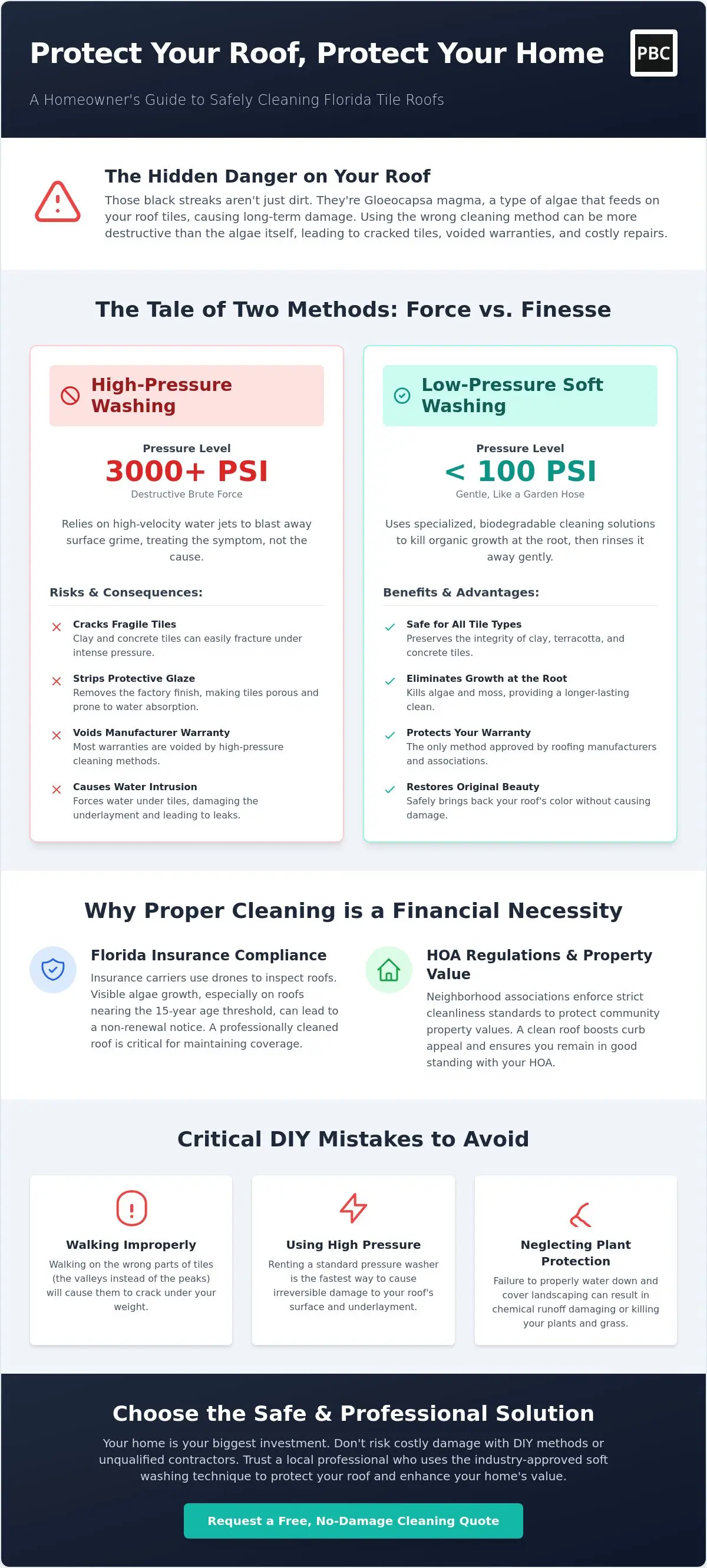
Choosing the right method is the difference between a clean roof and a compromised structure. Traditional pressure washing relies on sheer kinetic force to blast away surface debris. While this works for driveways, it’s often disastrous for tile roofs. High-pressure streams can crack brittle shingles and force water underneath the tiles into the delicate underlayment. If you’re researching how to clean tile roof without damage, you’ll find that soft washing is the only industry-recommended approach for these fragile surfaces.
Soft washing replaces high-pressure water with specialized, biodegradable chemistry. It’s a method that prioritizes the structural integrity of your home. Industry experts emphasize following safe roof cleaning guidelines to prevent the erosion of the tile’s surface. Even “low-pressure” settings on a standard machine can be too much for aged concrete tiles that have been weakened by years of Florida’s humidity. This is the safest way to approach how to clean tile roof without damage while maintaining your warranty and protecting the underlayment.
How Soft Washing Works
Soft washing utilizes a mixture of water, a cleaning agent, and a surfactant. The surfactant acts like a professional-grade soap, allowing the cleaning solution to “dwell” on the surface without running off. This dwelling time is crucial because it gives the chemicals the opportunity to penetrate the porous surface of the tile and reach the roots of the algae. Unlike pressure washing, which only removes the top layer of growth, soft washing sanitizes the entire surface.
- It kills 100% of organic growth, including algae, moss, and lichen.
- It protects the factory glaze on your tiles from being stripped away.
- It prevents water intrusion into your attic caused by high-pressure spray.
- It keeps your roof clean for significantly longer than mechanical scrubbing or blasting.
Comparing the Results
The visual difference between these two methods is often similar at first, but the long-term outcomes are worlds apart. Pressure washing is like mowing a weed; the root remains, and the black streaks will return within months. Soft washing is like pulling the weed out by the root. Because the biological spores are actually killed, your roof stays clean two to three times longer. Soft wash is a low-pressure chemical application that sanitizes the roof surface.
By choosing a professional roof cleaning service that specializes in these techniques, you ensure your home stays protected from both biological growth and physical damage. If you’re unsure about the current state of your roof, you might want to schedule a professional assessment to see which treatment is right for your property.
How to Clean a Tile Roof Safely: A Step-by-Step Guide
Cleaning a tile roof is a delicate process that requires specialized equipment and a clear plan. Learning how to clean tile roof without damage involves more than just spraying a solution; it requires a detailed preparation phase to protect your home’s exterior and landscaping. Professional teams follow a specific sequence to ensure the organic growth is eliminated while the property remains unharmed. This methodical approach is what separates a successful restoration from a costly roofing disaster.
The first step is selecting a Florida-approved cleaning mixture. Most professionals use a combination of sodium hypochlorite, water, and a high-quality surfactant. The surfactant is vital because it breaks the surface tension of the water, allowing the solution to stick to the curved surfaces of the tiles. Without it, the chemicals simply run off into your gutters before they can kill the algae. Choosing the right concentration is a balancing act; it must be strong enough to sanitize the roof but diluted enough to keep your property safe.
Once the solution is applied, dwell time becomes the secret to success. You shouldn’t rush this stage. The chemicals need approximately 15 to 20 minutes to penetrate the porous tile surface and neutralize the biological spores. If the solution dries too quickly in the hot Palm Beach sun, it won’t be effective. Professionals often work in sections to manage the moisture levels and ensure even coverage across the entire roof deck.
Protecting Your Palm Beach Landscape
Your tropical plants are sensitive to the salts found in roof cleaning solutions. Before any chemicals are applied, it’s critical to pre-wet all surrounding grass, shrubs, and flowers. This saturates the soil and leaves, creating a protective barrier that prevents the plants from absorbing the runoff. Using gutter redirects or heavy-duty tarps can further manage where the liquid flows. After the professional roof cleaning is complete, a final thorough rinse of the foliage ensures any stray mist is neutralized and washed away.
The ‘No-Pressure’ Application Process
A dedicated low-pressure pump system is the only safe way to apply the mixture. These systems operate at a pressure similar to a garden hose, which is essential for how to clean tile roof without damage. This gentle application prevents water from being forced under the tiles, which can lead to mold growth in your attic or rot in the wooden batten strips. For stubborn lichen or thick moss patches, a second application is often better than increasing the water pressure. This ensures the biological growth is completely dead, allowing it to naturally wash away during the next few rain cycles without the need for mechanical scrubbing.
Critical DIY Mistakes That Damage Florida Tile Roofs
Many homeowners attempt to tackle roof maintenance themselves to save money. However, without the proper training and equipment, a weekend project can quickly turn into a multi thousand dollar repair bill. Learning how to clean tile roof without damage is a skill that takes years to master. Most DIY mistakes fall into two categories: physical damage from improper movement and chemical damage from incorrect solutions. Avoiding these pitfalls is essential for maintaining the structural integrity of your home.
One of the most overlooked dangers is the extreme slip hazard. When you apply water to a roof covered in Gloeocapsa magma or moss, the surface becomes as slick as ice. Professional crews use safety harnesses and specialized footwear to manage this risk. A simple slip don’t just threaten your safety; it often leads to “impact fractures” where a falling body or heavy equipment shatters multiple tiles at once. This type of damage often goes unnoticed until the next heavy rain causes a leak in your ceiling.
The Proper Way to Walk on a Tile Roof
If you must step onto your roof, you need to understand the mechanics of weight distribution. Tiles are strongest at the “lap” or “butt” section. This is the bottom three inches of the tile where it overlaps the one below it, providing a double layer of support. You should always distribute your weight across two tiles whenever possible. Never walk in the “valleys” where water collects or on the “caps” along the ridges. These areas are hollow underneath and will snap instantly under the weight of an adult. Using walk-boards or padded roofing ladders is the best way to ensure you are practicing how to clean tile roof without damage.
Chemical Blunders to Avoid
Using the wrong cleaning agents can be just as destructive as walking on the tiles. Many people reach for high-concentration bleach or acid-based cleaners. While these might remove the stains, acid-based products can corrode your metal flashing, lead boots, and aluminum gutters. This leads to rust and eventual failure of the water-shedding components of your roof. Improper chemical ratios can lead to permanent tile discoloration, leaving your roof with “tiger stripes” or bleached spots that can’t be fixed. Additionally, failing to clean your gutters during the process can allow chemical-heavy runoff to pool near your home, potentially causing foundation issues or killing expensive landscaping.
The risks to your property and your personal safety are significant. Instead of risking a fall or a damaged roof, you should request a professional roof inspection to ensure the job is done safely and correctly. Our team uses the right equipment to provide a professional roof cleaning that protects your investment for years to come.
Why Professional Roof Cleaning is the Best Choice for Palm Beach Homeowners
Choosing a professional service is about securing your home’s future. Consumer-grade pressure washers often lack the pressure regulation needed for fragile tiles. A professional team brings specialized equipment designed specifically for soft washing. This ensures the job is done effectively without the brute force of water. Beyond equipment, liability is a major factor for any property owner. A DIY fall isn’t just a physical risk; it’s a financial nightmare. Professional contractors carry the necessary insurance and certifications to protect you and your property from unforeseen accidents.
Palm Beach County presents unique environmental challenges that require a local touch. Salt air and high humidity create a constant breeding ground for biological growth. Local experts understand these specific conditions and how they affect different tile types. We know which cleaning ratios work best for our coastal climate to ensure long-lasting results. Our technicians are trained on how to clean tile roof without damage by utilizing modern soft wash techniques. This expertise prevents the common mistakes discussed earlier, such as stripped glazes or cracked ridge caps.
A clean roof is also the first step toward a successful exterior painting project. If you leave a roof dirty, the biological spores will eventually wash down onto your freshly painted walls. This can cause staining and premature paint failure. By starting with the roof, you ensure the entire exterior of your home remains sanitized and protected. This logical approach to maintenance preserves your asset value and keeps your home looking its best year-round.
The Pressure Pros Advantage
Our commitment to safe roof cleaning methods means we never use high pressure on your tiles. We focus on chemical accuracy to sanitize the surface and kill algae at the source. This comprehensive process often reveals other maintenance needs. For instance, gutter cleaning is a vital part of roof health. If your gutters are clogged, the cleaning solution and biological debris can’t drain properly. This leads to overflow that can damage your siding or landscaping.
Preparing for Your Next Project
A clean roof is the foundation of great curb appeal. You should always pressure wash before painting to ensure the new finish bonds correctly to the surface. Similarly, a clean roof prevents dirty runoff from staining your driveway or patio. This is especially important if you are planning on paver sealing to protect your outdoor living spaces. Bundling these services ensures a cohesive, clean look for your entire property.
Don’t risk your safety or your home’s value on a DIY attempt. Request a free roof inspection and quote today.
Protect Your Home Investment Today
Maintaining a clean roof in South Florida is about more than just curb appeal. It’s a critical step in preserving the lifespan of your tiles and ensuring your home remains compliant with evolving insurance standards. By choosing soft washing over high-pressure methods, you’ve learned the essential secrets of how to clean tile roof without damage. This approach eliminates destructive biological growth while protecting the fragile factory glaze that keeps your home cool and dry.
Pressure Pros of Palm beach provides the expertise and specialized soft-wash equipment needed to handle these delicate surfaces safely. We are fully licensed and insured in Palm Beach County; our team has been serving homeowners in Wellington, Boca Raton, and Delray Beach for years with a focus on precision and quality. Don’t let a dirty roof lead to a cancelled insurance policy or an expensive HOA fine. You can Get Your Free Roof Cleaning Estimate from Pressure Pros of Palm beach today to restore your property’s beauty and value. We look forward to helping you protect your most valuable asset.
Frequently Asked Questions
Is it safe to walk on my tile roof while cleaning it?
Walking on a tile roof is generally not safe for homeowners because of the high risk of breaking brittle tiles. Professional technicians use specific weight distribution techniques and safety harnesses to navigate the surface safely. If you step on the wrong area, such as the center of a tile or a ridge cap, you’ll likely cause immediate structural damage that leads to leaks.
Will the cleaning chemicals kill my plants or grass?
The cleaning solutions used in soft washing won’t harm your landscaping if the proper protection steps are followed. Professionals use a process of pre-wetting all foliage and applying neutralizers to safeguard your grass and shrubs. Managing the runoff through gutter redirects ensures that the biodegradable chemicals stay on the roof surface where they belong rather than in your garden.
How often should a tile roof be cleaned in Florida?
In Florida’s humid climate, most experts recommend a professional cleaning every 2 to 3 years. This frequency prevents the accumulation of Gloeocapsa magma, which is the black algae that feeds on the limestone in your tiles. Regular maintenance keeps the biological growth from becoming deeply rooted, which protects the integrity of the tiles and maintains your home’s curb appeal.
Can cleaning my roof void its manufacturer warranty?
Yes, using high-pressure water can void your roof’s warranty. Most tile manufacturers specifically mandate soft washing as the only approved maintenance method. If you’re looking for how to clean tile roof without damage, you must follow these manufacturer guidelines. Using a professional service ensures that the cleaning process remains compliant with your specific warranty requirements and insurance standards.
What is the black stuff on my roof, and is it dangerous?
The black streaks are a hardy type of algae called Gloeocapsa magma. While it isn’t dangerous to your health, it’s very destructive to your roofing system. It thrives on the limestone filler in concrete tiles, making them more porous and brittle over time. If left untreated, this algae can lead to increased cooling costs as the dark surface absorbs more heat from the sun.
How long does a professional soft wash roof cleaning last?
A professional soft wash typically lasts two to three times longer than traditional pressure washing. This is because the chemical treatment kills the algae spores at the root level rather than just removing the top layer of growth. By sanitizing the surface completely, you can expect your roof to stay clean and free of black streaks for several years before another treatment is needed.
Can I use a regular pressure washer on a low setting?
Using a consumer pressure washer is not recommended because these machines often have inconsistent pressure spikes. Even a “low” setting can still deliver enough force to strip the factory glaze or force water under the tiles into the underlayment. Soft washing with a dedicated low-pressure pump is the only reliable way how to clean tile roof without damage while ensuring a deep, lasting clean.
Does insurance cover roof cleaning for algae removal?
Homeowners insurance does not cover the cost of roof cleaning as it’s considered a standard maintenance responsibility. However, maintaining a clean roof is often a requirement for keeping your policy active. Many Florida insurance carriers now use drone inspections and may issue non-renewal notices if they see significant algae growth, which they view as a sign of property neglect.
Recent Comments