
How to Protect Sealed Pavers from Tire Marks: A Practical Guide
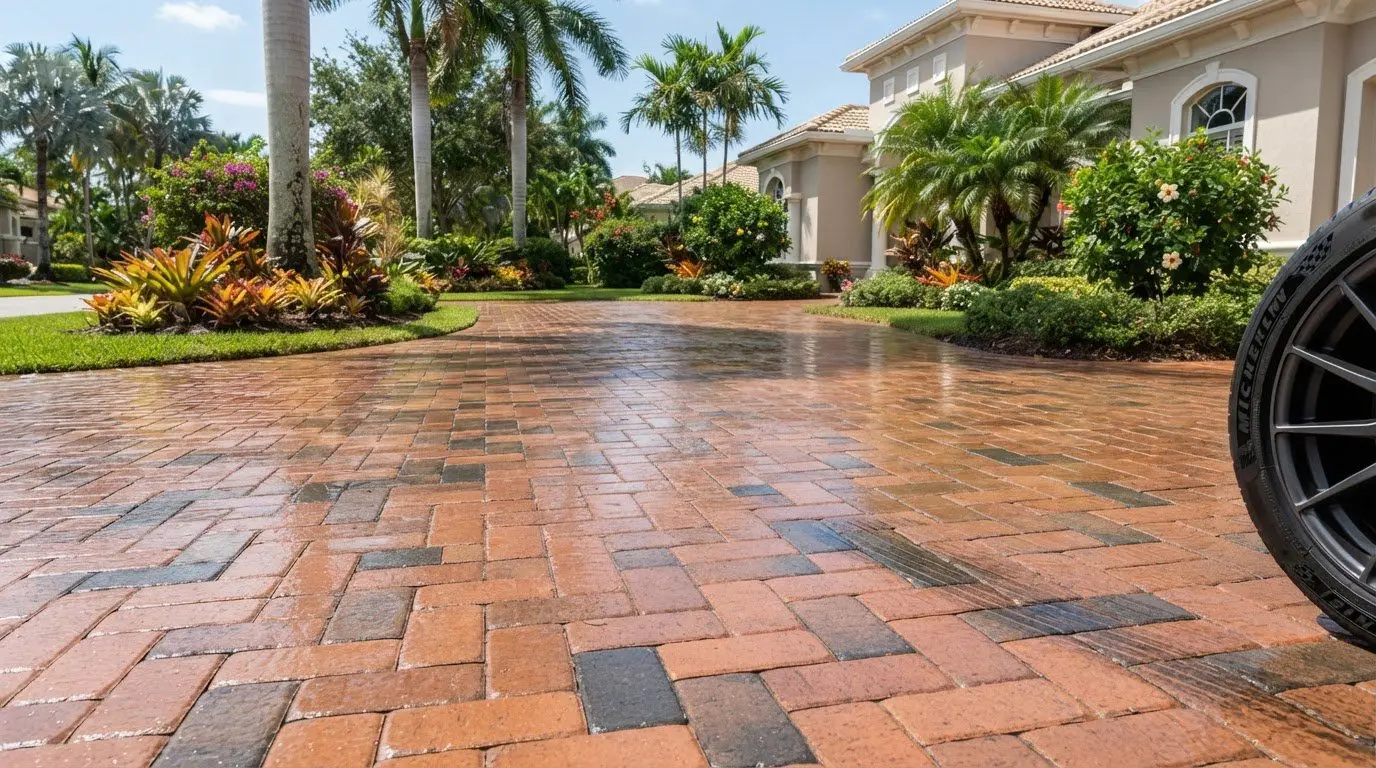
A fresh tire mark on a newly sealed driveway doesn’t automatically mean the sealer failed. If you’re wondering how to protect sealed pavers from tire marks, start by considering when the pavers were sealed, whether the product has cured for vehicle use, and how the tires contacted the surface. Heat, uncured sealer, and tire friction can all contribute to scuffs. Before cleaning, check the product’s care instructions and avoid rushing into a treatment that could affect the finish.
Some marks on newly sealed pavers may fade with time, but that doesn’t mean every mark should be ignored. The right response depends on what caused the mark and the sealer’s condition. Aggressive scrubbing or pressure washing too soon can damage the finish, so use a cautious, product-specific approach.
This guide explains why tire marks appear, how careful driving and regular inspection can reduce risk, and what to consider if marks develop. You’ll also learn when professional paver cleaning or a paver sealing assessment may help. Pressure Pros of Palm Beach provides paver sealing and pressure cleaning for homes and commercial properties in Palm Beach County, including Wellington, West Palm Beach, and Jupiter.
Key Takeaways
- Learn how curing, tire contact, and driving habits can contribute to marks on sealed pavers.
- Understand how to protect sealed pavers from tire marks with careful driving and a practical maintenance routine.
- Check the sealer manufacturer’s instructions before driving on a newly sealed surface, since curing guidance varies.
- Use a suitable cleaning method cautiously, test it in an inconspicuous spot, and follow the product label.
- Find out when recurring marks or widespread discoloration may warrant professional pressure cleaning or a paver sealing assessment in Palm Beach County.
Why do tire marks show up on sealed pavers?
You’ve had the driveway cleaned and sealed, then notice dark streaks where a vehicle turned or stopped. A mark on sealed pavers doesn’t automatically mean the sealer has failed. It may be rubber transfer or discoloration related to tire contact, friction, or the condition of the surface. The mark’s appearance alone may not reveal its cause.
In Palm Beach County, driveways experience regular vehicle use as well as sun, rain, and outdoor exposure. These conditions are part of routine paver maintenance, but they don’t point to one cause for every mark. Before deciding how to protect sealed pavers from tire marks, note where the mark appears, whether it is isolated or widespread, and whether the sealer is newly applied or has been in use for some time.
For a visual example of tire marks and sealed surfaces, watch this video:
What can leave marks on sealed pavers?
Tire rubber transfer and friction are possible causes, particularly where a vehicle turns, brakes, or repeatedly sits in the same area. The result may also depend on tire condition, how the vehicle moves, whether the pavers were clean before sealing, and the condition of the sealer. A dark spot can resemble a tire mark but have another source, so don’t choose a cleaner based on appearance alone. First consider where and when it appeared, then check that any cleaning method is suitable for both the pavers and their sealer.
For general background, pavement sealing describes sealcoating used on asphalt. Paver sealers are not necessarily the same products, so follow the instructions for the sealer applied to your pavers. Pressure Pros of Palm Beach provides paver sealing for driveways, walkways, and patios.
Does a tire mark mean the sealer has failed?
No single mark can confirm the sealer’s condition. An isolated streak is different from broader fading, visible wear, or staining that keeps returning across the driveway. Look at the overall surface and note whether marks are limited to a turning or parking spot or appear in several areas. If you’re uncertain, avoid aggressive scrubbing or increasing pressure before the mark and finish have been assessed.
Sealing can help protect and maintain pavers, but it can’t guarantee mark-free use. Looking at the pattern and condition of the surface helps distinguish a limited tire mark from a wider concern.
How curing, tire contact, and driveway habits affect sealed pavers
Sealer needs to be applied and allowed to cure according to the instructions for that specific product. Until vehicle use is permitted, tires may scuff or mark a surface that is still vulnerable. Timing can vary by product and site conditions, so a general rule from another driveway may not apply to yours.
Why follow the sealer’s curing instructions?
Check the sealer label or ask the contractor who applied it when vehicles can return to the driveway. If you don’t know which product was used, contact the installer rather than guessing. Keep vehicles off the treated area until the confirmed instructions allow traffic. This helps protect the finish while it cures, though it can’t prevent every mark once the driveway is in regular use.
Also consider how the driveway is used. A surface where vehicles frequently arrive, depart, and turn may face different demands from one used only occasionally. Pressure Pros of Palm Beach provides paver sealing and pressure cleaning for residential and commercial properties in Palm Beach County, including Wellington, West Palm Beach, and Jupiter.
Which everyday driving habits may reduce scuffing?
Turning the steering wheel while the vehicle is stopped can make the tires rub against the same small area of pavers. That friction may contribute to scuffing. If there’s room, let the vehicle roll slowly before turning instead of sharply steering from a stationary position.
- Make wider, smoother turns where the driveway layout allows.
- Avoid repeatedly making tight turns in the same spot when practical.
- Approach the driveway and change direction gradually rather than braking or turning sharply.
These adjustments may reduce friction where tires contact the pavers, especially in areas where vehicles routinely turn or maneuver. They can’t guarantee a mark-free surface, since tire condition, surface cleanliness, and sealer condition may also affect the result.
Start with two practical checks: confirm when vehicle use is allowed, then consider how daily driving brings tires into contact with the surface. If you’re unsure about the cure instructions or the condition of your pavers, you can contact Pressure Pros of Palm Beach to discuss professional paver sealing or pressure cleaning.
What sealing can, and cannot, do about tire marks
Paver sealing can help maintain a clean, cared-for appearance and protect pavers from stains, weed growth, and erosion. It doesn’t make a driveway immune to tire marks. Results depend on the surface, the sealer, and how the driveway is used. Think of sealing as one part of paver care, not a promise of mark-free use.
When does sealing help, and where are its limits?
Sealing may add a protective layer that makes routine maintenance easier, but it can’t prevent every type of discoloration. Tire marks may still appear, and the cleaning method should account for the sealer and its condition. A method suitable for one sealed driveway could affect another finish differently, so check the product’s care guidance before treating a spot.
For a broader overview, see Paver Sealing Palm Beach County: A Homeowner’s Guide to Lasting Protection. The practical point is that sealing can support paver protection, while regular care and realistic expectations remain important.
| Approach | What it can help with | Keep in mind |
|---|---|---|
| Prevention habits | Reduce unnecessary tire friction through careful driving. | They can lower risk, not eliminate marks. |
| Prompt, gentle cleaning | Address a minor mark before it becomes a maintenance concern. | Confirm the method suits the pavers and sealer first. |
| Professional assessment | Help evaluate recurring marks or uncertain sealer condition. | Assessment comes before choosing stronger treatment. |
How should you choose between DIY care and professional help?
For a small, isolated mark, start with gentle spot cleaning only after confirming the surface-care instructions. Test a suitable method in an inconspicuous area and follow its label. Don’t assume stronger scrubbing or pressure is the next step. If marks keep returning, discoloration covers a wider area, or you’re unsure about the sealer, seek a professional assessment before trying a more aggressive treatment.
Professional paver cleaning is not simply a matter of applying more pressure. The condition of the surface and sealer should guide the approach. Pressure Pros of Palm Beach provides paver sealing and pressure cleaning for residential and commercial properties in Palm Beach County. Ask a local professional to assess the surface before deciding whether cleaning or another step is appropriate. A careful assessment is central to how to protect sealed pavers from tire marks while maintaining their appearance.
How to protect sealed pavers from tire marks: a practical routine
A consistent routine helps you care for sealed pavers without risking damage through guesswork. Use these steps after sealing and during regular driveway maintenance.
- Confirm vehicle-use guidance. Check the sealer label or ask the installer when vehicles can return. Keep tires off the treated area until the product-specific instructions allow driveway use. Don’t rely on a general cure time from another product or project.
- Drive with care. Roll slowly before turning, and avoid sharply steering while stopped. Where practical, reduce repeated tight turns in the same area to limit unnecessary tire friction.
- Inspect the surface. Check the driveway periodically, especially where vehicles turn, stop, or park. Note whether discoloration is isolated or appearing across a wider area before deciding how to respond.
- Clean marks cautiously. First consider whether the spot looks like tire residue or another kind of stain. Use only a cleaning method confirmed as suitable for the specific pavers and sealer.
What should you do before parking after sealing?
Follow the actual product instructions, not a guessed waiting period. If the label doesn’t clearly explain when vehicles can use the surface, contact the installer and confirm before driving onto the pavers. Keep tires away until the verified guidance permits use, so you don’t put vehicle traffic on a finish that may still be curing.
How can you clean a fresh tire mark safely?
Start with a visual check in good light. Don’t assume every dark mark is rubber. Before treating it, confirm the cleaning approach is compatible with both the pavers and their sealer. Test it in an inconspicuous spot and follow the product label. Avoid aggressive scrubbing, unverified chemicals, and high pressure, which may affect the paver surface or sealer. If the mark persists or the finish changes, stop and seek professional advice instead of escalating the treatment.
Identify the mark, verify compatible care, then treat it gently. That’s a safer starting point for how to protect sealed pavers from tire marks without putting the finish at unnecessary risk. For Palm Beach County homeowners and property managers, Pressure Pros of Palm Beach offers paver sealing and pressure cleaning. If you’re uncertain about the surface or a mark won’t come away with careful care, contact Pressure Pros of Palm Beach to discuss your pavers.
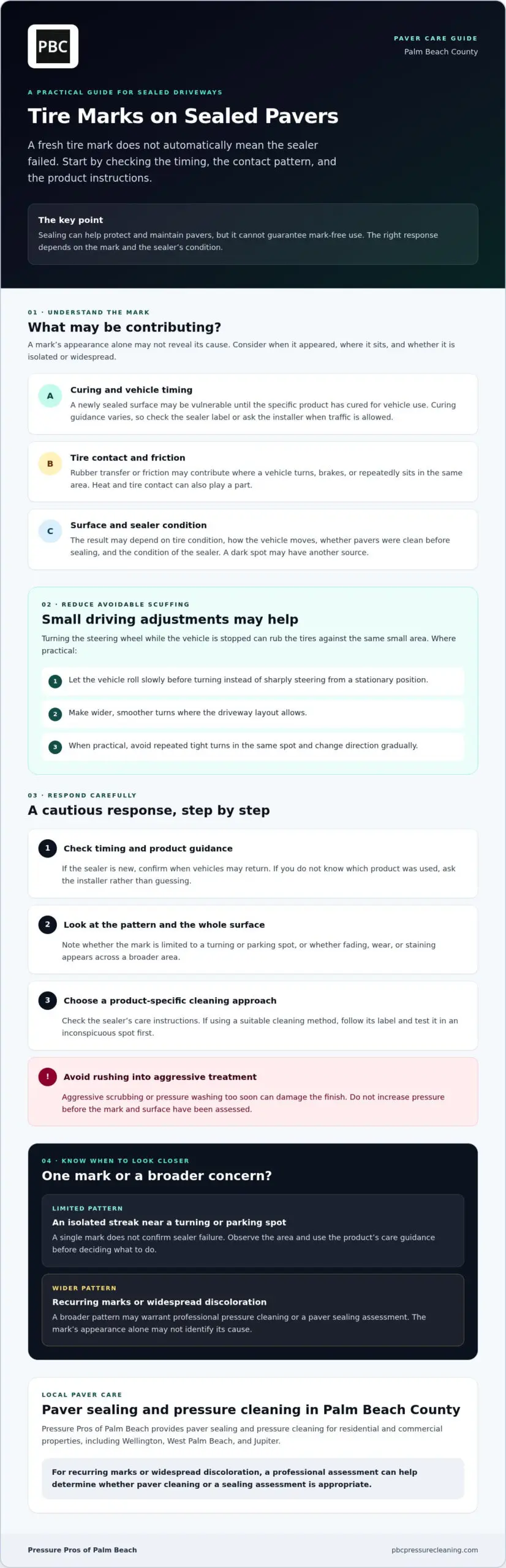
When Palm Beach County homeowners should call a paver professional
A professional inspection may be worthwhile if tire marks keep returning, discoloration covers a broad area, or you’re unsure whether the sealer is still in good condition. These signs don’t prove that resealing is needed. They do mean it’s sensible to identify what’s happening before trying stronger cleaning methods that could affect the finish.
Professional pressure cleaning isn’t simply using more pressure than you would at home. The approach should account for the pavers, the sealer, and the type of mark. If the concern extends beyond tire residue to broader surface cleaning, ask how a cleaning method will be selected for sealed pavers.
What should you ask before hiring a local paver professional?
Clear answers can help you understand the proposed care before work begins. Ask the provider:
- How will you identify the mark and choose a cleaning approach that suits these pavers?
- Which sealer instructions or product details inform your recommendations about vehicle use and maintenance?
- What might cleaning or resealing address, and what can’t it guarantee?
A professional should be able to explain the reasoning behind the recommended next step. If the sealer product is unknown, say so. That detail may affect what guidance is appropriate.
What are the next steps for a marked driveway?
Before an initial discussion, take clear photos of the marks and note when they appeared. Share whether they’re limited to a turning or parking area or whether discoloration is showing elsewhere. If you know when the pavers were sealed or have product information from the installer, include it. This context helps frame the conversation, though an assessment may still be needed to understand the surface fully.
Pressure Pros of Palm Beach provides paver sealing and pressure cleaning for residential and commercial properties in Palm Beach County, including Wellington, West Palm Beach, and Jupiter. If the marks are recurring or widespread, ask a local professional to assess the surface before choosing a treatment. You can contact Pressure Pros of Palm Beach to discuss your pavers.
Keep Your Sealed Pavers Looking Their Best
A tire mark doesn’t automatically mean your sealer has failed. Sealed pavers can still show marks, so check the product’s care guidance before cleaning. Confirm vehicle-use instructions after sealing, drive smoothly to reduce unnecessary friction, and avoid aggressive scrubbing, unverified chemicals, or high pressure that could affect the finish.
For a minor mark, identify what you’re seeing and use only a cleaning method confirmed as suitable for the pavers and sealer. If marks recur, discoloration spreads, or you’re uncertain about the sealer’s condition, a professional assessment can help clarify possible next steps without assuming cleaning or resealing will solve every issue. These steps can help you protect sealed pavers from tire marks while caring for the surface over time.
Pressure Pros of Palm Beach provides paver sealing for driveways, walkways, and patios, along with pressure cleaning for residential and commercial customers in Palm Beach County. To discuss the condition of your pavers and possible next steps, contact Pressure Pros of Palm Beach.
Frequently Asked Questions
Can sealed pavers still get tire marks?
Yes, sealed pavers can still show tire marks. Sealer helps protect and maintain the surface, but it doesn’t make pavers immune to rubber transfer, friction, or other discoloration. A single dark streak doesn’t prove the sealer has failed. Check where the mark appears and whether fading or staining is widespread. Identify the likely cause before choosing a cleaning method, since similar-looking stains may need different treatment.
How do you remove tire marks from sealed pavers safely?
First, check whether the spot is likely tire residue, since other stains can look similar. Confirm that a cleaning method is suitable for the particular pavers and sealer, test it in an inconspicuous spot, and follow its label. Avoid unverified chemicals, abrasive scrubbing, or strong pressure. If the mark persists or the finish changes, stop and ask a paver professional.
How long should sealed pavers cure before driving on them?
There isn’t one safe cure time for every sealer. The product and site conditions affect when vehicles can use the driveway, so check the specific sealer label or confirm timing with the installer. Keep cars off the pavers until that guidance allows vehicle traffic. If you don’t know which product was applied, contact the sealing contractor before parking rather than relying on a general time found online.
Does turning the steering wheel while parked cause tire marks?
It can contribute to scuffing. Turning the steering wheel while a vehicle is stopped can increase friction where the tires meet the pavers. When space allows, let the vehicle roll slowly before turning, and avoid repeating sharp turns in the same spot. These habits may reduce unnecessary rubbing, but they can’t guarantee a mark-free surface. Tire condition and the state of the sealer may also affect the result.
Can pressure washing damage sealed pavers?
Yes, pressure washing can affect pavers or their sealer if the pressure or cleaning method isn’t suitable for the surface. Don’t assume that more pressure will remove a tire mark safely. Confirm what care the pavers and sealer can tolerate before cleaning, and stop if the finish changes. Professional pressure cleaning considers the surface condition and the mark, rather than simply applying stronger pressure.
When should I call a paver sealing professional in Palm Beach County?
Consider an inspection if marks keep returning, discoloration is widespread, or you’re unsure about the sealer’s condition. Pressure Pros of Palm Beach provides paver sealing and pressure cleaning for residential and commercial properties in Palm Beach County, including Wellington, Royal Palm Beach, Loxahatchee, Westlake, Lake Worth, Greenacres, Palm Beach Gardens, West Palm Beach, Jupiter, Juno, Tequesta, and Riviera Beach. Ask what an assessment can clarify before deciding on cleaning or resealing. To discuss your pavers, contact Pressure Pros of Palm Beach.
Recent Comments