
Pre-Party Patio and Pool Deck Cleaning in West Palm Beach
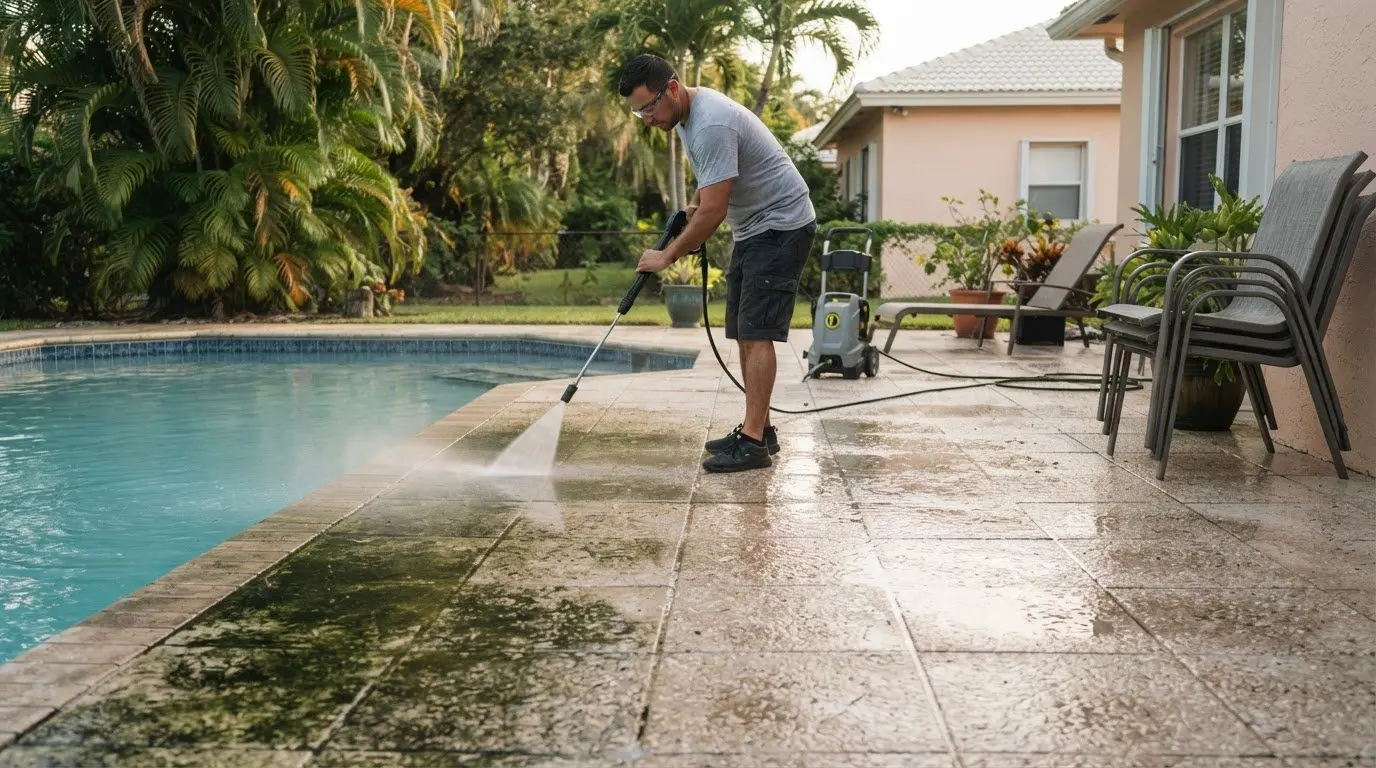
More pressure can leave a deck worse off than algae did. For pre-party patio and pool deck cleaning in West Palm Beach, pressure-treated wood generally needs moderate pressure applied with the grain, while composite decking calls for lower pressure and pH-neutral cleaners to help reduce scratching. Matching the method to the surface matters as much as removing visible grime.
A clean pool deck helps guests feel welcome, but Florida’s damp, shaded conditions can bring algae back and create slippery patches. Learn why that happens, how cleaning pressure affects wood and composite, and what to consider before sealing pavers.
This guide also covers practical steps for preparing a patio and pool deck before a gathering, including how often cleaning may be needed and how to keep surfaces looking cared for between professional visits.
Key Takeaways
- Use moderate pressure with the grain on pressure-treated wood, and lower pressure with pH-neutral cleaners on composite decking to reduce surface damage.
- Shade, lingering moisture, and organic debris can encourage algae and slippery buildup on West Palm Beach pool decks.
- Choose a paver or stone sealer based on the surface and traction needs; breathable, penetrating sealers are recommended for natural stone.
- Plan deck cleaning before guests arrive, allowing time for the surface to dry and the gathering area to be reset.
- Learn how Pressure Pros of Palm Beach’s exterior cleaning services can help refresh outdoor spaces and maintain the property.
Why does algae return quickly on West Palm Beach pool decks?
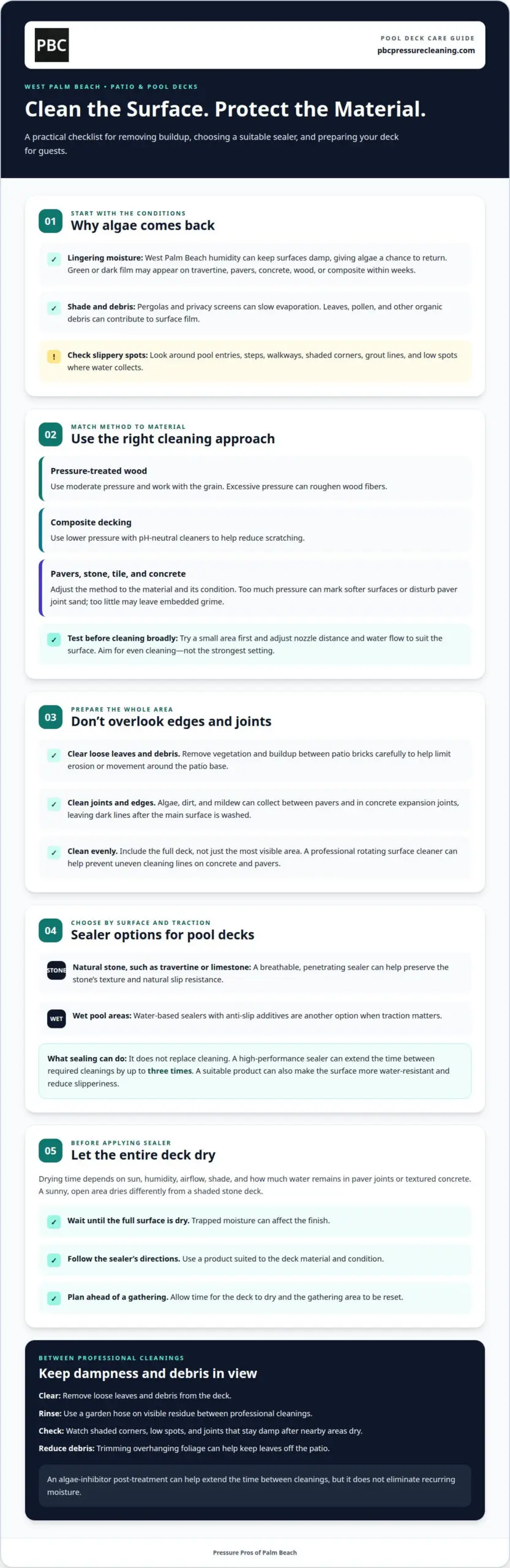
West Palm Beach humidity keeps outdoor surfaces damp, giving algae a chance to grow again after cleaning. Pool decks made of travertine, pavers, concrete, wood, or composite can develop green or dark film within weeks. Growth is more likely where moisture lingers instead of drying between uses.
Shade can prolong damp conditions. A pergola or privacy screen blocks sunlight and slows evaporation, so deck boards and pavers may stay moist overnight. Nearby landscaping adds leaves, pollen, and other organic debris that can feed surface film. Wind and foot traffic spread dirt and contaminants across surrounding areas.
Algae is more than a stain. A slick patch beside a pool entry, steps, or a frequently used walkway can make the area slippery, especially when wet. Check shaded corners, grout lines, and places where water collects. If green growth returns quickly, address those damp areas as well as the open deck.
Effective cleaning removes more than visible algae. Dirt, grime, mildew, and mold can cling to textured concrete and paver joints. Pressure washing can clear stubborn buildup, but the pressure and method should suit the deck material and condition. Excessive pressure can roughen wood fibers or disturb paver joint sand, while the wrong approach may leave uneven marks. Test a small area first to see how the surface responds before cleaning a larger section.
After cleaning, an algae-inhibitor post-treatment can help extend the time between cleanings and reduce slippery conditions. It supports maintenance but does not eliminate recurring moisture. Clear loose leaves and debris from the deck, and rinse visible residue with a garden hose between professional cleanings. Trimming overhanging foliage can also reduce debris on the patio.
- Check for shade: Compare growth under a pergola with growth in an open, sunnier area.
- Watch water retention: Note low spots or textured joints that stay damp after nearby areas dry.
- Match the cleaning method: Consider the material before using pressure washing on wood, composite, or pavers.
Removing algae and residue improves the deck’s appearance, while managing shade, moisture, and debris helps address why growth returns. These checks are especially useful before a gathering, when clean, dry walking areas matter around the pool.
Paver Pool Decks: Should You Seal?
Sealing can help protect pool-deck pavers, but the right product depends on the surface and desired finish. For natural stone such as travertine or limestone, a breathable, penetrating sealer can preserve the stone’s texture and natural slip resistance. Water-based sealers with anti-slip additives are another option for pool decks where traction on wet surfaces matters.
How long does a pool deck take to dry after pressure washing? Drying time depends on sun, humidity, airflow, shade, and how much water remains in paver joints or textured concrete. A sunny, open area dries differently from a shaded travertine deck, so wait until the entire surface is dry before applying sealer.
Clean before sealing. Dirt, algae, and mildew can collect in paver joints and concrete expansion joints, leaving dark lines after the main surface is washed. Remove loose debris, then clean the joints and surrounding surface thoroughly. For interlocking pavers, adjust the pressure to lift buildup without displacing joint sand. A small test area helps show whether the nozzle distance and water flow suit the material.
Concrete pool decks and pavers can be cleaned with a professional rotating surface cleaner, which helps prevent uneven cleaning lines. Tile and limestone also need a method suited to their finish and condition. Too much pressure can mark softer surfaces or disturb joints; too little may leave embedded grime. Aim for even cleaning, not simply the strongest setting.
- Check joints: Look for organic growth between pavers and in concrete expansion joints.
- Protect the base: Remove weeds and buildup carefully to help limit erosion or movement around patio bricks.
- Choose sealer by material: Consider breathable, penetrating products for natural stone and anti-slip options for wet pool areas.
Sealing does not replace cleaning, but a high-performance sealer can extend the time between required cleanings by up to three times. Sealing also makes surfaces more water-resistant and can reduce slipperiness when the product suits the deck. Follow the sealer’s drying and application directions, since trapped moisture can affect the finish.
For a better appearance before a gathering, clean the whole deck evenly, including edges and joints, then allow it to dry thoroughly before sealing. If you’re planning a paver refresh, discuss your pool deck cleaning needs and sealer options with a local professional.
Before selecting a sealer or beginning pressure washing, assess the deck’s material and condition. The pressure and cleaning method for a deck should be selected based on its material and condition to avoid unnecessary damage. Cleaning a small test area first allows pressure-washing teams to adjust nozzle distance and flow rate to the decking material. This check helps keep the cleaning approach matched to the surface rather than applying the same method everywhere.
Pay attention to the spaces between patio bricks during preparation. Removing vegetation and buildup between the bricks can help prevent cracking, shifting, or erosion of the patio base. Clear these areas before sealing, then wait until the surface is dry and follow the sealer’s application directions. Choose a product suited to the deck’s material and condition.
West Palm Beach pool deck cleaning
For pre-party patio and pool deck cleaning in West Palm Beach, consider the property’s layout and how people use each area. A private home with a covered lanai has different cleaning priorities from a shared condominium pool deck. Map walking routes, poolside seating, and transitions between concrete, pavers, and stone. This helps identify the surfaces and trouble spots that need attention.
West Palm Beach conditions also shape maintenance plans. Homes with tropical foliage may collect leaf stains and organic residue, while frequent guest use can track dirt across larger areas. Note where buildup returns, such as near a gate or beneath a canopy. These patterns help distinguish a recurring source from an isolated stain and give the cleaning team useful property details.
What should you ask when hiring a pool deck cleaning company in West Palm Beach? Ask how the method will be matched to your deck material and existing finish, and how problem areas will be addressed without disturbing nearby surfaces. For commercial properties, discuss access routes and off-peak scheduling to limit disruption for residents and guests.
A useful assessment looks beyond the visible deck surface. Pool coping, paver borders, and concrete transitions can collect different types of grime. Describe whether the concern is a broad film, a dark mark beneath a table, or discoloration along a joint. Specific examples help define the work area and distinguish surface cleaning from a concern that needs a different service.
- Identify materials: Note where the deck changes from concrete to pavers or natural stone.
- Describe problem spots: Point out recurring marks, shaded sections, and areas with frequent foot traffic.
- Plan shared spaces: For community pools, coordinate access and timing with residents or guests.
Commercial pool areas often benefit from work scheduled during off-peak hours, when fewer residents or guests need access. For a residential property, describing the deck materials and problem areas helps shape a focused cleaning plan. The aim is to address surfaces that affect appearance and everyday use without treating every area alike.
For a property with several exterior materials, explain which areas matter most and why. A pool deck cleaning plan can take the deck layout and surface types into account.
For natural stone, ask what pressure the crew plans to use: standard high-pressure cleaning equipment used on natural stone often runs at 3,000 to 4,000 PSI. Also ask how the treatment will address mold and mildew; the service says its mold and mildew treatment does not use bleach. These details can help you compare approaches and discuss how the crew will care for the deck’s specific surfaces.
For maintenance, the page recommends cleaning Palm Beach County pool decks at least once per year before pool season, which it places in March-April. Properties with heavy tropical foliage or high guest usage may need pool deck cleaning twice a year, described as bi-annual. The page also recommends cleaning pool decks twice per year for ideal maintenance: once in spring and once in fall. Decks that receive heavy use or are heavily shaded may need cleaning every 4-6 months. Consider those conditions alongside the deck’s materials and use when discussing a practical schedule.
How long before a party should you clean a patio and pool deck?
Clean the patio and pool deck early enough to allow for washing, rinsing, and complete drying before guests arrive. There is no single drying schedule for every West Palm Beach deck. Sun exposure, humidity, airflow, shade, and surface material all affect how quickly water evaporates. A shaded travertine area may stay damp after an open concrete section looks dry.
Plan backward from the gathering. First, identify the areas guests will use, including pool steps, seating zones, and the path from the house. Remove furniture and loose debris before cleaning. Allow the surface to dry fully before replacing furniture or inviting people to walk across it. Damp pavers may hold water in their joints even after the surface appears dry.
For a deeper clean, cleaning solution may need time to work before rinsing. A soft-wash solution can dwell on a deck for 10 to 15 minutes. That dwell time is part of cleaning, not a drying estimate. Keep guests and pets away from the work area while cleaning is underway, and follow the cleaning product’s directions.
- Before washing: Move chairs, cushions, planters, and other items away from the cleaning area.
- During the work: Keep the pool entrance and main walking route clear until rinsing is complete.
- After rinsing: Check shaded corners, joints, and steps for lingering moisture.
- Before guests arrive: Return furniture only after the patio and deck are dry.
West Palm Beach weather can affect event planning. Humidity and shade slow evaporation, while direct sun and airflow help the deck dry. If rain is forecast, consider whether runoff could carry dirt back onto the patio. Check the surface again before placing cushions or serving food outdoors.
For a small gathering, rinsing with a garden hose may remove loose debris between professional cleanings. Stubborn algae, mildew, or embedded grime needs a more considered approach. Match the pressure and cleaning method to the material. Natural stone, composite, wood, and concrete respond differently, so using one aggressive setting across every surface can cause avoidable damage.
Leave a clear buffer between cleaning and the party, and judge readiness by the actual surface conditions. Dry walking areas, clean steps, and furniture back in place make the outdoor space easier to use. Scheduling ahead also gives you time to spot missed stains or debris before guests arrive.
Pressure Pros of Palm Beach: Roof Cleaning
Pressure Pros of Palm Beach helps homeowners address exterior buildup with Roof Cleaning, Pressure Cleaning, Power Washing, and Exterior Painting. Ahead of a gathering, clean exterior surfaces can make the whole property feel more cared for, from the roofline to the patio approach. Roof cleaning is a practical next step when dark stains or visible organic growth affect the home’s appearance; pressure cleaning can address suitable exterior surfaces where dirt and grime have accumulated.
Choose a service that matches the surface and the problem. A roof and a hard patio need different cleaning approaches, so describe the materials and buildup you see when discussing your property. Contact Pressure Pros of Palm Beach to talk through your exterior cleaning needs.
Make Your Outdoor Space Ready for What’s Next
A gathering can be a useful prompt to make outdoor upkeep part of your regular property routine. After guests leave, note which areas collected the most debris or became difficult to keep clean. That observation can help you plan future pre-party patio and pool deck cleaning in West Palm Beach around your home’s actual use, rather than waiting until stains or buildup become obvious.
For a larger exterior refresh, Pressure Pros of Palm Beach can discuss suitable cleaning needs for your property. A clear description of the surfaces and areas you want addressed helps start a practical conversation about next steps.
With a little planning, your patio can feel ready for the next gathering and remain an inviting part of your home.
Frequently Asked Questions
Is pressure washing safe for pool decks and patio pavers?
Pressure washing can clean a pool deck safely when the pressure and technique match the surface. Pavers, concrete, travertine, and composite decking respond differently to water pressure. A poorly matched approach can disturb paver joints or mark a delicate finish. Avoid using one high-pressure setting across the entire patio. Let the material, finish, and condition guide the cleaning method.
Pool deck cleaning chemicals safe for pools, pets, and landscaping
A properly applied pool-safe cleaning solution will not affect pool water chemistry. Nearby foliage, grass, and gardens are pre-saturated with fresh water before the cleaning solution is applied.
Recent Comments