
Cleaning Coquina Stone Walls in Palm Beach Without Etching
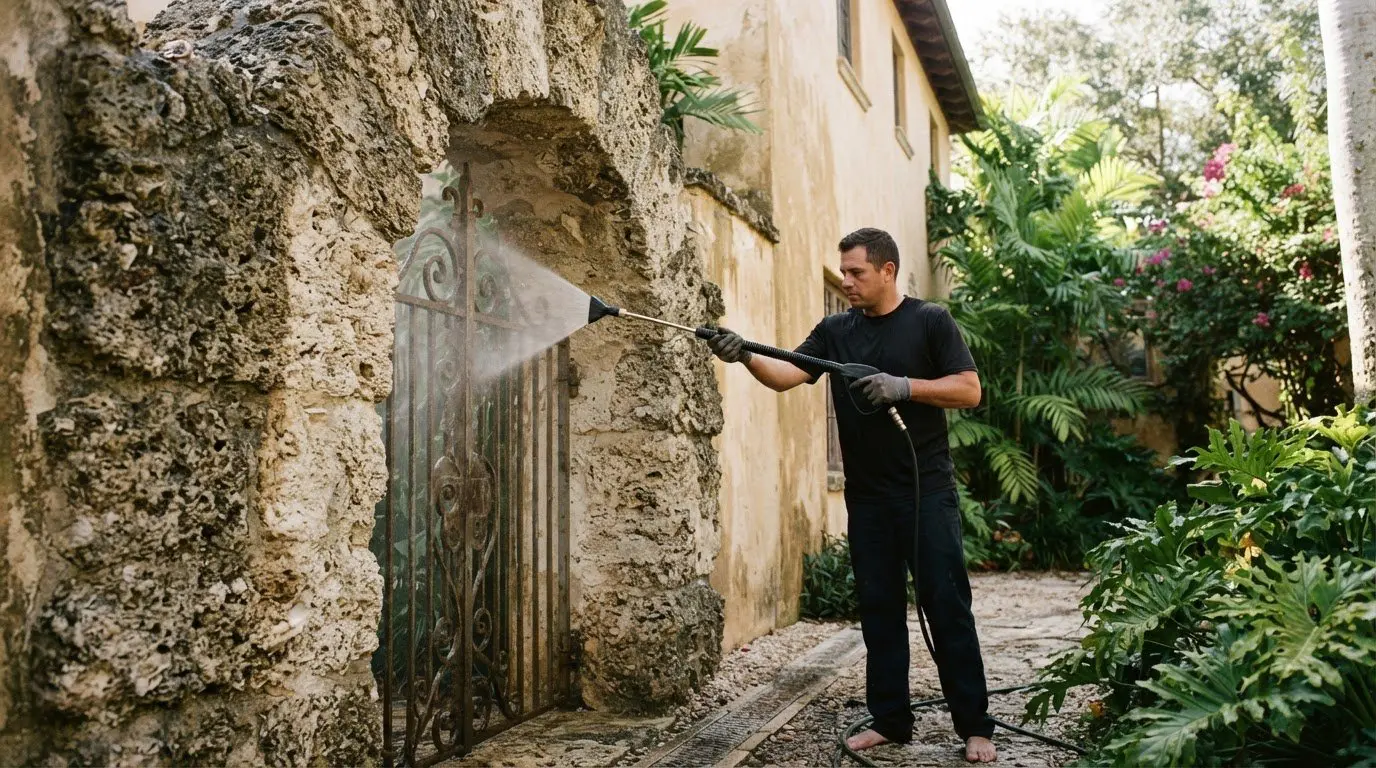
High-pressure washing can etch coquina or loosen its shell fragments when the spray is too forceful or too close. Cleaning coquina stone walls without damage in Palm Beach requires an approach tailored to the stone’s condition and surface buildup. The goal is to remove grime without wearing away the wall’s natural texture.
Caution matters with a historic or distinctive exterior: a method suited to concrete may be too harsh for porous stone. Coastal walls can also collect salt and windblown sand, so cleaning should respond to the surface’s actual condition rather than rely on force.
This guide explains how pressure and cleaning methods affect coquina, what a gentler process involves, and when professional exterior cleaning may help. You’ll also learn how to avoid common mistakes that leave marks or cause unnecessary wear, so you can protect the wall’s appearance while planning its care.
Key Takeaways
- Learn why forceful washing can wear coquina and why pressure should be adjusted to the wall’s condition.
- See how a careful cleaning approach can remove surface buildup while helping preserve delicate stone details.
- Understand how managing moisture and vegetation can support long-term coquina and coral stone preservation.
- Find out when gentle hand-cleaning may help with algae or lichen, and when the growth calls for a more careful assessment.
Can pressure washing damage the coquina stone on my historic estate?
Yes. A forceful spray can erode coquina’s softer shell fragments, open weak joints, or dislodge loose material. Cleaning coquina stone walls without damage in Palm Beach starts by assessing the stone and adjusting the method before work begins.
Surface-Specific Pressure Settings
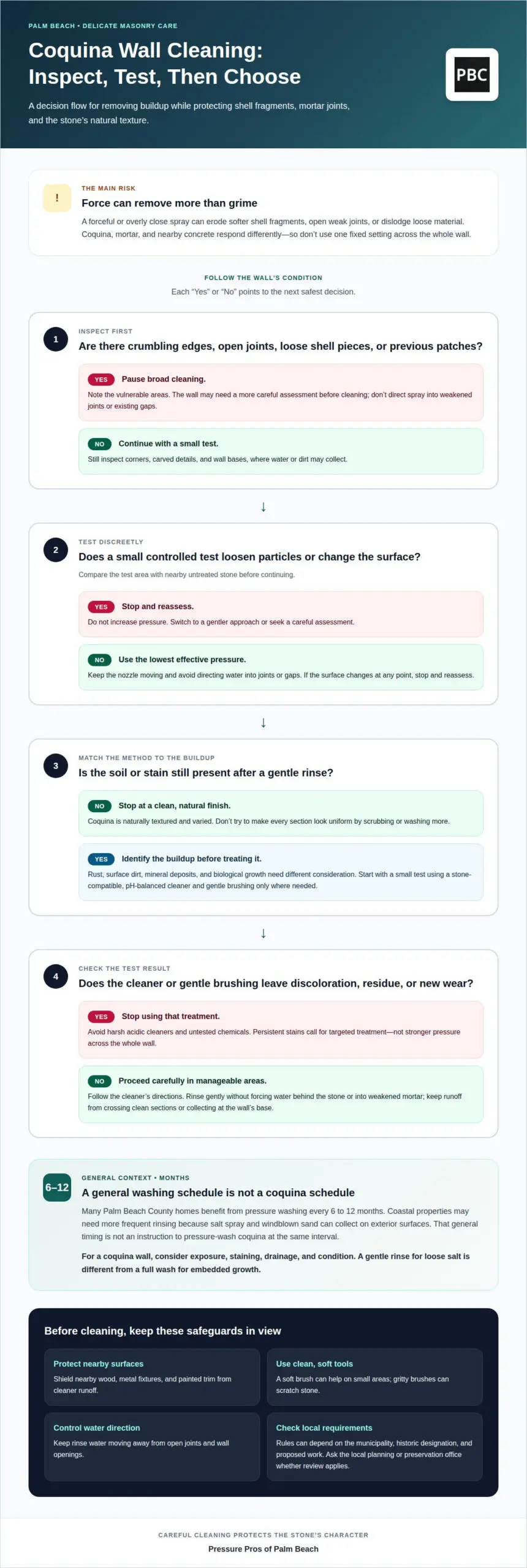
Coquina, mortar joints, and nearby concrete respond differently to water pressure. Assess each surface separately, looking for crumbling edges, open joints, previous patching, and loose shell pieces. Use the lowest effective pressure, not one fixed machine setting across the entire wall.
A controlled test in a discreet area helps show whether the spray lifts grime or disturbs the stone. Keep the nozzle moving and avoid directing water into joints or existing gaps. If particles loosen or the surface changes, stop and reassess rather than increasing pressure.
Low-Pressure, pH-Balanced Cleaning
For delicate coquina, cleaning typically relies on a compatible, pH-balanced stone cleaner and gentle rinsing rather than a concentrated blast. Follow the cleaner’s directions and test a small area first. Use a soft brush only where needed, since aggressive scrubbing can also wear softer shell fragments.
Rinse without forcing water behind the stone or into weakened mortar. Avoid harsh acidic cleaners, which may react with calcium-rich stone, and untested chemicals that could leave discoloration. If stains persist, consider targeted treatment rather than applying stronger pressure across the entire wall.
Recommended Pressure-Washing Frequency
Most homes in Palm Beach County benefit from pressure washing every 6 to 12 months. Coastal properties may need more frequent rinsing because salt spray and windblown sand can collect on exterior surfaces. That general schedule shouldn’t be treated as an instruction to pressure-wash coquina at the same interval.
Before scheduling cleaning, consider the wall’s exposure, staining, drainage, and condition. A gentle rinse to remove loose salt differs from a full wash to address embedded growth. Inspect the surface between cleanings, especially when buildup is visible, and avoid repeated high-pressure passes that can gradually wear edges and joints.
What local rules or permits apply to cleaning historic coquina walls in Palm Beach County? Requirements can depend on the property’s municipality, historic designation, and proposed work. Identify the property’s jurisdiction and ask its planning or preservation office whether review applies before cleaning begins.
How do you remove rust, dirt, and efflorescence stains from coquina stone? First identify the stain: rust, surface dirt, and mineral deposits need different treatments. Start with a small test using a stone-compatible cleaner and gentle brushing. Avoid acidic products and strong pressure that can etch the stone.
How can you find a qualified coquina stone cleaning or restoration contractor in Palm Beach? Look for experience with porous coquina, careful assessment of mortar and stone condition, and a low-pressure test before broader cleaning. Ask how the process protects nearby surfaces, manages runoff, and treats stains without relying on aggressive pressure.
Cleaning delicate exterior surfaces without etching
Coquina walls need a cleaning plan suited to the material, its condition, and nearby details. On Palm Beach Island, an estate may combine coquina, coral stone, cast stone, and barrel tile. Treating every surface alike can leave etched patches, weakened joints, or uneven color. Identify each material before choosing a method.
Start with a visual inspection in natural light. Look for loose shell fragments, hairline cracks, soft mortar, dark biological growth, and mineral deposits. Note these areas to distinguish existing wear from changes during cleaning. Pay particular attention to corners, carved details, and wall bases, where water or dirt may collect.
Historic Palm Beach Island homes with coquina walls and barrel-tile roofs often date to the 1920s and 1930s. Older masonry may have repairs or weathering that respond differently from original stone. Avoid directing concentrated spray at decorative edges or patched joints. If a surface sheds grit during a small test, stop and use a gentler method.
- Protect adjacent materials: Cover or shield nearby wood, metal fixtures, and painted trim from cleaner runoff.
- Control water direction: Work from a stable position and keep rinse water moving away from open joints and wall openings.
- Use clean tools: Choose a soft brush for small areas; gritty brushes can scratch stone.
- Compare sections: Check the test area against nearby untreated stone before continuing.
Cleaning should remove surface soil without trying to make naturally varied stone look uniform. Coquina’s shells and pores create texture, and aggressive scrubbing can flatten or damage that character. A pale patch beside darker stone, for example, may reflect natural variation rather than removable dirt. Treat only the affected area and reassess after rinsing.
Runoff matters on a historic estate. Dirty water running across a clean section can leave streaks or redistribute loosened deposits. Work in manageable areas, rinse each section carefully, and keep water from collecting at the wall’s base. Don’t let cleaner dry on the surface, as residue can create additional marks.
For a Palm Beach property with delicate masonry, discuss the stone type, visible damage, and staining before work begins. A focused assessment helps match the cleaning process to coquina instead of applying a routine intended for concrete. If you’d like to discuss the wall’s condition and next steps, contact a local exterior cleaning professional.
Coquina and coral stone wall preservation
Preserving coquina and coral stone means managing moisture, plant growth, and cleaning together. Palm Beach’s coastal exposure can bring salt spray and windblown sand onto exterior masonry.
Coquina Porosity and Fragility
Coquina is a sedimentary stone made largely of cemented shell fragments. Its visible shells, pores, and uneven texture distinguish it from smooth, dense wall surfaces. Some areas may be softer or more weathered than others, especially near mortar joints and previously damaged edges.
During an inspection, look for loose shell pieces, crumbling mortar, damp patches, and plants rooted in joints. These signs help distinguish surface dirt from conditions that need attention before washing. Avoid scraping or blasting weakened spots, as detached fragments can expose more porous material underneath.
Coastal Conditions and Stone Care
Humid air can slow drying, while salt spray and windblown sand settle on coastal walls. These deposits can make coquina look dull or dirty, but forceful washing may drive water into open joints. Base rinsing on exposure and visible buildup rather than applying the same schedule to every wall.
After a windy coastal period, inspect the wall for fresh deposits and check that water drains away from its base. Gentle rinsing can remove loose salt and sand before they accumulate. Don’t leave damp debris or vegetation against the masonry, as persistent moisture can encourage biological growth.
Preservation also means addressing what keeps a wall wet. Plant growth can hold moisture against masonry, and acids produced by plant growth can dissolve limestone. Removing vegetation and redirecting moisture are preservation options identified in discussions on historic building materials and coquina cleaning.
A practical maintenance review can focus on these areas:
- Wall base: Look for standing water, damp soil, or runoff flowing toward the stone.
- Mortar joints: Note open gaps where rain or rinse water could enter.
- Vegetation: Identify vines, roots, or growth touching the wall before removal.
- Surface deposits: Separate loose sand and salt from attached biological growth.
Handle vegetation carefully. Pulling firmly on roots embedded in coquina can loosen shell fragments or mortar. Remove growth without levering tools against the stone, then address the moisture source that allowed it to persist. If a plant has penetrated a joint, don’t treat forceful removal as routine cleaning.
Biological growth and mineral staining need different responses. The historic-building-material symposium identified research into controlling biological growth and cleaning coquina as preservation priorities. This favors targeted treatment and moisture management over repeated aggressive washing. Inspect the wall after cleaning to see whether damp areas return or growth reappears.
In Palm Beach County, coastal exposure may call for more frequent rinsing, but the coquina’s condition still determines the method. Keep water away from weak joints, remove vegetation carefully, and track recurring damp spots. These steps help protect the wall’s texture and maintain its appearance.
Hand-scrubbing algae and lichen
Algae often appears as a green or dark film in damp, shaded areas, while lichen can form crusty patches attached to stone. On coquina, hand-cleaning offers more control than a concentrated spray, but hard scrubbing can still loosen shell fragments. First determine whether the growth sits on the surface or is firmly attached.
What tools and cleaning steps should homeowners use for coquina walls? Use clean water, a soft-bristled brush, and a stone-compatible cleaner labeled for the surface. Test a discreet spot first, then gently clean a small area and rinse without forcing water into joints.
Before brushing, inspect the patch and surrounding mortar. If the coquina flakes, the joint crumbles, or lichen extends into a crack, stop rather than scraping it out. A soft nylon brush can loosen light film; metal brushes, abrasive pads, and pointed tools can scratch or dislodge fragile material.
- Clear loose debris: Remove leaves and loose sand by hand, without grinding grit into the stone.
- Dampen the patch: Apply clean water gently, keeping runoff away from open joints.
- Test a small area: Apply the cleaner as directed and watch for color change or surface particles.
- Brush lightly: Use short, gentle strokes on the growth, not broad forceful scrubbing.
- Rinse and reassess: Check the patch after rinsing before treating nearby stone.
For algae on a shaded lower wall, a soft brush may lift loose surface growth after dampening. Lichen can be more firmly attached, so repeated scraping is not a safe shortcut. If gentle brushing leaves the patch in place, don’t increase force or use an untested chemical. The stone’s texture and mortar condition matter more than removing every mark in one pass.
Keep cleaning tools free of grit between sections. Sand trapped in brush bristles can act as an abrasive, especially on coquina’s uneven shell surface. Rinse the brush often, use fresh water, and avoid spreading loosened growth onto untreated areas. Work in manageable patches so cleaner doesn’t dry before rinsing.
After cleaning, observe whether algae returns to the same damp area. Persistent growth can point to moisture against the wall, vegetation touching the masonry, or poor drainage nearby. Removing surface growth without addressing the underlying condition may leave the wall vulnerable to recurring deposits. Don’t cut or pull rooted vegetation against the stone.
For extensive lichen, fragile joints, or growth that resists gentle treatment, a professional assessment can help prevent unnecessary surface damage. Palm Beach’s humid, coastal conditions make careful handling especially important for porous historic walls.
Pressure Pros of Palm Beach
Pressure Pros of Palm Beach helps Palm Beach County property owners plan exterior cleaning around the surface and visible buildup. Its pressure cleaning and power washing services address exterior cleaning needs, while delicate coquina calls for careful consideration before washing.
Turn to a professional when a wall has persistent staining, loose shell fragments, open mortar joints, or growth that resists gentle hand-cleaning. Describe the stone’s condition and the areas you want cleaned so the discussion can focus on an appropriate approach for your property.
For historic coquina, preserving the masonry matters as much as improving its appearance. Contact Pressure Pros of Palm Beach to discuss your exterior cleaning needs.
Plan the next step for your coquina wall
A plan for cleaning coquina stone walls without damage in Palm Beach should start with the outcome you want. Decide whether your priority is improving the wall’s overall appearance, addressing a visible area, or maintaining its historic character. Clear expectations keep the scope focused and make it easier to discuss what should remain unchanged.
For a distinctive estate wall, the best result isn’t necessarily a uniform finish. Agreeing on priorities before work begins can help preserve the property’s character while guiding practical maintenance decisions. Share what matters most about the wall and what prompted you to consider cleaning.
If you’re ready to discuss a careful approach for your property, contact Pressure Pros of Palm Beach. A thoughtful conversation can help you plan exterior maintenance with confidence.
Frequently Asked Questions
What is the safest way to clean coquina stone walls?
When cleaning coquina stone walls without damage in Palm Beach, focus on removing harmful buildup, not making every stone look identical. Photograph representative areas before work begins, including decorative details and existing discoloration. The images create a useful record for comparing future changes and distinguishing long-standing variation from new marks after maintenance.
Which cleaners are safe for coquina stone and which chemicals should be avoided?
Choose a cleaner whose label specifically identifies natural stone as a suitable surface. Products formulated for concrete, metal, or pool-scale removal aren’t automatically appropriate for shell-rich masonry. Read the label for surface restrictions and follow its directions. If it doesn’t clearly cover natural stone, don’t use it on a visible wall area; an unsuitable cleaner may change the finish or leave residue.
Can you use a pressure washer on coquina stone walls, and what PSI is safe?
A pressure washer should be used only when the setup and wall condition allow controlled cleaning; no single PSI value suits every coquina wall. A machine’s maximum rating describes its equipment, not a safe setting for historic stone. Don’t choose a setting based on concrete-cleaning routines. Decorative shell details and old mortar need particular care during pressure-based work.
How do you remove algae, mildew, and moss from coquina without damaging it?
First determine whether the mark is active growth or a remaining stain, since cleaning may remove growth without restoring the stone’s original color. Green film, dark patches, and rooted moss can look similar from a distance. Don’t keep escalating treatment just because a pale shadow remains after cleaning. If growth persists across decorative or historic areas, pause before treating more stone.
How often should coquina stone walls in Palm Beach be cleaned and maintained?
Review walls as part of regular exterior maintenance rather than washing every coquina wall on an automatic schedule. Keep dated notes on visible changes, such as new staining, altered mortar, or deposits near a particular feature. A simple record helps property owners and managers distinguish gradual change from a sudden issue and plan maintenance before the wall’s appearance becomes difficult to manage.
Recent Comments