
Soft Washing Historic Homes in Palm Beach With Care
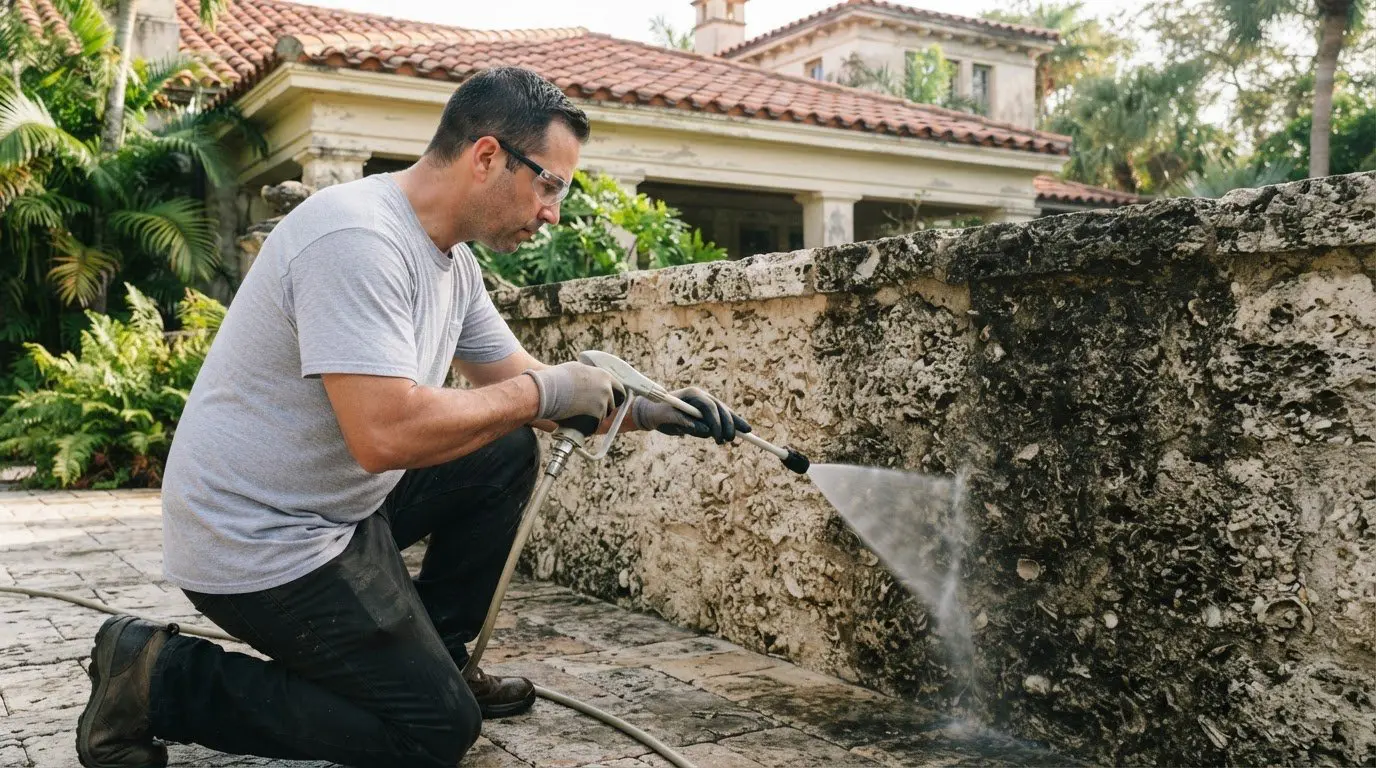
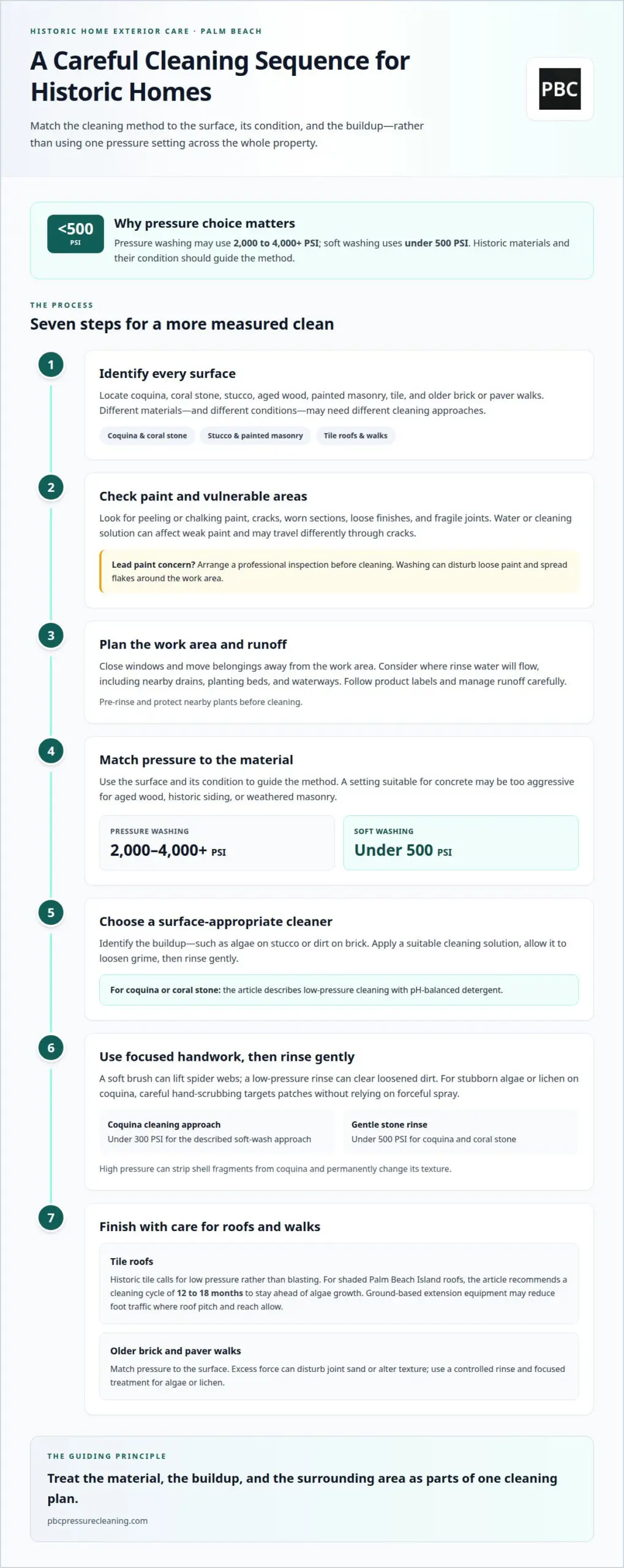
High pressure isn’t the default for cleaning a historic home. Soft washing historic homes in Palm Beach can be suitable when the method and cleaning approach are matched to each surface. Pressure washing may use 2,000 to 4,000+ PSI, while soft washing uses under 500 PSI.
It makes sense to be cautious around coquina, aged paint, stucco, and painted masonry. These materials can be vulnerable to forceful cleaning, and a method suited to a hard surface may be too aggressive for a softer or weathered one.
This guide explains how soft washing historic homes in Palm Beach can address delicate exteriors, what calls for extra care, and when old paint should be professionally inspected before cleaning. It covers coquina walls, stucco, painted masonry, and tile roofs, so you can see how a careful approach helps clean a home while respecting its existing materials.
Key Takeaways
- Learn why coquina needs a gentler cleaning approach to help preserve its shell fragments and surface texture.
- See how surface type guides the choice between soft washing and pressure washing.
- Understand why older paint may need professional inspection before cleaning, especially when lead paint is a concern.
- Find out what careful cleaning of historic stucco and painted masonry involves, including attention to nearby plants.
- Recognize where algae and mildew can take hold on Palm Beach exteriors and why targeted cleaning matters.
Can pressure washing damage the coquina stone on my historic estate?
Yes. High-pressure washing can strip soft shell fragments from coquina and permanently change its texture. Exterior pressure washing often exceeds 3,000 PSI, while a soft-wash approach described for historic coquina uses under 300 PSI. A gentle rinse for coquina and coral stone stays under 500 PSI.
A Palm Beach contractor should have experience cleaning historic surfaces and documented licensing and insurance. Choose one whose credentials and approach are suited to delicate materials such as coquina, rather than relying on pressure alone.
Algae and mildew can collect on Florida home exteriors, especially in shaded, humid areas. North-facing walls, covered entries, and spots beneath mature trees in Palm Beach neighborhoods such as El Cid and Flamingo Park are common places for growth to start. It can darken surfaces and make dirt more noticeable, so cleaning should account for both the material and the affected area.
For coquina or coral stone, a careful process uses low-pressure, pH-balanced detergent, hand-scrubbing for stubborn algae or lichen, and a gentle rinse. Each step matters: detergent helps loosen organic buildup, while hand work targets patches without blasting fragile shell fragments. A forceful stream can remove parts of the stone itself, not just the green or dark growth.
Spider webs, loose dirt, and algae need different levels of attention. A soft brush can lift webs from sheltered corners, while a low-pressure rinse clears loosened dirt from the exterior. Lichen may cling more firmly than surface grime, so it can require careful hand-scrubbing. Applying high pressure to every stain risks roughening coquina that has remained intact for generations.
Roof growth also calls for a material-specific approach. Some Palm Beach Island homes date to the 1920s and 1930s and still have original barrel-tile roofs. For shaded Palm Beach Island roofs, a cleaning cycle of 12 to 18 months is recommended to stay ahead of algae growth. Low-pressure roof cleaning avoids blasting tile, while ground-based extension equipment can reduce foot traffic where roof pitch and reach allow.
For older brick or paver walks near coquina walls, pressure should match the surface. Excess force can disturb joint sand or alter the material’s texture. A controlled rinse and focused treatment of algae or lichen address buildup without treating a historic walkway like concrete.
Cleaning sequence matters around a historic estate. First, identify coquina, coral stone, tile, and older masonry. Then treat visible algae and lichen with a method suited to the surface, hand-scrub stubborn patches, and rinse gently. This measured approach removes webs, dirt, and organic growth while helping preserve the exterior’s distinctive texture.
For properties in Palm Beach, a careful pressure washing approach should account for the stone, the growth, and nearby historic surfaces rather than using one setting everywhere.
Can You Soft Wash a Historic Home?
Yes, soft washing can suit a historic home when the method matches its materials and condition. Pressure, detergent, water direction, and runoff all matter before exterior cleaning begins.
Soft Wash and Pressure Wash Comparison
Pressure washing is listed at 2,000 to 4,000+ PSI, while soft washing uses under 500 PSI. That difference matters on historic siding, old brick, and decorative details. Concrete may tolerate more pressure than aged wood or masonry. The surface and its condition should guide the method instead of applying one setting across the property.
Runoff and Chemical Requirements
Runoff and chemical-use requirements can depend on the cleaning product and where rinse water flows. Account for nearby drains, planting beds, and waterways when planning exterior cleaning in Palm Beach County. Follow product labels and manage rinse water to limit unwanted flow. These practical steps help keep the process controlled without assuming one approach fits every property.
Historic Surface Compatibility
Soft washing can suit historic stucco, wood, masonry, and clay tile when the method is adjusted for each material. Long exposure can leave old-growth wood brittle, while aged stucco may have fragile areas. Historic tile roofs also call for low pressure rather than blasting. Material condition should guide decisions across each facade and roof section.
Methods and Detergents
Begin by identifying the surface and buildup, such as algae on stucco or dirt on brick. Apply a surface-appropriate cleaning solution, allow it to loosen grime, then rinse gently. For coquina or coral stone, use low-pressure, pH-balanced detergent and careful hand-scrubbing for stubborn algae or lichen rather than relying on forceful spray.
Water intrusion and surface damage are risks if spray reaches loose finishes, gaps, or vulnerable joints. Before service, close windows, move belongings from the work area, and identify delicate features. Pre-rinse and protect nearby plants during cleaning. Cracks or worn sections also need attention because water may travel differently there than across intact material.
Soft washing and old paint
Soft washing can clean a painted historic exterior, but weak, peeling, or chalking paint needs careful attention. Lower pressure reduces force on the surface, yet water and cleaning solution can still affect loose paint. The paint’s condition, the wall material, and existing cracks all matter before cleaning begins.
For a historic home with lead paint, arrange a professional inspection before cleaning. That assessment helps identify whether paint may contain lead and whether its condition makes washing unsuitable. Don’t treat visible peeling as ordinary dirt: washing can disturb loose paint and spread flakes around the work area.
Look closely at a faded wood siding board, a chalky stucco wall, or paint lifting around a window. Each signals a different concern. Loose edges may separate further under water, while cracks can let moisture reach the material beneath. Even a gentle soft wash needs an approach suited to those conditions.
A careful cleaning plan should address the surface in stages:
- Identify peeling, bubbling, chalking, and exposed areas before washing.
- Separate painted walls from harder surfaces, such as a concrete driveway.
- Use a low-pressure method and a cleaning solution suited to the paint and substrate.
- Rinse gently, avoiding direct spray into gaps, loose edges, and damaged areas.
The driveway example matters because one pressure setting shouldn’t be used across every part of an older property. Hard concrete and a painted wood facade respond differently. Treating the home as one uniform surface can damage paint or force water toward vulnerable joints.
Preparation also protects nearby areas. Move outdoor furniture away from the wall, close windows, and protect plants before washing. Note painted trim, shutters, and decorative details that could catch water or cleaning solution. These steps keep the work focused on the intended surface instead of spreading residue across the property.
Historic paint can show age unevenly. A sheltered entry may retain a more intact finish, while a sun-exposed wall may appear faded or powdery. Cleaning should account for those differences rather than applying the same pressure everywhere. Where paint is already failing, cleaning cannot restore the finish; the priority is avoiding further disturbance.
After cleaning, inspect the same areas for lifted edges, remaining chalk, or dirt around trim. Those observations help distinguish surface grime from paint deterioration. For older Palm Beach homes, this material-by-material approach supports a cleaner exterior while respecting the existing finish and the property’s character.
Soft washing historic stucco and painted masonry
Historic stucco and painted masonry need a cleaning method that respects both the finish and the material beneath it. Low-pressure soft washing is preferable to blasting these surfaces, especially where age, paint, or exposed texture changes across the facade. For soft washing historic homes in Palm Beach, surface condition should guide the method.
Begin by identifying the materials and visible wear. A stucco wall beneath a covered entry may hold algae, while a sun-exposed section may show fading or worn paint. Check for loose edges, cracks, and decorative details before applying cleaning solution or rinse water. Different areas of one facade may need different handling.
Stucco’s textured finish can hold dirt and organic growth in its recesses. A forceful spray may roughen weak areas or drive water into openings around windows and trim. A gentler method applies cleaning solution across the affected area, lets it loosen grime, then rinses without directing water into joints. Long exposure to weather can leave stucco uneven in condition.
Painted masonry needs the same surface-specific judgment. A painted brick wall, for example, may have intact coating beside flaking edges. Cleaning should avoid driving water beneath loose paint or stripping sound finish from the masonry. Treating every section identically can disturb the property’s existing character and leave uneven results. Targeted application and a controlled rinse help limit unnecessary force.
A careful process can include these steps:
- Identify stucco, brick, painted areas, trim, and decorative details.
- Note visible algae, dirt, loose paint, and openings around windows.
- Pre-rinse and protect surrounding plants during cleaning.
- Apply a surface-appropriate cleaning solution, then rinse gently.
- Review the wall for remaining grime or areas needing separate attention.
Plant protection matters when beds sit beside the facade. Pre-rinsing plants and protecting them during washing helps limit contact with cleaning solution. Directing spray toward the wall, rather than into window gaps or beneath trim, also helps control water movement. These details matter around mature planting close to an older exterior.
The goal is to clean without treating a vulnerable wall like a hard, uniform surface. Low pressure, careful coverage, and attention to changing conditions help remove buildup while respecting historic stucco and painted masonry. A measured approach can preserve the finish and details that give an older Palm Beach home its character.
Pressure Pros of Palm Beach: Power Washing
Pressure Pros of Palm Beach helps Palm Beach property owners address exterior buildup with power washing, pressure cleaning, and roof cleaning. For historic homes, the cleaning method should match the surface: coquina, aging stucco, painted masonry, and tile each need careful consideration before work begins.
Turn to a professional when algae returns in shaded areas, dirt collects across multiple exterior surfaces, or a roof needs cleaning without aggressive blasting. If old paint is worn or peeling, exterior painting may be the next step after cleaning. A surface-specific plan can improve curb appeal while respecting a home’s historic character.
Contact Pressure Pros of Palm Beach to discuss your historic home’s exterior cleaning needs.
Plan the Next Careful Step for Your Home
A thoughtful plan for soft washing historic homes in Palm Beach begins with the property’s preservation priorities. Decide which areas need attention now, note surfaces that have weathered differently, and consider how future cleaning fits alongside exterior upkeep. A measured approach helps protect the character you value while keeping maintenance decisions practical.
Pressure Pros of Palm Beach provides exterior cleaning services, including pressure cleaning and roof cleaning. If cleaning reveals worn or faded finishes, exterior painting may also suit your property’s next maintenance step. The right service depends on the surface and the work you want addressed.
Share your property’s needs with Pressure Pros of Palm Beach to take the next step toward thoughtful exterior care.
With a clear plan, you can care for your historic home with confidence.
Frequently Asked Questions
What Is Soft Washing?
Soft washing cleans exterior surfaces with a cleaning solution and a low-pressure rinse, rather than relying on force to remove buildup. The solution loosens organic growth and grime, reducing the need for aggressive spraying. On a Palm Beach home, the process can be adapted to stucco, painted masonry, and wood siding. The material and its condition guide the cleaning approach.
Does my property need Architectural Commission approval before you can clean it?
Not every historic property has the same review process. Some historically designated Palm Beach Island properties may need coordination with the Town of Palm Beach Architectural Commission or a private preservation consultant before facade work. Whether a property’s designation and planned work bring it into that process is key. Roof cleaning may involve different considerations than washing a visible historic facade.
How do you clean an original barrel-tile roof without breaking tiles?
Original barrel tile is cleaned with low pressure rather than a forceful blast. The method also limits roof foot traffic, since unnecessary steps can stress older tiles. Ground-based extension equipment is used where the roof’s pitch and reach allow. For a home with original tile, the cleaning plan should account for roof access and tile condition before work begins.
How long does a soft wash treatment last?
Soft-washing results typically last two to three times longer than traditional pressure-washing results. The time before buildup returns still depends on the surface and its surroundings. A north-facing wall beneath trees, for example, stays shaded and can retain moisture longer than a sunlit wall. These differences influence how quickly algae becomes visible again, so one schedule won’t suit every facade.
What Surfaces Can Be Soft Washed?
Soft washing can suit surfaces that shouldn’t be cleaned with forceful pressure, including historic stucco, painted masonry, wood siding, shingles, old brick, and clay tile roofs. Coquina and coral stone also call for a controlled approach. A home may have several materials on one elevation, such as painted trim beside stucco, so consider each surface separately.
Will the cleaning solutions harm my historic landscaping?
Cleaning solutions can affect plants if they contact foliage or collect around roots, so plant protection is part of the cleaning process. Plants beside a historic facade are pre-rinsed and protected during washing, while rinse water is managed to limit unwanted exposure. The process should account for sensitive planting beds, vines, and mature shrubs near the walls, not just the surface being cleaned.
Recent Comments