
Exterior Cleaning for Outdoor Party Prep: Pavers, Decks, and Siding

Pressure washing pavers can freshen an outdoor gathering space, but more pressure isn’t always better. The right method depends on the pavers’ condition and finish, and a garden hose may be enough for light dirt. Effective exterior cleaning for outdoor party preparation also includes the deck and house exterior, so grime elsewhere doesn’t distract from a clean patio.
Focus first on the surfaces guests will use, especially if they have dirt, mildew, or food stains. Cleaning only the patio can leave the rest of the gathering area looking overlooked. This guide explains when pressure washing concrete and pavers makes sense, how to apply cleaner and rinse with a garden hose, and how to clean decks, siding, and other exterior surfaces carefully. You’ll also learn how to plan the work so runoff and loosened dirt don’t undo your efforts on areas you’ve already cleaned.
Key Takeaways
- Choose the cleaning method for concrete and pavers based on their condition, and avoid assuming that more pressure means a better result.
- Use a garden hose for suitable cleaning tasks, applying cleaner in manageable areas and rinsing thoroughly before it dries.
- Clean decks and siding with care to avoid using an overly aggressive approach on surfaces that need gentler treatment.
- Plan house-exterior cleaning from higher surfaces downward so loosened dirt doesn’t soil areas you’ve already cleaned.
- Learn when professional exterior cleaning can help prepare your property for guests and maintain its appearance.
Pressure washing concrete and pavers
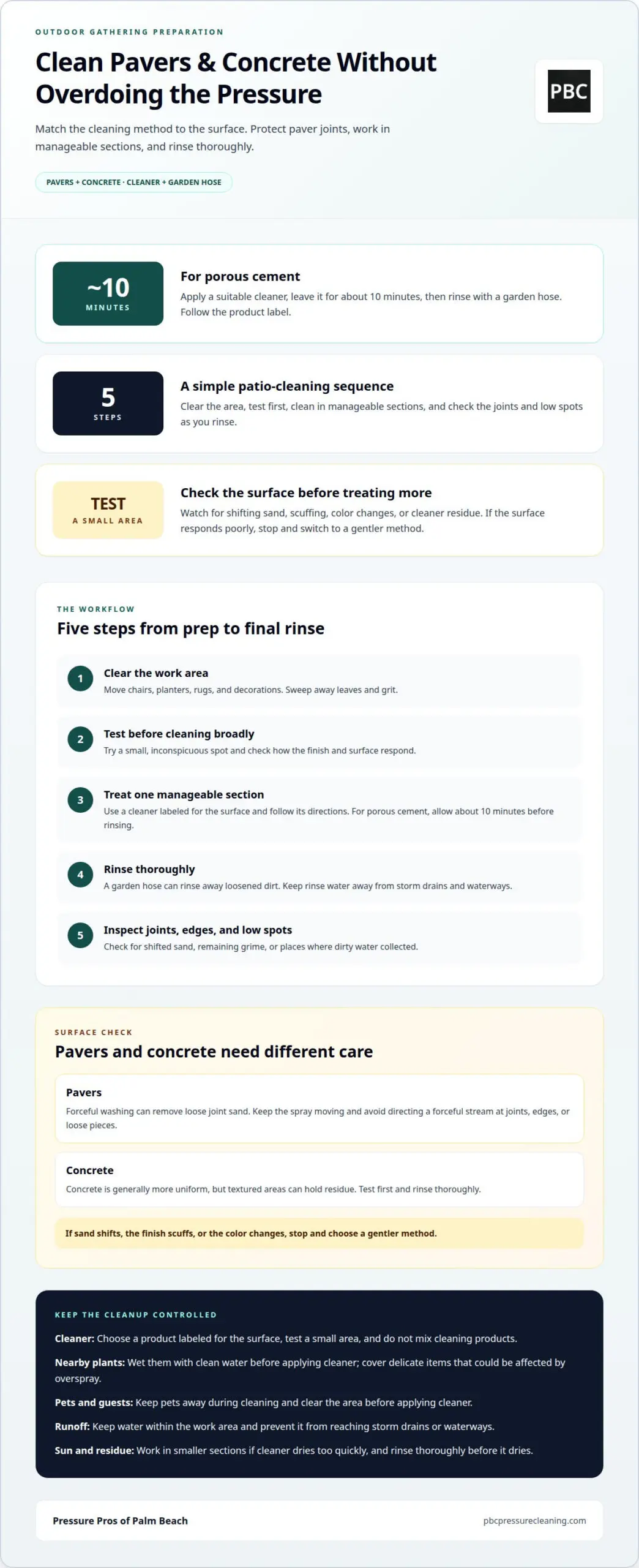
Pressure washing can remove tracked-in dirt, grime, and party spills from concrete and pavers. Choose the approach for each surface: a broad concrete walkway differs from pavers with loose joint sand or a worn finish. Before cleaning, move furniture and decorations, sweep away leaves, and inspect stained or damaged spots. Clearing the area makes the surface easier to assess and keeps loose debris from spreading during washing.
Concrete is generally more uniform, while paver joints can lose sand under forceful washing. Start with a small, inconspicuous test area and watch how the surface responds. Keep the spray moving rather than concentrating it in one spot. Avoid directing a forceful stream at joints, edges, or loose pieces. If sand shifts, the finish scuffs, or the color changes, stop and switch to a gentler method.
For a Palm Beach property, use only the water needed for rinsing and keep runoff within the work area. This helps limit unnecessary water flow while you clean.
For a patio guests will use, work from the far edge toward the exit. That route reduces foot traffic across areas you’ve already cleaned. Rinse loosened dirt away from seating and food areas, and check low spots where dirty water can collect. If stains cover a broad paver area or the surface needs even treatment, professional paver cleaning may be a better fit than spot cleaning.
Use this sequence to prepare a concrete path or paver patio:
- Move chairs, planters, rugs, and party decorations away from the work area.
- Sweep loose leaves and grit so they don’t become muddy debris.
- Test a small area and change methods if the surface responds poorly.
- Clean manageable sections while keeping the spray moving.
- Rinse loosened grime away and inspect joints, edges, and low spots.
For example, a concrete walkway may have muddy footprints beside a paver seating area. Clean the walkway, then assess the pavers separately instead of assuming both surfaces need the same pressure. If paver joints begin to wash out, stop directing pressure there. This helps preserve the existing layout and prevents a simple cleanup from creating more work.
Deep stains, widespread algae, and uneven discoloration can take more than a quick rinse. Clean early enough to inspect the patio and address missed spots. For exterior cleaning for outdoor party preparation, match the method to each surface, protect paver joints, and keep the area clear until rinsing is finished.
Applying cleaner and rinsing with a garden hose
A garden hose can rinse away loosened dirt without a pressure washer. For porous cement, a cleaner can be sprayed on, left for about 10 minutes, then rinsed with a garden hose. Follow the product label and adjust the method to the surface, since residue can remain in textured concrete or paver joints.
What cleaners are safe for plants, pets, and nearby waterways? No cleaner is automatically safe for every plant, animal, or waterway. Choose a product labeled for the surface, follow its directions, keep pets away during cleaning, and prevent runoff from reaching storm drains or waterways.
Before applying cleaner, sweep away grit and move furniture from the work area. Wet nearby plants with clean water and cover delicate items that could be affected by overspray. Apply cleaner to a small test area first, then check for changes to the surface. Testing can reveal residue or effects on the finish before you treat a larger section.
Clean outdoor furniture in small batches so the solution doesn’t dry on the surface. For example, clean one chair or table section, then rinse it thoroughly with cool water before moving on. Dried cleaner can leave visible marks, especially on sun-warmed furniture. Keep the hose nearby and rinse seams, undersides, and textured areas where solution can collect.
For mold on hard surfaces, the U.S. Environmental Protection Agency recommends washing with detergent and water, then drying completely. This approach can suit a small, accessible patch on a hard outdoor surface. Scrub gently with an appropriate brush, rinse off the detergent, and let the area dry before returning furniture or party supplies.
Use this sequence to manage the work:
- Read the cleaner label and clear the area of guests, pets, and movable items.
- Protect nearby plants and direct rinse water away from drains and waterways.
- Apply cleaner to a small test area, then treat one manageable section.
- For porous cement, allow about 10 minutes before rinsing with a garden hose.
- Rinse furniture thoroughly with cool water and let cleaned surfaces dry.
If cleaner dries too quickly in direct sun, reduce the size of each work area. A shaded section of patio may stay workable longer than a sunlit stretch, so plan the order around exposure. Don’t mix cleaning products, and don’t increase the concentration beyond the product directions. For larger areas or surfaces that need a consistent approach, talk with a local cleaning professional about the right method for your property.
Cleaning decks and siding carefully
Deck boards and house siding need methods suited to their materials. Wood, composite boards, vinyl, painted surfaces, and stucco can respond differently to scrubbing and water. Before starting, identify the surface and inspect it for peeling paint, splintered boards, loose trim, or cracked sections. These details help you avoid treating a fragile area like a sturdy walkway.
For stains, mold, or mildew on patios and siding, first identify the affected material and the mark’s location. Choose a cleaner labeled for that surface, then test it in a hidden spot. Use a soft brush on a small stubborn patch, and stop if the finish changes or paint begins lifting.
On a deck, remove chairs, cushions, and rugs so you can inspect the boards beneath them. Check for leaves trapped between boards, then clear debris without forcing it deeper. If a stain sits near a table leg, treat that spot separately rather than applying a stronger cleaner across the entire deck. This targeted approach helps preserve the surrounding finish.
For example, a shaded corner may have dark spots while exposed boards show only dust. Start with the affected corner and assess the result before working across the deck. If wood fibers rise or the surface becomes rough, stop scrubbing. A deck with widespread discoloration or delicate boards may need a more controlled approach than a small, accessible spot.
Inspect siding separately. Look for peeling paint, loose trim, and dirt around corners or decorative details. Close nearby doors and windows, move outdoor decorations, and use a soft brush on accessible marks. Avoid directing water beneath edges or toward openings. Work around the house in a consistent route so you can track which sections you’ve cleaned.
Consider a home with a painted deck beside vinyl siding. Test each surface independently, even if the same stain appears on both. A cleaner suited to one material may not suit the other. Keep cushions, planters, and party decorations away until the surfaces are ready to use, and check them in natural light for missed streaks.
Before guests arrive, use these checks:
- Identify each surface before choosing a cleaning method.
- Inspect boards, siding, trim, and painted areas for visible wear.
- Test the cleaner where a change won’t be obvious.
- Treat isolated marks instead of using a stronger method everywhere.
- Pause if the surface texture or finish changes during cleaning.
Extensive staining across a deck or siding can be difficult to treat evenly. A careful assessment helps determine whether spot cleaning is practical or a broader cleaning plan is needed. Either way, matching the method to the material helps maintain the appearance of these exterior surfaces.
Cleaning the house exterior for an outdoor gathering
Start with the areas guests will notice on arrival: the front entry, walkway, and walls facing the patio. Work from higher surfaces downward, then finish with ground-level paths and gathering spaces. This order helps keep dirt from upper areas off surfaces you’ve already cleaned.
For mold cleanup, mix 1 cup of household bleach with 1 gallon of water, according to the Centers for Disease Control and Prevention. Use this mixture for the stated mold-cleanup purpose, and keep it away from food, serving supplies, and party items.
Should you hire a professional or clean outdoor areas yourself? Handle small, accessible tasks yourself when the surface is in good condition and the dirt is limited. Professional cleaning is a practical choice for extensive buildup, large areas, or surfaces that need a consistent approach.
What is the best way to clean outdoor furniture, cushions, and umbrellas? Follow each item’s care label, and test a suitable cleaner on a hidden spot first. Remove cushions before cleaning frames, and let fabric items dry fully before stacking them or putting them back on furniture.
How do you clean windows, gutters, and exterior entryways before guests arrive? Wipe accessible windows with glass cleaner, clear visible debris from safely reachable gutter areas, and sweep the entryway before rinsing it. Check the door threshold and corners for leaves or dirt where guests walk.
What weather conditions are best for exterior cleaning before a party? Choose a dry, mild period with little wind so spray stays on the intended surface and cleaned areas can dry. Strong sun may cause cleaner to dry before rinsing, while rain can bring dirt back onto walkways and furniture.
Use this order to make the work manageable:
- Move cushions, food, and decorations away from cleaning areas.
- Address upper surfaces before windows, entryways, and walkways.
- Check furniture, doorways, and the guest route before setting up.
- Leave cleaned areas clear until they’re dry and ready to use.
A patio with dusty furniture needs a different plan from a home with visible mold. Focus first on the areas guests will approach or use, then check the route from the entrance to the gathering space. This final walk-through can catch overlooked dirt before you set out chairs and serving tables.
Pressure Pros of Palm Beach: Roof Cleaning
Pressure Pros of Palm Beach can help when roof staining makes the home look neglected beside a freshly cleaned patio. Roof cleaning is a useful next step if the roof is visible from the yard, pool area, or guest entrance. Cleaning the roof alongside nearby exterior surfaces can create a more consistent look for your gathering.
For a smaller party-prep project, focus on the accessible areas guests will use. If roof stains cover a broad area or you want the exterior addressed as a whole, professional service can save you from tackling work beyond your cleaning plan. Pressure Pros of Palm Beach also provides pressure cleaning and exterior painting for relevant exterior maintenance needs.
Make Your Outdoor Space Ready for What’s Next
A gathering can be a useful deadline for noticing what your property needs. As you prepare, consider which surfaces get the most daily use and where dirt tends to return. This helps make exterior cleaning for outdoor party preparation a practical part of ongoing property care, rather than a task you remember only before guests arrive.
After the event, note how the cleaned areas held up. Keep a simple record of surfaces that need attention, such as a frequently used entrance or shaded seating area. This makes future planning easier and helps you prioritize maintenance that supports your property’s appearance over time.
Choose a cleaning plan that fits your home and your schedule. For larger projects, a local professional can help you determine a practical next step.
A well-cared-for outdoor space is ready to welcome guests and enjoy long after the party ends.
Frequently Asked Questions
Can I pressure wash pavers before an outdoor gathering?
Yes, but first consider the pavers’ condition and the event setup. Move furniture, rugs, and decorations so you can see the entire surface and avoid spraying them. Pay attention to areas beneath planters and table legs, where dirt can collect unnoticed. After cleaning, inspect the patio from the main entrance and seating area. That final view can reveal missed marks before guests arrive.
How far ahead should you arrange cleaning?
Plan cleaning with enough lead time for the work, drying, and a final inspection before the gathering. The time needed depends on the amount of buildup, the surfaces involved, and the weather. A small, accessible area may be manageable as a DIY task; several exterior surfaces may need more planning. Set the cleaning date before arranging furniture or food, so the work area stays clear.
Is it better to pressure wash or soft wash before a party?
Choose the method for the surface, not just the party deadline. Pressure washing uses force to remove buildup, while soft washing relies on a gentler application for surfaces that need less force. A concrete path and a roof shouldn’t automatically receive the same treatment. Identify each material first, and use professional cleaning where the wrong method could leave visible marks or uneven results.
Outdoor Party Pressure Washing: Which Areas Should You Clean First?
Start with the areas guests will approach and use most, such as the front walk, patio entrance, and space around outdoor seating. Then address less visible sections, including the side path or a corner where bins usually stand. Plan your route so you finish near an exit rather than crossing cleaned areas repeatedly. This helps prevent foot traffic from tracking loosened dirt back across the gathering space.
Should you clean the house exterior for an outdoor gathering?
Yes, if visible dirt or stains distract from the areas where guests will gather. Focus on the walls facing the patio, the entrance guests use, and exterior surfaces beside dining or seating areas. You don’t need to clean every wall for a backyard event. A targeted approach directs effort toward what guests will notice and keeps unrelated exterior projects from delaying party preparations.
What should I pressure wash before guests arrive?
Prioritize durable, frequently used surfaces, such as concrete walkways and suitable patio areas. Don’t assume every exterior surface should be pressure washed: roofs and delicate finishes call for different approaches. Check for loose material before starting, and keep cushions, decorations, and serving items away from spray. If you’re unsure about a deck’s material or finish, choose a gentler approach rather than risking visible damage.
Recent Comments